Home › Umbria › Castelluccio di Norcia
Castelluccio di Norcia
Wide skies. Flowering fields. A village finding its way back.
High in the Sibillini Mountains, Castelluccio di Norcia looks across a vast patchwork of fields and open grassland. The famous fioritura brings colour to the plateau, but the landscape rewards a visit beyond the flowering season too. Come for the mountain setting, the farming traditions and time outdoors, while recognising that the village is still recovering from the 2016 earthquakes.
01 · THE PIAN GRANDE
Let the landscape set the pace
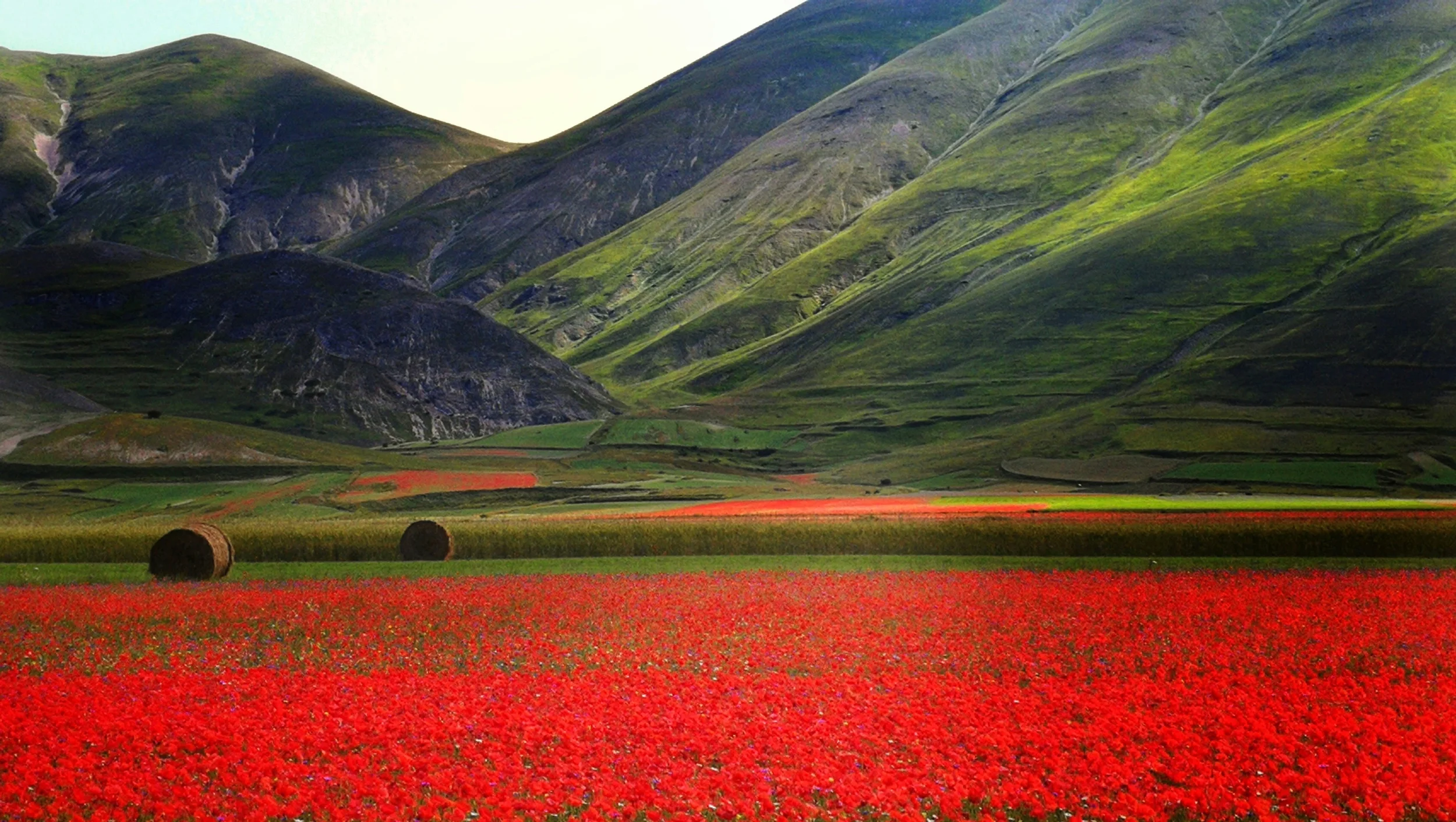
The approach to Castelluccio opens onto the Pian Grande, a broad karst plateau enclosed by the Sibillini Mountains. Together with Pian Piccolo and Pian Perduto, it forms a landscape whose scale is best appreciated slowly: cultivated strips, pale tracks and mountain slopes under a wide sky.
Rainwater drains through limestone features rather than gathering into a lake. The shallow channels and sinkholes are part of this living landscape, not places to explore off the permitted routes. Monte Vettore provides a striking backdrop, but a walk on the plain and an ascent into the mountains are very different outings.
For a first visit, we suggest a short, clearly marked walk and pauses at authorised stopping places. Check the route and current conditions with the national park before setting out. You do not need a summit to enjoy Castelluccio; give yourself time to watch the light move over the fields.
02 · FIORITURA & FARMING
Look beyond the colours
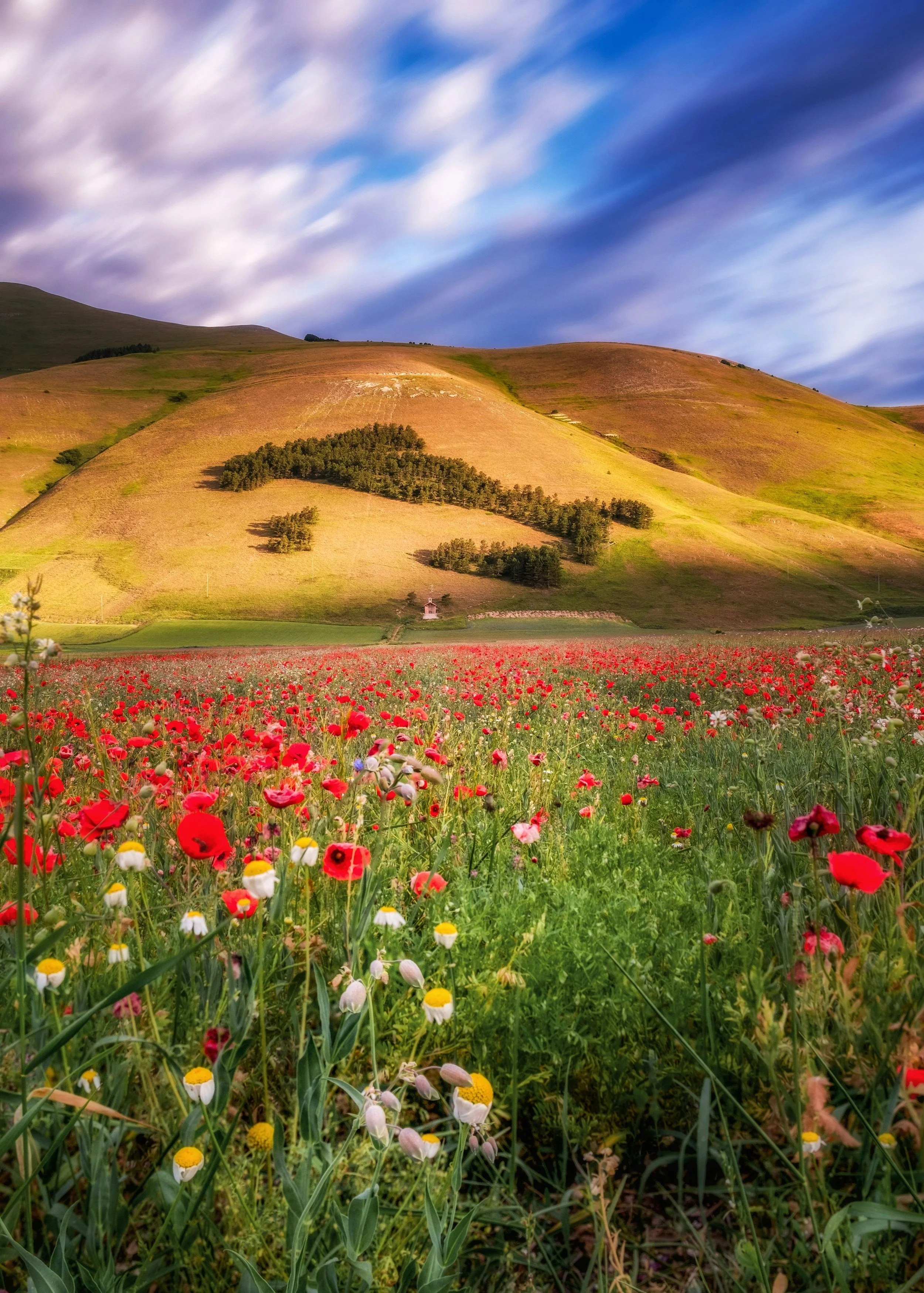
Castelluccio’s flowering is a seasonal event shaped by weather and agriculture. Poppies, cornflowers and other flowering plants mix with the cultivated lentils, creating the colours that have made the plains famous. The display develops across different fields at different times, so there is no single guaranteed peak day.
The small Lenticchia di Castelluccio di Norcia IGP is an important local crop. Buying properly labelled lentils from local producers, or ordering them at lunch, connects the view with the people who work this land.
Enjoy the flowers from permitted paths and field edges. Do not walk into crops for a photograph, pick flowers or park on grassland. Check the national park’s visitor guidance and the latest seasonal notices before travelling. A quieter weekday can be a more comfortable choice, although access arrangements still need checking.
03 · THE VILLAGE & ITS RECOVERY
Visit with the present in mind
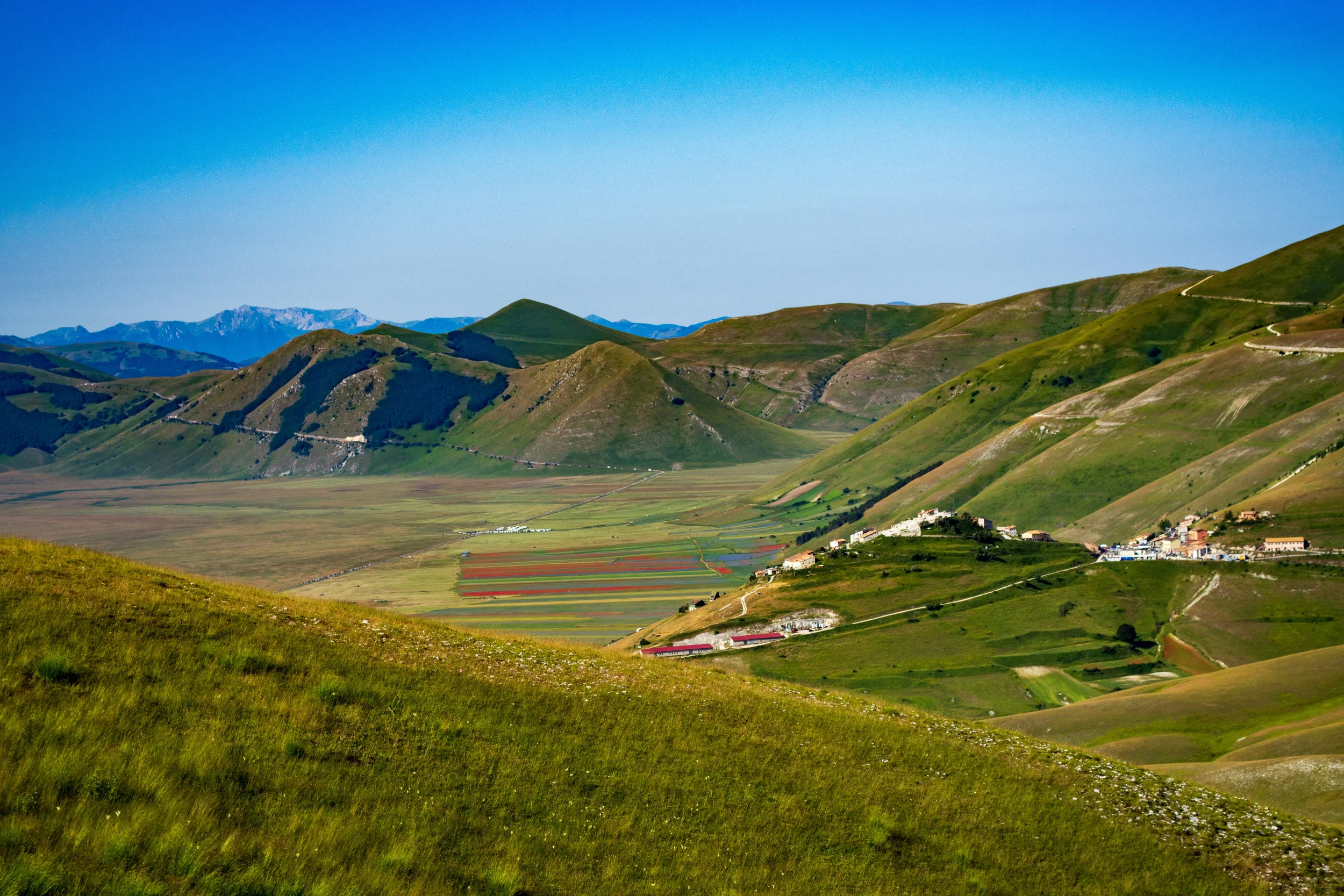
Castelluccio was devastated by the 2016 earthquakes. Reconstruction of its historic core remains a major undertaking, so older photographs of an intact hilltop village should not be treated as a promise of what is accessible today.
The landscape, local food producers and businesses are central to a visit. Use the areas currently open to the public, respect barriers and follow signs around works. Confirm restaurant opening and any accommodation directly, rather than assuming every address shown on an older map is operating.
Leave room for a meal or a purchase from an open local business. We would plan the village stop around what is available that day, with the plains as the main focus. The Comune di Norcia publishes local notices; the official reconstruction update explains the work on the historic core.
PLAN YOUR VISIT
Give the mountains a little breathing space
One day on the plateau
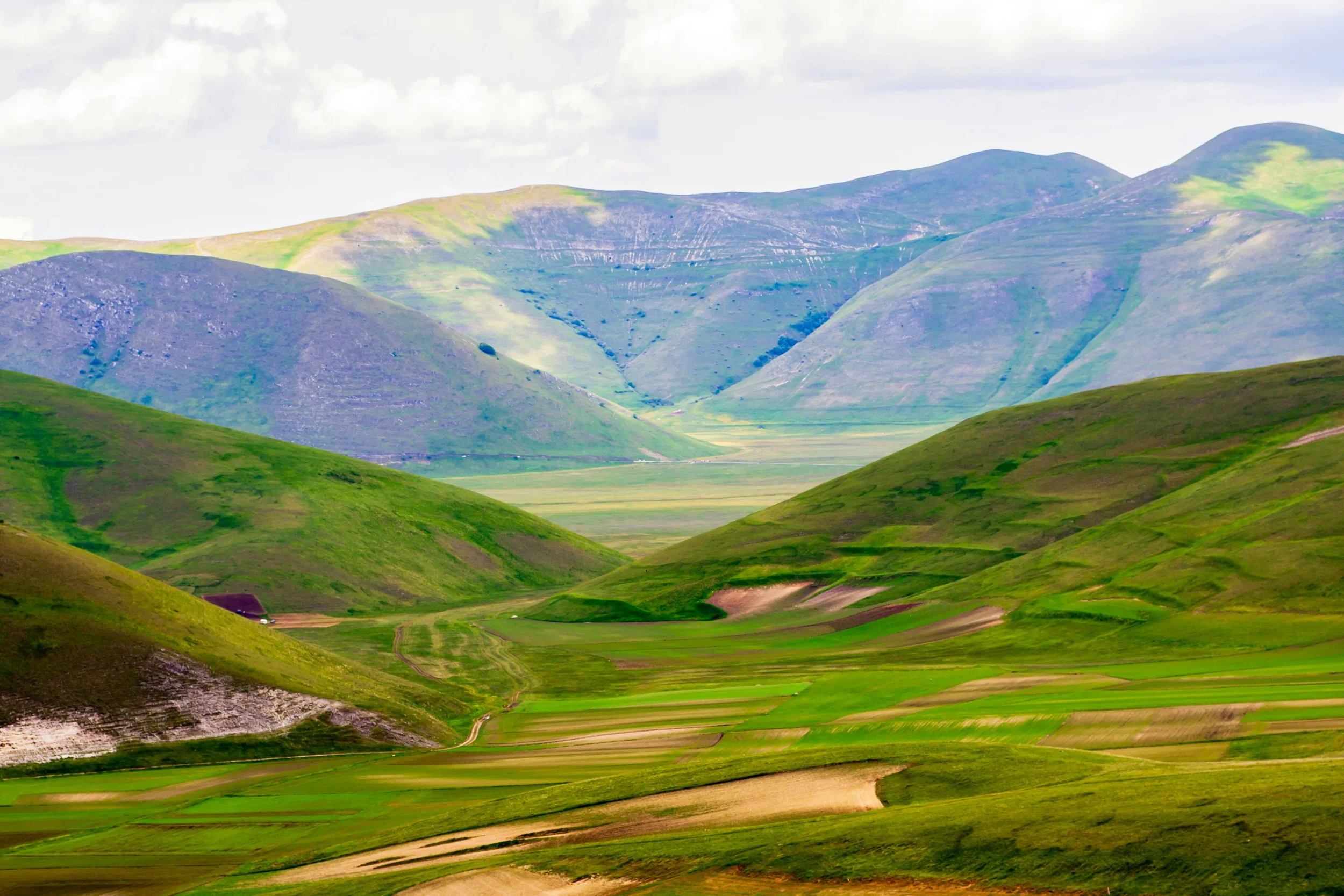
Begin with the journey up from your base, allowing time for the winding road and any seasonal access controls. After parking in an authorised place, take a short permitted walk on the plain. Choose the distance to suit the weather and your group, then leave time for lunch and a look at the village areas open to visitors.
This is our suggested shape for a day, not a fixed trail itinerary. Save a longer hike or an organised outdoor activity for another day. Confirm your return transport before setting out, especially if using a seasonal shuttle.
Where to stay & how long to spend
We suggest a full day for the plateau, with two nights in the wider Norcia area if you want flexibility around the weather. Norcia can be a practical base for food, supplies and a separately planned visit to the plains. For accommodation closer to Castelluccio, confirm the exact location, road access and currently available services before booking.
When to visit
The flowering generally develops from late spring into early summer, with timing and intensity changing each year. June and July attract particular interest, but do not book around a promised date or assume the entire plain flowers at once. Outside that period, come for the open landscape rather than flower carpets. Winter requires separate planning for snow, road conditions and services.
Getting here & getting around
Castelluccio is a mountain destination reached by road, not a railway stop. Check the latest road and parking notices, and arrange onward travel if arriving in the region by public transport. During the fioritura, particular days may have restricted vehicle access, designated parking or shuttle arrangements; these can change even within the season. Consult the Monti Sibillini National Park and the municipality shortly before your trip.
Carry water, sun protection, a warm layer and waterproof clothing. Exposed paths, uneven ground and changing weather matter even on a short outing. Ask locally about a suitable viewing route if you need to avoid rough surfaces; a flat-looking field is not an accessible public path.
What to try
Start with local lentils, perhaps in a simple soup or alongside another regional dish. Ask what is available that day and where the ingredients come from. In Norcia, local cheeses and cured meats offer another way to explore the area’s food traditions. Book a meal ahead on busy flowering weekends.
Make it part of a wider Umbrian journey
Keep Castelluccio as a dedicated mountain day. Rasiglia and Marmore Falls offer different water landscapes on separate stages of a wider trip, rather than quick additions to a plateau walk. For a contrasting day of art and historic streets, explore Assisi on a separate stage of your journey.
Use our 7-day Umbria itinerary as a starting point, then add time for the mountains. The Umbria travel map and regional travel guide help you plan the distances between stops.