Rasiglia
Spring-fed lanes and the memory of a working village
In the Menotre Valley above Foligno, Rasiglia gathers stone houses around a network of clear, running water. Springs feed channels that pass between homes, beneath small bridges and beside the remains of mills. It is a small place with a much larger story: water once sustained a busy textile economy here. Slow down enough to follow that connection, and the village becomes more than a beautiful stop for photographs.
Springs & lanes · Mills & weaving · Plan your visit
Find more places to explore in our Umbria travel guide.
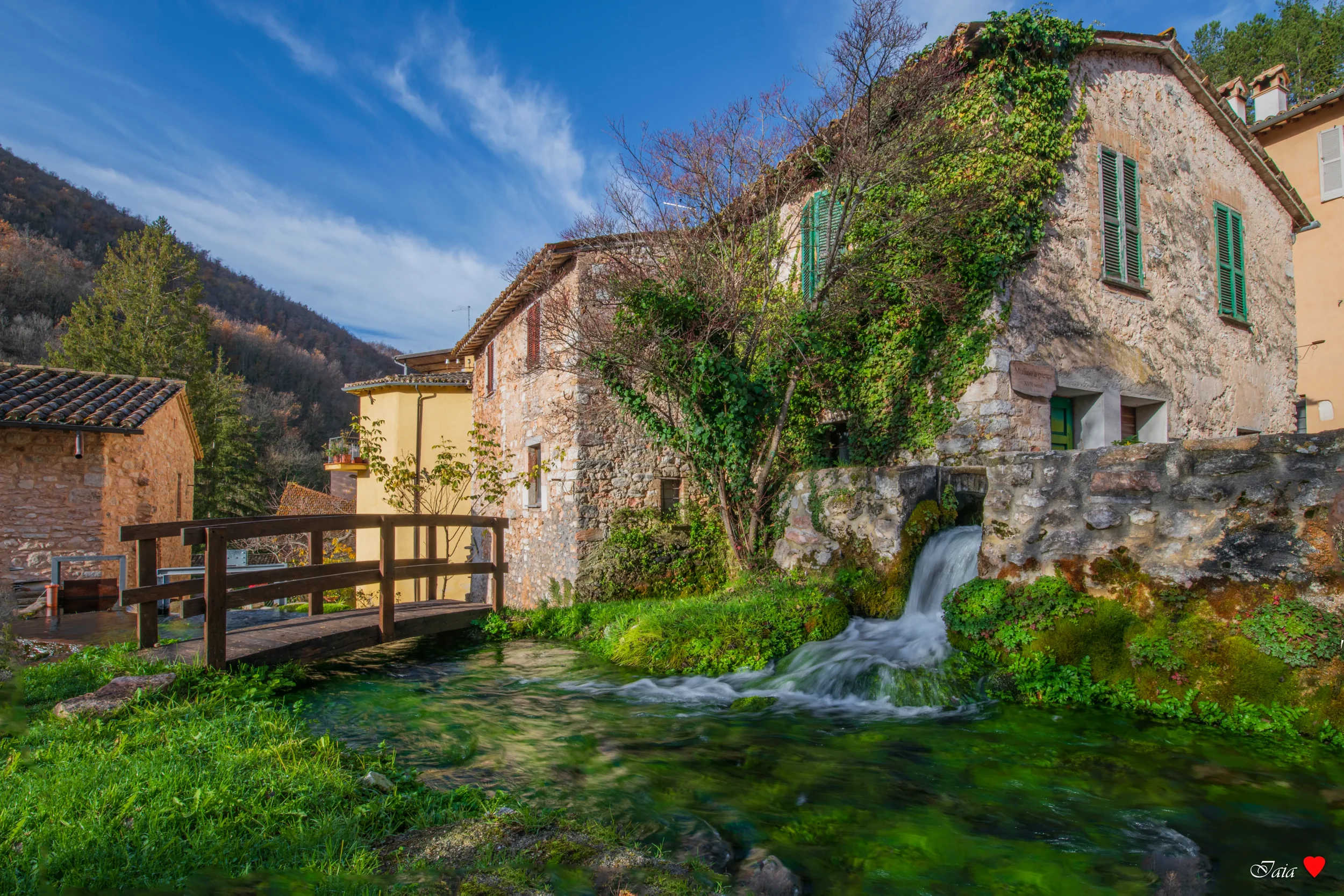
01 / FOLLOW THE WATER
Springs, channels and stone lanes
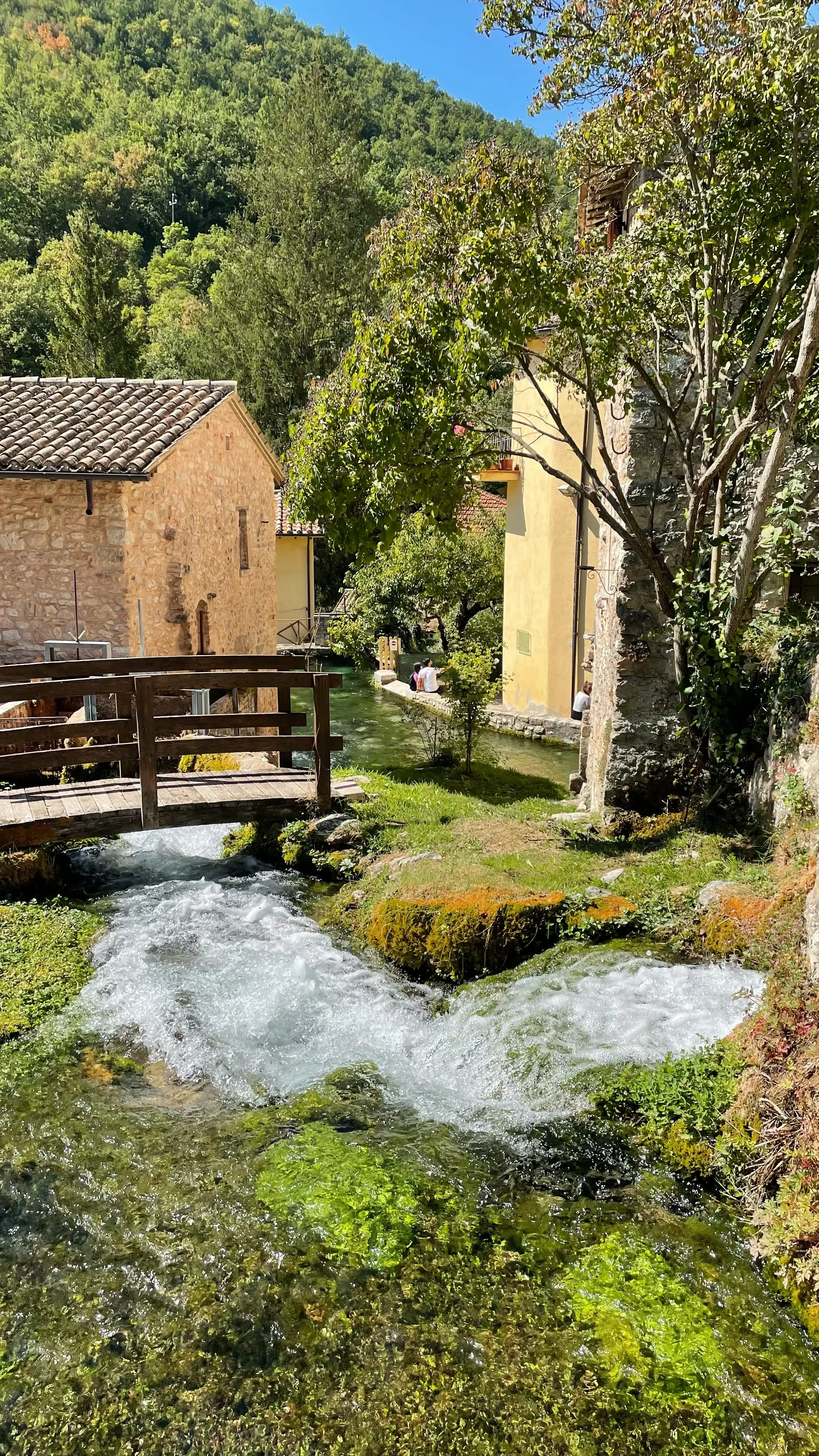
Capovena, the spring at the upper edge of Rasiglia, feeds the channels that shape the village below. Follow the water through the lanes and notice how closely the houses and old working spaces are arranged around it. Small changes in level create cascades, pools and different sounds within a very short walk.
The setting belongs to the Apennine side of Umbria: Rasiglia sits above 600 metres in the municipality of Foligno, surrounded by the slopes of the Menotre Valley. Remains of a Trinci fortress above the village recall another layer of its medieval past. We suggest keeping your first circuit simple, following the public lanes and returning to details you missed. Leave private doorways and bridges clear; this small network of paths is also part of everyday village life.
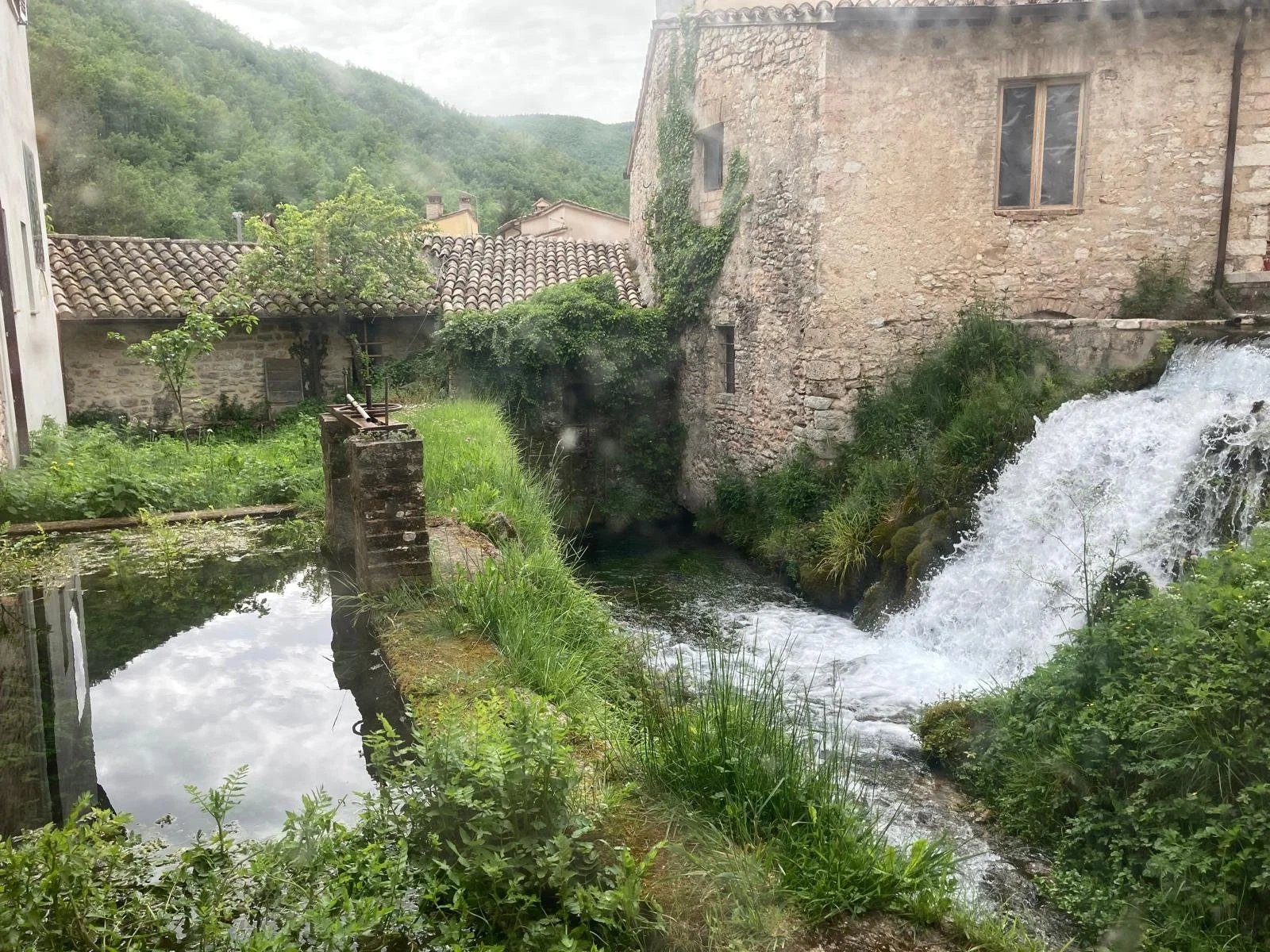
02 / MILLS & WEAVING
The water that made a living
For centuries, Rasiglia’s water did practical work. It drove grain mills and supported wool processing, including fulling, dyeing and weaving. The surviving machinery helps make that history tangible: wooden looms, a Jacquard loom and an early twentieth-century hydroelectric installation belong to the story alongside the older channels and millstones.
These layers explain why the village is worth more than a quick circuit of its prettiest corners. Ask how water reached each workshop, what the machinery did and how work changed as technology developed. The local Rasiglia e le sue Sorgenti association preserves this heritage and arranges visits. Contact it ahead of time if the interiors and textile history are your priority; do not assume every historic workshop will be open for an unplanned visit.
03 / BEYOND THE VILLAGE
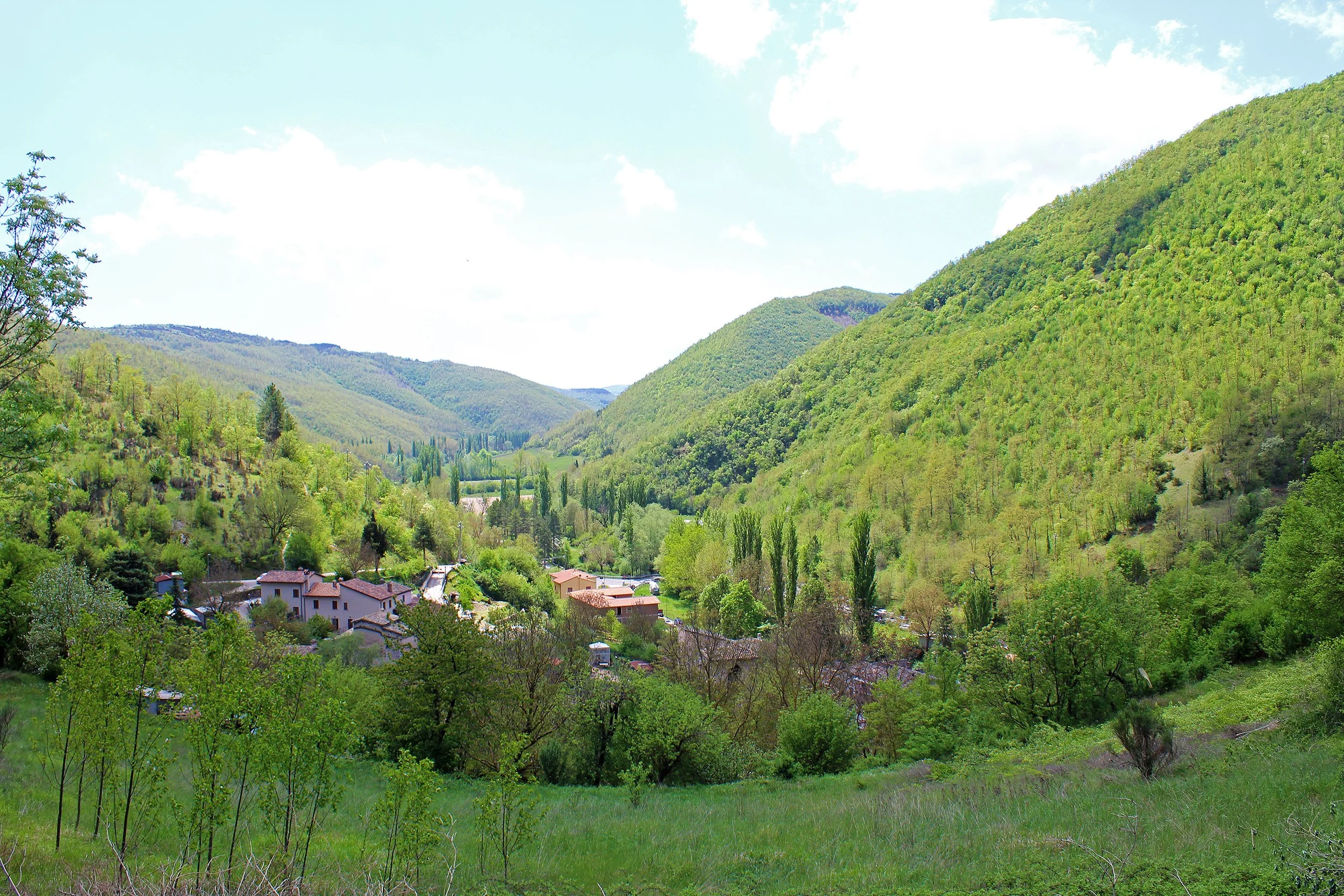
The valley and Madonna delle Grazie
The wider view reveals Rasiglia’s setting beneath the wooded slopes of the Menotre Valley. After exploring the channels, leave time for a separate stop beyond the village.
Outside the village, the Sanctuary of the Madonna delle Grazie adds a quieter, artistic dimension to a visit. Its walls preserve a rich group of devotional frescoes by painters from the Foligno area, dating mainly to the second half of the fifteenth century. They speak of local faith and gratitude across generations.
The sanctuary’s foundation is linked in local tradition to the discovery of a terracotta image of the Virgin and Child in 1450. Read that as a devotional story rather than a documented account of a miracle. If you want to see the frescoes, check opening arrangements through the association’s sanctuary information before setting out. Treat it as a separate stop, with time to reach it and return, rather than assuming it lies on the village’s main circuit.
STAY A LITTLE LONGER
Plan your visit to Rasiglia
A relaxed half day
Begin with a slow walk beside the channels, then work uphill towards the spring before retracing the lanes at your own pace. If you have arranged a heritage visit, build the rest of the morning around it. Follow with lunch, or add the sanctuary if access has been confirmed. This is our suggested half-day rhythm; you do not need a long checklist to enjoy a village of this size.
How long to stay
A couple of hours can work for the outdoor lanes, but half a day gives you room for the history and a break. For a longer trip, consider Foligno as a base for town visits and rail connections, or accommodation in the Menotre Valley if countryside is the priority. Check access, parking and evening meal options for the particular property, especially if travelling without a car.
When to visit
We favour spring or autumn for walking and softer light. In summer, aim for an earlier start and allow for other visitors in the narrow lanes. Weekends and public holidays can feel busy in such a compact place. Bring a layer outside the warmest months and pay attention to wet paving after rain. Choose your date around a confirmed guided visit if seeing the historic interiors matters most.
Getting there and getting around
Approach Rasiglia from the Foligno area and follow current signs to visitor parking, continuing through the village on foot. Allow time for the final walk rather than expecting to park beside the water. For a journey by public transport, use Foligno as your rail planning point and check the regional transport information for onward and return options, or arrange a transfer in advance.
The lanes include changes of level, steps and small bridges. If you need a step-free route, contact the local association about the areas and buildings you want to reach. Wear shoes with grip and keep to the paths beside the water.
Lunch and a slower afternoon
Decide whether lunch belongs in the village or later in Foligno, then check that your chosen place is open on the day. A booked table can give a useful shape to a longer visit without filling the morning with too many stops. Leave a little time afterwards to revisit a channel or workshop that caught your attention.
Explore more of central Umbria
For another day, combine Rasiglia’s working history with Spello’s art and hillside lanes or Bevagna’s medieval centre. Check the geography on our Umbria travel map and use the seven-day Umbria itinerary as a starting point for a trip with room to linger.
Image credits
Rasiglia, village waterways — Iaia quark, via Wikimedia Commons, CC0 1.0. Converted to WebP and resized for display.
Rasiglia, channels and houses — Bultro, via Wikimedia Commons, CC BY-SA 4.0.
Rasiglia and the valley — Kimahri88, via Wikimedia Commons, CC BY-SA 4.0.
The latter two images are resized for display; any adaptations are shared under the same licence.


