Assisi
Frescoed walls. Roman columns. Quiet moments above the valley.
Assisi rises on the slopes of Monte Subasio, with pale stone streets leading between some of Italy’s most important Franciscan sites. Give the famous basilicas time, then look beyond them: a Roman temple, small lanes and views across the Umbrian valley add depth to a visit that is both an encounter with art and a living place of pilgrimage.
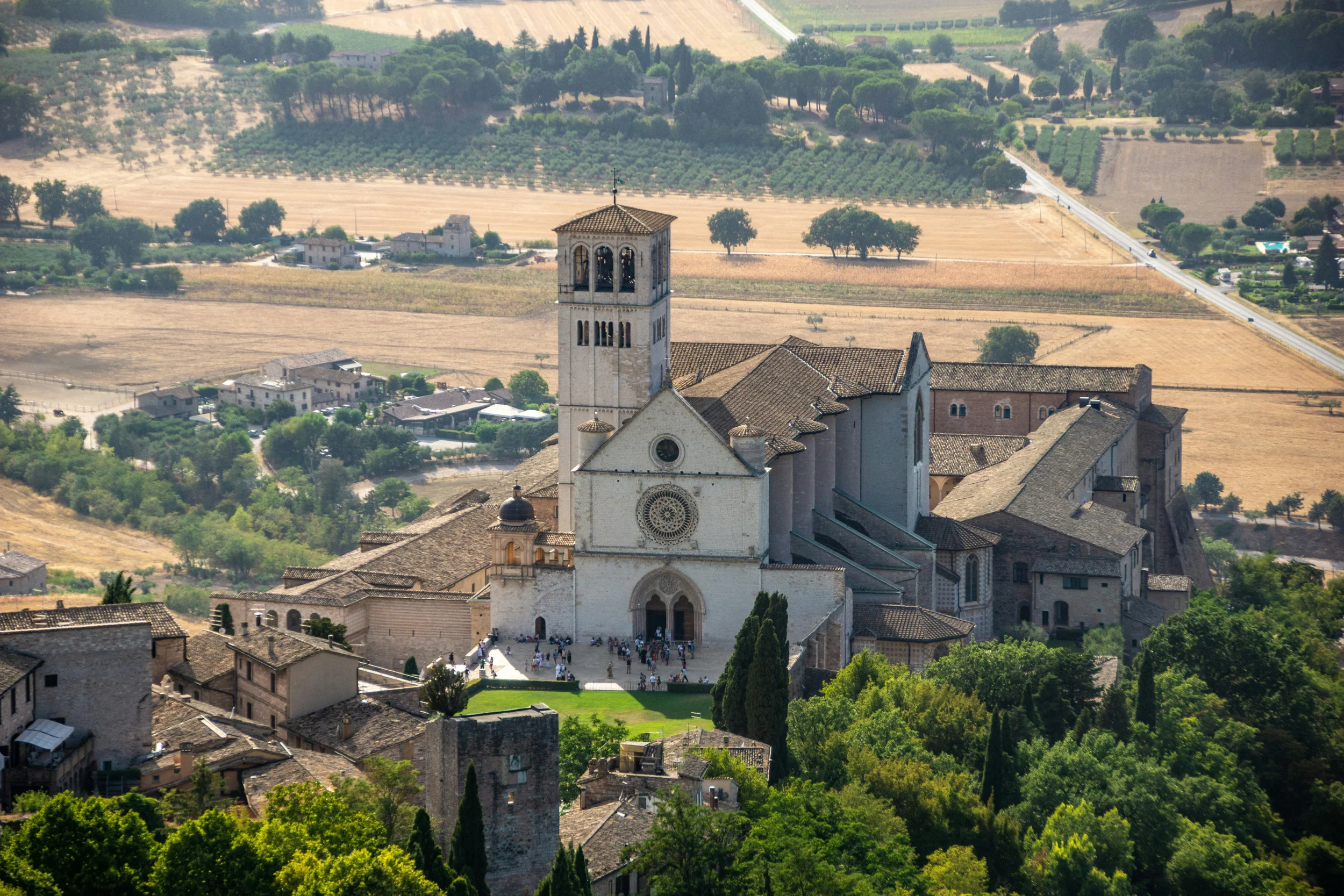
01 · THE BASILICA OF SAINT FRANCIS
Read the stories on the walls
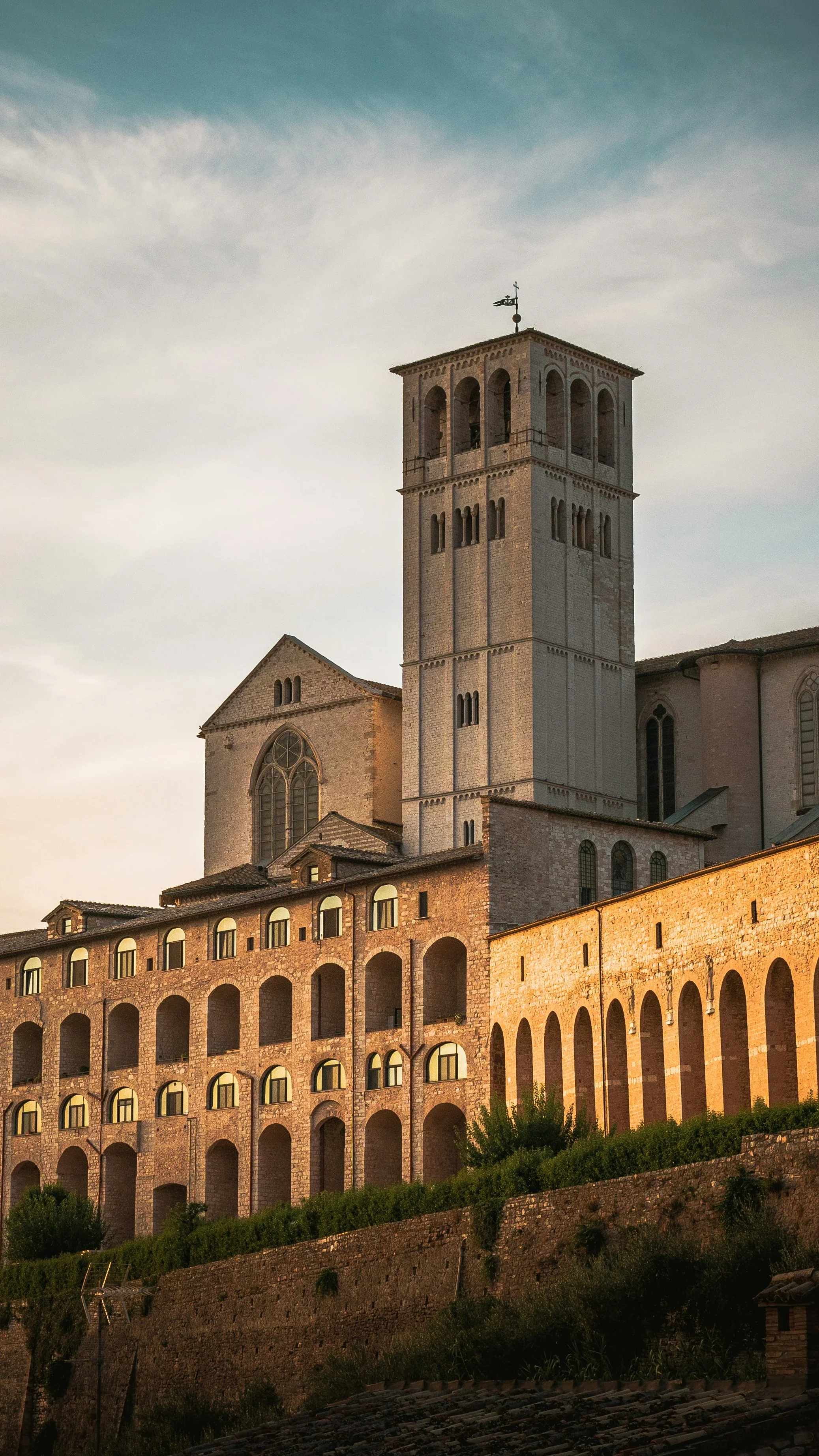
The Basilica of San Francesco brings together two churches, one above the other, and the tomb of Saint Francis below. Work began in 1228, soon after his death, and the complex became a major setting for the development of Italian painting.
Look at the difference between the lower church’s intimate, richly painted spaces and the height of the upper church. Frescoes associated with artists including Cimabue, Giotto, Simone Martini and Pietro Lorenzetti make this much more than a single famous picture. Choose a few scenes to study closely, or use an authorised guide to place them in context.
This remains a working sanctuary. Plan around worship, follow the basilica’s photography and conduct rules, and allow quiet time at the tomb if you wish to visit it. Check the basilica’s official information for current visiting arrangements and group requirements. We suggest making this the main focus of one part of your day.
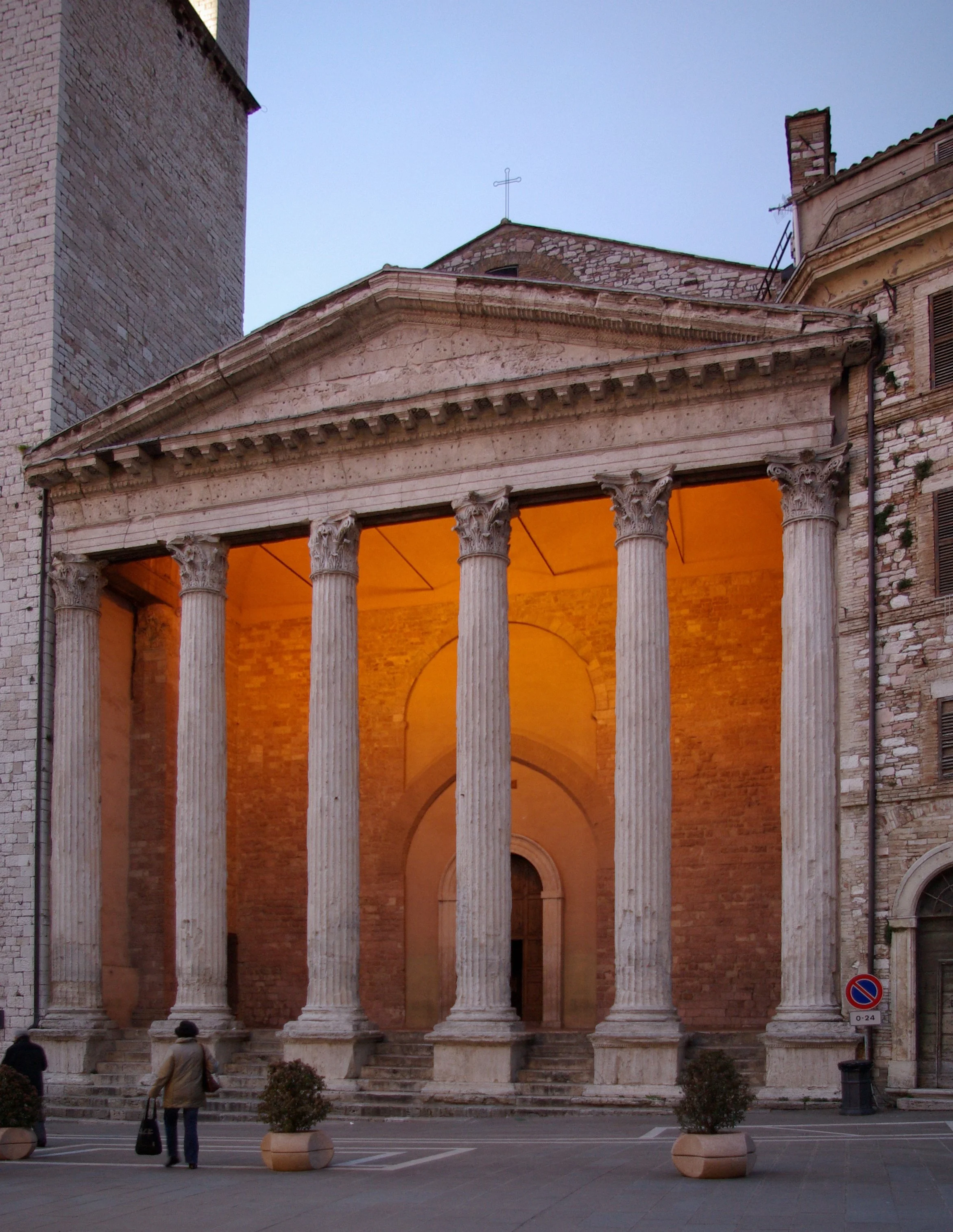
02 · PIAZZA DEL COMUNE & ROMAN ASSISI
Find the older town beneath the familiar one
Piazza del Comune is a natural pause between Assisi’s religious monuments. The columns of the so-called Temple of Minerva face a square shaped by later civic buildings, including the Torre del Popolo. The contrast makes centuries of change visible in a small space.
Behind the ancient temple front is Santa Maria sopra Minerva, a church with a much later interior. Step inside when it is open: the shift from classical façade to decorated church is part of the appeal. For more of ancient Assisi, consider the Roman Forum and archaeological collection beneath the square, checking its current visitor information first.
Continue through the streets towards San Rufino, rather than treating the piazza only as a route between basilicas. A coffee stop and a detour into a public side lane can give the day a gentler rhythm. Keep entrances clear and remember that the quieter streets are still people’s homes.
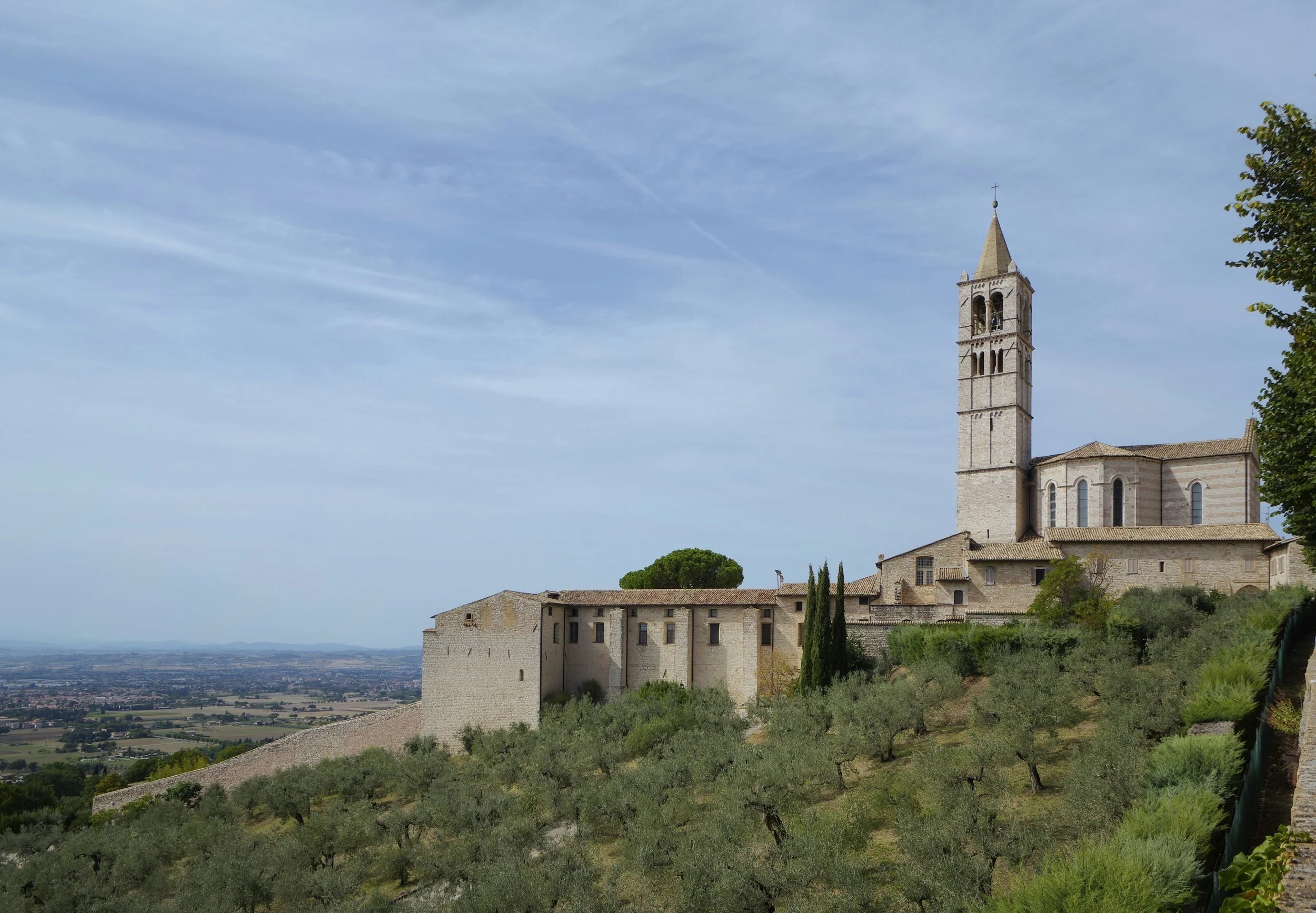
03 · SANTA CHIARA & THE UPPER TOWN
Make space for another story
The Basilica of Santa Chiara introduces the life of Clare of Assisi and the community she founded. Its façade, with bands of pale and pink stone, faces a terrace overlooking the valley. Inside, the original San Damiano crucifix is an important focus of devotion; Clare’s tomb is in the crypt.
Let this visit stand on its own, rather than treating it as a quick addition to San Francesco. Check the official Santa Chiara visitor information and allow for religious services and breaks in visiting hours.
If you want a longer walk, continue towards San Rufino and the climb to Rocca Maggiore. The fortress occupies the high ground above town and gives a different perspective on Assisi’s setting. We would choose it for a clear day when you have energy for more uphill walking, leaving enough time to return without rushing.
PLAN YOUR VISIT
See Assisi at a human pace
One day, with time for the basilicas
Begin with San Francesco, allowing the visit to follow current worship and opening arrangements. Walk towards Piazza del Comune for the Roman temple and lunch, then continue to Santa Chiara. Add San Rufino and a short wander through the upper streets if time allows.
For a first day, choose either the Roman Forum or the climb to Rocca Maggiore as an extra. This is a suggested walking day, not a schedule that requires every monument. San Damiano, Santa Maria degli Angeli and the Eremo delle Carceri deserve separate time and a transport plan.
Where to stay & how long to spend
We suggest two nights for an unhurried introduction, with a second day for a Franciscan site outside the centre or time around Monte Subasio. Staying within the walls brings early and late walks close to your door, but check steps, luggage access and the permitted unloading route.
Santa Maria degli Angeli, down in the valley, can simplify a rail arrival. It is a different base from the hilltop centre, so allow for the onward journey each day. A countryside stay works best when you have arranged transport for meals and sightseeing.
When to visit
Spring and autumn would be our first choices for walking. In summer, plan the steeper sections early and leave room for water and shaded breaks. Religious celebrations, public holidays and major events can bring large numbers of visitors; consult Visit Assisi before fixing your dates.
Getting here & getting around
Assisi railway station is in Santa Maria degli Angeli, below the historic centre. Plan a bus or taxi connection rather than assuming the train arrives beside the basilicas. Check Busitalia’s Assisi travel information and the current timetable for both directions.
By car, use the signed car parks outside the restricted historic streets. Choose your arrival point around the part of town you want to visit first. Slopes, steps and uneven paving make route choice important; the official Assisi accessibility guide gives venue-specific information. Confirm suitable entrances and transfers directly if you need step-free access.
Take a proper lunch break
Look for seasonal Umbrian cooking, local olive oil and a menu that suits your appetite between visits. A seated lunch gives you time to rest before the next climb. We suggest choosing a place away from your tightest sightseeing window, so a queue or slow service does not turn the afternoon into a rush.
Continue through Umbria
Spello makes a rewarding separate outing for Roman gateways, mosaics and Pinturicchio’s frescoes. For another substantial town day, Gubbio offers a different medieval setting; allow for the journey rather than squeezing it into an Assisi afternoon.
Build a longer route with our 7-day Umbria itinerary, Umbria travel map and regional travel guide.
Image credits
Temple of Minerva at dusk: Berthold Werner, public domain.
Santa Chiara from the southeast: Berthold Werner, CC BY-SA 4.0.
Via Wikimedia Commons. Images resized for display; adapted versions of the Santa Chiara photograph remain under CC BY-SA 4.0.

