Marmore Falls
Roman ingenuity, woodland paths and water in motion
Marmore Falls, or Cascata delle Marmore, brings a different rhythm to a journey through Umbria. Near Terni, the Velino River drops towards the Nera through a landscape shaped by both nature and engineering. Come for the scale of the water, then make time for the paths and changing viewpoints. A little planning matters here: the park’s opening hours and the waterfall’s full-flow periods are not the same.
The waterfall · Viewpoints & trails · Plan your visit
Explore the wider region in our Umbria travel guide.
01 / WATER & HISTORY
A waterfall shaped by people
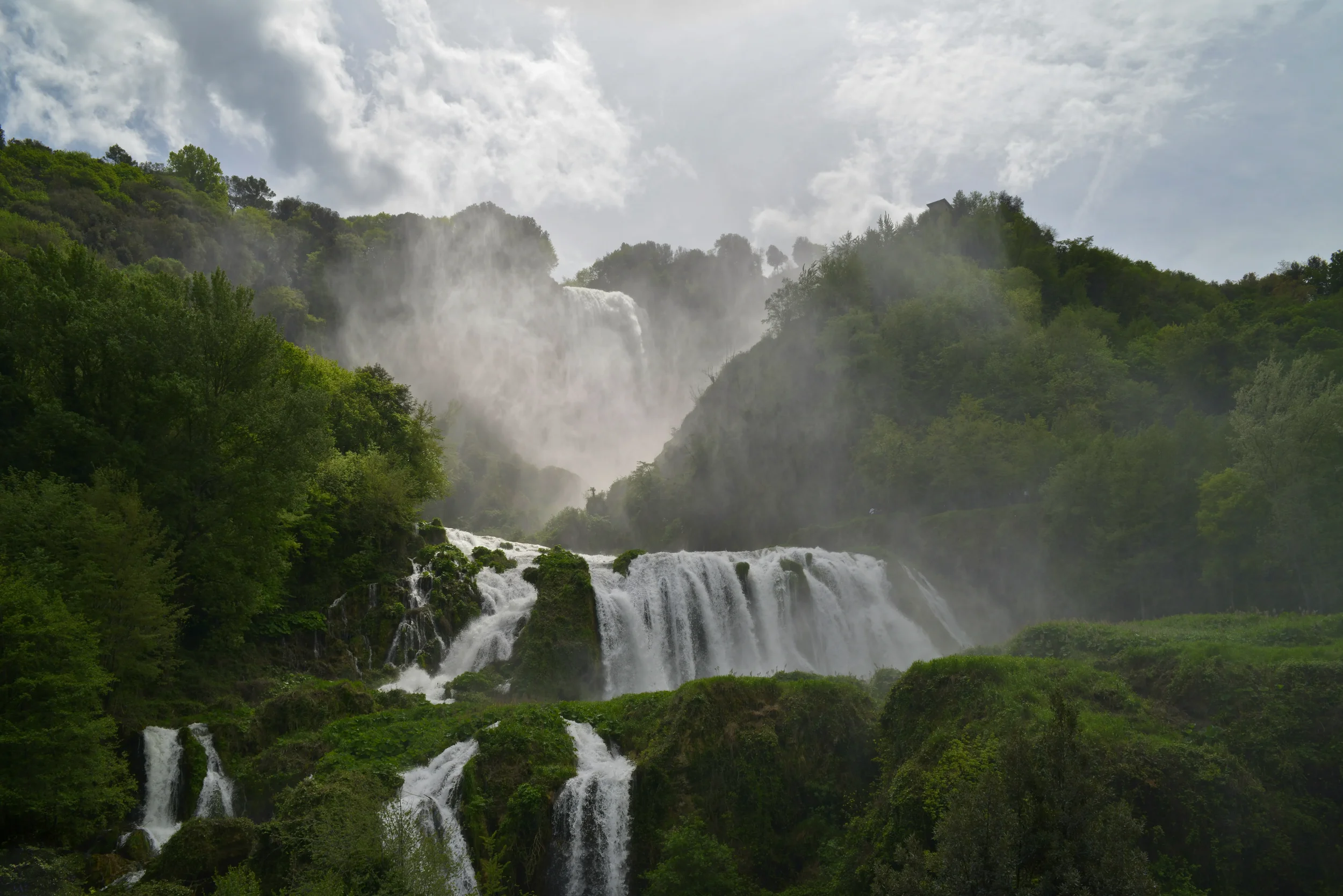
The falls descend 165 metres in three stages, but their story begins with a Roman engineering project. In the third century BC, a channel was cut to carry the Velino’s waters away from the marshy Rieti plain and towards the Nera below. Later interventions reshaped the system. What looks like a wild spectacle is also a long history of people managing water.
Today, hydroelectric use means the flow is regulated. During scheduled releases, the volume increases gradually after an audible warning. We suggest being at your chosen viewpoint before the release begins, so you can watch the change rather than arriving only for the fullest flow. Check the official water release calendar for your date; an open park does not guarantee a full waterfall.
02 / VIEWPOINTS & TRAILS
Choose your perspective
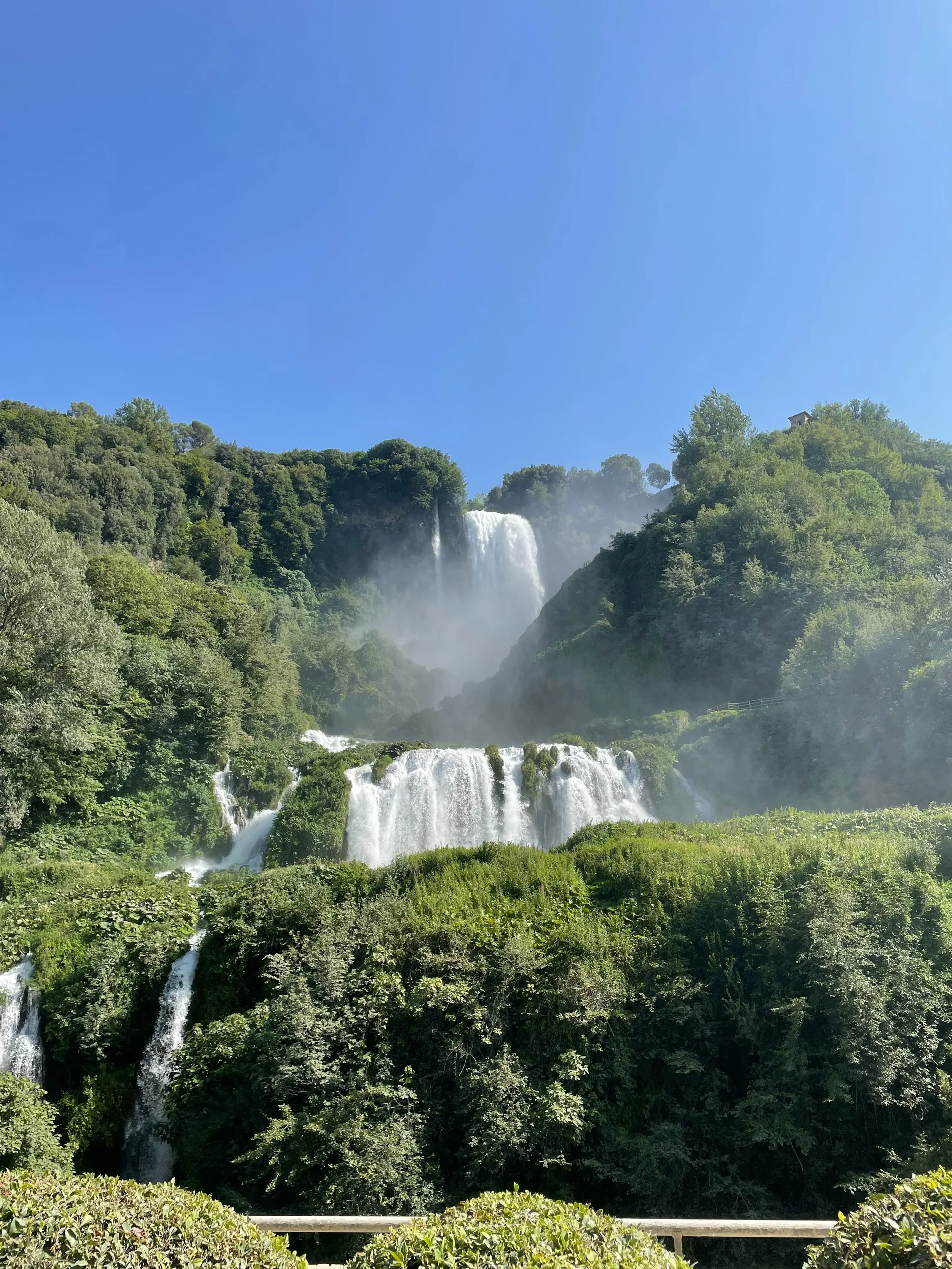
The lower entrance at Collestatte Piano gives the broad view of the falls; the upper entrance in Marmore brings you close to the first drop at the Specola. Choose where to start before setting your navigation. Visiting both levels takes more planning than moving between two neighbouring terraces.
Trail 1 links the two through woodland, with roughly 600 steps and a substantial climb. The shorter lower trails 2 and 3 bring you closer to the water, but still include steps and uneven ground. Trail 4 climbs the opposite slope for a different panorama when open. Check the current park map and suggested routes, then choose a walk that suits your energy and the conditions. You do not need to complete every trail to have a rewarding visit.
03 / A CLOSER LOOK
From the spray to the valley
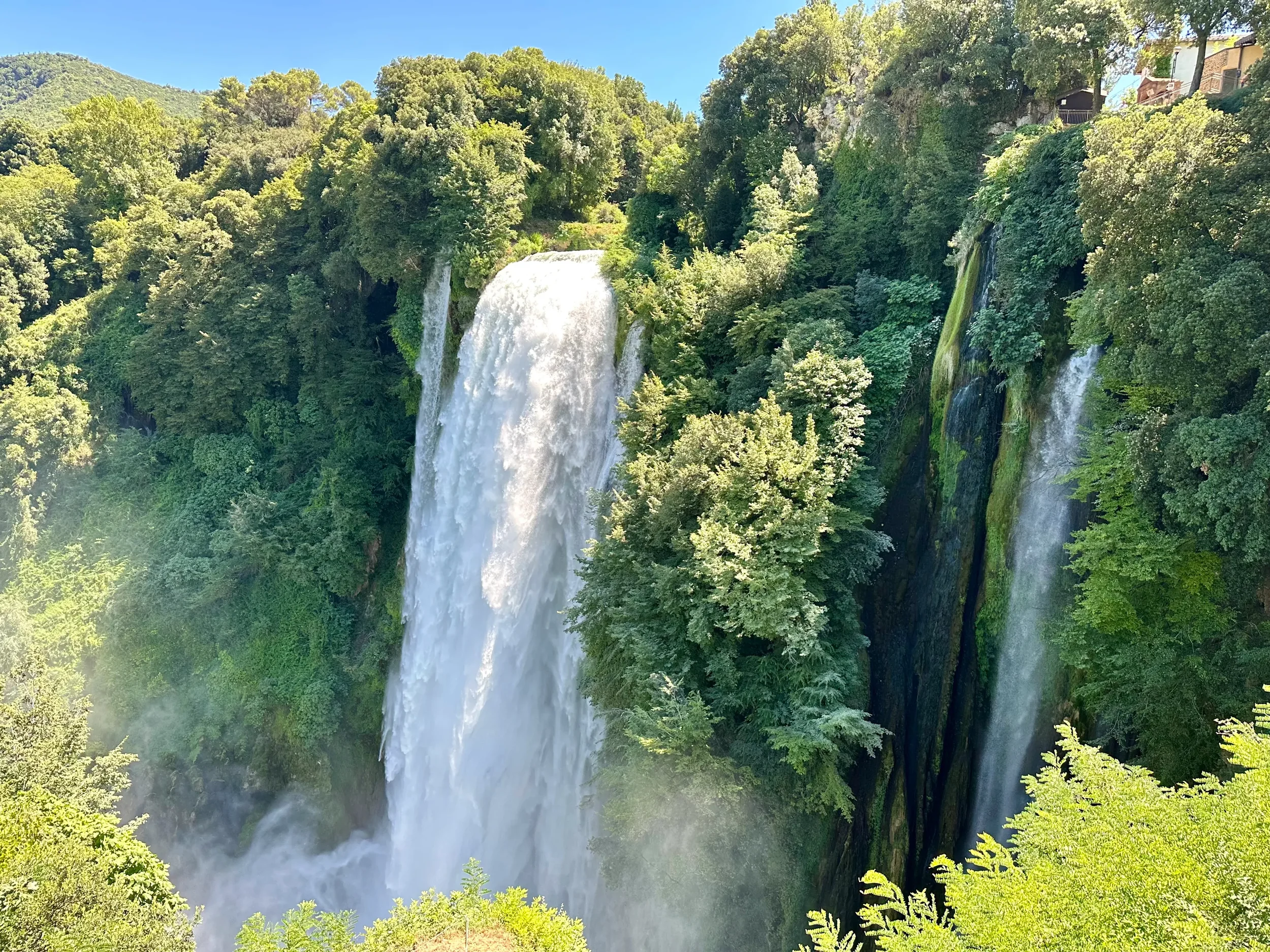
For a closer encounter with the first drop, the Balcone degli Innamorati is reached on a guided visit that needs its own booking. It is not an unrestricted detour from the main path. If that experience appeals, arrange it before building the rest of your day around the waterfall.
For a gentler change of pace at the upper level, Trail 5 looks towards the Valnerina rather than offering the main waterfall panorama. It provides another way to understand the setting beyond the spray. Allow a pause between viewpoints: the sound, light and distance from the water change the experience as much as the route itself. The park’s visitor information explains guided access, trail suitability and seasonal services.
STAY A LITTLE LONGER
Plan your visit to Marmore Falls
A well-paced half day
Start with the release calendar, then work backwards to allow time for arrival and entry. We suggest beginning at the lower viewpoint, watching the flow build and following one or two suitable lower paths. Add the upper viewpoint only if your chosen route, energy and return transport make it comfortable. A picnic or unhurried lunch is a better finish than racing to fit in every path.
How long to stay
Allow roughly half a day for a first visit, including a walk and time at the viewpoints. Make it a full day if you want both levels, a booked guided experience and a slower meal. Staying in Terni can simplify a journey by public transport; for accommodation in the surrounding countryside, check the actual route to your chosen entrance before booking.
When to visit
Spring and autumn are our preference for walking, with layers for changing conditions. In summer, plan the more strenuous sections around the heat and bring drinking water. In winter, check daylight, park access and water releases especially carefully: some days have no scheduled full-flow period. Weather and temporary trail restrictions can alter the visit in any season.
Getting there and getting around
Terni is a useful rail arrival point. The region lists a Marmore Link bus connection from Terni; check the official transport information for your travel date, arrival stop and return journey. By car, select the upper or lower entrance deliberately and follow parking signs on arrival. The shuttle between levels is seasonal, so do not build your return around it without checking.
Wear shoes with a firm grip and bring a light waterproof for the spray. The main trails are not all suitable for wheelchairs or pushchairs. If steps are a concern, ask the park about the accessible viewing areas and current lift availability before choosing a route.
Make time for lunch
The park has designated picnic areas. Bring a simple lunch if you want flexibility around the release schedule, or leave time for a sit-down meal afterwards. A break also helps you decide whether you really want another climb or would prefer to enjoy the wider landscape.
Continue through southern Umbria
Pair the falls with Narni’s old town and underground history on a separate day for a contrast of water, stone and art. Use our Umbria travel map to group stops sensibly, and adapt our seven-day Umbria itinerary to leave enough time at each place.
Image credits
Cascata delle Marmore, detail — Francescaolivieri, via Wikimedia Commons, CC BY-SA 4.0.
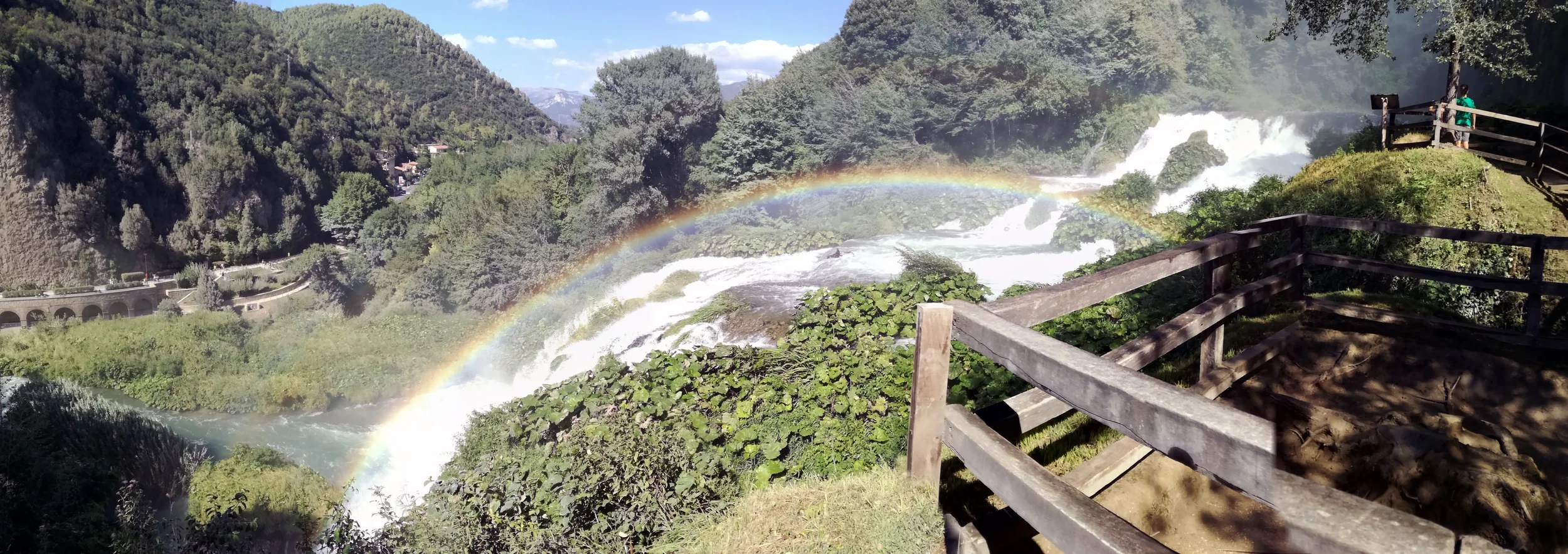
Marmore’s falls, double rainbow panorama — Horcrux92, via Wikimedia Commons, CC BY-SA 4.0.
Images converted to WebP and resized for display; any adaptations are shared under the same licence.

