Bevagna
Roman mosaics. Medieval workshops. A slower rhythm in the valley.
Bevagna sits in the Umbrian valley below the hills of Montefalco, with a compact historic centre shaped by Roman roads, medieval churches and working traditions. Come for Piazza Silvestri and the remarkable bath mosaic, then make time for the Gaite craft workshops and a meal that lets the day unfold slowly.
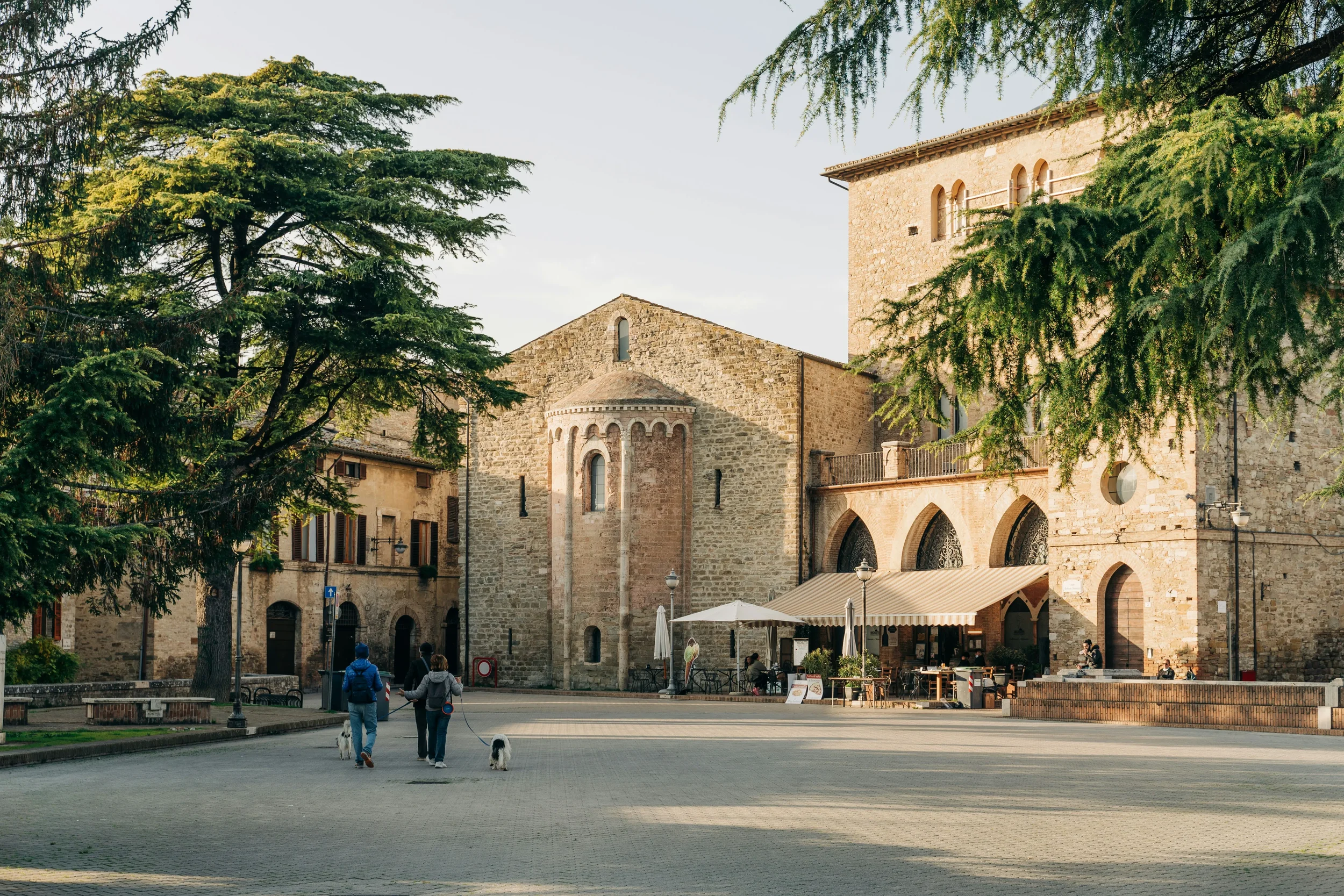
01 · PIAZZA SILVESTRI
Begin in the medieval heart
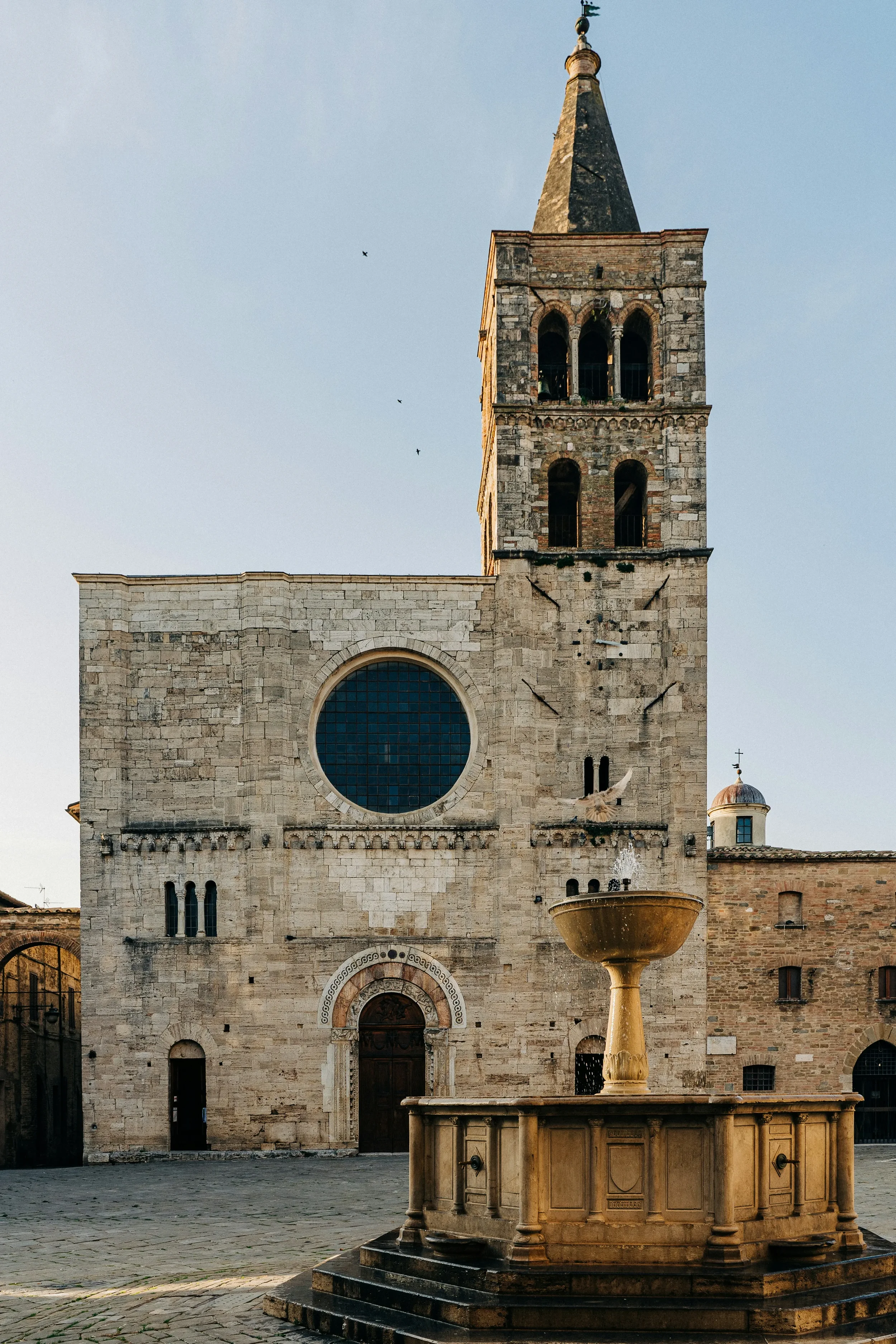
Piazza Silvestri brings together the buildings that define medieval Bevagna: the Romanesque churches of San Silvestro and San Michele Arcangelo, and the Palazzo dei Consoli. Their different façades and the irregular shape of the square reward a pause before you start exploring.
San Silvestro’s entrance inscription dates its foundation to 1195. Look closely at its portal and windows, then step inside when open to see the simple nave and raised presbytery above the crypt. Across the square, San Michele offers another encounter with the town’s Romanesque architecture.
The portico of the Palazzo dei Consoli recalls the square’s civic and commercial life. We suggest starting with a slow circuit of the piazza, choosing an open church to visit and returning later for a coffee. Check religious services before entering, and avoid treating a quiet interior as a backdrop for photographs.
02 · THE ROMAN BATHS
Find an underwater world in stone
Before medieval Bevagna there was Mevania, an important Roman settlement connected with the Via Flaminia. Its history survives in scattered remains, but the mosaic of the Roman baths offers the clearest place to begin.
The black-and-white floor, dated to the second century AD, decorated the cold-bath room, or frigidarium. Dolphins, octopuses, lobsters and mythological sea creatures animate a surface that once belonged to everyday public life. Look at the relationship between the individual figures and the wider pattern, rather than searching for a single centrepiece.
Other traces are woven into the later town, including the curved arrangement of buildings following the ancient theatre. Ask the tourist office or museum which archaeological sites can currently be visited. Our suggestion is to make the bath mosaic the main Roman stop, then use a walk through the centre to understand how later streets grew around older structures.
03 · THE GAITE & MEDIEVAL CRAFTS
Watch how things were made
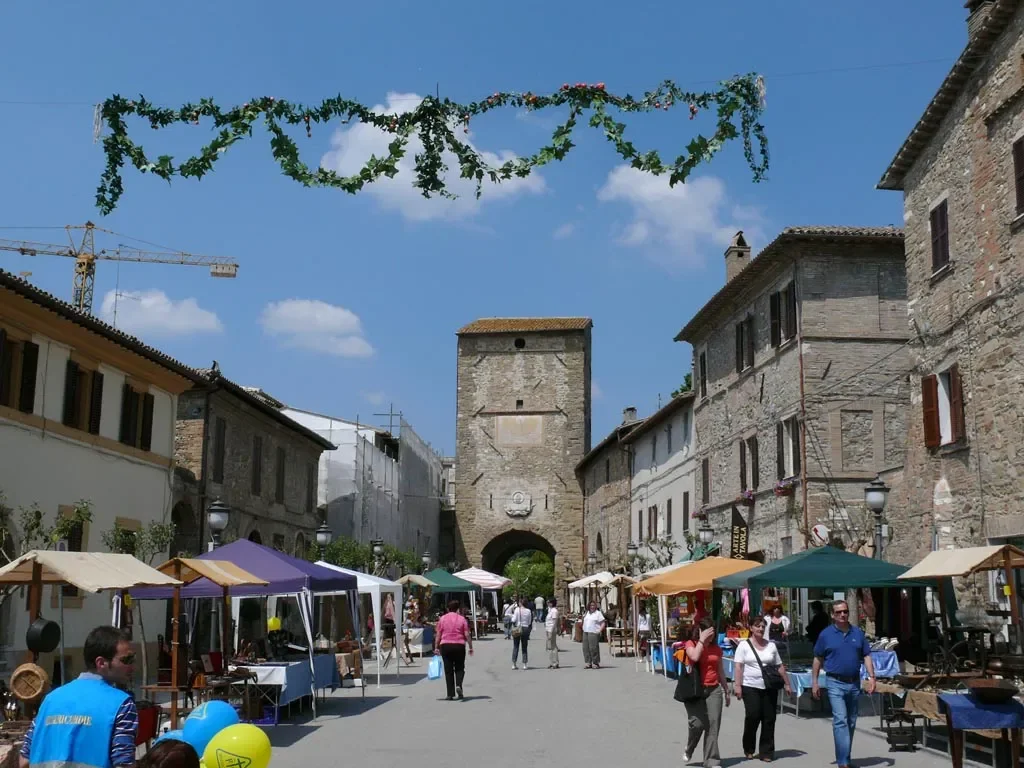
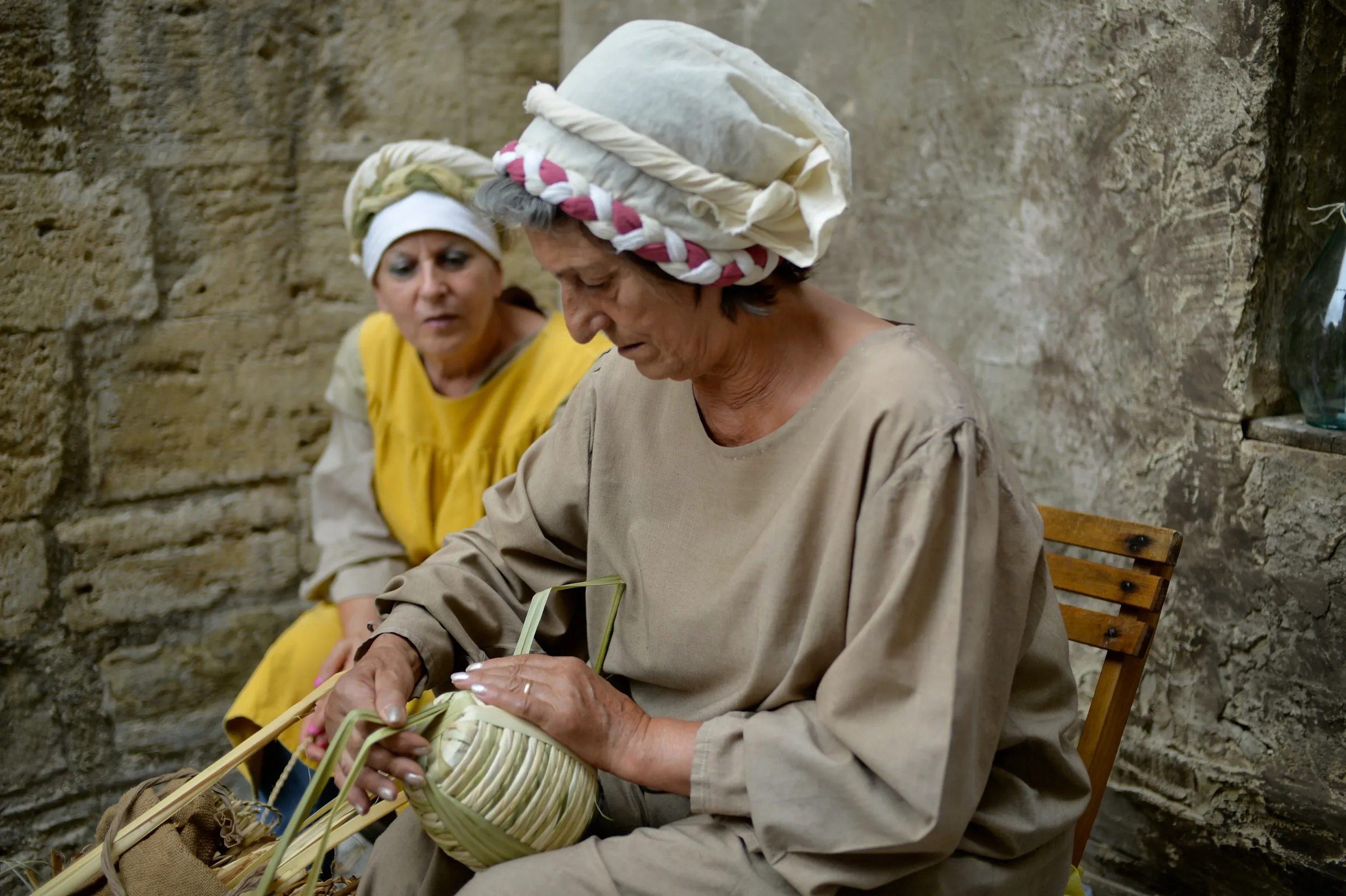
Bevagna’s Mercato delle Gaite recreates aspects of medieval life through research, craft and the town’s four historic districts. The annual festival brings a different atmosphere to the streets, but you do not have to visit during the festival to explore the craft tradition.
The Circuito Culturale dei Mestieri Medievali includes paper-making, beeswax candles, painting and silk production. These are demonstrations of processes and tools, giving a more tangible sense of the past than a display of finished objects alone.
Workshops are available throughout the year by arrangement, with booking and group conditions. Check the official craft circuit before fixing your itinerary, especially for an individual visit. For the festival itself, use the organiser’s current programme; ordinary workshop visits and festival events are different experiences. We would build the day around a confirmed workshop slot if this is your main reason for coming.
PLAN YOUR VISIT
Keep a little space between the sights
One day, from the piazza to the workshops
Start in Piazza Silvestri, visit an open church and wander along the central streets. Fit the Roman bath mosaic around its current access arrangements, then pause for lunch. Leave the afternoon for a booked craft visit and an easy walk near the town walls.
We suggest this as a flexible day rather than a timetable. If the workshops are not operating on your date, choose a museum visit or spend longer on the town walk. Avoid promising yourself several small interiors without checking how their opening hours fit together.
Where to stay & how long to spend
A half day gives you a first look at the centre; a full day suits the churches, mosaic, a workshop and lunch. We suggest one or two nights for quieter evening streets or a base for the surrounding valley.
Stay inside or close to the walls if walking to dinner matters. An agriturismo outside town offers a countryside setting, but check how you will reach restaurants and return after dark. Confirm the exact address, parking and luggage route before booking, particularly during the Gaite festival.
When to visit
Spring and autumn would be our first choices for a relaxed town visit. Summer afternoons can be hot, so put longer walks earlier and leave time indoors. The Mercato delle Gaite is usually held in June; check the official festival programme for the current dates and book ahead if you want to stay during it. The festival brings crowds and special access arrangements as well as atmosphere.
Getting here & getting around
For a rail-based journey, Foligno is a practical arrival point, followed by a checked bus connection or pre-arranged taxi to Bevagna. There is no mainline railway station in the historic centre. Confirm return options before planning an evening meal, especially on Sundays and holidays.
By car, follow signs for parking outside the old streets and check local access restrictions. Bevagna’s valley setting involves less climbing than many Umbrian hill towns, but cobbles, thresholds and steps inside monuments still matter. Ask individual venues about suitable access rather than assuming the entire visit is step-free. The municipal visitor information is a useful starting point for arrival planning.
Olive oil, local cooking & the surrounding vineyards
Make time for regional olive oil and seasonal Umbrian dishes, asking what is prepared locally that day. Bevagna sits close to the wine country around Montefalco, so a separately booked winery visit can extend a longer stay. Arrange transport if you plan to taste wine, and keep the town lunch leisurely rather than fitting it between tight appointments.
Continue through the valley
Montefalco is a natural next stop for views, art and the surrounding vineyards. Spello offers Roman gateways and Renaissance frescoes on another day. For a different setting, consider Rasiglia as a separately planned outing among water channels and former mills.
Use our 7-day Umbria itinerary, Umbria travel map and regional guide to decide how these stops fit your pace.
Image credits
Piazza Garibaldi and Porta Cannara: Zyance, CC BY-SA 2.5.
Traditional craft demonstration: Wikibardamu, CC BY-SA 4.0.
Via Wikimedia Commons. Images converted to WebP and resized for display. Adapted versions remain under their respective licences.

