Montefalco
A hilltop outlook. Renaissance colour. The story of Sagrantino.
Montefalco brings together a compact old town, remarkable frescoes and the vineyards of central Umbria. Often called the region’s balcony, it is a place to look out across the landscape before discovering what lies inside its walls. Come for art or wine, then leave time for both the town and the table.
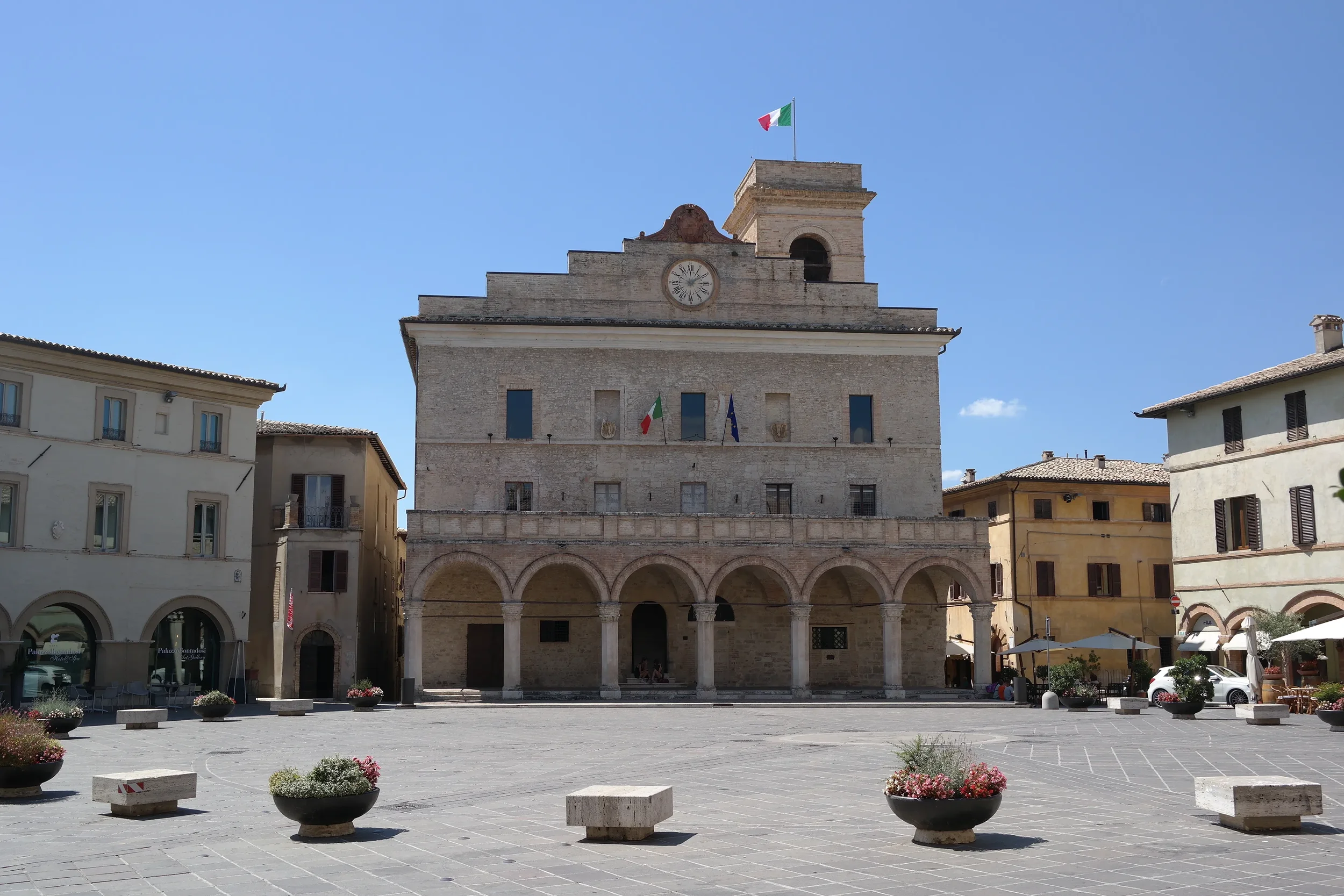
01 · PIAZZA DEL COMUNE & THE OLD TOWN
Find your bearings above the valley
Montefalco’s streets draw you towards Piazza del Comune, the central square framed by the town hall and historic buildings. Start here with a coffee and a look at the streets leading away from the square, rather than immediately setting off for a winery.
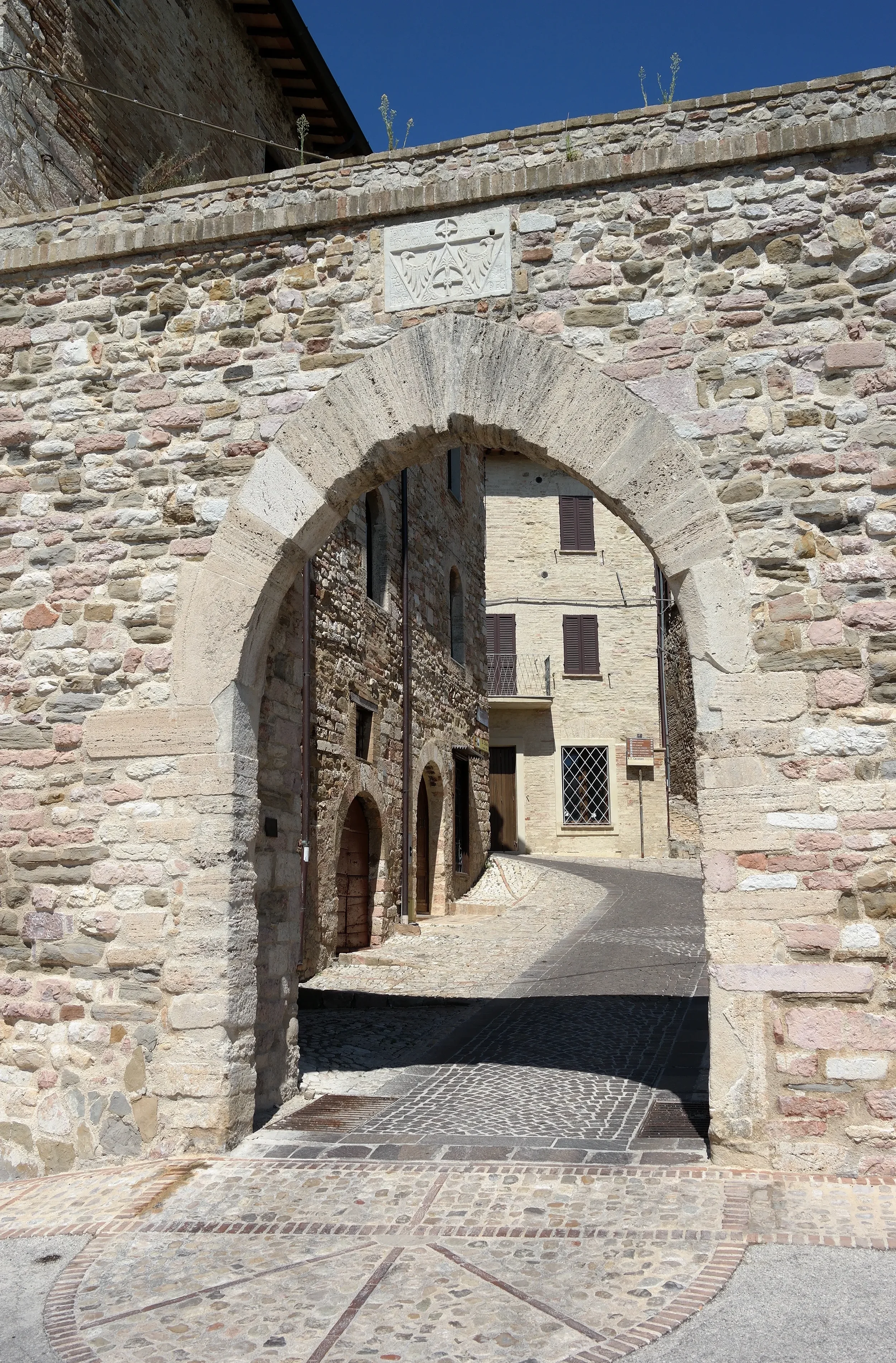
Walk along Corso Mameli past Sant’Agostino, then explore the lanes towards the walls and gates. The compact centre makes it easy to alternate enclosed streets with wider views of the surrounding countryside.
The name “Balcony of Umbria” makes sense when the landscape opens out below you. We suggest returning to a viewpoint later in the day if the light changes, and leaving time simply to sit in the square. Montefalco’s appeal lies as much in these pauses as in its more famous stops.
02 · RENAISSANCE ART IN MONTEFALCO
Read the stories on the walls
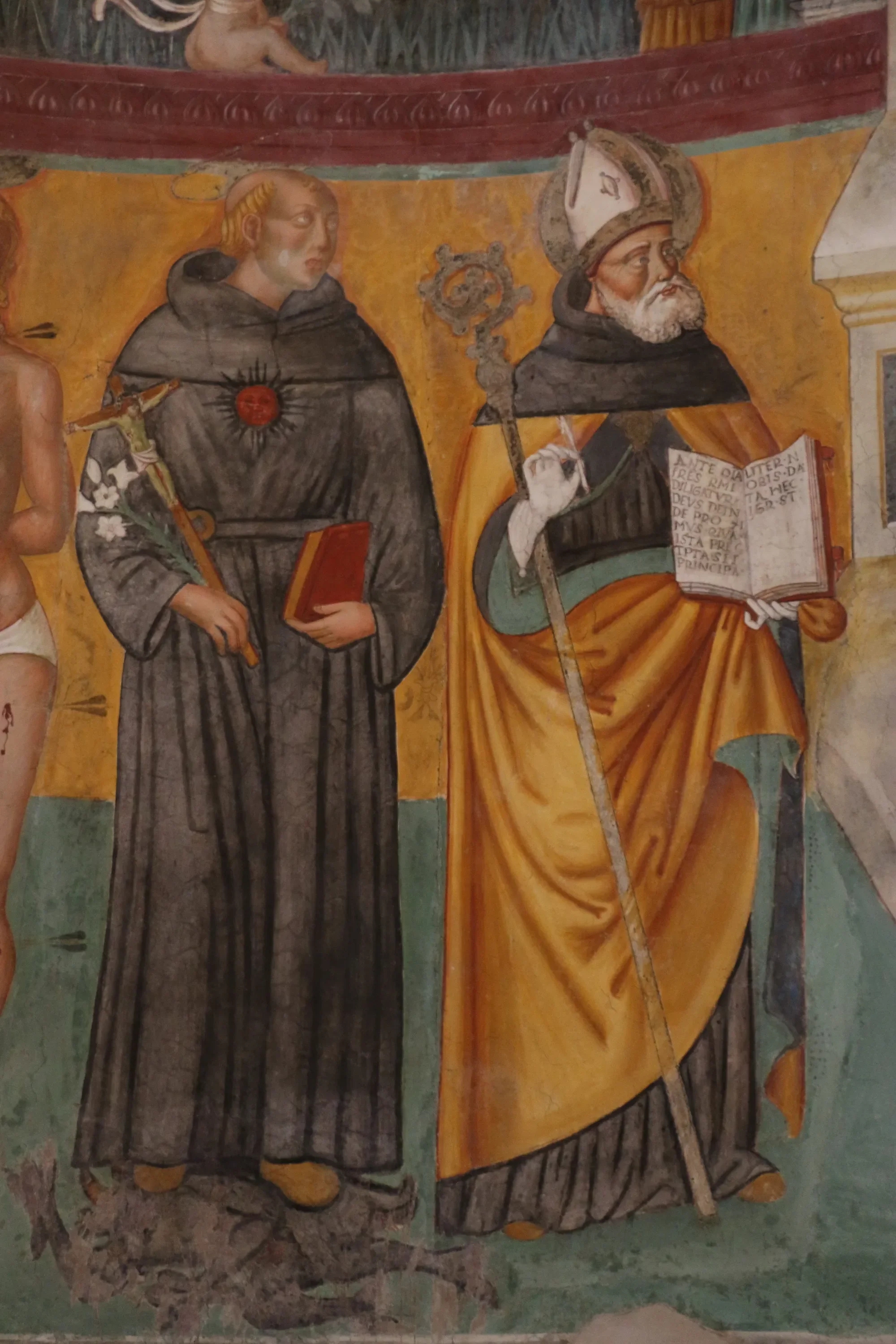
The Complesso Museale di San Francesco is Montefalco’s essential art visit. In the former church, Benozzo Gozzoli’s fresco cycle of the Life of Saint Francis, painted in 1452, fills the apse with richly detailed scenes.
Look for the buildings, landscapes and everyday details around the central story. Then turn towards the entrance wall for Perugino’s work of 1503, which includes a Nativity and Annunciation. The change of artist offers a different way to read the same Renaissance space.
The wider complex includes the civic art gallery and the former Franciscan cellars. They connect the paintings with the town’s longer history, including its relationship with wine. Give this visit a proper place in the day rather than fitting it between tastings.
Check the museum’s current visitor information →
The photograph shows frescoes in Santa Illuminata, another part of Montefalco’s painted heritage. Check local access before planning an interior visit there; San Francesco remains the main museum stop described above.
03 · SAGRANTINO & THE WINE COUNTRY
Understand the wine behind the name
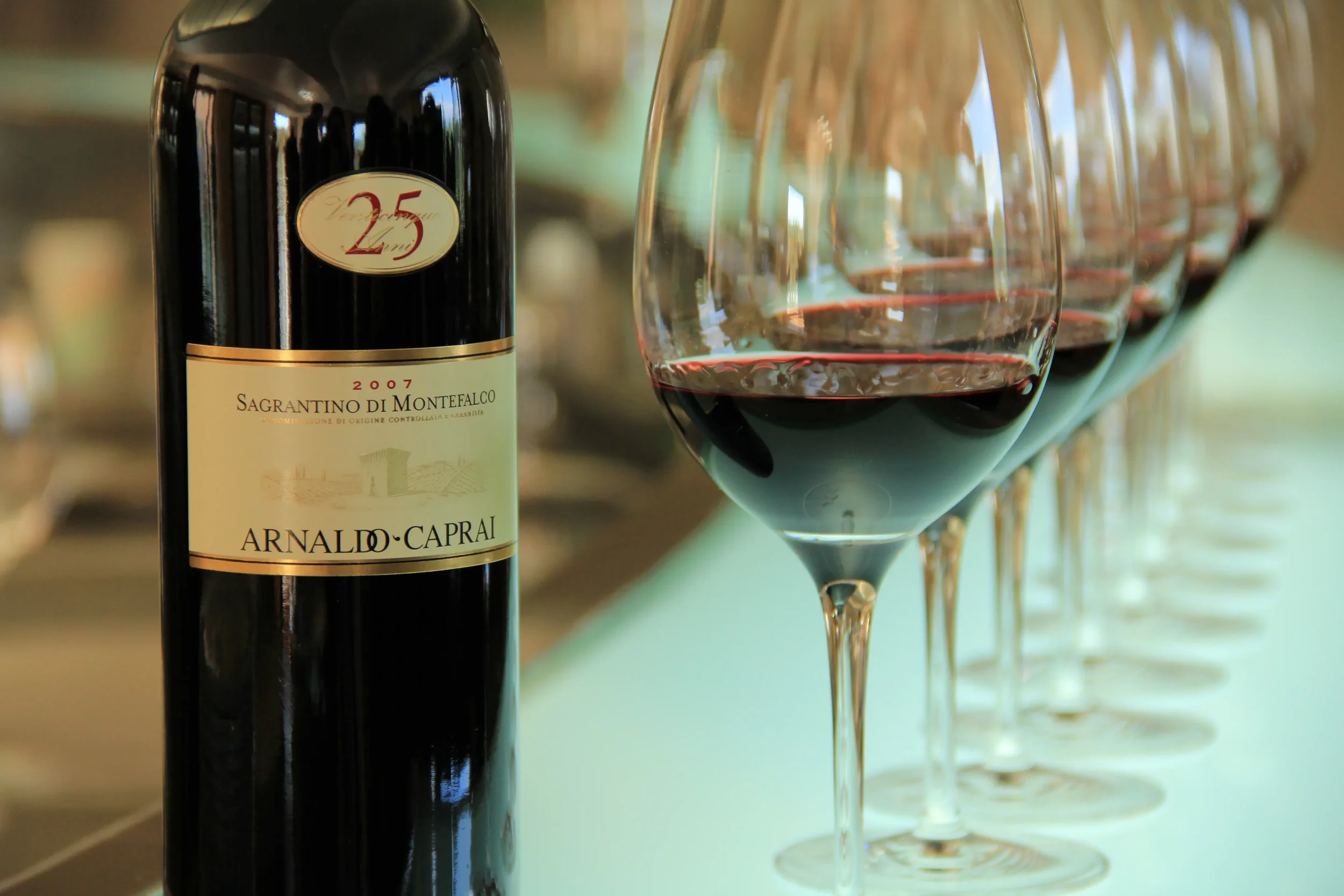
Montefalco Sagrantino DOCG is made entirely from Sagrantino grapes. It comes in both dry and passito styles, the latter made using dried grapes. Montefalco Rosso DOC is different: a Sangiovese-led blend that includes Sagrantino, rather than another name for the same wine.
A guided tasting can make these distinctions much clearer than a quick glass on the square. Choose one producer and book ahead, asking which wines and parts of the estate are included. The Montefalco wine consortium is a useful starting point for understanding the denomination.
Many wine experiences take you into the countryside. Confirm the location and arrange transport before choosing your time slot. Leave room for questions about the vineyards and the harvest; a single thoughtful visit can give more context than rushing between several cellars.
PLAN YOUR VISIT
Balance the town, the art and the countryside
One day, with time for one good tasting
Begin in Piazza del Comune, explore the old streets and make San Francesco your main morning visit. Pause for lunch before choosing an afternoon focus: one pre-booked winery, more time in town or a countryside outing.
If wine is not your focus, the museum and village walk still make a rewarding visit. We suggest keeping a second town for another day when you want to explore its interiors as well as its streets.
Where to stay & how long to spend
Allow a full day for the centre, the museum and an afternoon activity. Two nights give you more flexibility for a winery visit and another town without filling every hour.
Stay inside the walls if walking to dinner matters most. A rural stay offers more of the vineyard landscape, but check transport to restaurants and tasting appointments. Ask about parking, luggage access and steps before choosing a room in the historic centre.
When to visit
We would choose spring for a trip built around town walks, or autumn for time in the wine country. Harvest periods are working periods for wineries, so arrange visits rather than assuming you can drop in.
In summer, explore the exposed viewpoints in the cooler hours and use the museum as an indoor focus. For winter visits, check the opening days of the museum, restaurants and wineries individually before finalising your route.
Getting here & getting around
For a rail-based journey, Foligno is a useful arrival point, with onward bus connections to Montefalco. Check the official Montefalco–Bevagna Link information for current services and the return journey.
A car gives flexibility for countryside stays and wineries, while the old town itself is best explored on foot. Follow signed parking and restricted-access rules rather than driving straight towards the central square.
Allow for sloping streets and uneven paving. If a tasting is part of your day, choose your transport first and confirm how you will get back to your accommodation.
Leave room for the table
Try local olive oil alongside a meal of seasonal Umbrian produce. Cured meats, cheeses and a more substantial main course can offer different ways to explore the wines; ask the restaurant or producer for a pairing that suits what you enjoy.
You do not need a tasting appointment to appreciate the town. A long lunch followed by a museum visit and an evening walk is an equally good reason to stay.
Explore more of this part of Umbria
Bevagna makes a natural companion for another day, with a different setting in the valley. Continue to Spello for Roman gateways and another chapter of Umbrian painting.
Use our 7-day Umbria itinerary to shape a wider route, and the Umbria travel map to see the places together. The Umbria travel guide is the starting point for more regional discoveries.
Image credits
Palazzo Comunale and Porta Federico II — Luca Aless, via Wikimedia Commons, CC BY-SA 4.0.
Santa Illuminata fresco — Mattis, via Wikimedia Commons, CC BY-SA 4.0.
Sagrantino di Montefalco wine — Michela Simoncini, via Wikimedia Commons, CC BY 2.0.
Images converted to WebP and resized for display. Adaptations of the CC BY-SA images are shared under the same licence.


