Spello
Roman gateways. Painted stories. Flowers along the lanes.
Spello climbs the lower slopes of Monte Subasio, where pale pink stone, Roman gateways and flower-filled corners make an inviting first impression. Look inside its churches and museums, too: Pinturicchio’s frescoes and the floors of an ancient Roman villa reward a slower visit to this Umbrian hill town.
01 · ROMAN GATES & THE OLD TOWN
Follow the lanes beyond Porta Consolare
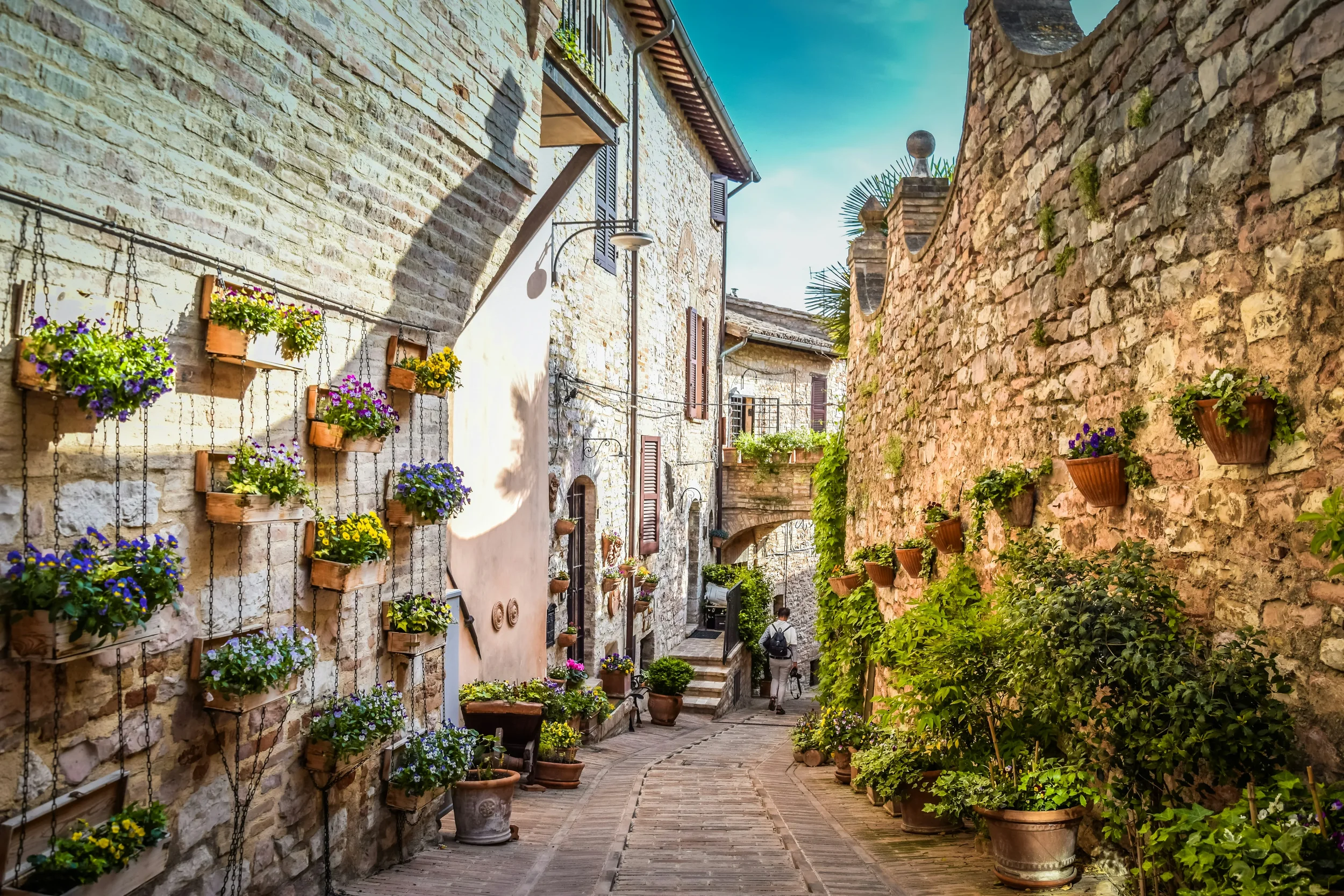
Begin at Porta Consolare, one of the entrances to ancient Hispellum. Spello’s Roman past remains visible in its gates and surviving walls, even as the streets inside lead through a much later town.
Walk uphill along Via Consolare and Corso Cavour towards Piazza della Repubblica, then continue into the lanes above. Small changes in direction bring doorways, stone steps and glimpses across the valley into view. The flowers are part of a lived-in town, so leave entrances clear and keep your wandering to public streets.
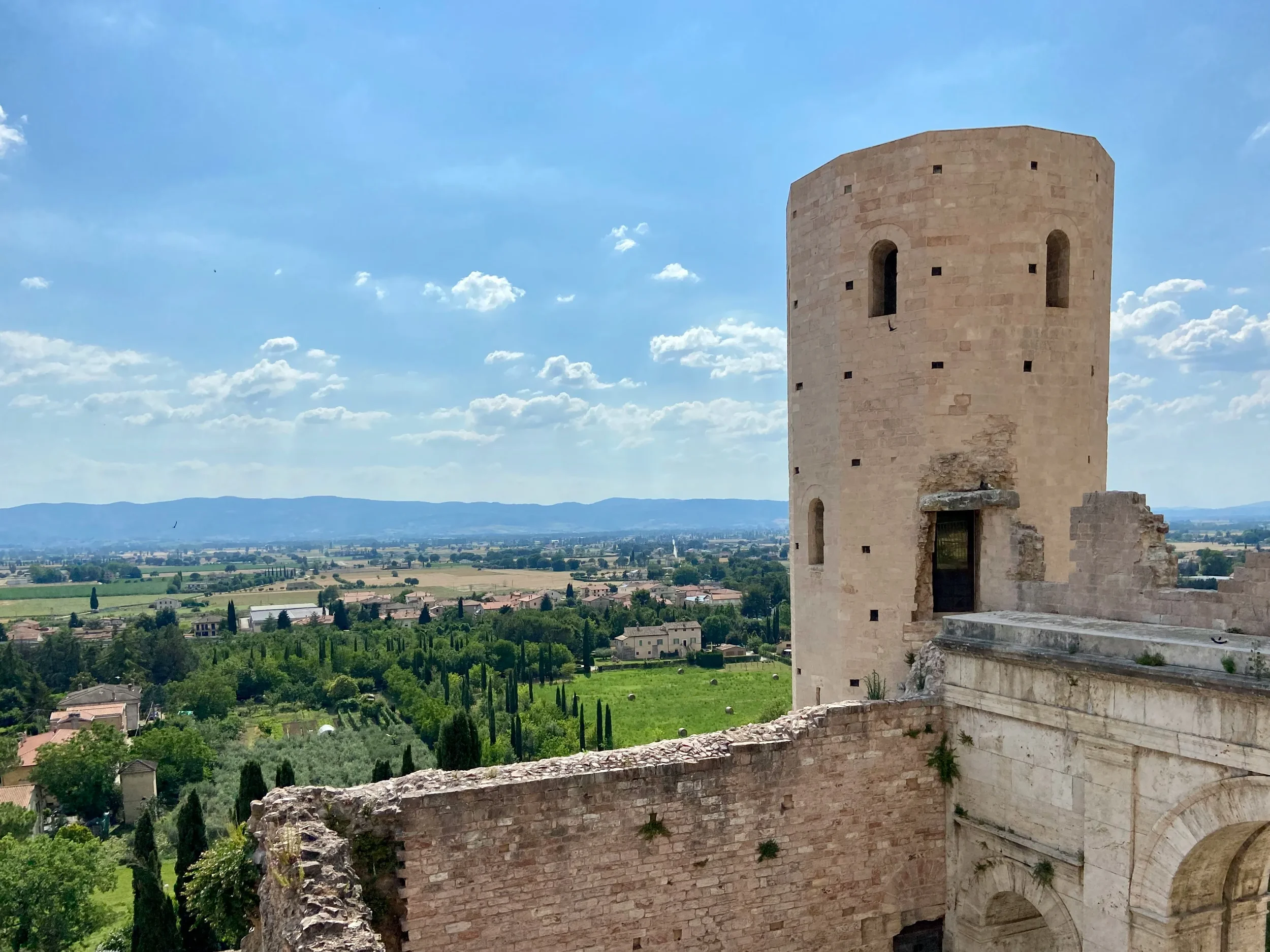
Make room for Porta Venere and the flanking Torri di Properzio on the western side of the centre. Seeing more than one gateway helps you understand the shape of the old settlement. We suggest allowing the walk to unfold around one or two planned interiors, rather than collecting every viewpoint in a hurry.
02 · SANTA MARIA MAGGIORE & THE BAGLIONI CHAPEL
Give Pinturicchio your full attention
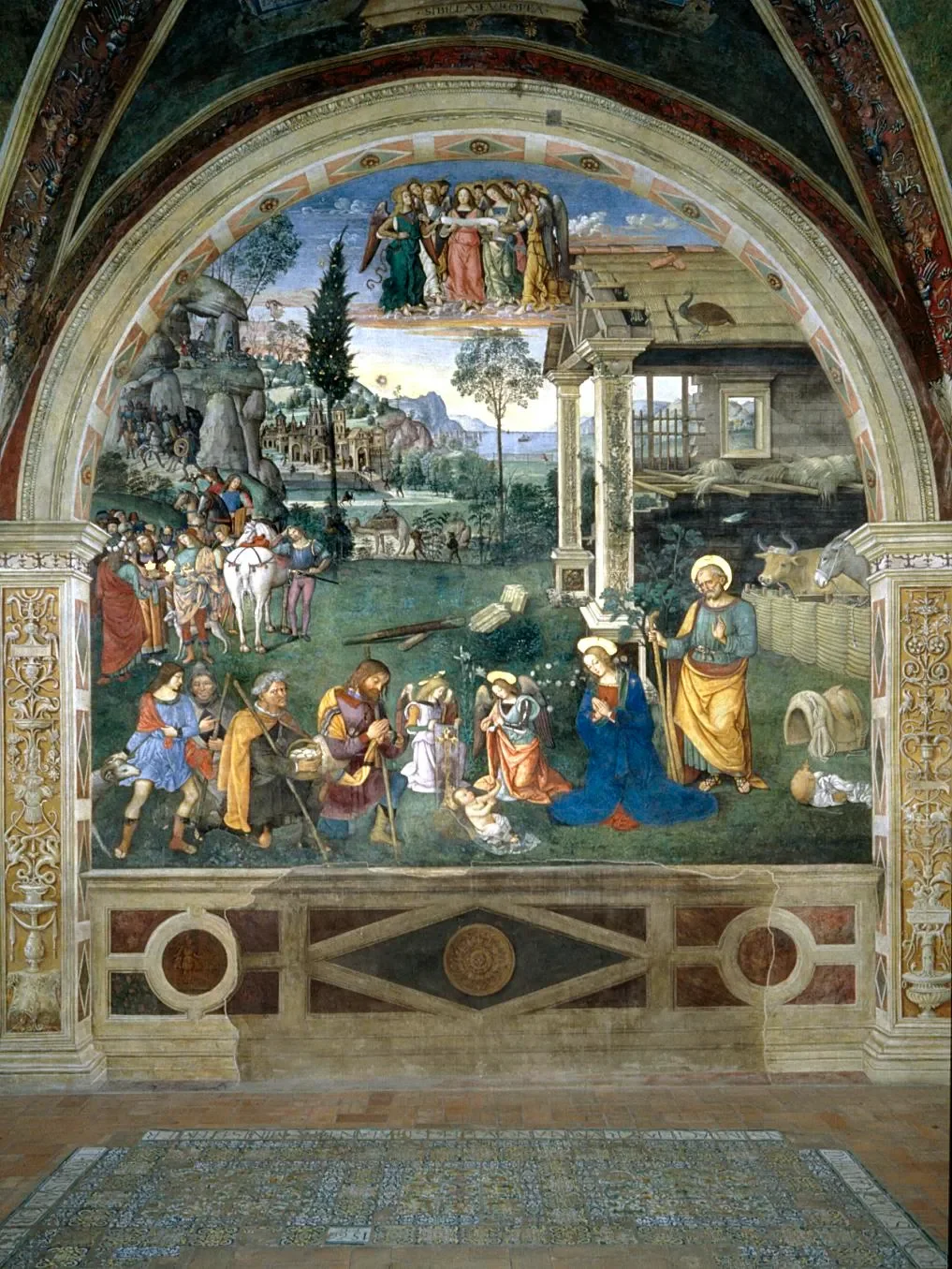
Inside Santa Maria Maggiore, the Cappella Baglioni contains a remarkably concentrated Renaissance world. Painted by Pinturicchio in 1500–1501 for Troilo Baglioni, its scenes include the Annunciation, the Adoration of the Shepherds and Christ among the Doctors.
Take time to look beyond the main figures. Architecture, distant landscapes and small narrative details give the paintings their depth; the vault adds the Sibyls above you. The artist also included his own portrait in the Annunciation scene.
Plan this visit around the parish’s current booking and visiting information. Access follows the church’s religious use, with Sunday and religious-holiday mornings reserved from visits. Book ahead when required, especially on busy national holidays. Photography and filming are not permitted inside the church and chapel, so this is a place to put the camera away and look slowly.
03 · THE VILLA OF MOSAICS
Step into the world of Roman Hispellum
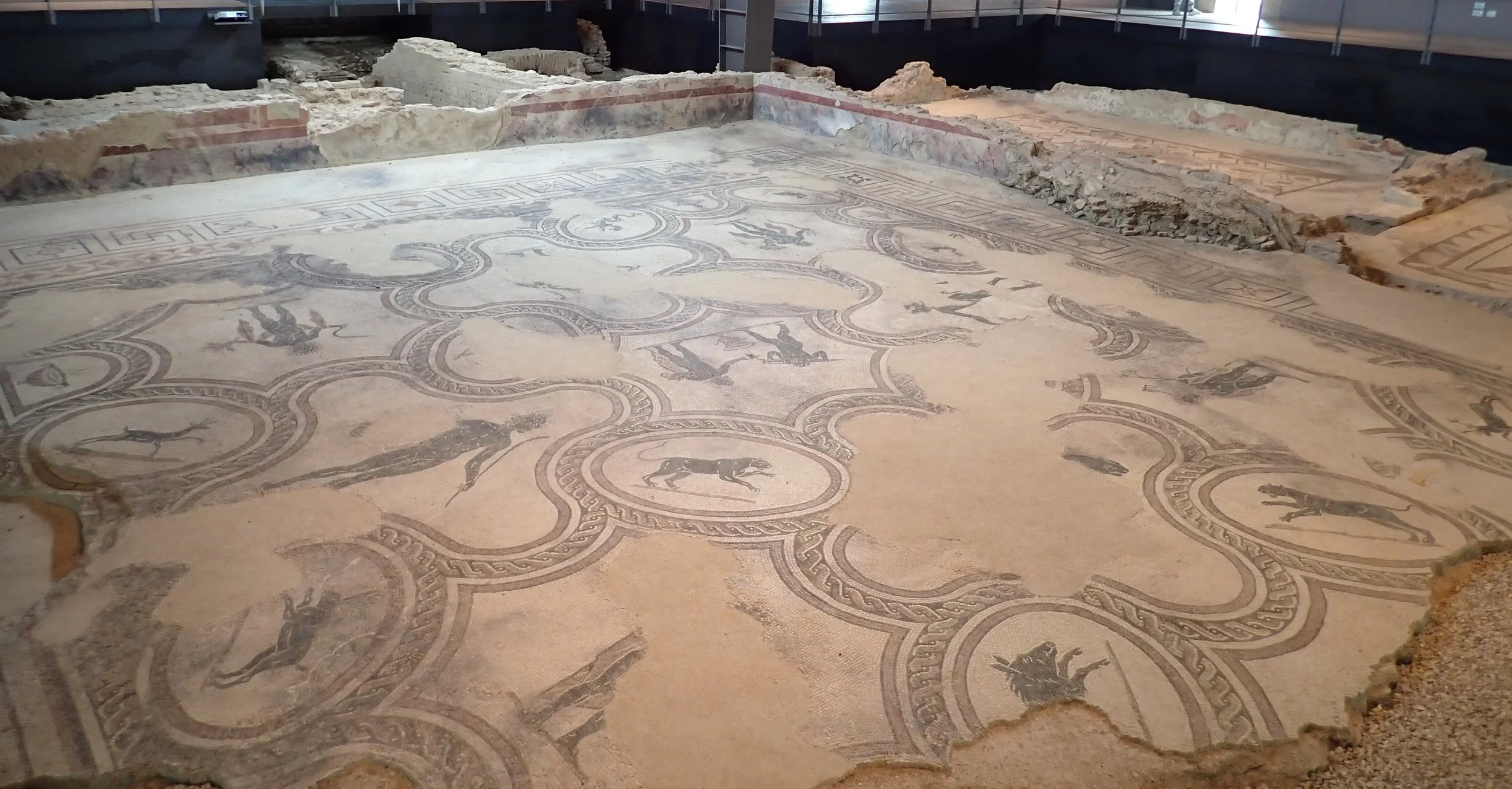
Below the old town, in the Sant’Anna area, the Villa dei Mosaici reveals another layer of Spello. Discovered in 2005, the Roman residence preserves almost 500 square metres of recovered mosaic floors.
Geometric borders sit alongside animals, mythical creatures and human figures. Look at how the designs change between rooms: the visit is an opportunity to imagine the organisation of a wealthy household, as well as to admire individual details.
Its position makes the museum a useful first or last stop before the climb through the gates. We would pair it with the Baglioni Chapel for two very different encounters with Spello’s art, leaving lunch and an unhurried walk between them.
Check the Villa of Mosaics visitor information for current opening days, admission and any combined museum ticket that suits your plans.
PLAN YOUR VISIT
Make room for the details
One day, from Roman mosaics to the upper lanes
Start with the Villa of Mosaics if its opening hours fit your arrival, then enter through Porta Consolare. Build the walk around your Baglioni Chapel visit, pausing for lunch before continuing to Piazza della Repubblica and the streets above.
Return by a route that includes Porta Venere, allowing time for views and a final coffee. If you arrive later, choose the chapel or the villa as your main interior and leave the other for a longer stay.
Where to stay & how long to spend
A full day lets you combine the town walk with its two main art stops. We suggest one or two nights if you want quieter morning and evening streets, or a base for exploring this part of Umbria.
Stay within the walls for atmosphere and walks to dinner, checking steps and luggage access before booking. A lower-town address can simplify arrival. Countryside accommodation offers a different setting, but needs a plan for reaching restaurants and the centre.
When to visit & the Infiorate
Spring and autumn would be our first choices for walking. In summer, explore the upper lanes early or later in the day and plan an indoor visit around the heat.
The famous Infiorate flower carpets are a special event, not a permanent display. They are made through the night before the Corpus Domini Sunday procession. For that experience, check the official Infiorate programme and book ahead; the atmosphere, crowds and access arrangements differ greatly from an ordinary visit.
Getting here & getting around
Spello has its own railway station below the historic centre. Check a current route from the station to your accommodation or the lower gates, allowing for the uphill walk and any luggage. Confirm both outward and return trains before settling on your day’s schedule.
By car, follow signed parking outside the old streets and check restricted-access rules. The centre is best explored on foot, but its slopes, steps and uneven surfaces matter when choosing a route. Ask venues and your host about suitable access if you need to avoid stairs.
Olive oil & a leisurely lunch
Make time for local extra-virgin olive oil, a good way to connect the table with the groves around this part of Umbria. Ask for a simple tasting or try it on bread before choosing the rest of your meal.
Look for seasonal dishes and local produce rather than a long checklist of specialities. A relaxed lunch gives the day a welcome pause between the Roman villa, the chapel and the climb through town.
Continue through the valley
Assisi deserves its own time for churches and art. For a different town experience, consider Bevagna on another outing.
Our 7-day Umbria itinerary helps put these stops into a wider journey. Use the Umbria travel map to plan their positions, and the Umbria travel guide for more regional ideas.
Image credits
Nativity, Baglioni Chapel — Pinturicchio; public-domain artwork and reproduction (PD-Art), via Wikimedia Commons. Converted to WebP and resized for display.
Villa dei Mosaici, Spello — HJunghans, via Wikimedia Commons, CC BY-SA 4.0. Resized for display; any adaptations are shared under the same licence.

