Home › Umbria › Castiglione del Lago
Castiglione del Lago
Painted rooms. Castle walls. Long afternoons beside the lake.
Castiglione del Lago stands above the western shore of Lake Trasimeno, where a compact old town leads from frescoed palace rooms to a fortress overlooking the water. It is a place to combine a little history with an unhurried lakeside afternoon, leaving time for the view and a meal before moving on.
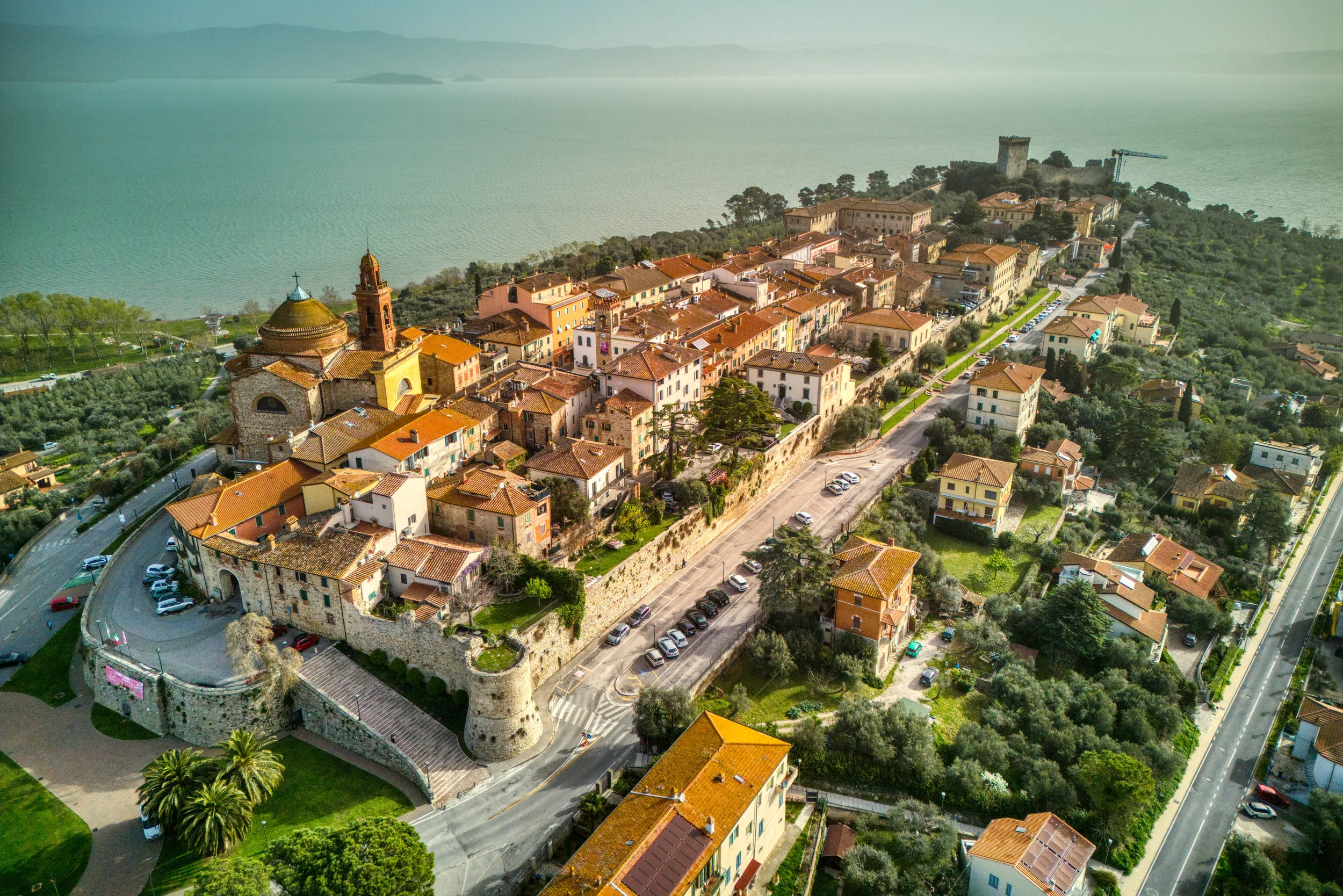
01 · PALAZZO DELLA CORGNA
Step into a Renaissance story
Palazzo della Corgna introduces the family whose rule shaped Castiglione del Lago in the sixteenth century. Inside, painted rooms turn history and mythology into a display of status, with scenes celebrating Ascanio della Corgna alongside stories from the classical world.
Look up as well as around you. The decoration includes work by Niccolò Circignani, known as Pomarancio, and other painters; the room devoted to Ascanio’s deeds gives a particularly vivid sense of how the family wanted to be remembered. Rather than trying to identify every scene, choose a few details and follow the explanations through the rooms.
The palace is also the beginning of the route to Rocca del Leone. We suggest treating the two as one main visit, with a break afterwards in the old town. Check the museum’s current hours and ticket information before planning your day; the standard museum ticket covers both the palace and fortress.

02 · ROCCA DEL LEONE
Follow the walls above Trasimeno
A covered passage links the palace to Rocca del Leone. The change of setting is part of the experience: decorated rooms give way to defensive walls, towers and open views across the lake.
The medieval fortress has a polygonal enclosure and a distinctive triangular keep. Its position explains its importance more clearly than a list of dates: this is high ground commanding a broad stretch of water and the approaches around it. Take time along the permitted visitor route to see how the view changes as you move around the walls.
Expect stairs and exposed sections, and check which parts are open on the day. The fortress also hosts events, so access can differ from an ordinary museum visit. Wear shoes suited to stone steps, and ask the museum about the route before buying tickets if stairs or heights are a concern.
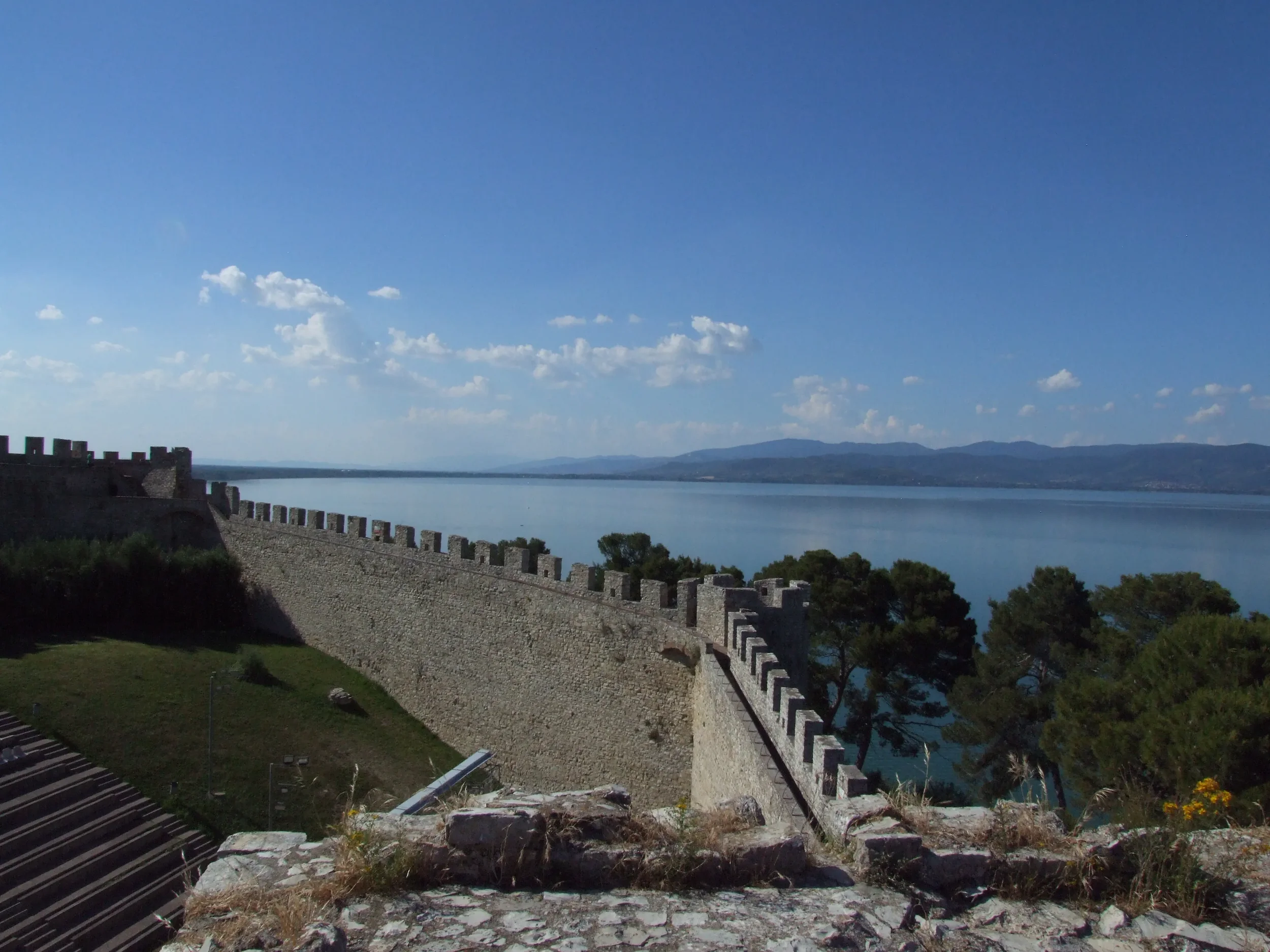
03 · THE OLD TOWN & LAKESHORE
Let the afternoon open out
After the palace and fortress, return to the streets around Piazza Mazzini. A short wander through the walled centre gives you a change of pace before heading down towards the lakeshore. The old town and the waterfront are different levels, so allow for the return climb.
Choose a lakeside walk, a café stop or simply time looking across the water. For us, this is the reason to avoid squeezing Castiglione into a quick castle stop: the shore gives the historical visit a relaxed second half.
If an island trip is part of your plans, build it around the actual service operating on your date. Departures, embarkation points and routes can change with the season and lake levels. Check Busitalia’s Lake Trasimeno navigation notices and timetables; do not assume a direct boat from Castiglione will be running. Save an island outing for a separate day if the connections leave little time ashore.
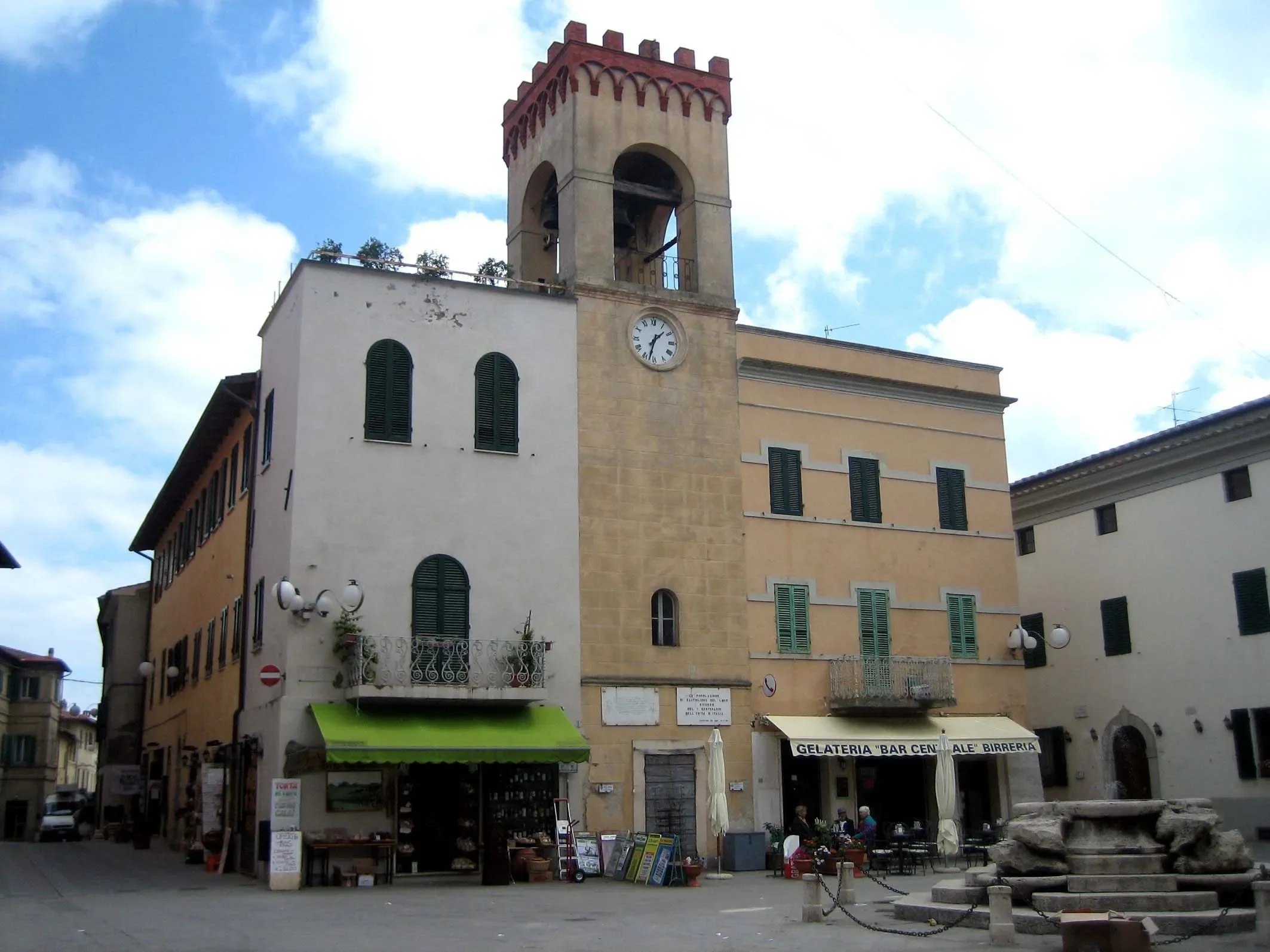
PLAN YOUR VISIT
Leave time for both the town and the lake
One day, from the palace to the water
Start with Palazzo della Corgna and continue through to Rocca del Leone. We suggest leaving the morning flexible enough to look at the frescoes and walk the permitted fortress route without hurrying. Return to the centre for lunch and a wander through the streets, then spend the afternoon by the lake.
If you have only half a day, concentrate on the palace, fortress and old town. Add the lakeshore if your arrival and walking pace allow. A boat excursion is best planned as its own activity, with the return sailing checked before departure.
Where to stay & how long to spend
A full day gives the town and shore room to breathe. We suggest two nights if you want a slower lake stay, or three with a separately planned island or village outing. An address inside the walls suits evening walks and dinner; a lakeside stay suits time by the water.
Check the actual location before booking: the municipality extends beyond the historic centre. Confirm parking, luggage access and the route between your accommodation, the shore and the old town. Countryside properties may need a car or arranged transfers for meals.
When to visit
Spring and early autumn would be our first choices for town walks and a gentler pace. Summer brings a livelier lake atmosphere, but exposed fortress sections can be hot. Plan those earlier in the day and leave room for shade and water. Outside the main season, check museum, restaurant and transport opening arrangements individually.
Getting here & getting around
Castiglione del Lago has its own railway station away from the walled hilltop. Check your onward walking route or arrange a transfer, especially with luggage, and confirm both outward and return trains. Drivers should use signed parking and follow local restrictions rather than navigating directly into the old streets.
The town, fortress and lakeshore are not one level route. Slopes, steps and the museum’s internal passages matter if you need accessible travel. Ask the museum and your host about suitable entrances and facilities before arrival. For boats, check current boarding arrangements as well as the timetable; low water can affect services and accessibility.
A lunch with a sense of place
Ask what local lake fish is available and how it is prepared, or choose seasonal vegetables, regional olive oil and other Umbrian produce. Menus vary, so use the day’s suggestions as a starting point. A long lunch works well between the museum visit and time by the water.
Build a wider Umbria route
Give the Trasimeno area its own time before moving towards Umbria’s inland towns. Spello and Gubbio make contrasting stops on later days, with journeys planned separately from a lake excursion.
Our 7-day Umbria itinerary provides a framework for a longer trip. Use the Umbria travel map to compare locations and the Umbria travel guide for more places around the region.
Image credits
Aerial view: Hagai Agmon-Snir, CC BY-SA 4.0.
Palazzo della Corgna: Umbria ws, CC BY-SA 3.0.
Rocca del Leone: Diego Baglieri, CC BY-SA 4.0.
Piazza Mazzini: Adrian Michael, CC BY-SA 3.0.
Via Wikimedia Commons. Images converted to WebP and resized for display. Adapted versions remain under their respective licences.


