Gubbio
Stone streets. Ancient voices. A mountain above the town.
Gubbio rises in layers against Monte Ingino, with medieval lanes leading from the lower town to Piazza Grande and the palaces above. Its museums reach further back, to the Umbrian people who lived here before Roman rule. Give the town a full day: there is more to discover than its famous skyline.
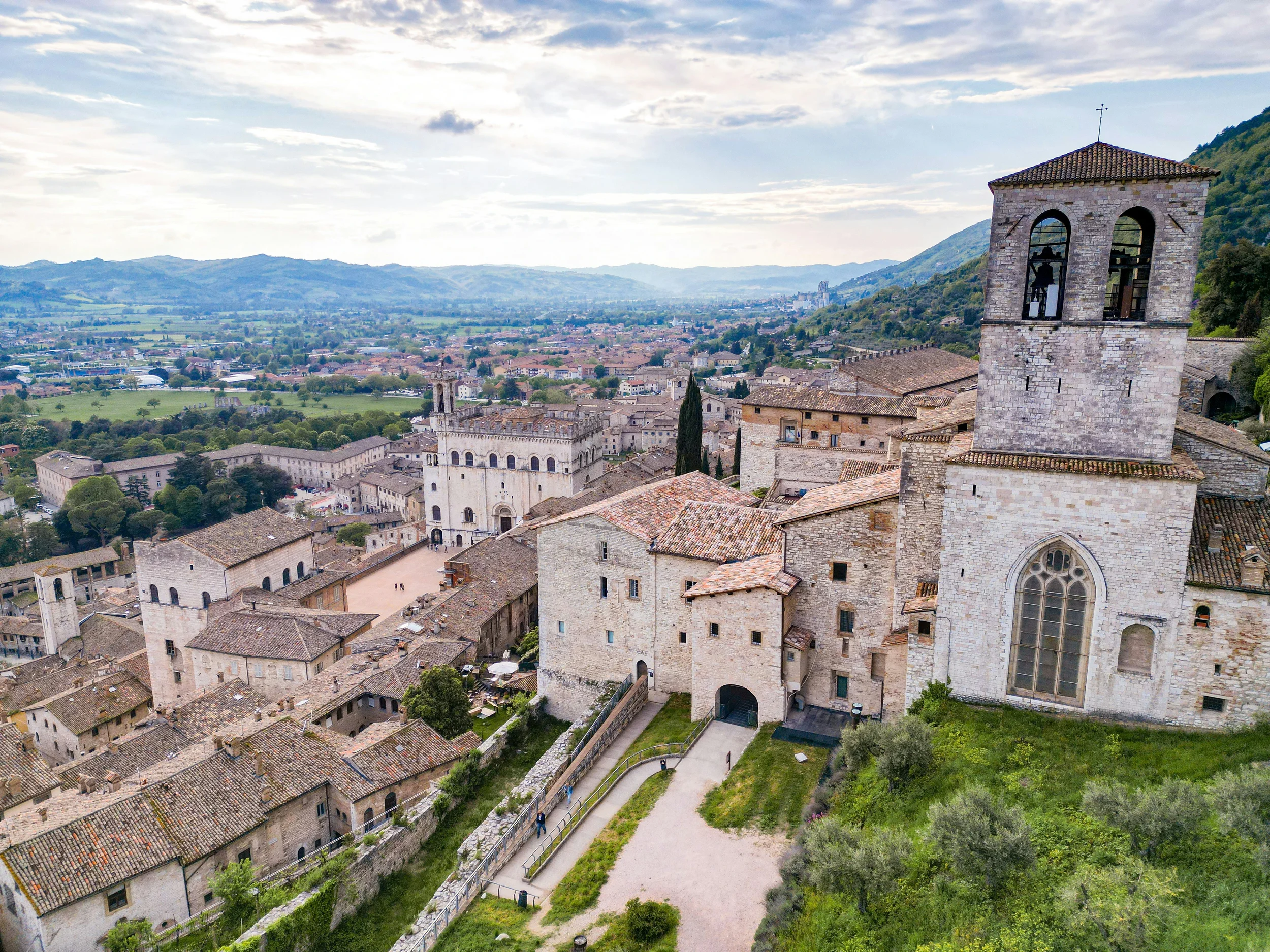
01 · PIAZZA GRANDE & THE PALAZZO DEI CONSOLI
Begin above the rooftops
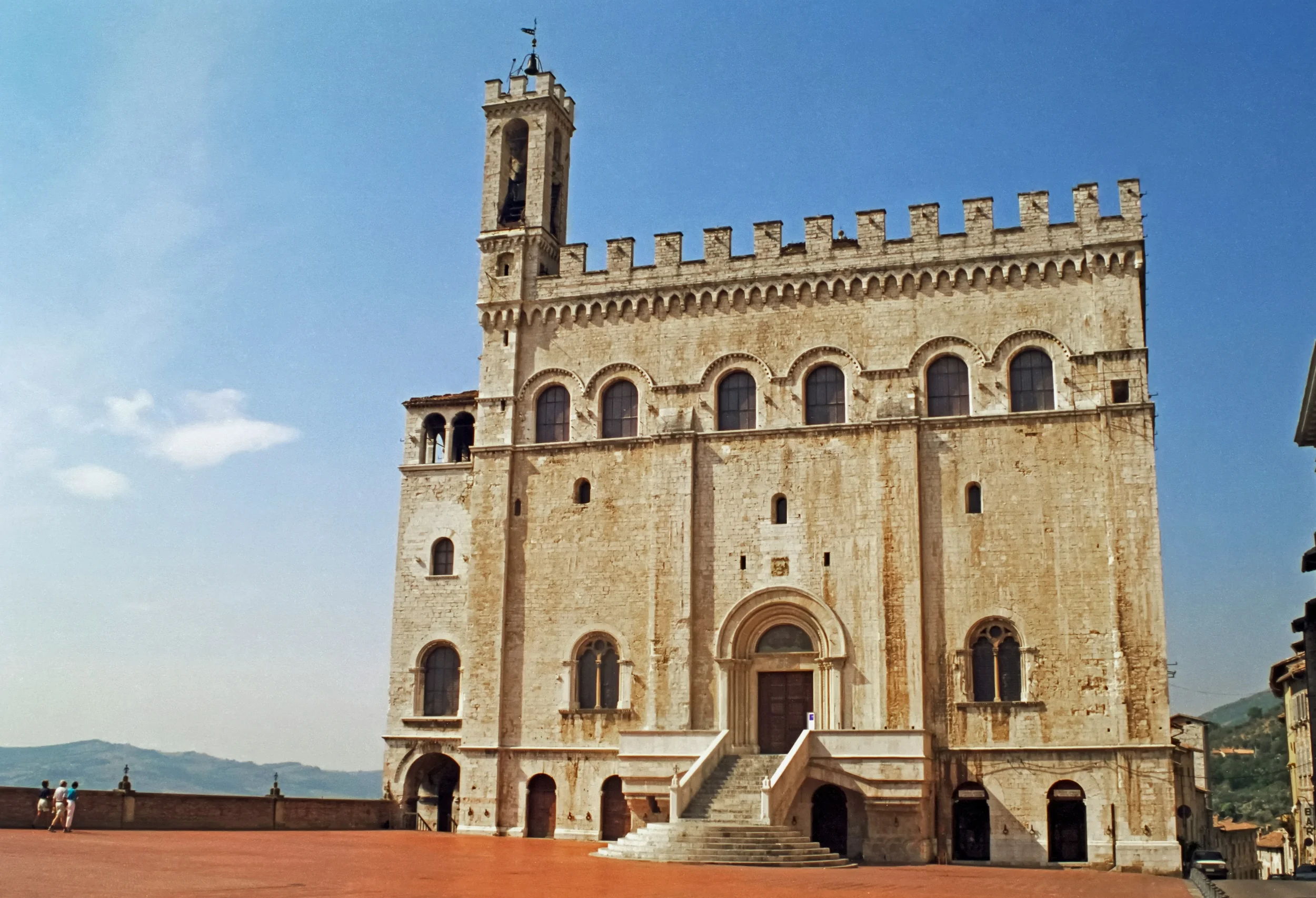
Piazza Grande opens like a terrace above Gubbio’s lower streets. Pause at the edge to take in the valley, then turn towards the Palazzo dei Consoli: its great staircase and tower give the square its unmistakable outline.
The fourteenth-century palace houses the civic museum. Its most distinctive treasures are the seven bronze Iguvine Tablets, also known as the Tavole Eugubine. Written in the ancient Umbrian language, they record religious ceremonies and offer a rare glimpse of a culture that predates Roman dominance.
Allow time to read the interpretation as well as admire the building. The museum’s archaeology, paintings and ceramics place the tablets within a longer history of the town. We suggest making this your main morning visit, before continuing into the upper streets.
02 · THE UPPER TOWN & DUCAL PALACE
Look beyond the medieval skyline
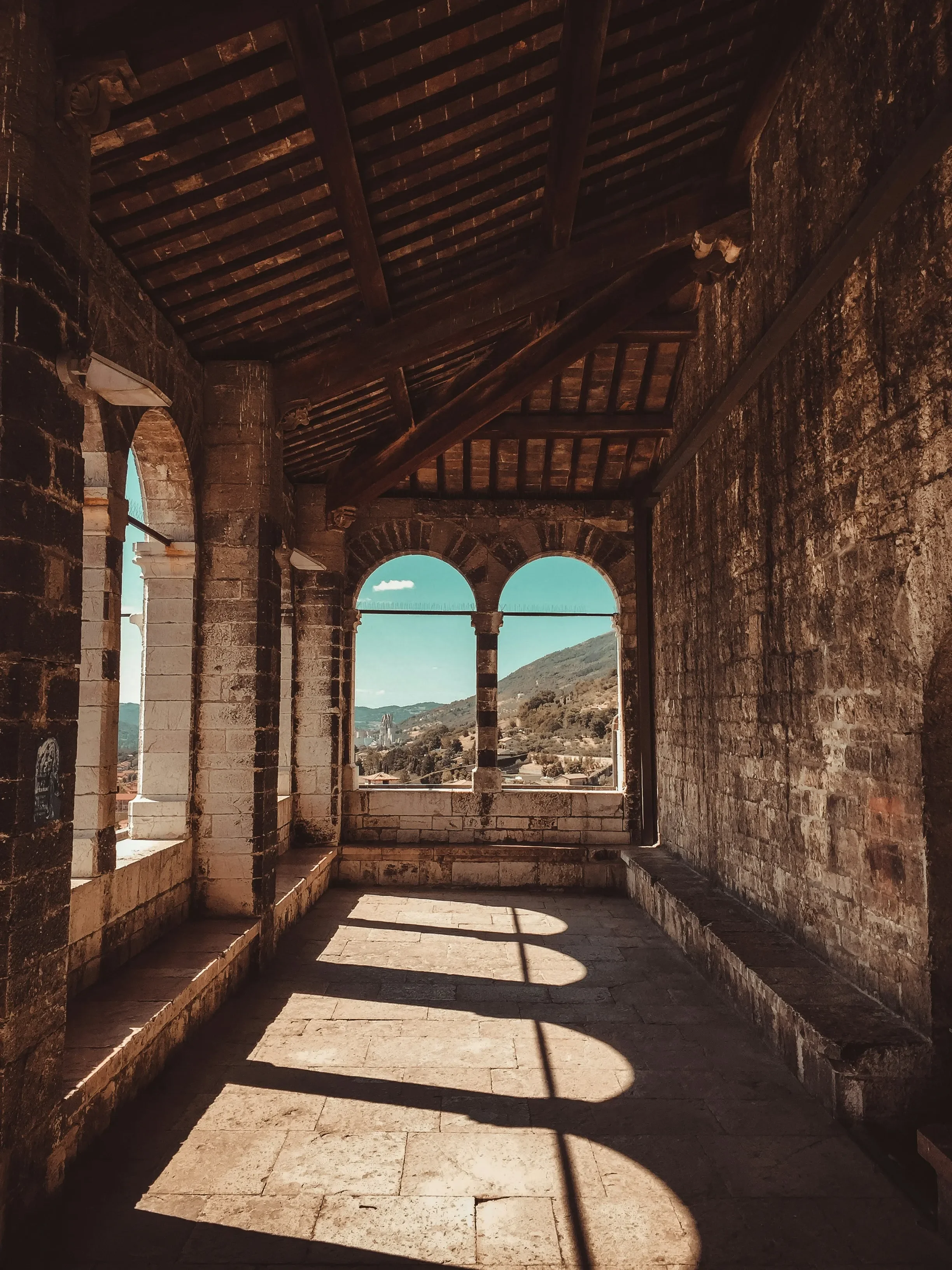
Climb towards the Duomo, dedicated to Saints Marianus and James, and the Palazzo Ducale opposite. The change of scale is part of the pleasure: narrow lanes give way to imposing buildings, with quieter corners between them.
Commissioned by Federico da Montefeltro, the Ducal Palace brings Renaissance refinement into Gubbio’s medieval setting. Its courtyard is a good place to notice the contrast. The celebrated wood-inlaid studiolo displayed here is a reconstruction; the original room is now at the Metropolitan Museum of Art in New York.
On the way down, leave room for Via dei Consoli and the ceramics workshops around the old centre. Gubbio has a long tradition of lustreware, associated with the red and golden effects of the sixteenth-century master Giorgio Andreoli. Ask makers about their own work rather than treating every shop as the same stop.
03 · MONTE INGINO & SANT’UBALDO
Leave space for the mountain
Above the town, the Basilica of Sant’Ubaldo gives Gubbio another focal point. It holds the remains of the town’s patron saint and is closely connected with the Ceri, the great wooden structures central to Gubbio’s best-known festival.
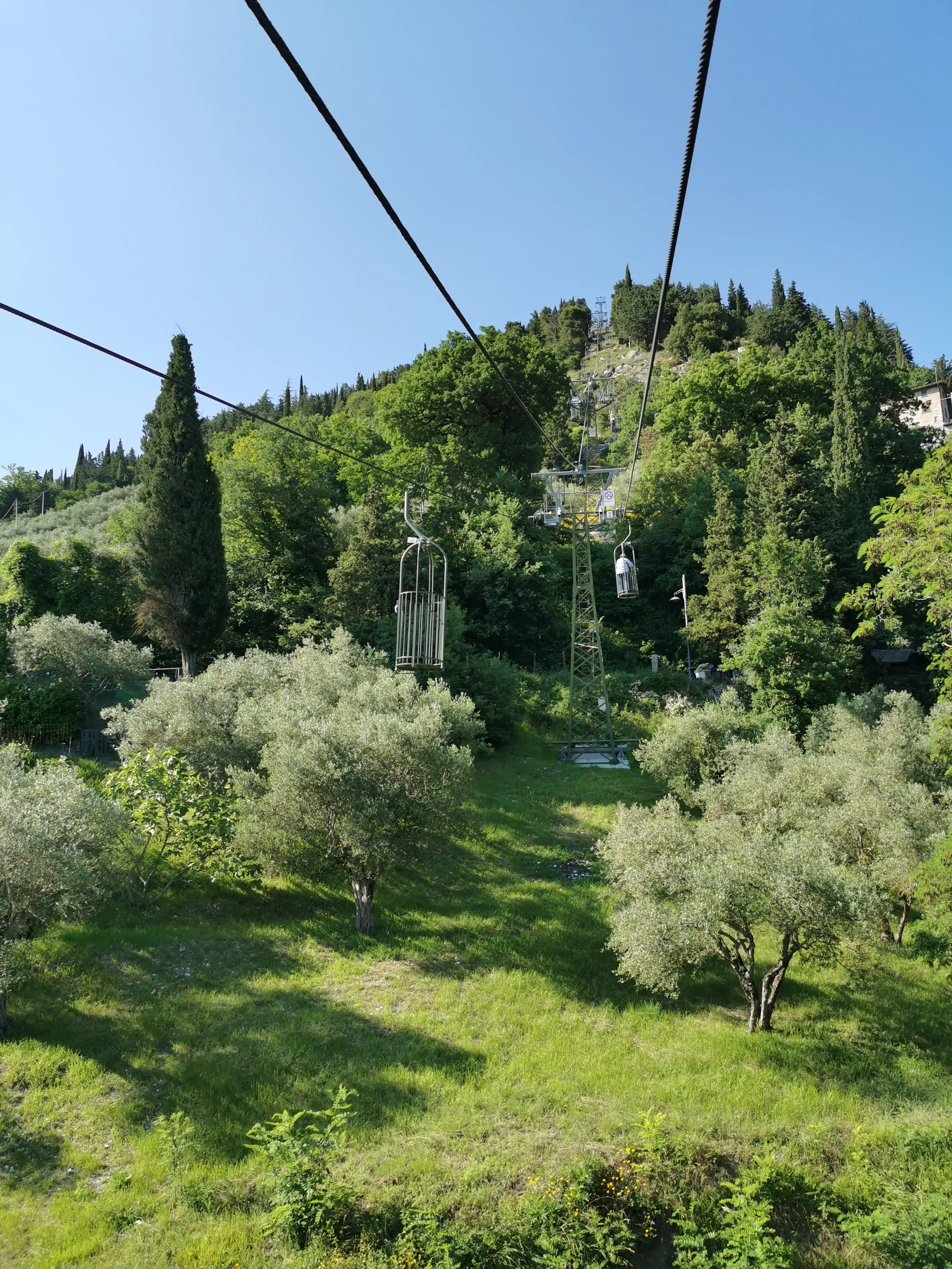
The Funivia Colle Eletto leaves from Via San Girolamo and takes around six minutes to reach the basilica area. Check the operator’s current information before planning your visit, including the return service and whether the ride suits everyone in your group.
Walking up is another option, but treat it as a climb rather than a short extension of the town stroll. Choose a suitable signed route, allow for the ascent and carry water. We would make the mountain an afternoon focus on a clear day, keeping a museum or a slower town walk as the alternative.
PLAN YOUR VISIT
A day shaped around the town’s different levels
One day, from Piazza Grande to the upper town
Start around Piazza Quaranta Martiri, then work your way towards Piazza Grande and the civic museum. After lunch, choose between the Duomo and Ducal Palace or a visit to Sant’Ubaldo. Trying to fit every interior and the mountain into one afternoon leaves little time for the streets themselves.
Finish with a gentle wander back through the old centre. If you stay overnight, return to Piazza Grande after the day’s main sightseeing for a different sense of the town.
Where to stay & how long to spend
We suggest a full day for a first visit, or one or two nights if you want museums, the mountain and unhurried meals. Staying in the old town makes evening walks easy, but check the route from parking or the bus stop before booking.
A room on a higher street may involve steps or steep lanes. Accommodation near the lower town can be more convenient for luggage; a countryside stay works best when you have planned transport into town.
When to visit
We would favour spring or autumn for walking between the different levels. In summer, do the steeper climbs in the cooler part of the day and keep time indoors for the hottest hours.
Festival days bring a very different experience. Check the town’s event calendar before booking if you want either to join a celebration or enjoy a quieter visit. Mountain plans also need room to change with the weather.
Getting here & getting around
Despite its name, Fossato di Vico–Gubbio railway station is outside Gubbio. Plan the onward bus or transfer and the return connection; Perugia is another public-transport approach. The municipal visitor guide lists the main routes.
Use signed parking outside the restricted old streets and explore on foot. Public lifts connect Via Baldassini with Piazza Grande and Via XX Settembre with the Duomo area. They can reduce the climb, but do not remove every slope or step; check current operation and individual museum access.
What to try at the table
Look for crescia, the local flatbread, and brustengo, a fried batter bread often served with cured meats or cheese. Ask which dishes are local and seasonal, and give lunch enough room in the day rather than treating it as a gap between appointments.
Continue through Umbria
Allow a separate day for Assisi rather than squeezing both towns into one sightseeing stop. Our 7-day Umbria itinerary helps connect the region’s towns at a more comfortable pace.
Use the Umbria travel map to see how Gubbio fits your route, and return to the Umbria travel guide for more places to explore.
Image credits
Gubbio cable car, Gubbio veduta 29 — Sirleonidas, via Wikimedia Commons, CC BY-SA 4.0. Converted to WebP and resized for display; any adaptations are shared under the same licence.
