Paestum
Ancient columns in open light. A slower day near the Cilento coast.
Discover Paestum, where monumental Greek temples stand among the remains of an ancient city. Pair the archaeological park with its museum, then leave time for buffalo mozzarella and a different side of southern Campania.
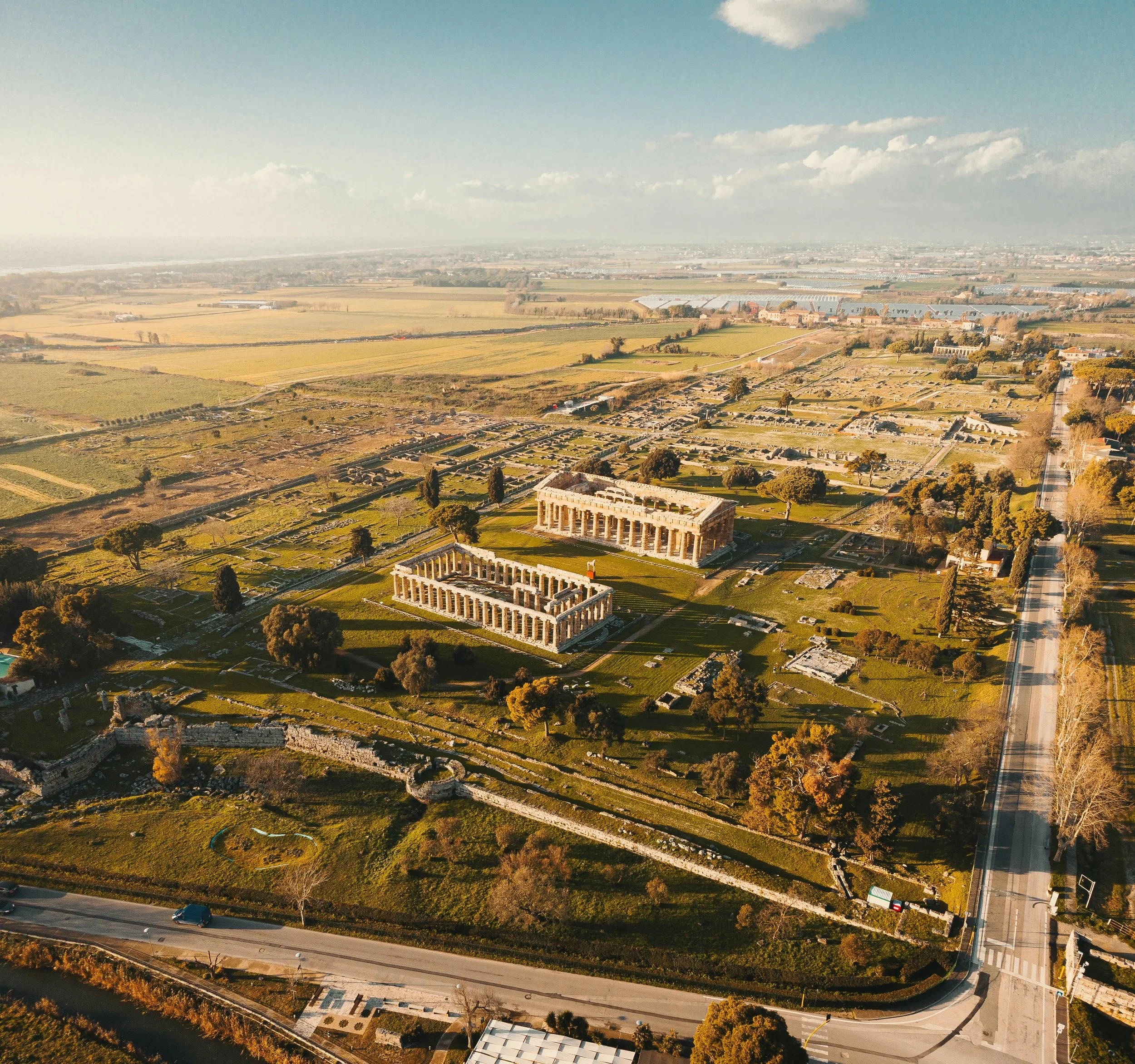
01 · THE TEMPLES & ANCIENT CITY
Walk through a different chapter of Italy
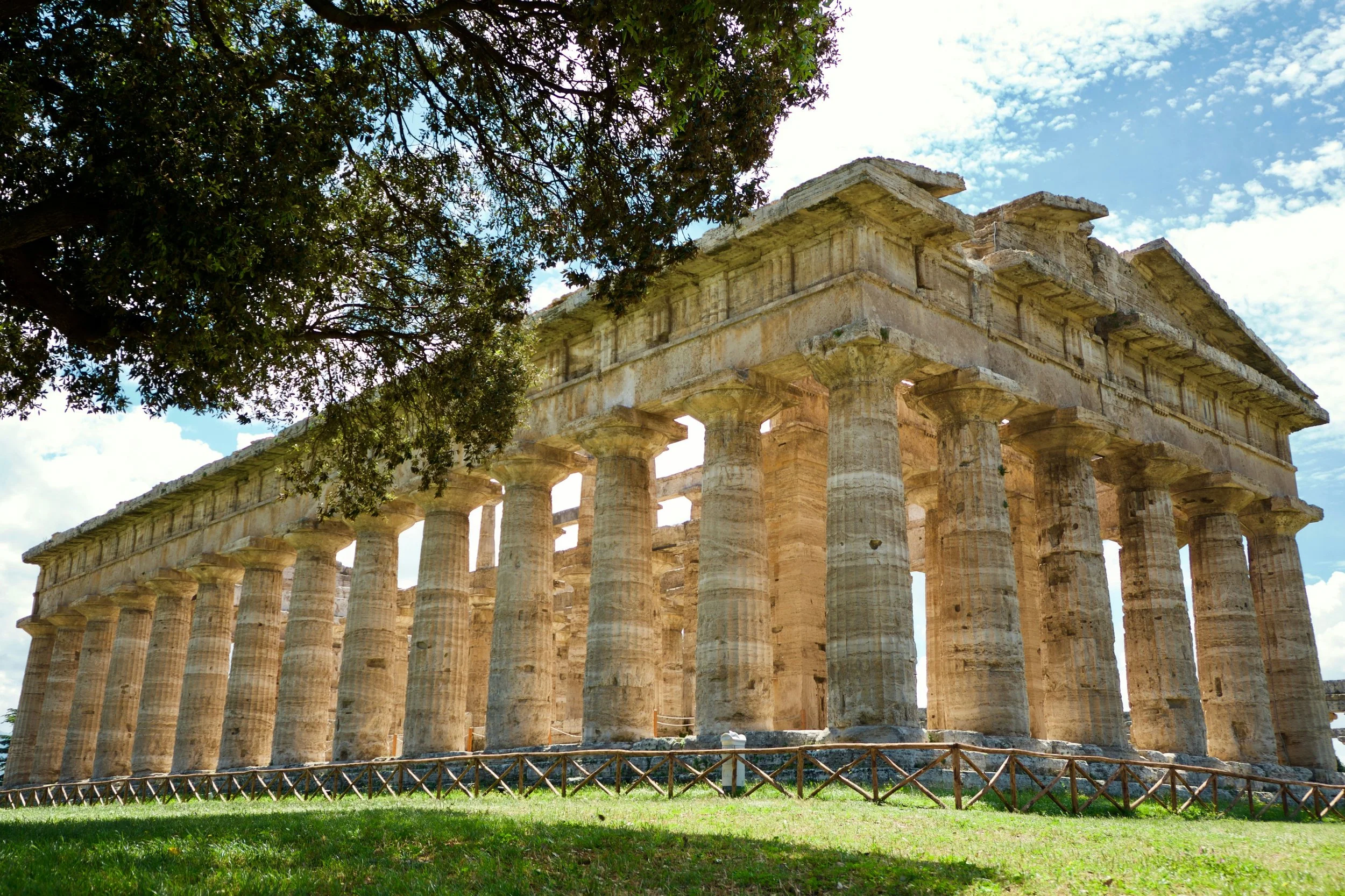
Paestum began as the Greek city of Poseidonia, before becoming a Lucanian and later Roman settlement. Its three great Doric temples are the obvious starting point, but the spaces between them help you imagine a working city rather than an isolated collection of monuments.
In the southern sanctuary, compare the broad colonnades of the so-called Temple of Neptune with the neighbouring Basilica, traditionally associated with Hera. These familiar names have a history of their own: “Neptune” is not a securely established dedication, and the Basilica was a temple, not a Roman civic hall.
Continue to the Temple of Athena in the northern sanctuary. Between the sanctuaries, look for the Roman forum and the remains of spaces used for public meetings. A site map helps connect what can otherwise look like scattered foundations.
Hidden Italy tip: Give yourself time to compare the temples from several viewpoints. Stay on permitted routes and follow the current signs about access to the monuments.
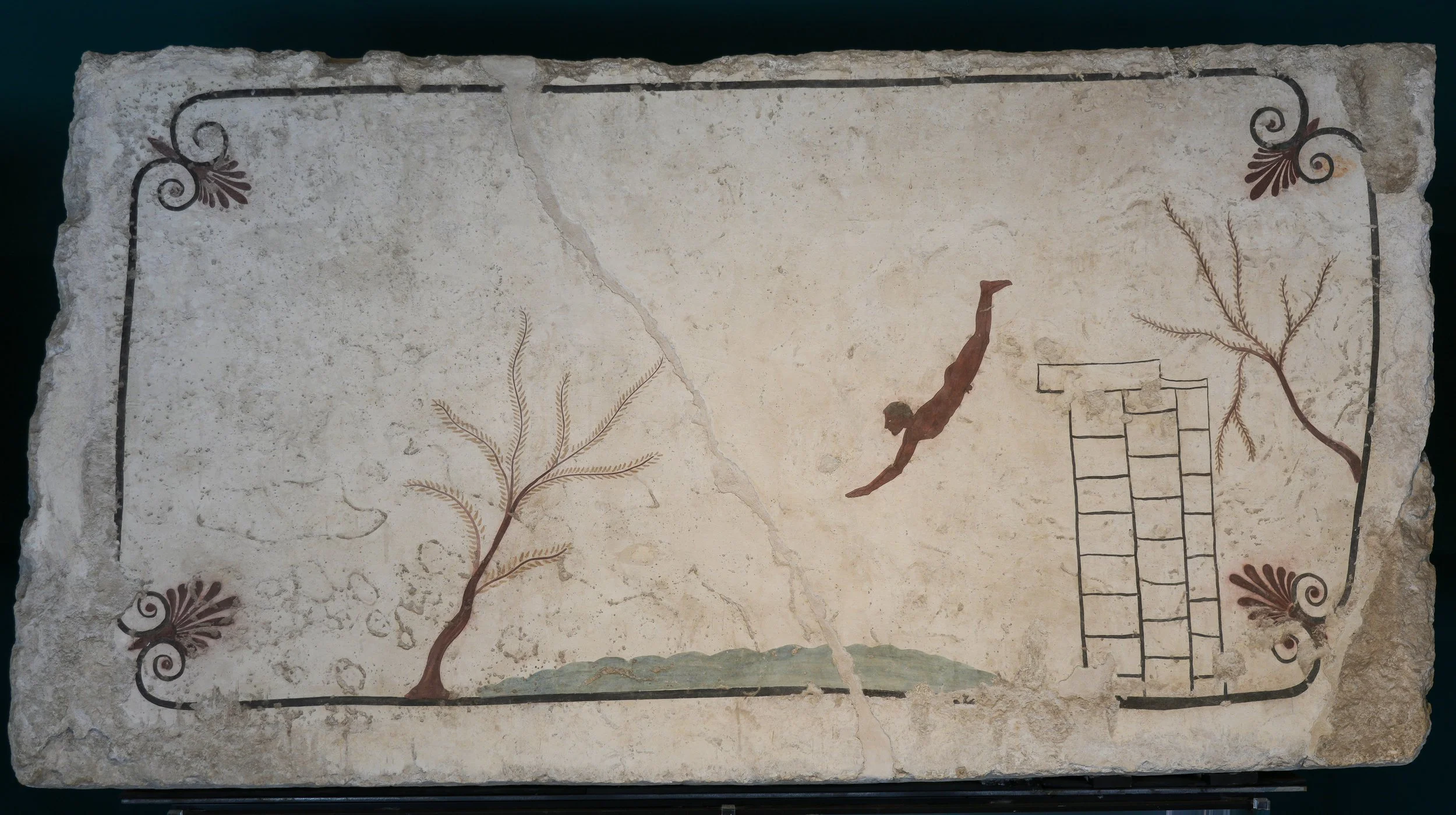
02 · THE ARCHAEOLOGICAL MUSEUM
Look beyond the famous diver
The National Archaeological Museum of Paestum gives the outdoor ruins a more human scale. Make it part of the visit, rather than a stop to squeeze in only if time remains: the collections follow the area through Greek, Lucanian and Roman life.
The Tomb of the Diver, from the fifth century BC, is the best-known highlight. Pause with the painted slabs, then continue to the Lucanian tomb paintings to see how funerary imagery changed across the centuries.
Look too for the carved metopes from the sanctuary of Hera on the River Sele: these stone panels tell mythological stories. The bronze figure of Marsyas, found in the Roman forum, adds another layer to the city’s long history.
Plan your time: We suggest setting aside about an hour for a first museum visit, longer if you enjoy archaeology. Check current gallery access and temporary exhibitions when planning your day.
03 · LOCAL FLAVOURS & THE COAST
Leave room for the landscape around you
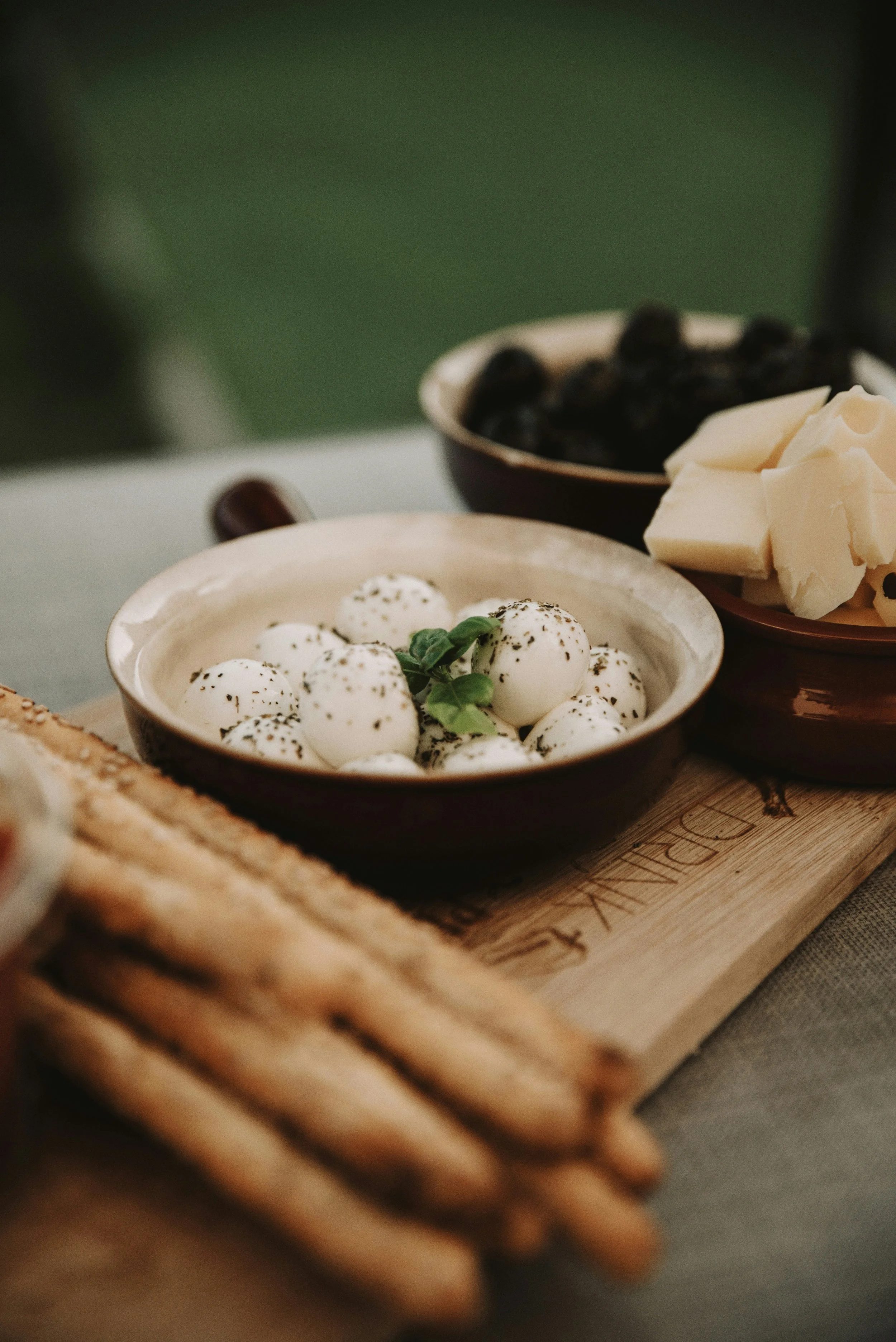
The area around Capaccio Paestum is known for mozzarella di bufala. A lunch featuring locally made buffalo mozzarella is a natural way to slow the day down after the temples and museum.
If you would like to visit a dairy, choose a producer and check what it actually offers. A farm shop, a tasting and a guided production visit are different experiences; book ahead where required and plan the transfer from the archaeological area.
For a longer stay, combine Paestum with time on the coast. Keep the beach as a separate stop rather than assuming it is beside the temple entrance, and choose access and facilities that suit the season and your transport.
For a separate village outing, explore Capaccio Capoluogo in the hills above the plain, or visit Agropoli for its old town, castle and harbour.
Make it part of your trip: Continue south to Castellabate for hilltop lanes and seaside time, or browse our Campania beach guide to choose your next coastal stop.
PLAN YOUR VISIT
Make a day of Paestum
One day, from the temples to the museum
Morning: begin in the archaeological area, using the official map to connect the southern temples, the civic remains and the Temple of Athena. We suggest allowing around two hours outdoors for a first visit with pauses, rather than rushing between the three main monuments.
Later: spend about an hour in the museum, then pause for lunch. These are our planning estimates, not an official timed route. Allow a generous half-day overall, or a full day if you want a guided visit, a dairy stop or time at the beach. In hot weather, put the outdoor part in the cooler hours and check museum opening arrangements before relying on it as a midday break.
Tickets & opening arrangements
Check the official Paestum and Velia website for current tickets, opening times, last admissions and temporary closures. Confirm what your chosen ticket includes. Velia is a separate archaeological site farther south, not another part of the same walk around Paestum.
Where to stay & how long to spend
Stay close to the archaeological area if the temples and museum are your priority; check the actual walk from the property to the entrance. A coastal hotel suits a beach-led stay, while a countryside base works better with a car. “Capaccio Paestum” covers a wider area, so inspect the map pin rather than relying on the place name alone.
One night gives you room for a slower visit and dinner nearby. Two nights make more sense if you also want a beach day or rural stops. Ask about parking, luggage access and evening transport before choosing your base.
When to visit
Spring and autumn are our preferred seasons for an unhurried outdoor visit. In summer, bring water, sun protection and comfortable shoes, and plan around the heat. For winter visits, check daylight, forecasts and current opening arrangements rather than assuming summer hours apply.
Getting here & getting around
For rail travel, check services that actually stop at Paestum station. The park’s official arrival guidance describes a walk of about 15 minutes via Porta Sirena to the museum and archaeological area. Allow extra time for your pace and the entrance in use, and check the return train before setting off.
By car, navigate to the archaeological park on Via Magna Grecia and follow signs for designated parking. Plan a separate transfer for a dairy or the beach. Ancient paving and uneven surfaces can affect the visit; if you need step-free access, ask the park about current accessible routes and assistance before travelling.
Build it into a longer road trip
Use our 7-day Campania itinerary to connect Paestum with the wider region. Add a stay in Castellabate for a slower Cilento extension, or return to the Campania travel guide to compare regional stops.
For the latest visitor arrangements and collection information, consult the Archaeological Parks of Paestum and Velia.