Vitorchiano
Grey stone, medieval stairways and an unexpected connection to Rapa Nui
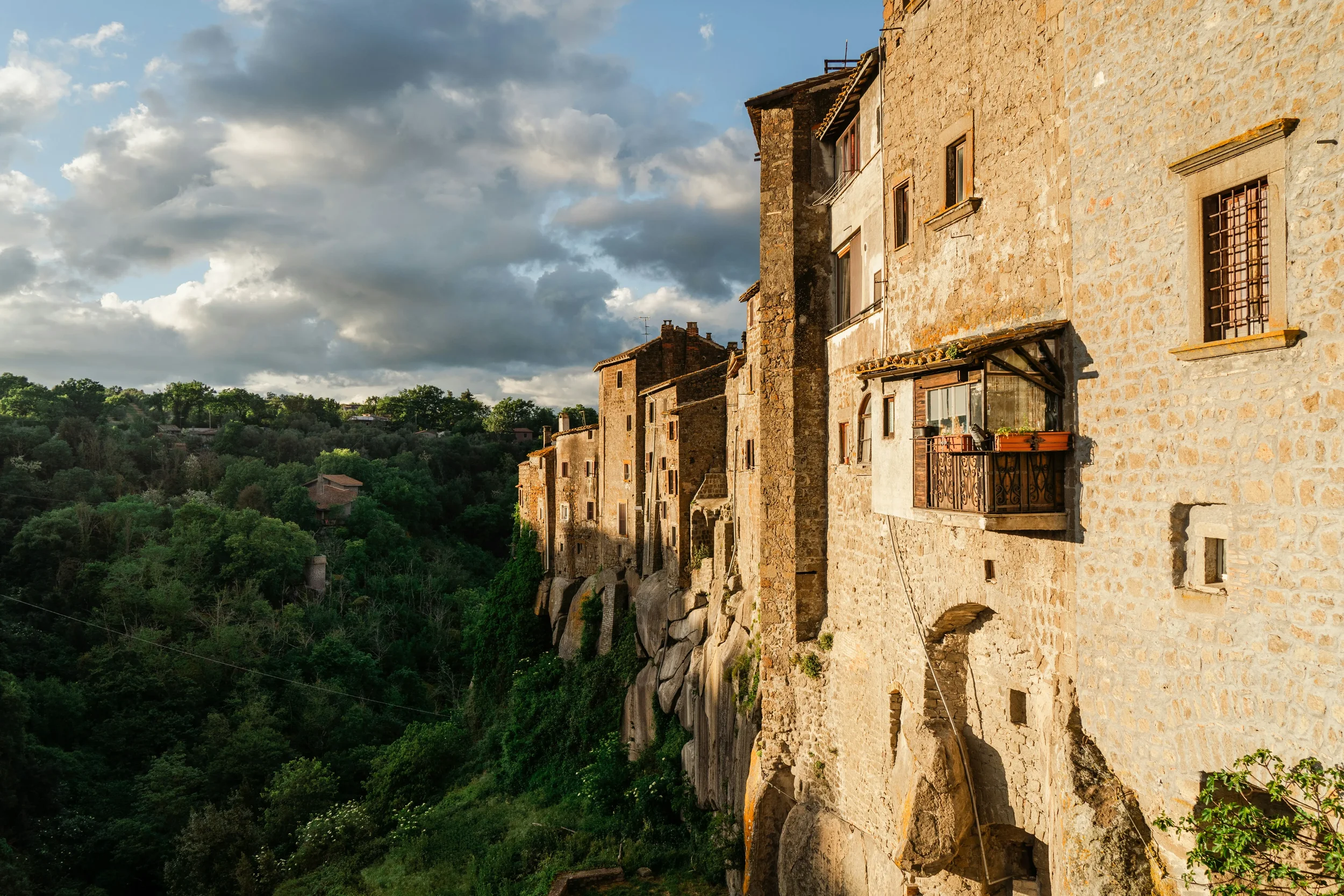
Vitorchiano seems to grow directly from the rock beneath it. Houses of grey peperino cluster above wooded ravines, creating the striking outline that gives the village its suspended appearance. Inside, the scale becomes intimate: external stairways, carved details and a fountain at the heart of civic life. Outside the old centre, a Moai introduces a surprising modern chapter. This is a place for looking closely, with enough time to enjoy both the lanes and the view back towards them.
01 — PEPERINO AND PASSAGES
Read the village in its stone
Peperino gives Vitorchiano a strong visual identity. The local volcanic stone appears in walls, arches and architectural details, connecting the buildings to their setting. Its muted colour makes texture and shadow especially noticeable.
As you walk, look for the external stairways known as profferli. A short flight rises along a façade towards a small landing or loggia by the entrance. They are practical domestic features, but together they give the streets much of their character.
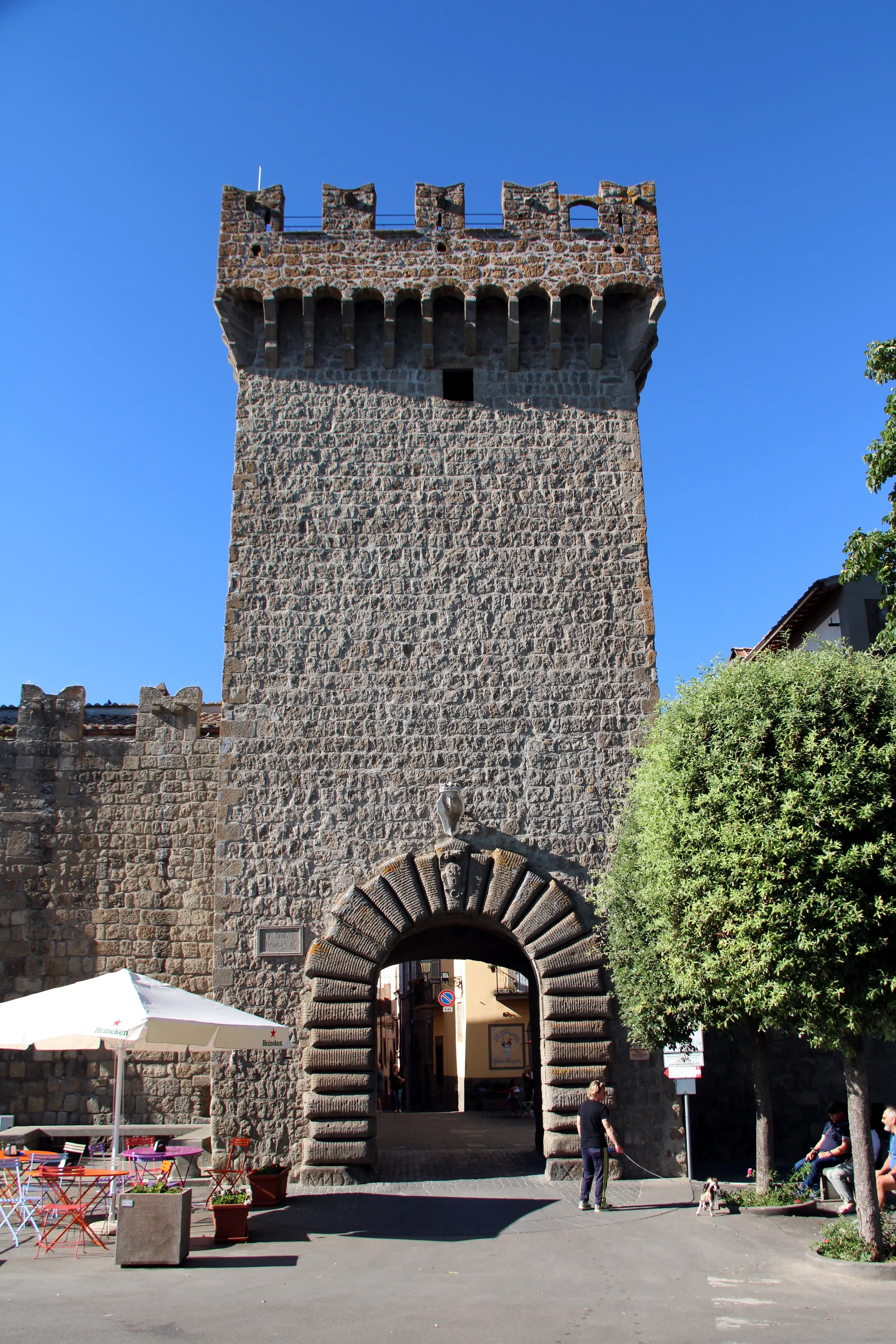
Begin around Porta Romana and allow the smaller lanes to shape your route. This is still a village of homes, so enjoy the details from public streets without treating private steps and doorways as viewpoints. Comfortable shoes make the uneven surfaces easier to negotiate.
Hidden Italy tip: Look up as often as you look ahead. A carved doorway, projecting stair or small balcony can be the most memorable detail of a quiet lane.
02 — THE CIVIC HEART
Pause beside the Fontana a Fuso
Piazza Roma brings the village’s civic history into focus. The Fontana a Fuso stands beneath the clock tower, its tall central form and carved peperino giving the square a distinct centre of gravity.
Take time to study the fountain’s decorative details rather than using it only as a landmark. Public fountains once served as meeting places as well as water supplies, and the arrangement of tower, civic buildings and square helps you imagine that shared daily life.
The letters SPQR, found on local monuments, point to Vitorchiano’s long relationship with Rome. They are a useful reminder that this small Tuscia village was connected to political events far beyond its own walls. Check separately before expecting access to civic interiors.
Hidden Italy tip: Make the square your pause between two short walks. A second look often reveals details missed while finding your way around.

03 — THE MOAI VIEWPOINT
Find an unexpected figure overlooking the village
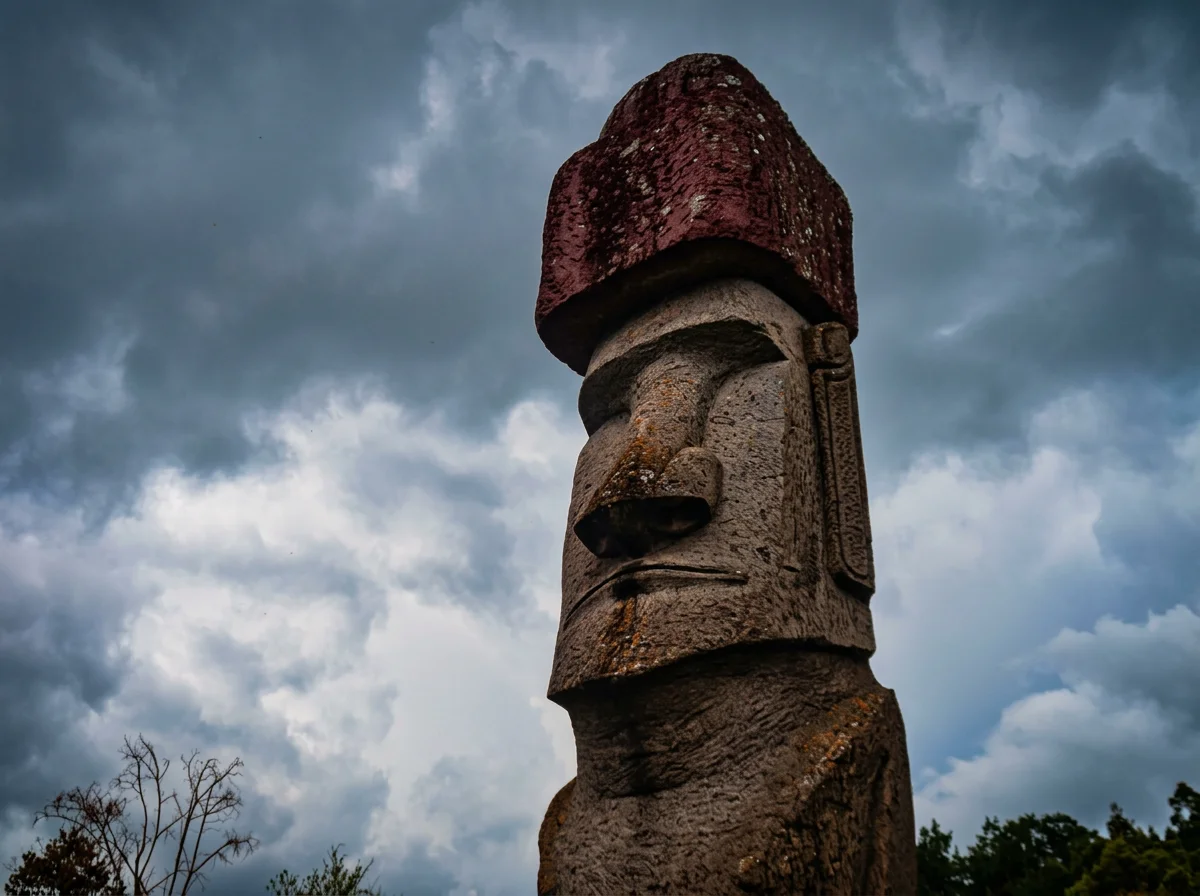
Beyond the historic centre, Vitorchiano’s Moai is an unexpected sight. Carved from local peperino in 1990 by members of the Atan family from Rapa Nui, it connects the village’s stone with a very different sculptural tradition.
The monument now stands by the panoramic area at Largo Padre Ettore Salimbeni, near the municipal camper area. Its setting gives you another reason to come: the view back towards the old village reveals the close relationship between the buildings and the rock.
Visit with an interest in both the sculpture and its story, rather than treating it as an unexplained novelty. The local visitor guide’s Moai page explains the project and its connection with Rapa Nui. Follow the public approach and be attentive to traffic when walking outside the old lanes.
Hidden Italy tip: See the village from here after exploring it on foot. The distant outline becomes more meaningful once you recognise the streets within it.
PLAN YOUR VISIT
Give a small village a generous half day
A day in Vitorchiano
Allow a few hours for the old centre, Piazza Roma and the Moai viewpoint. Add lunch for a relaxed half day. You do not need an ambitious checklist: the reward lies in the stonework, the village’s shape and the contrast between enclosed lanes and open views.
Where to stay
A village stay suits visitors who enjoy quiet evening walks and historic surroundings. Ask about steps, luggage access and parking before booking. Viterbo can provide a practical alternative base if you want a larger choice of services while exploring Tuscia.
When to go
Spring and autumn are appealing for walking without the strongest summer heat. Local events can change the atmosphere, so consult the Vitorchiano visitor website if you want to coincide with a festival or avoid a busier day. Outside events, do not assume every business will be open throughout the afternoon.
Getting there and around
Use designated parking outside the historic lanes and explore the centre on foot. Check your accommodation’s directions before following navigation into narrow streets. The Moai is a separate stop beyond the old core, so include its approach in your walking plan.
For public transport, confirm current connections, the exact stop and the final return departure before setting out. Uneven paving and stairways are part of the historic setting; ask locally about suitable approaches if changes in level are a concern.
Make it a longer journey
Vitorchiano fits naturally into an exploration of northern Lazio. Use our Lazio seven-day itinerary for ideas around Viterbo and the surrounding area, or return to the regional guide to choose another stop without overloading the day.
Image credits
Vitorchiano at sunset — Gabriella Clare Marino, Unsplash License.
Porta Romana — Mongolo1984, CC BY-SA 4.0, via Wikimedia Commons.

Fountain in Piazza Roma — Dieterdreist, CC BY-SA 4.0, via Wikimedia Commons.

Moai di Vitorchiano — Gabriele Maccaroni, CC BY-SA 4.0, via Wikimedia Commons. Colourised and edited version, shared under the same licence.

Images resized, format-converted and cropped for this layout; Commons adaptations retain their stated licences.