Home › Le Marche › Tempio del Valadier
Tempio del Valadier
A small temple beneath a vast roof of rock.
In the Frasassi gorge near Genga, an octagonal sanctuary stands within the mouth of a natural cave. The Tempio del Valadier is a memorable meeting of architecture and landscape, made richer by the older hermitage beside it. Give the uphill approach and the quiet setting as much attention as the photograph.
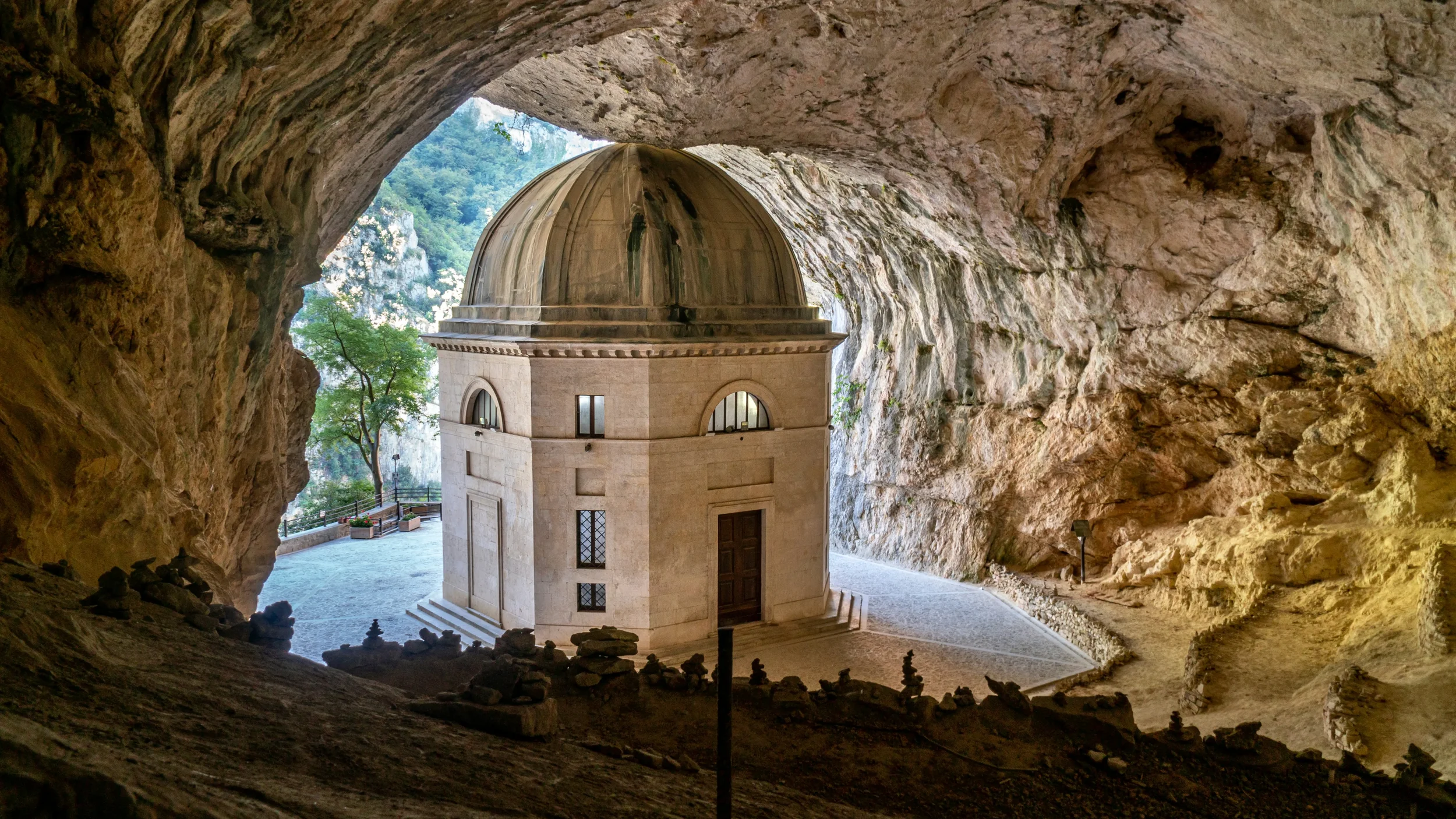
01 · THE CAVE SANCTUARY
Find symmetry inside the mountain
The sanctuary’s precise geometry is what catches the eye: pale limestone walls, an eight-sided plan and a dome set against the irregular rock around it. Step back within the permitted visitor area to appreciate the scale of the cave opening.
Commissioned in 1819 by Cardinal Annibale della Genga, the future Pope Leo XII, the shrine was inaugurated in 1828. Its familiar name links it to Giuseppe Valadier, although the official local account describes that attribution as traditional and stylistic.
The setting is as important as the building. Look between the finished stone and the cave surfaces, then turn towards the light at the entrance. The contrast becomes clearer when you pause rather than immediately searching for another viewpoint.
Hidden Italy tip: Keep the approach and doorways clear for other visitors, and respect any barriers or restrictions within the cave.
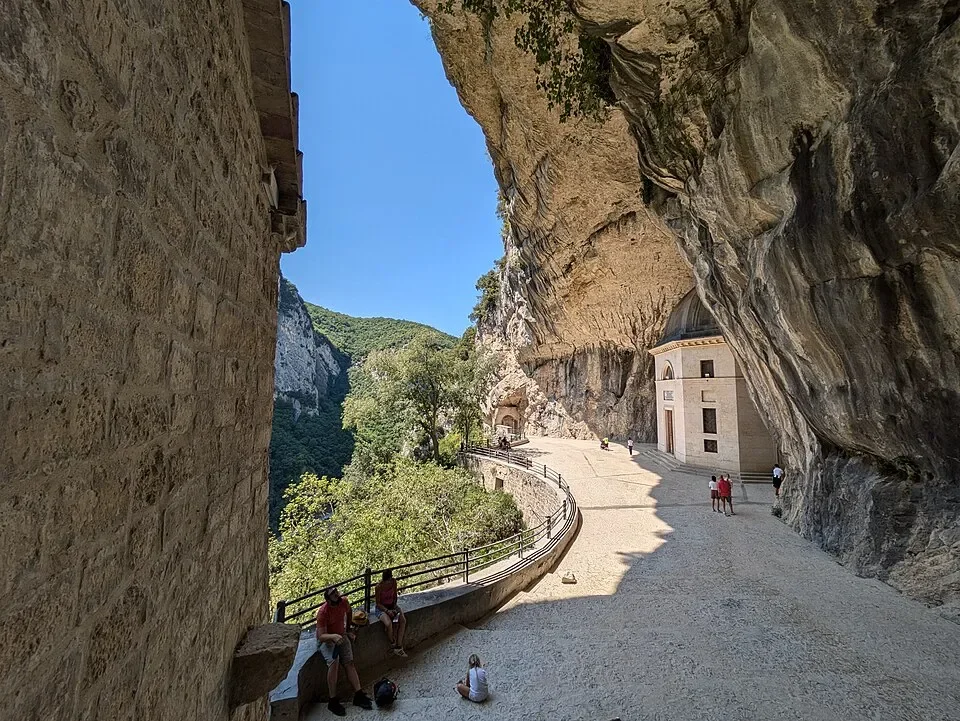
02 · SANTA MARIA INFRA SAXA
Notice the older place of prayer beside it
The small hermitage of Santa Maria Infra Saxa rests against the rock near the temple. Documented around the year 1000, it belongs to a much earlier religious story and is associated with a community of Benedictine women.
Its modest scale offers a different experience from the formal symmetry of the neighbouring sanctuary. Look at how the built structure meets the cliff, and how little separates the architecture from the landscape.
Seeing the two together helps explain why this cave has remained a place of devotion across centuries. Allow a quiet pause here, following the visitor route and any notices about entry.
Hidden Italy tip: Do not overlook the hermitage after taking the familiar temple photograph. It gives the visit historical depth and a more intimate sense of the site.
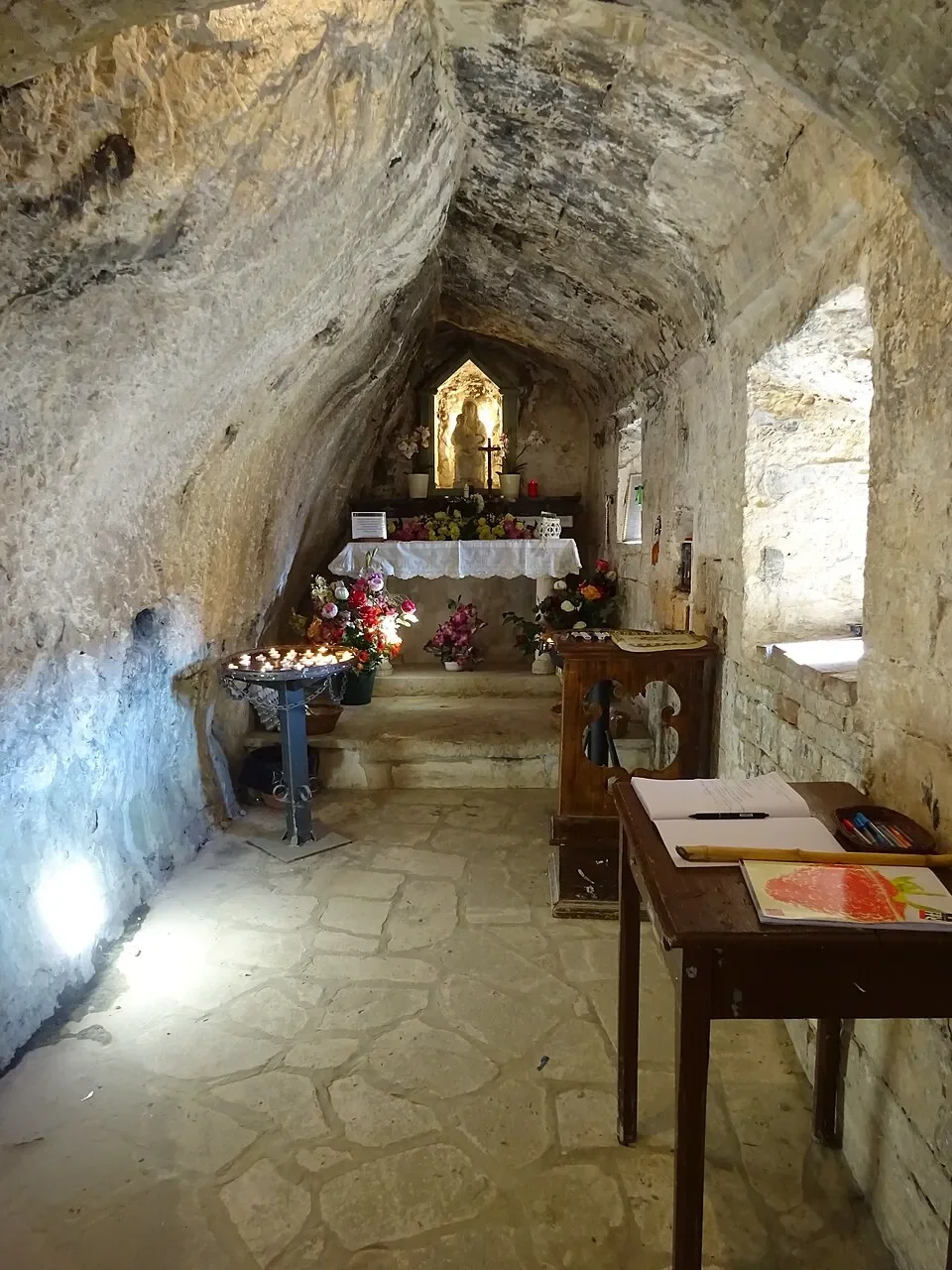
03 · THE APPROACH & THE GENGA CONNECTION
Let the journey complete the visit
A paved uphill path leads from the gorge road towards the sanctuary. Although the walk is relatively short, its gradient matters: use comfortable shoes, carry water and allow enough time to climb at your own pace and descend without rushing.
If you want to continue the story afterwards, the Museum of Art, History and Territory in Genga holds the marble Virgin and Child formerly placed in the sanctuary. The museum also presents local art and a copy of the prehistoric Venus of Frasassi.
Genga village is a separate stop, not the entrance to the temple path. Plan the transfer and check museum opening before adding it to your day.
Plan ahead: Consult the official sanctuary information for current access, and ask about the uphill route if mobility or pushchair use affects your plans.
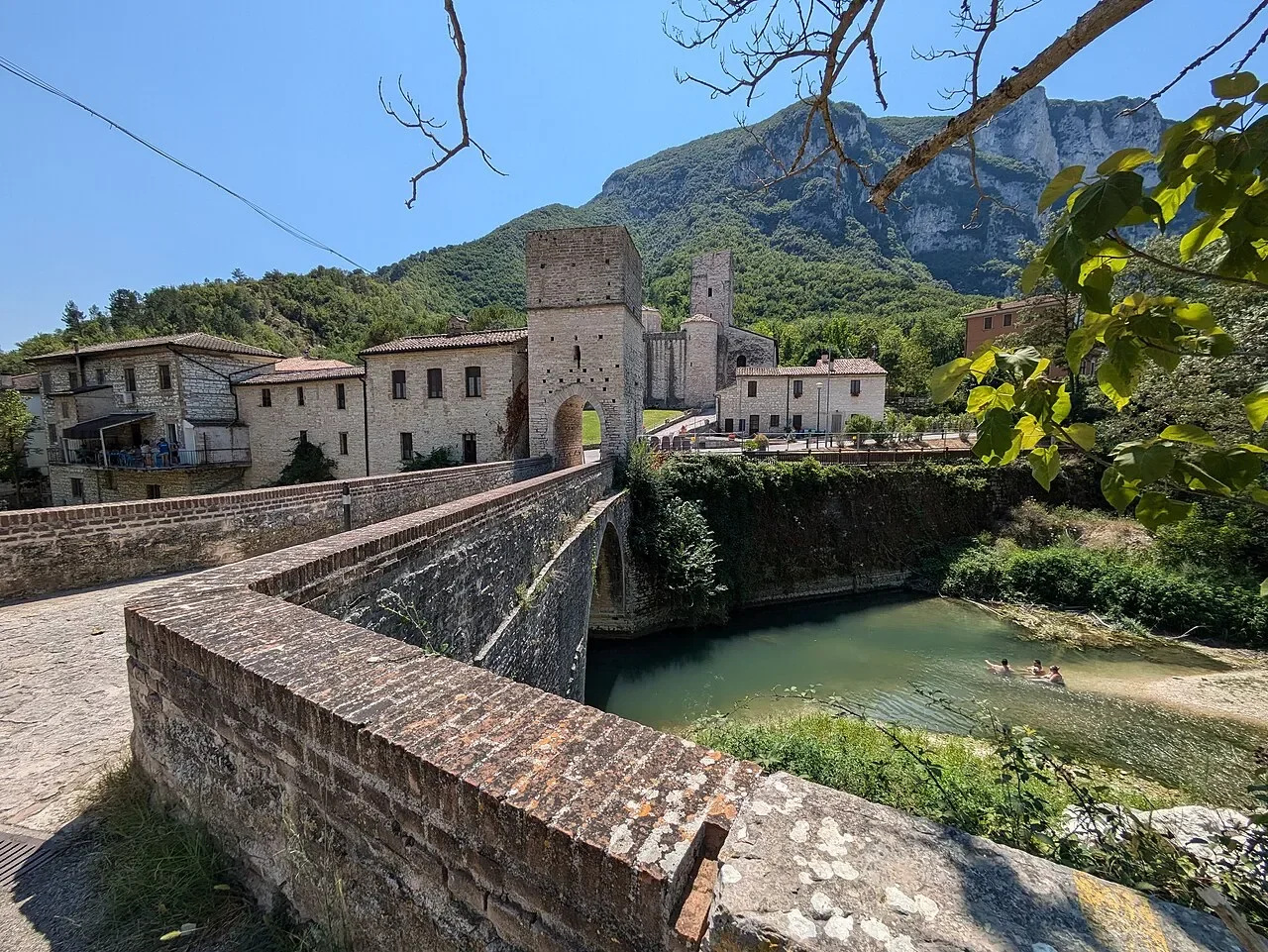
PLAN YOUR VISIT
Plan a calm visit to the Frasassi sanctuary
A suggested half day, with room to pause
Start with the approach: check current admission and opening arrangements, locate the signed path entrance and walk up at a comfortable pace. Spend time with both the temple and Santa Maria Infra Saxa, then return by the authorised route. We suggest leaving a half day flexible for the journey, visit and a break.
For a longer day: add either Genga’s museum or San Vittore’s abbey and museum. A Frasassi show-cave tour is another possibility, but it has separate booking and transfer arrangements. Keep sufficient time between the two visits rather than assuming they share an entrance.
Where to stay & how long to spend
Choose the Genga or San Vittore area for a stay focused on the gorge. A countryside base can work well with a car; check the distance to dinner and to each attraction. One or two nights gives you space for the sanctuary, caves and local villages without crowding them into a single day.
When to visit
Spring and autumn are our choices for a comfortable uphill approach when weather is settled. In summer, avoid the hottest part of the day and bring water. In cooler or wet weather, check access conditions and allow for slippery surfaces and shorter daylight.
Arrival, parking & access
Navigate to the signed sanctuary access point in the Frasassi gorge, not simply to Genga’s centre or the show-cave ticket office. Use designated parking and follow current roadside signs. Check whether any temporary arrangements affect entry before setting off.
Genga–San Vittore Terme is the railway station identified by local tourism information for the area, but reaching it does not remove the onward transfer to the temple path. Confirm that connection in advance. The paved approach is uphill; do not assume paving means a step-free or easy route for every visitor.
Build it into a longer Marche trip
The sanctuary pairs naturally with the history and geology of the Frasassi area. Leave another day for longer regional journeys, and browse our Le Marche travel guide for onward destinations.
See Frasassi Experiences’ sanctuary guide, the Genga museum information and the Marche tourism guide to the approach for official background and visitor planning.
Image credits
The sanctuary: Santuario della Madonna di Frasassi by Accurimbono, CC BY-SA 4.0, via Wikimedia Commons.

The hermitage: Eremo di Santa Maria Infra Saxa 02 by Beta16, CC BY-SA 4.0, via Wikimedia Commons.

San Vittore: Abbazia di San Vittore alle Chiuse 5 by Accurimbono, CC BY-SA 4.0, via Wikimedia Commons.

Commons images converted to WebP and resized for this page. Adapted versions remain available under the respective licences linked above.