Home › Le Marche › San Vittore delle Chiuse
Abbazia di San Vittore delle Chiuse
A Romanesque pause at the entrance to the Frasassi gorge.
At San Vittore, pale stone architecture meets the narrow valley of the Sentino. The abbey, historic bridge and neighbouring museum make a rewarding stop in their own right, and a thoughtful addition to a day around Frasassi. Slow down here before moving on to the caves or the hills.
01 · ROMANESQUE ARCHITECTURE
Read the abbey in stone and shadow
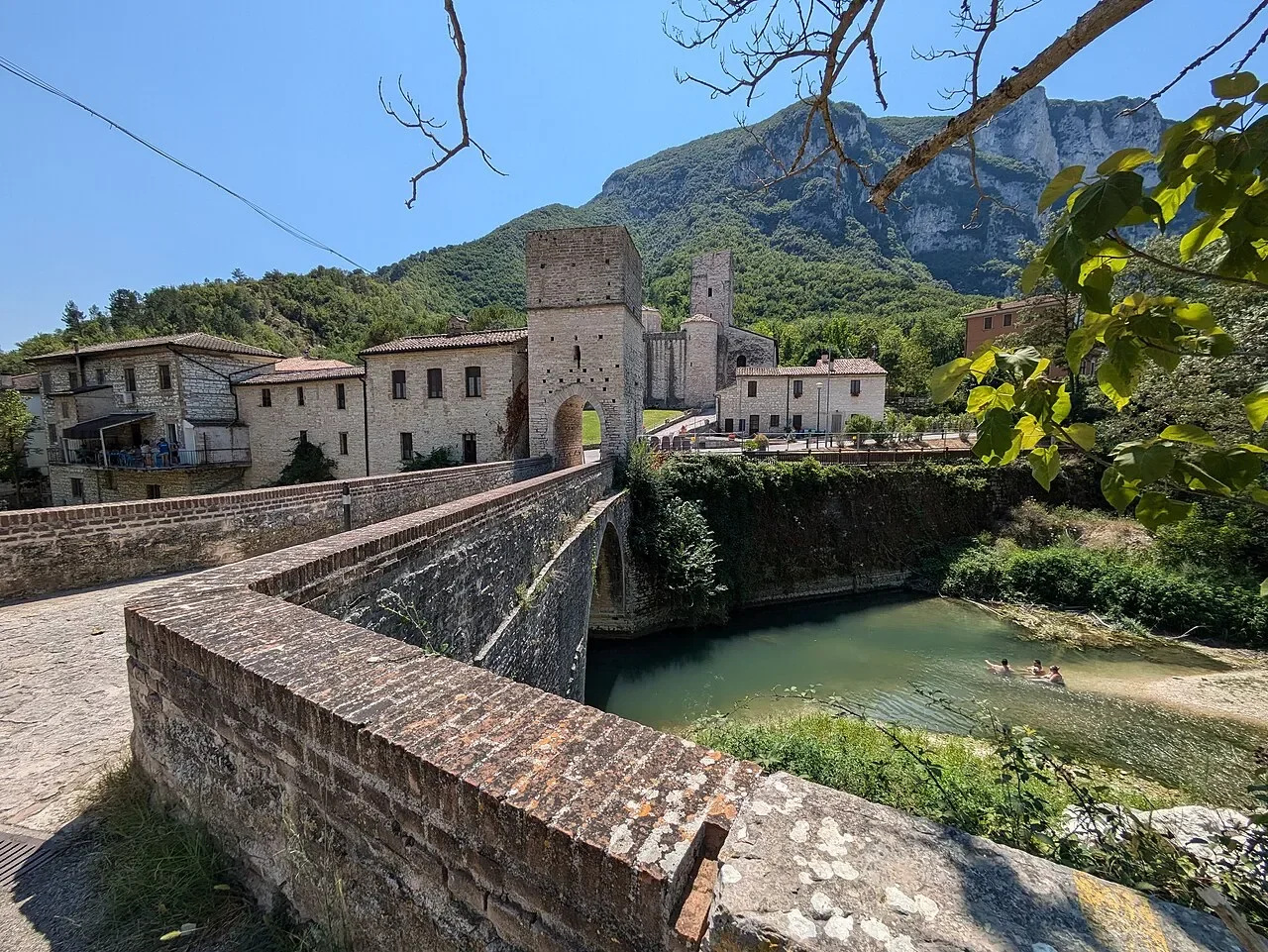
The present church dates largely to the late eleventh century, while records of the monastery reach back to the beginning of that century. Its setting at the eastern entrance to the gorge is part of its identity: this was a religious community positioned in a constrained river landscape.
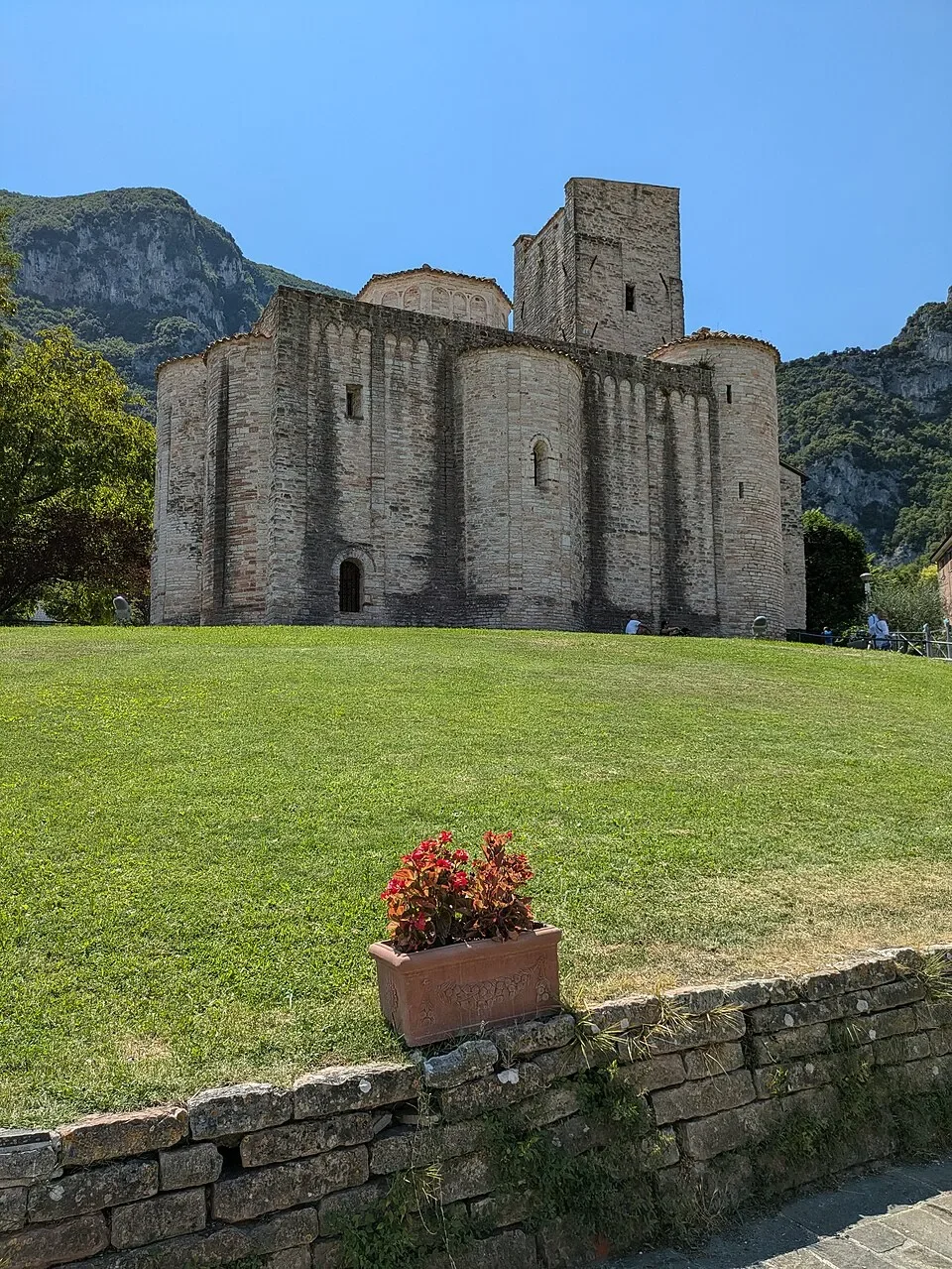
Look first at the compact mass of the building, its towers and the octagonal structure above the crossing. Inside, four substantial piers organise the space into nine bays. The effect is solid and measured, with the architecture itself doing much of the storytelling.
Walk slowly around the accessible parts of the exterior, then give the interior time for your eyes to adjust. You do not need a long checklist to appreciate the relationship between the simple stone surfaces and the vaulted space.
Hidden Italy tip: Treat this as a church as well as a monument. Check opening arrangements and allow worshippers their space when visiting.
02 · THE SENTINO & THE BRIDGE
Step outside to understand the setting
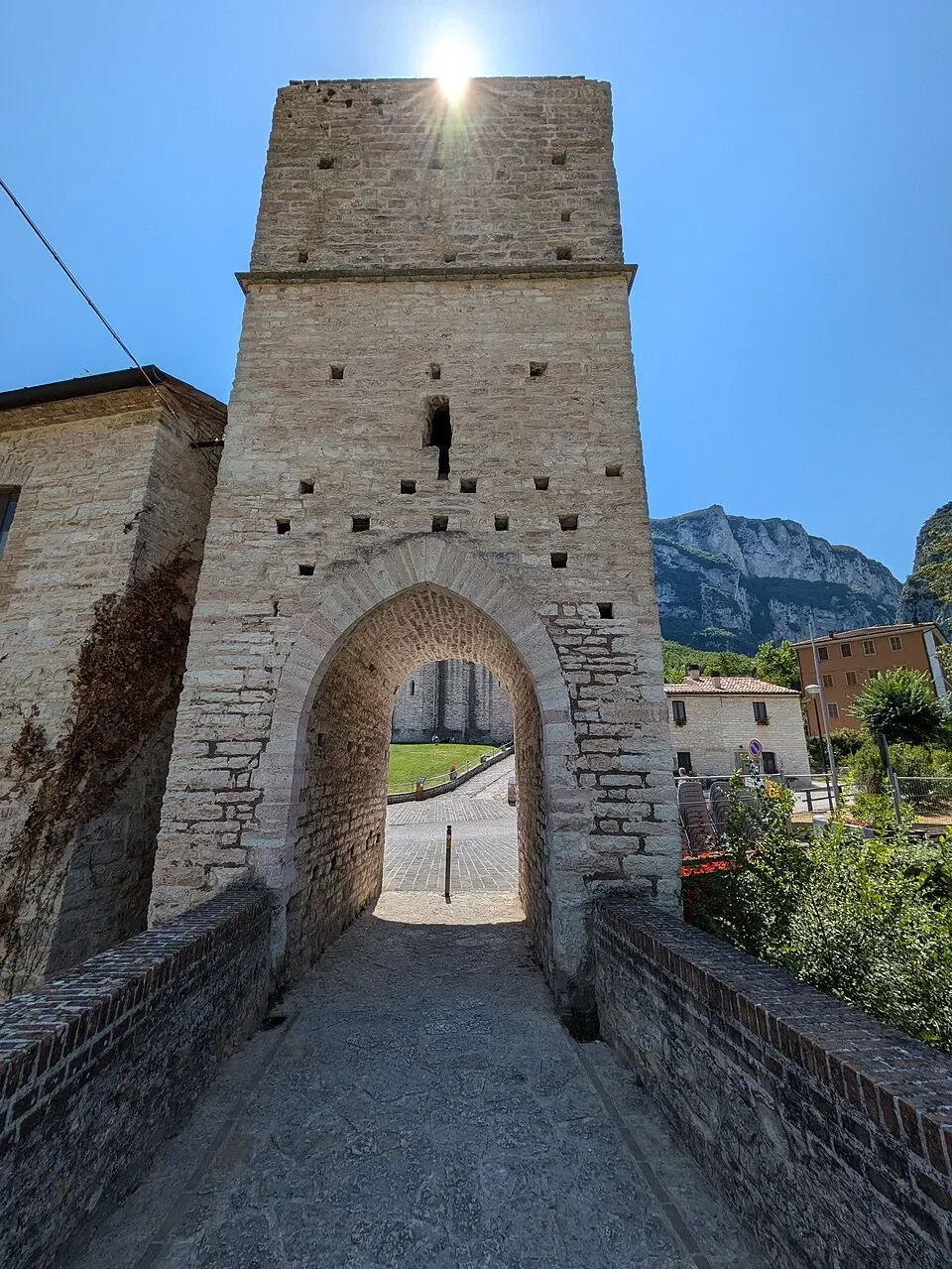
The historic bridge over the Sentino stands beside the abbey, with a tower-gateway marking the crossing. It draws your attention back to the practical geography of the place: river, passage and gorge entrance are all close together.
Pause on the public approach and look between the stone buildings and the limestone slopes. The abbey makes more sense when seen as part of this narrow valley, rather than as an isolated architectural stop.
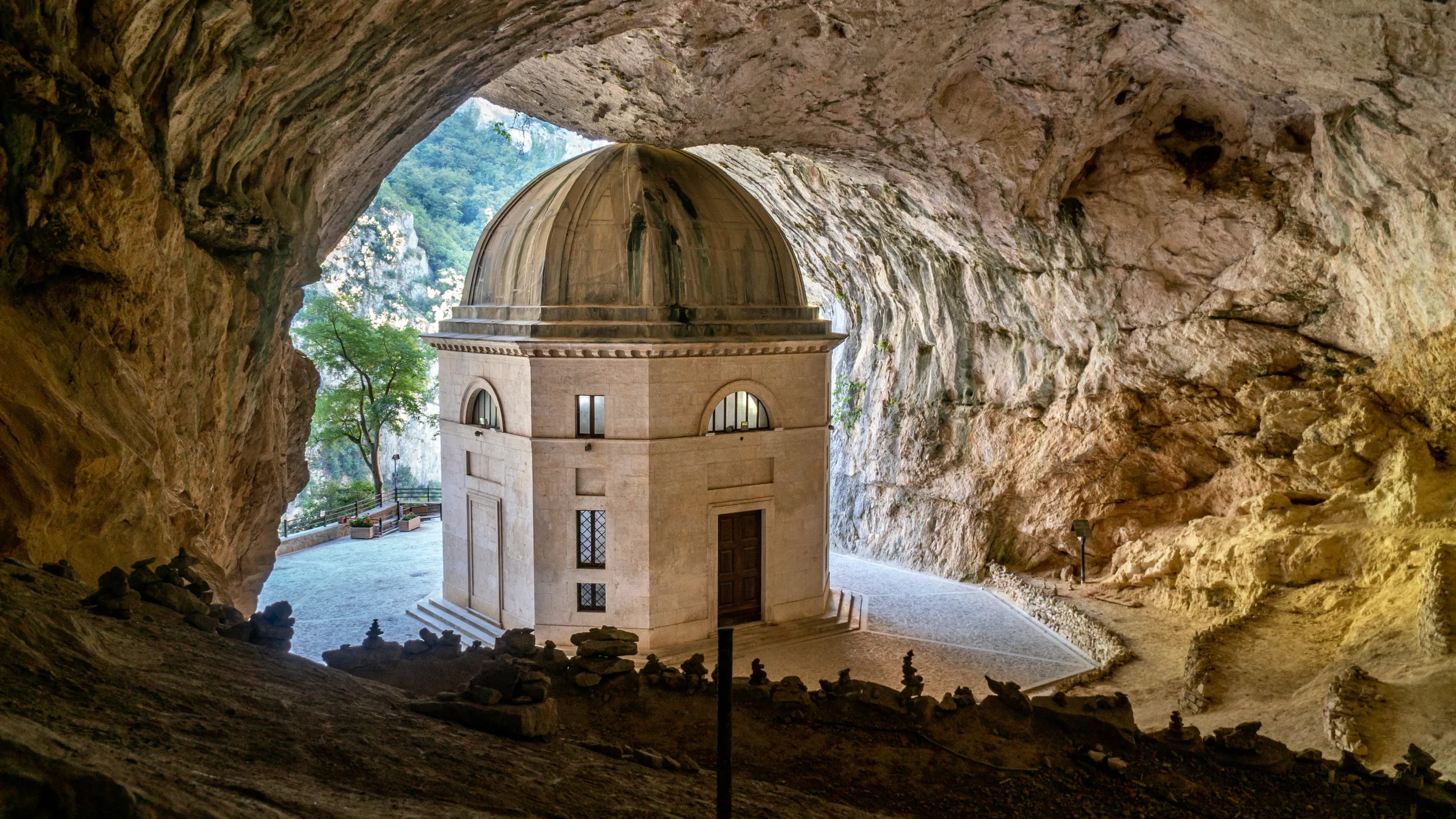
The wider Frasassi area has several distinct visitor sites. The show caves, the sanctuary commonly called Tempio del Valadier and the hill village of Genga are separate visits with their own access arrangements.
Hidden Italy tip: Leave a little time between booked attractions for the bridge and hamlet. Follow public pedestrian routes and do not assume the riverbank is a continuous walking trail.
03 · FOSSILS & DEEP TIME
Meet the landscape’s much older inhabitants
Beside the abbey, the Speleo-Paleontological and Archaeological Museum shifts the story from medieval buildings to the area’s geological past. Its best-known fossil is an ichthyosaur discovered in 1976 during road-tunnel works near Genga.
The collections also explore caves and karst processes, local rocks and fossils, and the early human history of the territory. Bronze Age funerary material adds a different time scale to the visit.
This makes a useful companion to the caves: you can connect the scenery outside with the processes that shaped it. Families may prefer to choose a few objects and explanations rather than trying to absorb every display.
Plan ahead: Consult the official museum information for current opening and entry arrangements. Confirm access to the individual floors if you need a step-free visit.
PLAN YOUR VISIT
Make San Vittore part of an unhurried Frasassi day
A suggested half day, with an optional cave visit
Begin locally: visit the abbey, walk to the bridge and spend time in the museum when it is open. We suggest keeping a half day free for this combination, including a relaxed break, rather than using San Vittore only as a brief photo stop.
For a full day: add a pre-booked Frasassi cave visit and organise the other stops around its admission time. The cave ticket office, entrance and transfer arrangements require attention; allow the time stated by the operator and avoid booking another attraction immediately afterwards.
Where to stay & how long to spend
San Vittore and the Genga area suit a stay focused on the gorge and its monuments. A countryside property gives more space but may require a car for meals and evening travel. One or two nights lets you separate the caves from other visits. Confirm the exact location: accommodation in Genga village is not necessarily beside the abbey.
When to visit
Spring and autumn are our choices for combining architecture with the surrounding landscape. In summer, plan outdoor sections for cooler hours. The abbey and museum can also form part of a visit in cooler months, provided their opening days match your plans.
Arrival & getting around
The official local arrival guide identifies Genga–San Vittore Terme station on the Ancona–Rome railway. Check the services that actually stop there and your onward walking or transfer route. By car, follow local signs for San Vittore and use the designated parking areas.
Do not confuse San Vittore, the cave entrance and Genga’s hilltop village when planning transfers. Ask each venue about steps, surfaces and accessible entrances if these affect your visit.
Build it into a longer Marche trip
Use San Vittore as an introduction to the Frasassi landscape, then continue to other inland towns or the coast on a separate day. Browse our Le Marche travel guide for regional ideas.
For the abbey and local context, see Frasassi Experiences. Consult the official arrival guide and Frasassi Caves for current transport, booking and admission arrangements.
Image credits
Bridge and abbey: Abbazia di San Vittore alle Chiuse 5 by Accurimbono, CC BY-SA 4.0, via Wikimedia Commons.

Gate tower: Abbazia di San Vittore alle Chiuse 10 by Accurimbono, CC BY-SA 4.0, via Wikimedia Commons.

Abbey exterior: Abbazia di San Vittore alle Chiuse 3 by Accurimbono, CC BY-SA 4.0, via Wikimedia Commons.

Commons images converted to WebP and resized for this page. Adapted versions remain available under the respective licences linked above.