Subiaco
Painted sanctuaries and monastic history above the Aniene Valley
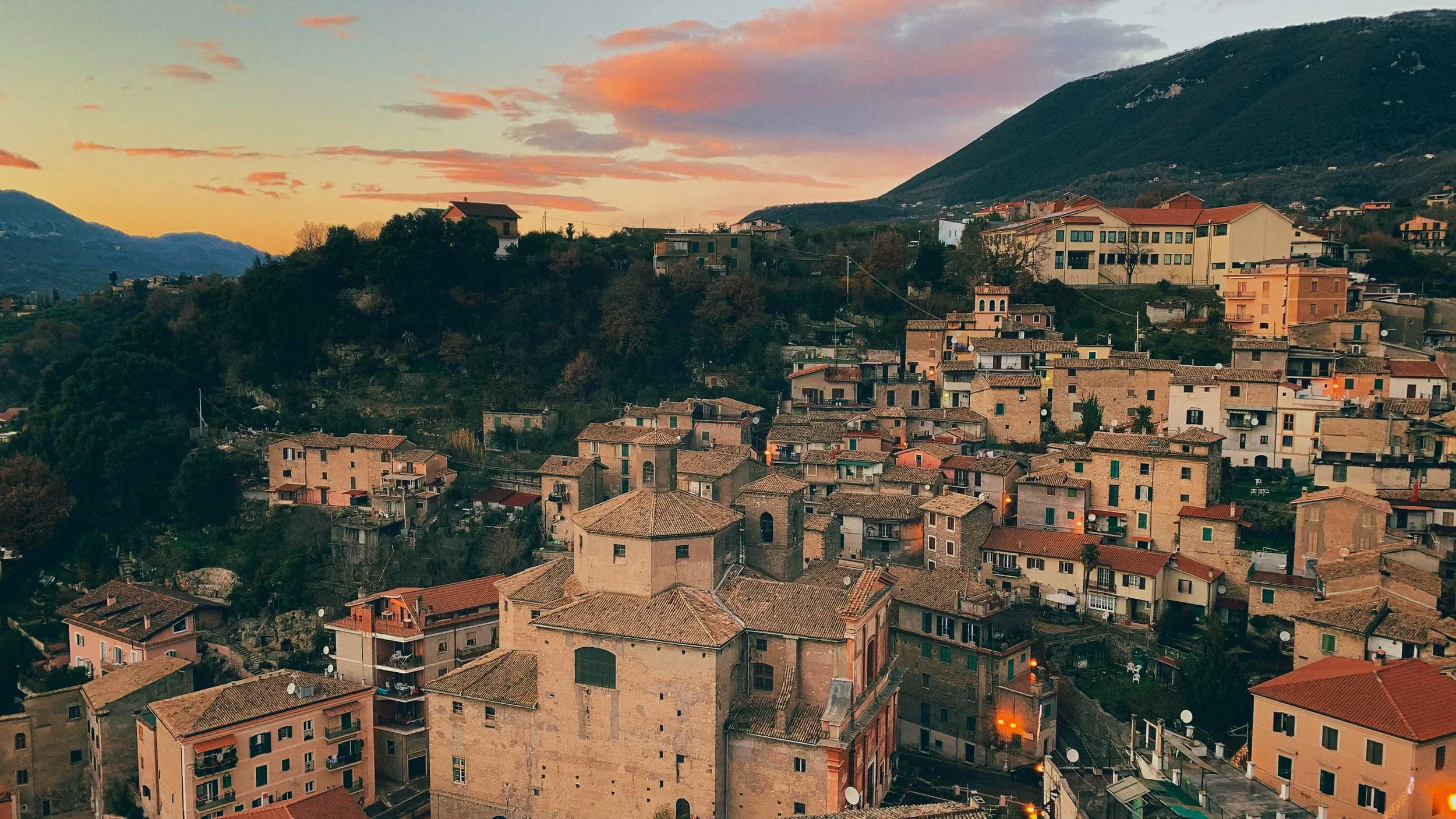
Subiaco asks you to look beyond a single village centre. Its celebrated monasteries sit outside the town, where religious history, painted interiors and a dramatic hillside setting come together. The Sacro Speco and Santa Scolastica offer different experiences, while the historic streets, river bridge and hilltop rocca give the town its own character. Plan around confirmed visiting arrangements and the journeys between them, and Subiaco becomes a rewarding day of art, landscape and quiet observation.
01 — THE SACRO SPECO
Enter a sanctuary built around the rock
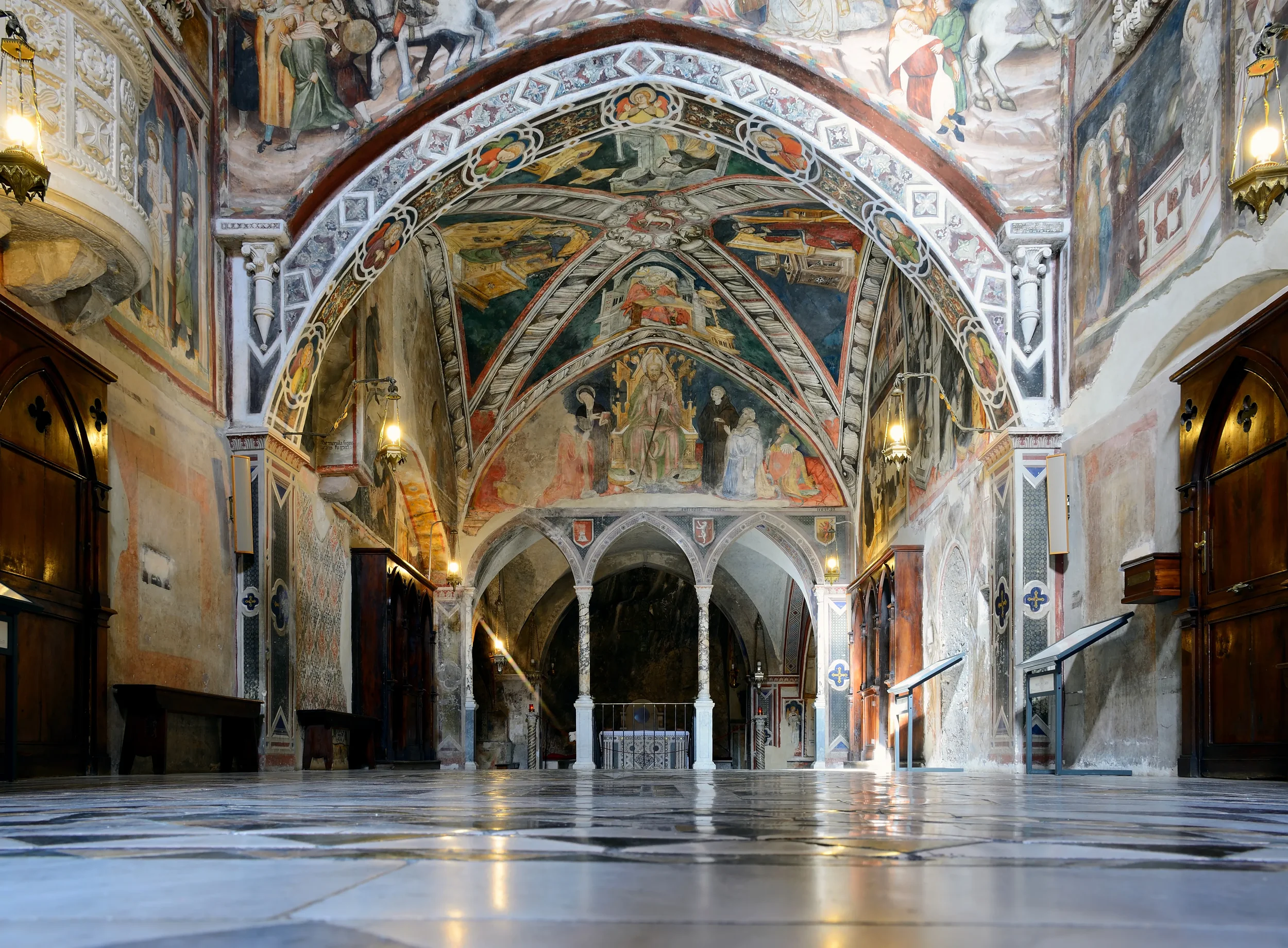
The Monastery of San Benedetto, often called the Sacro Speco, is built against the mountainside around the cave associated with Saint Benedict’s early retreat. The setting gives the visit an immediate sense of place: the rock is part of the architecture, not merely its backdrop.
Inside, painted churches and chapels unfold on different levels. Take time to look at the frescoes as part of the spaces they occupy, following the guide and the permitted visitor route. This remains a sanctuary, so dress appropriately and keep the atmosphere quiet.
Access to individual areas can change. The monastery currently reports restoration work affecting the Chapel of San Gregorio, which contains the well-known portrait of Saint Francis. Check the monastery’s current visitor information rather than assuming that every artwork will be visible.
Hidden Italy tip: Arrive with enough time to join the visit calmly. A last-minute dash before the midday break is a poor match for this setting.
02 — SANTA SCOLASTICA
Discover another rhythm of monastic life
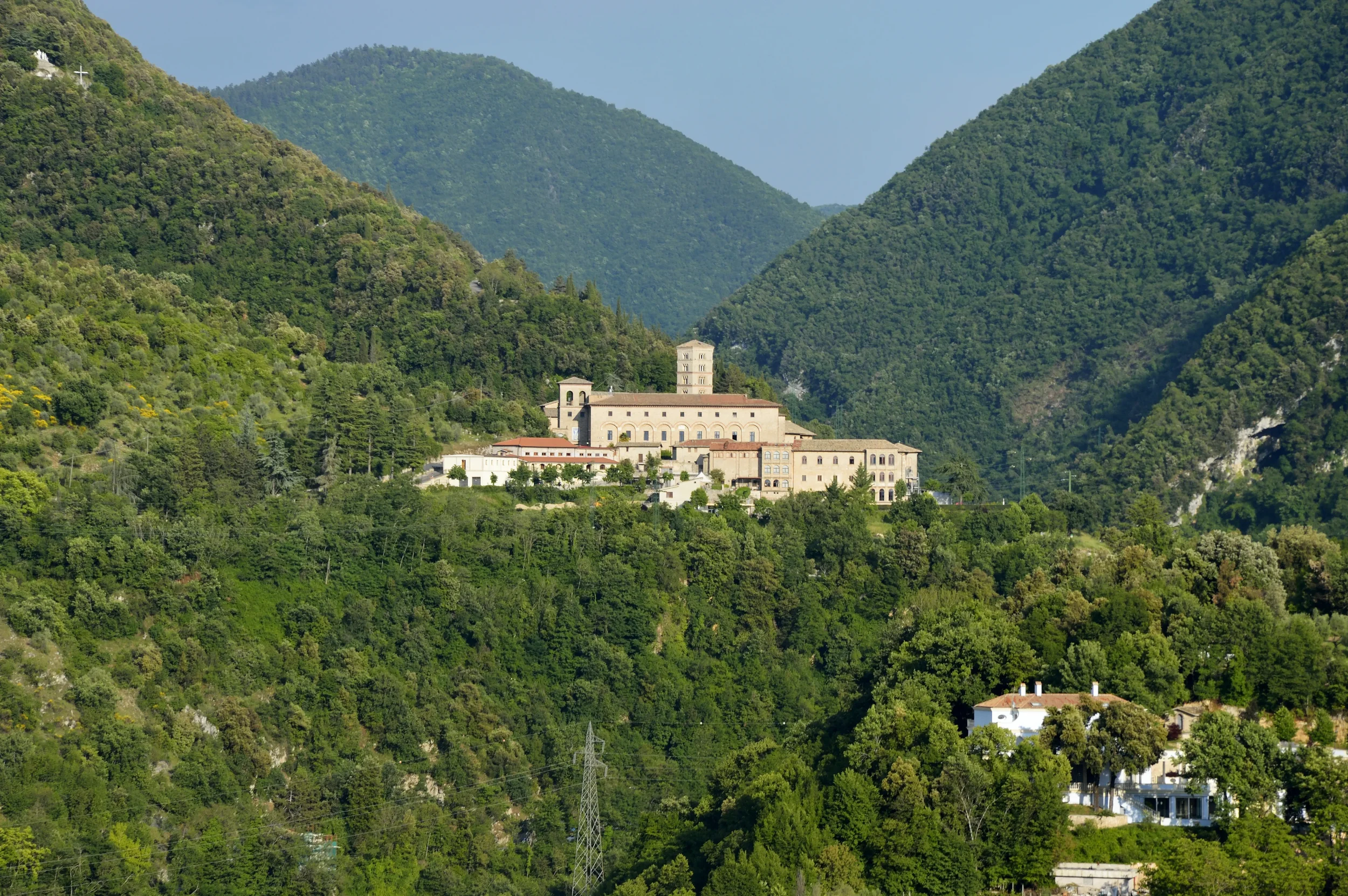
Santa Scolastica offers a different perspective on Subiaco’s Benedictine history. Its cloisters and successive architectural layers speak of a community that developed over many centuries, rather than a single moment preserved unchanged.
The medieval Cosmatesque cloister is a highlight, while the church introduces a later, neoclassical language associated with Giacomo Quarenghi. Looking at the contrast between these spaces makes the visit more rewarding than trying to memorise every date.
The monastery is also associated with the early history of printing in Italy. Its books and library form part of a much larger story of learning and preservation. Do not assume that a standard visit includes access to every collection: confirm the guided route and any special arrangements in advance through the Abbey of Subiaco website.
Hidden Italy tip: See both monasteries if time allows, but leave a proper gap between them. Their differences deserve attention.
03 — THE TOWN AND RIVER
Leave time for Subiaco itself
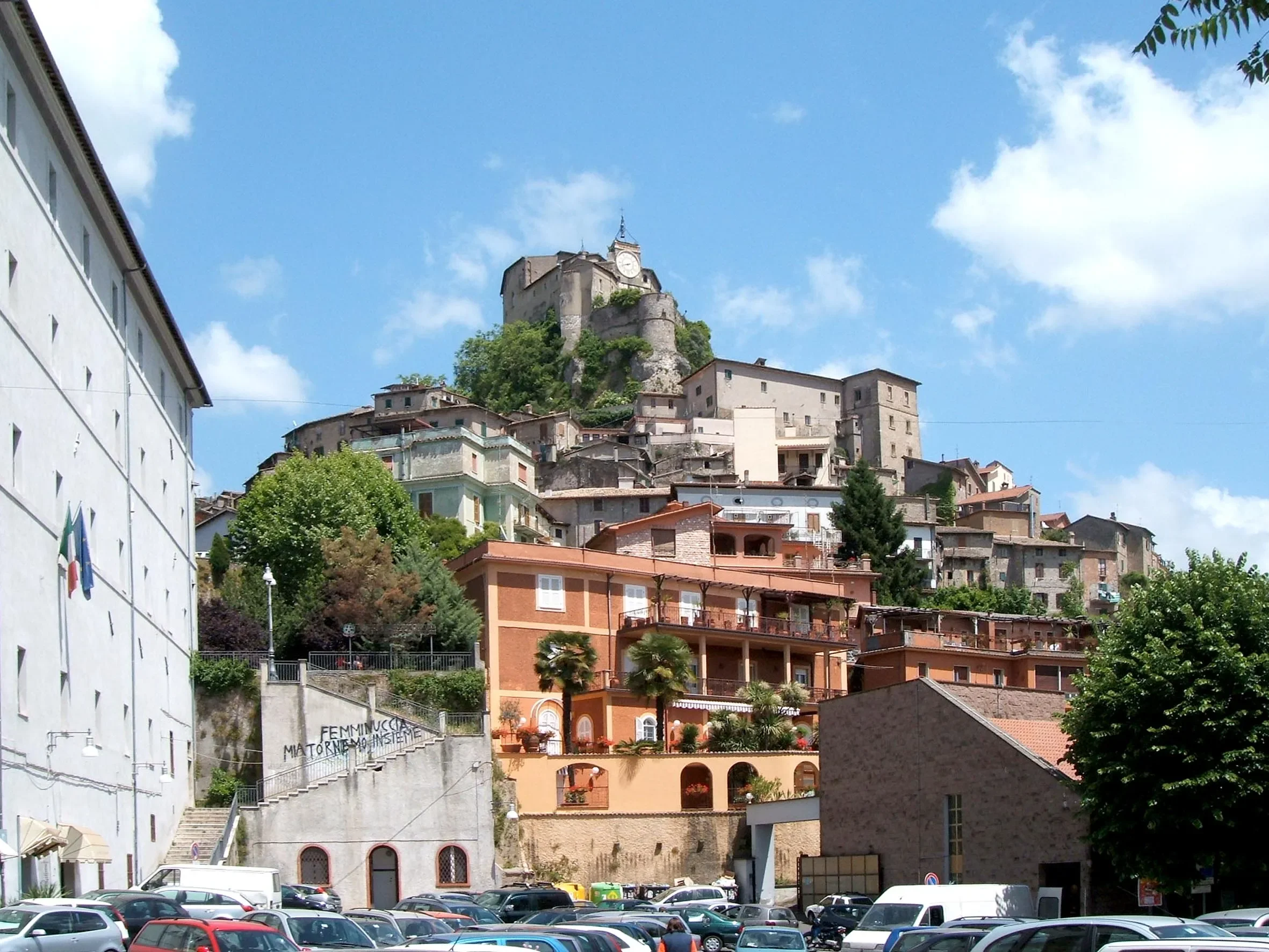
After the monasteries, the town brings the day back to a more everyday scale. Explore the historic streets and seek out the medieval Ponte di San Francesco, whose relationship with the river offers a different kind of view from the hillside sanctuaries.
Above the town, the Rocca di Subiaco adds a secular chapter. Its noble apartments and exhibitions can be visited when the site is open. Check the rocca’s official visitor page before including the interiors in your itinerary, particularly on weekdays.
The wider Aniene Valley and Simbruini mountains invite a longer stay, but a substantial walk should be planned separately from a full day of monastery visits. Choose a route using current local information rather than extending a town stroll into unfamiliar terrain.
Hidden Italy tip: Keep a meal in town in the plan. It gives you a natural pause between the monasteries and an afternoon spent exploring the streets.
PLAN YOUR VISIT
Plan the visits before arranging the day
A day in Subiaco
For a full day, organise the two monasteries around their confirmed visiting times, with lunch and a shorter town walk between or afterwards. Add the rocca only if its opening fits comfortably. An overnight stay gives more room for the town and surrounding countryside.
Where to stay
A central base suits evening meals and walks through Subiaco. Accommodation nearer the monasteries or in the countryside may suit a quieter stay, but check how you will reach meals and other sights. Confirm parking and access rather than judging distances alone.
When to go
Spring and autumn can be pleasant for combining art and outdoor time. Religious services, seasonal schedules and restoration work can affect visits at any time of year. In winter, allow for shorter daylight and check conditions before heading higher into the mountains.
Getting there and around
The monasteries are outside the town and should not be treated as adjacent stops on a flat urban walking route. A car or a prearranged transfer makes the logistics more straightforward. If arriving by public transport, confirm the onward journey to each monastery as well as the return home.
Both sites have guided visiting arrangements and midday breaks. Consult their own current information for access, group requirements and appropriate clothing. If stairs or uneven surfaces are a concern, contact the site about the actual route before travelling.
Make it a longer journey
Explore the Lazio guide for a wider route through the region. Our seven-day itinerary provides another starting point, with enough flexibility to give Subiaco a full day rather than squeezing its monasteries into a brief detour.
Image credits
Subiaco at sunset — Robert Anitei, via Unsplash, Unsplash License.
Frescoed church of the Sacro Speco — Livioandronico2013, via Wikimedia Commons, CC BY-SA 4.0.

Monastery of Santa Scolastica — Livioandronico2013, via Wikimedia Commons, CC BY-SA 4.0.

Subiaco and the Rocca Abbaziale — Pippo-b, via Wikimedia Commons; released into the public domain by the uploader.

Images have been resized and, where applicable, converted to WebP for this website; display crops may vary by screen size. Adapted CC BY-SA images retain the same share-alike licence.