Sorano
Steep lanes, a Renaissance fortress and a village shaped by tuff
Sorano rewards a slower look. From above, its houses gather around a rocky ridge; inside, stairways and narrow passages reveal a town fitted closely to the landscape. This is a good base for exploring southern Tuscany’s tuff country, but the village itself deserves time between excursions. Come for the views, then stay long enough to understand how the fortress, streets and rock-cut paths fit together.
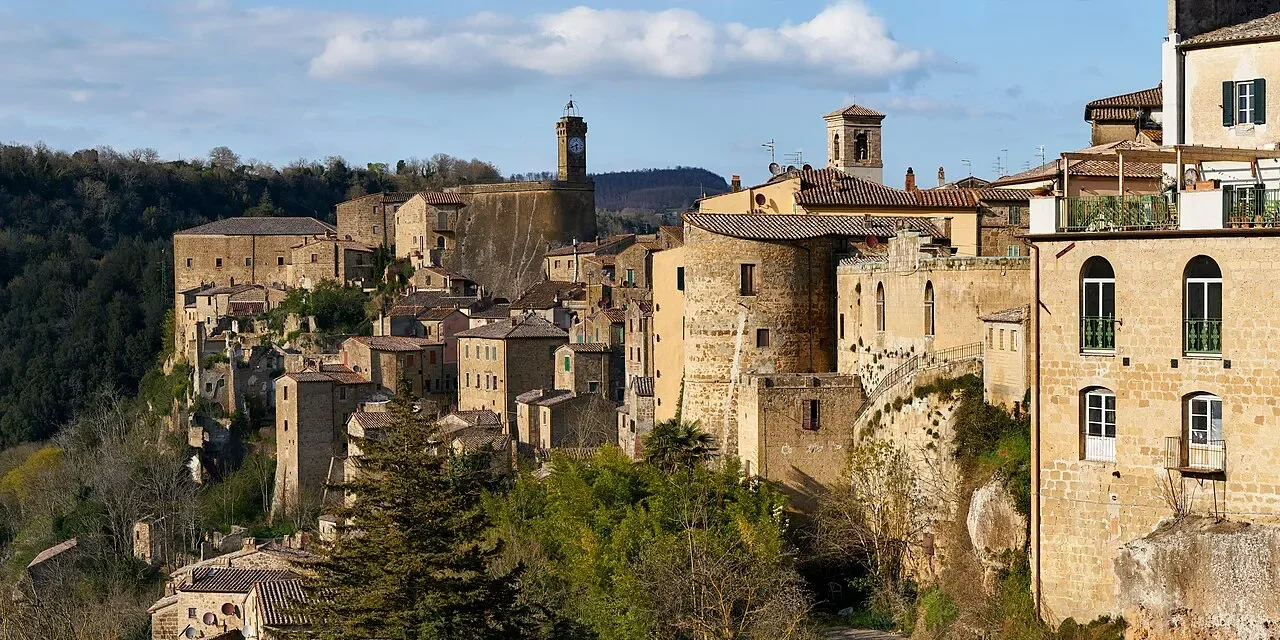
01 — THROUGH THE LANES
Let the old town unfold one level at a time
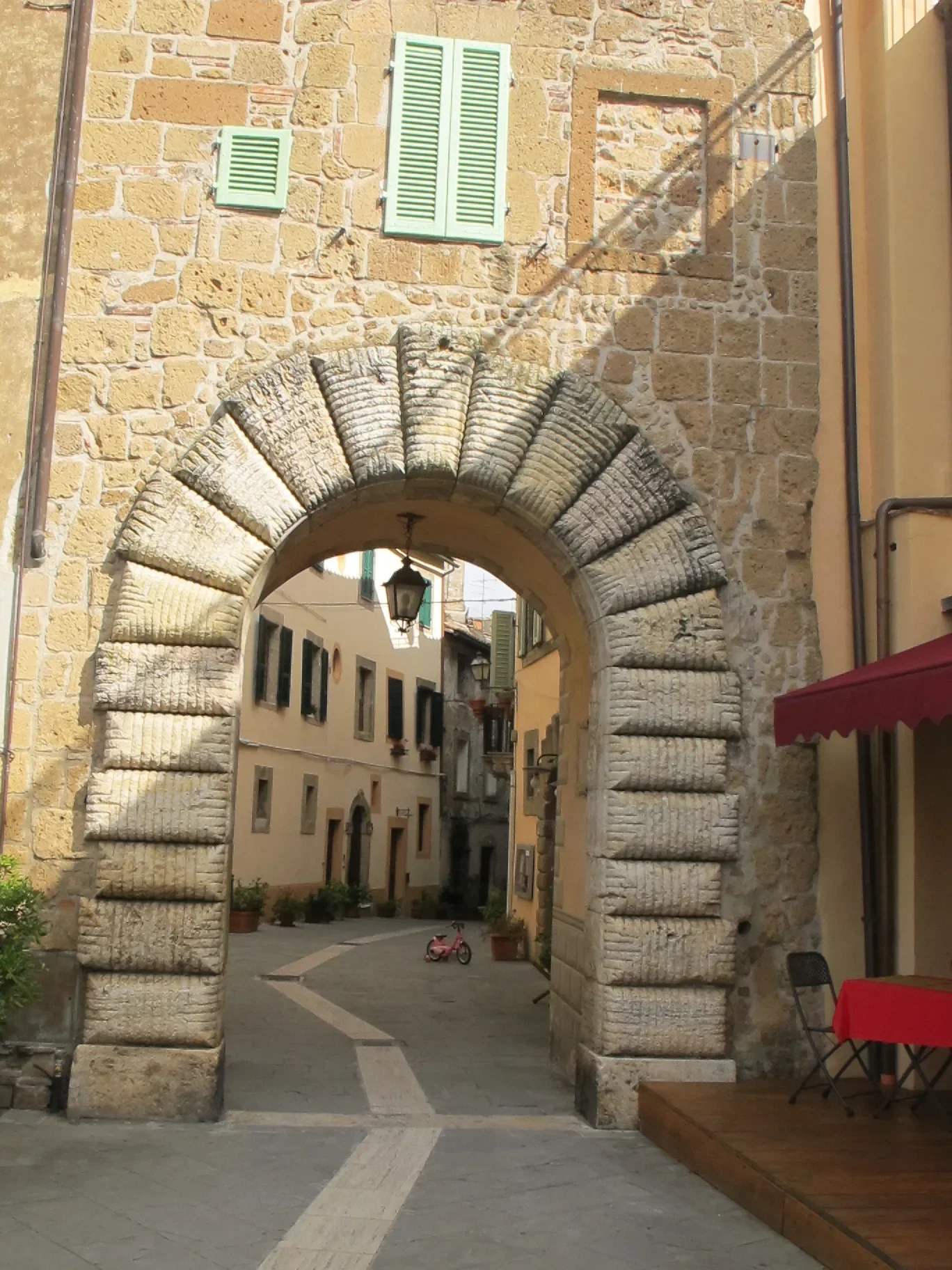
Enter near Porta di Sopra, beneath the fortress, and make your way into the centre towards the Collegiate Church of San Nicola. The route introduces the contrast that defines Sorano: substantial defensive buildings above, intimate streets below.
Continue along the public lanes towards Porta dei Merli, also known as Porta di Sotto. A walk here is less about covering distance than negotiating changes in level, pausing at a corner and noticing how houses use the shape of the ridge.
Leave time to retrace your route. A downhill detour means a climb back, and narrow streets can look quite different in the opposite direction. Comfortable shoes make more difference than a packed sightseeing list; keep private steps and residential entrances clear.
Hidden Italy tip: Walk the centre before choosing a place for lunch, so your break falls naturally between the lower streets and the climb to the viewpoints.
02 — FORTRESS AND SKYLINE
See Sorano from its two great landmarks
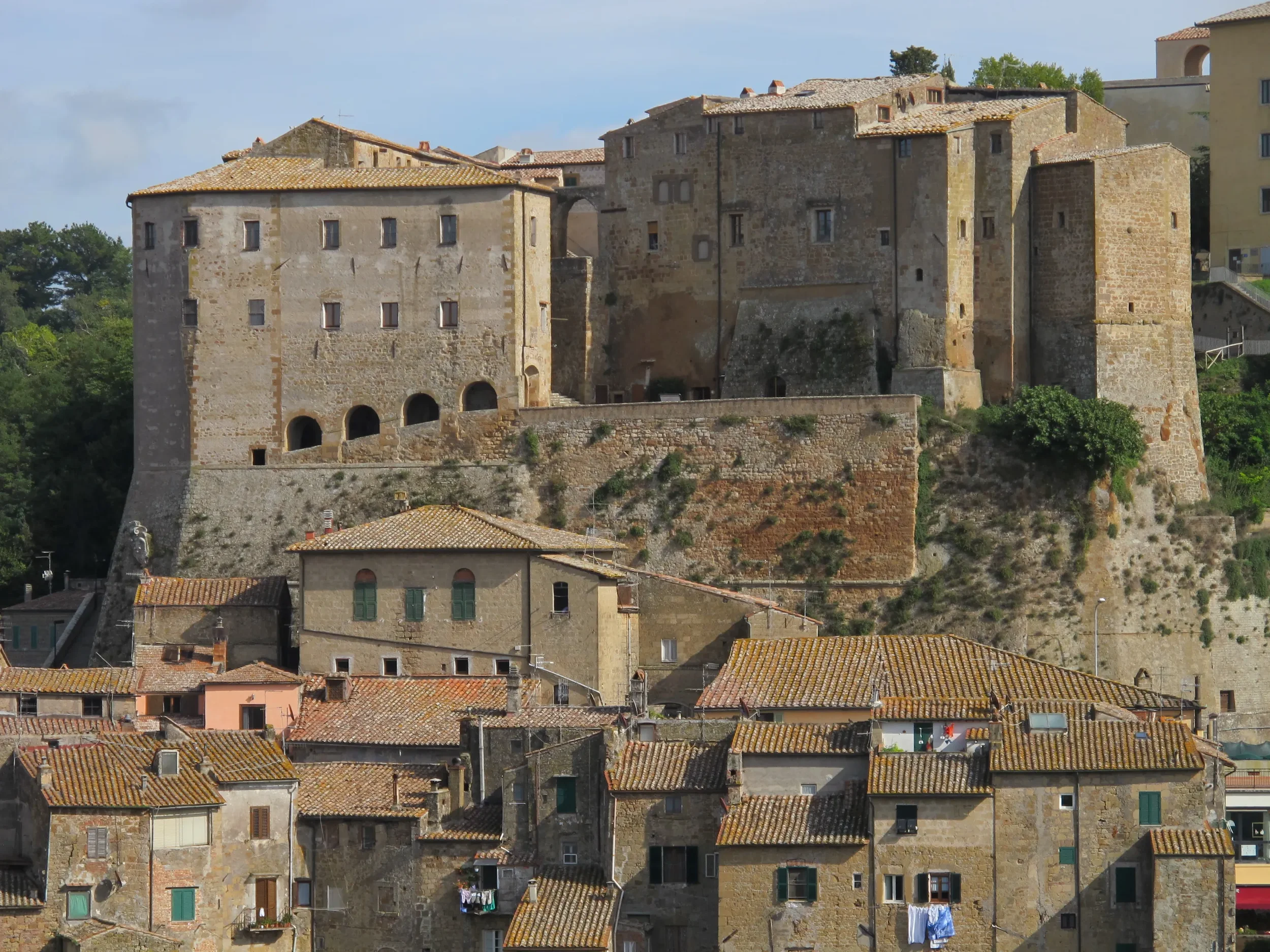
The Fortezza Orsini dominates the upper town. Its imposing defences make sense of Sorano’s strategic position and offer a different experience from the domestic scale of the streets below. Check the current museum and guided-visit arrangements before fixing your schedule.
Across the village, Masso Leopoldino combines natural rock with defensive architecture. Its present form owes much to nineteenth-century consolidation after falling rock damaged the town. A steep stairway leads towards the panoramic terrace.
Visit each for a different perspective rather than treating them as interchangeable photo stops. Confirm access on the day and allow time for the steps. If climbing is unsuitable for your group, build the visit around accessible street-level views and discuss the route with the local visitor office.
Hidden Italy tip: Choose a clear part of the day for the panorama, then use the fortress visit to add historical context.
03 — BEYOND THE RIDGE
Explore the tuff landscape with a specific route in mind
Sorano belongs to the wider Città del Tufo archaeological landscape, alongside Sovana and Vitozza. Rock-cut paths, wooded slopes and archaeological remains give this corner of Maremma its distinctive character.
Choose one walk or site for an afternoon. The monumental Etruscan tombs associated with Sovana are outside Sorano’s centre, while Vitozza is another separate excursion. Driving between starting points and walking within a site both need space in your plans.
Ask locally about current path conditions and access before setting out on a via cava. Routes cut into tuff can be uneven and slippery after rain. Carry water, wear shoes with grip and keep enough daylight for the return; a guide can help explain features that are easy to miss alone.
Hidden Italy tip: Pair the village with one outdoor visit, saving the remaining tuff towns for another day.
PLAN YOUR VISIT
Make room for both the climb and the pause
A suggested day in Sorano
Start with the old town and San Nicola, then visit the fortress around its confirmed opening. Take lunch before the climb towards Masso Leopoldino. Use the afternoon for either a short, checked walking route or a leisurely return through the lanes; a substantial archaeological excursion deserves a separate half-day.
Where to stay and how long
One night lets you enjoy the village after day visitors leave. Two or three nights nearby suit a wider journey through Sorano, Sovana and Pitigliano. For a room in the historic centre, ask about stairs, luggage drop-off and the walk from parking before booking.
When to visit
Spring and autumn can suit walking, although rain may change your plans. In summer, tackle the climbs early and leave the warmest hours for lunch or an indoor visit. Check individual opening arrangements outside the main season rather than assuming every attraction follows the same calendar.
Getting here and around
A car is useful for combining dispersed sites, but park in signed areas and explore the old town on foot. If using buses, check the exact stop, onward transfer and final return service for your travel date. A connection to the surrounding area is not necessarily a convenient connection to your accommodation.
Build a longer Tuscan journey
Combine Sorano with the other tuff towns at a pace that leaves time for walking. Our Tuscany travel map helps organise the wider route, while the Tuscany guide introduces other corners of the region. Use the seven-day itinerary as a starting point and allow extra days for southern Maremma.
Image credits
Sorano panorama from the south — Virtual-Pano · CC BY-SA 4.0
Porta di Sopra — Kritzolina · CC BY-SA 4.0
Fortezza Orsini — Kritzolina · CC BY-SA 4.0
Via Wikimedia Commons. Converted to WebP and resized for display; any crops and these adaptations are shared under the respective image licences.


