Pitigliano
A town of golden tuff, layered histories and paths cut into the rock
Pitigliano makes a remarkable first impression: houses rise from the edge of a tuff plateau, with stone and architecture almost merging into one outline. Inside, narrow streets lead between churches, small squares and the Jewish Quarter. The landscape below carries another layer of history in its rock-cut paths. Come for the skyline, but allow a full day to understand the town beyond it.
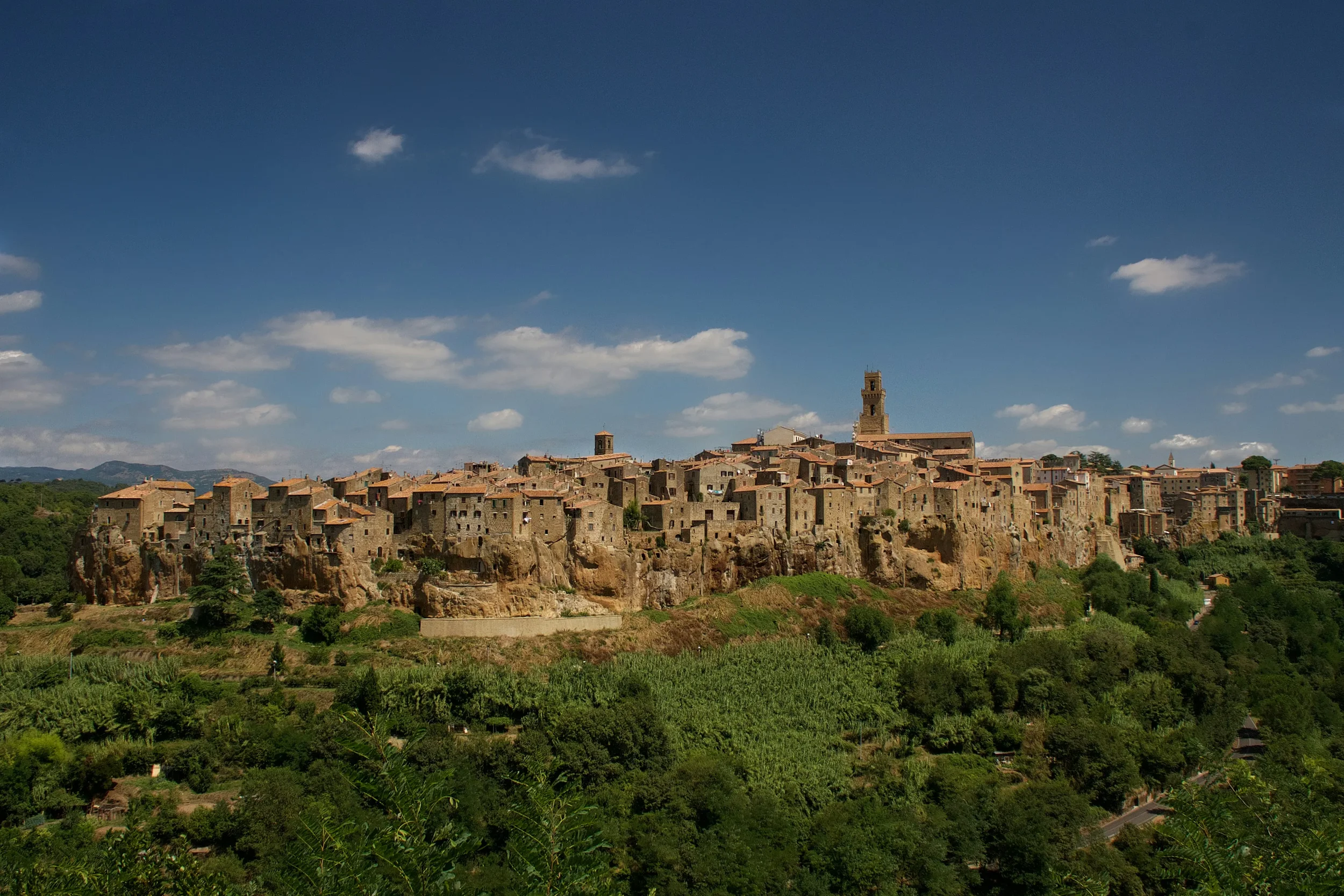
01 — STONE AND SKYLINE
Follow the ridge through the old town
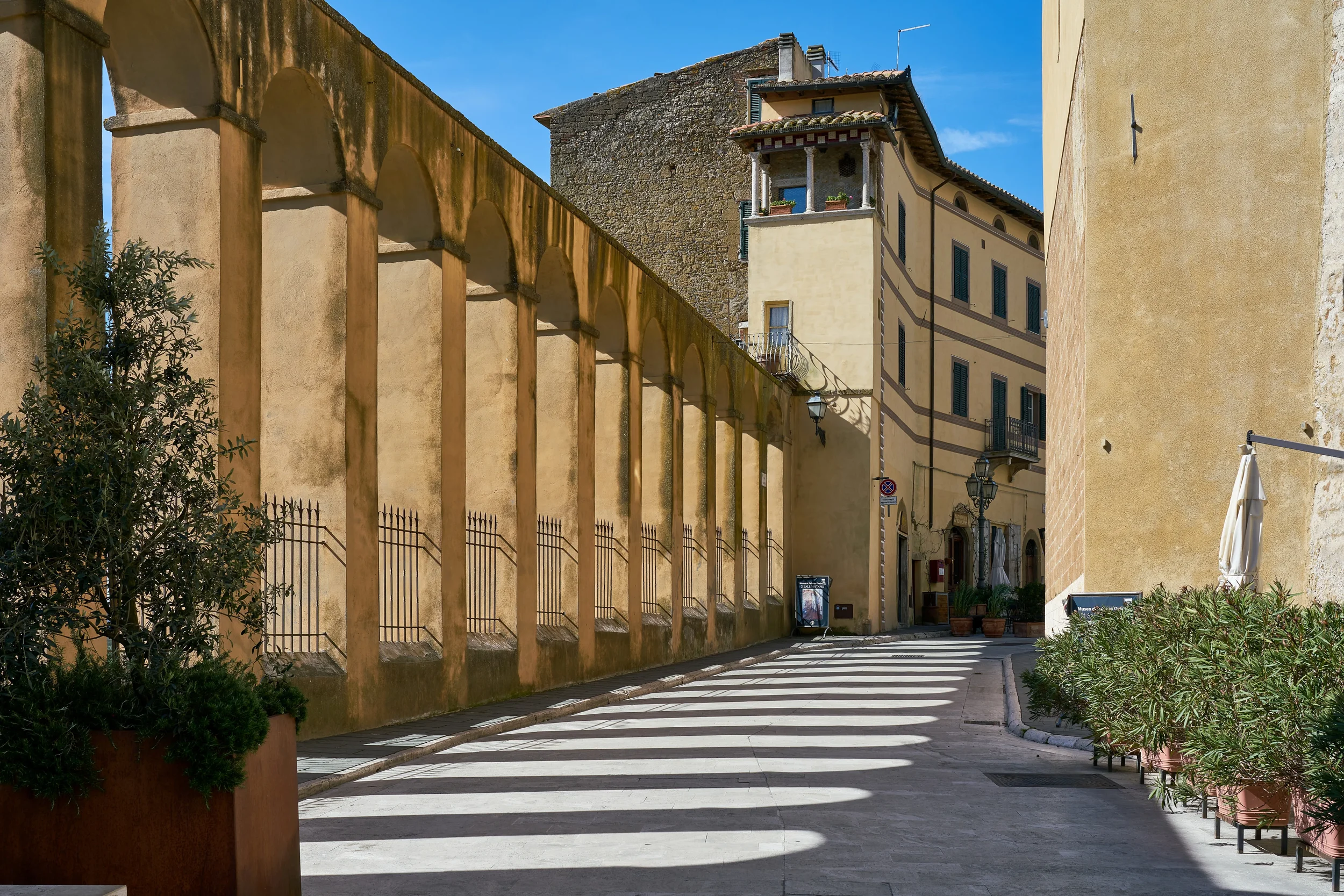
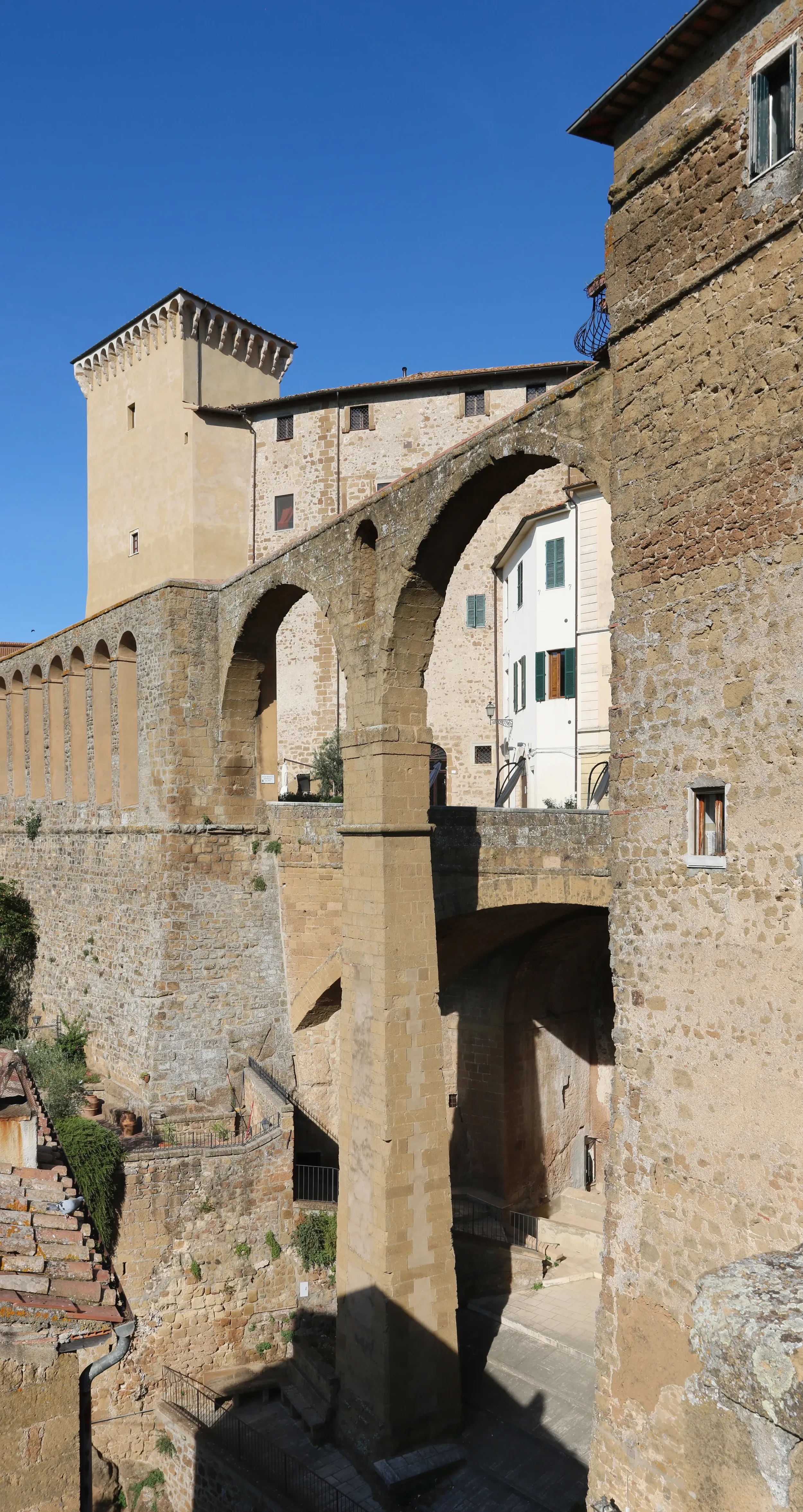
Begin around Piazza della Repubblica, where the aqueduct’s arches and Palazzo Orsini introduce the scale of the town’s historic ambitions. Continue into the older streets towards the cathedral, then explore the smaller lanes that branch away from the main route.
Palazzo Orsini developed from an earlier Aldobrandeschi building into the residence of the counts. Today its museums offer different ways into local history, including archaeology and religious art. Choose the collection that interests you most and confirm its current visitor arrangements before planning the day around it.
For the broader view, the area near the Santuario della Madonna delle Grazie is a recognised place to see the town across the valley. Reach a proper public viewpoint safely rather than stopping on a road bend. The distant outline becomes more interesting once you have walked the streets within it.
Hidden Italy tip: Alternate the main street with short detours into side lanes, keeping private doorways and courtyards clear.
02 — LITTLE JERUSALEM
Give the Jewish Quarter time and attention
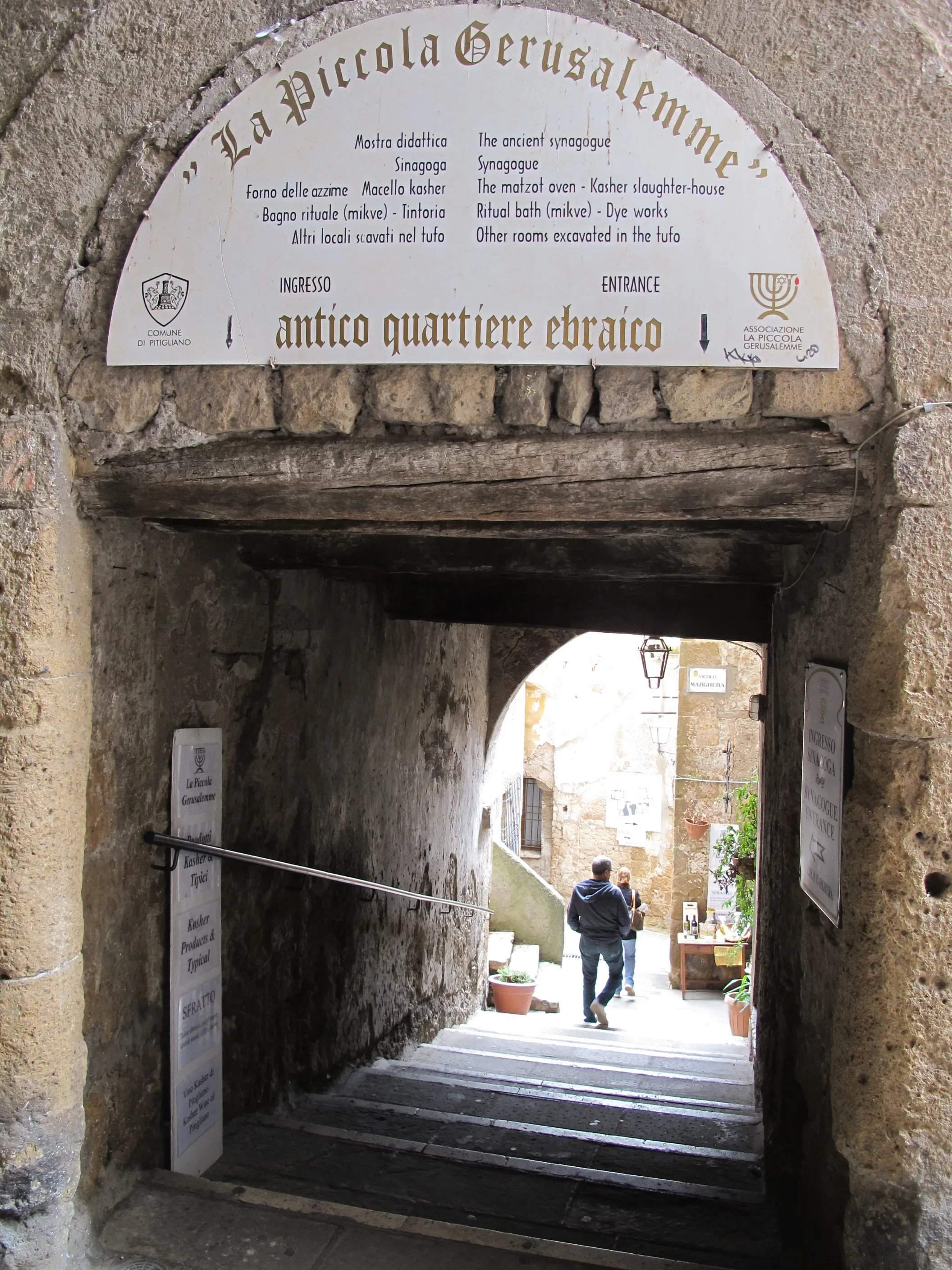
Pitigliano’s Jewish heritage is central to its identity. The synagogue, originally built in 1598 and subsequently restored, forms part of a visitor route through spaces associated with the community’s religious and daily life.
The ritual bath, kosher wine cellar and unleavened-bread oven help explain how people lived here. These places deserve more than a passing photograph: the visit brings together faith, work and the town’s unusual relationship with the rock beneath its streets.
Check the current opening arrangements and any guided visits before arriving, especially if travelling on a Saturday. The municipal museum page provides an official introduction and contact details. Follow the site’s guidance for respectful dress and behaviour inside the synagogue.
Hidden Italy tip: Arrange this visit first if it is your main reason for coming, then fit the palace and town walk around it.
03 — THE VIE CAVE
Discover a landscape shaped by passage
The vie cave are corridors cut into the tuff around Pitigliano, many associated with Etruscan origins and altered through centuries of use. Walking between their high walls gives a very different impression of the area from looking down at it from town.
Choose a specific route rather than treating every path as one interchangeable walk. The Gradone route belongs to the Alberto Manzi open-air archaeological museum and has its own ticketed access arrangements. Other paths have different approaches, gradients and conditions.
Consult the local visitor guide’s route information and current notices before setting out. Wear shoes with grip, allow for the return climb and avoid assuming a short route will be easy after rain. A guided walk can be useful for both orientation and historical context.
Hidden Italy tip: Give a walk its own place in the itinerary. If the morning has already filled with museums, save the paths for a second day.
PLAN YOUR VISIT
Balance the town’s history with its dramatic setting
A suggested day in Pitigliano
Start with Piazza della Repubblica and a museum in Palazzo Orsini, then continue through the historic streets. Visit the Jewish Quarter around its confirmed opening, with lunch between stops. Finish with a viewpoint; add a substantial vie cave walk only if you have enough daylight and energy.
Where to stay and how long
A night in the old town suits evening walks and dinner on foot, but check luggage access, steps and parking instructions. Accommodation outside the centre may offer easier car access for a wider southern Tuscany trip. Allow a full day here, or two nights if walking is a priority.
When to visit
Spring and autumn can be comfortable for combining town visits with walks. Summer makes the exposed streets and climbs more demanding in the middle of the day. In wet weather, favour museums over uncertain trail conditions and check seasonal opening arrangements.
Getting here and around
Follow signed parking outside the restricted historic streets and use your accommodation’s directions if staying inside. For a public-transport trip, verify the exact arrival stop and the return connection for your date; reaching the wider area does not guarantee an easy final transfer.
What to look for on the menu
Local specialities include acquacotta and the sweet known as sfratto, alongside Bianco di Pitigliano wine. Ask what is available locally rather than expecting every restaurant to serve the same dishes.
Build a longer Tuscan journey
Sorano and Sovana make natural companions on a slower exploration of the tuff towns. Use our Tuscany travel map to organise your stops and the Tuscany guide for broader inspiration. Our seven-day itinerary is another starting point, allowing extra time for this southern corner.
Image credits
Medici aqueduct from Via Cavour — Virtual-Pano · CC BY-SA 4.0
Entrance to the Jewish Quarter — Kritzolina · CC BY-SA 4.0
Medici aqueduct — Ingo Mehling · CC BY-SA 4.0
Via Wikimedia Commons. Converted to WebP and resized for display; any crops and these adaptations are shared under the respective image licences.


