Sirmione
A castle at the water’s edge, Roman ruins and a long peninsula walk
Sirmione reaches into the southern end of Lake Garda on a narrow peninsula. Its castle is the memorable first impression, but the town becomes more interesting when you continue beyond the busiest streets: Roman villa remains occupy the northern tip, old churches interrupt the walk and the lake appears on either side. This is a popular destination, so a little planning helps. Choose a few substantial stops and allow the journey between them to become part of the visit.
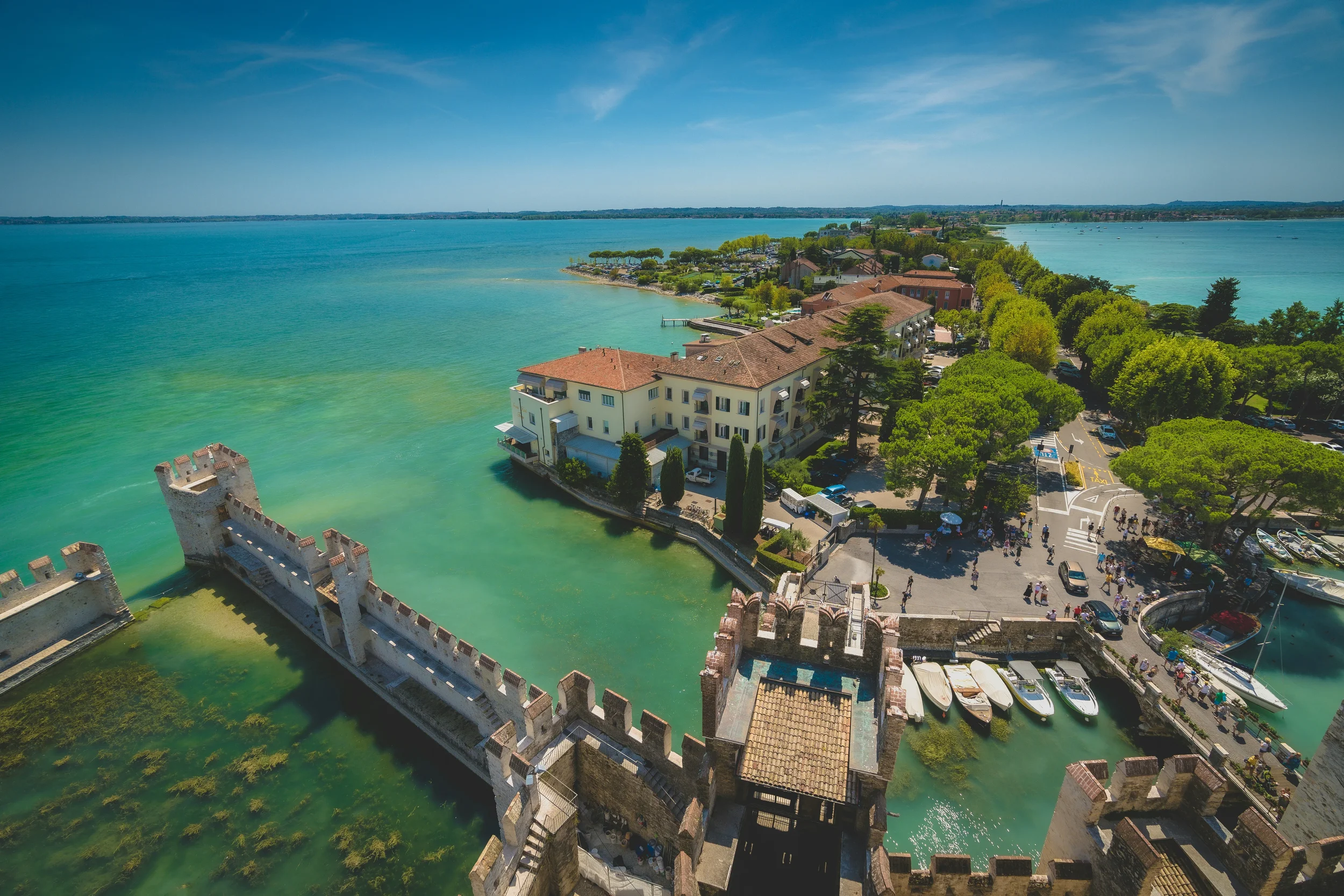
01 · THE SCALIGERO CASTLE
Begin where the town meets the water
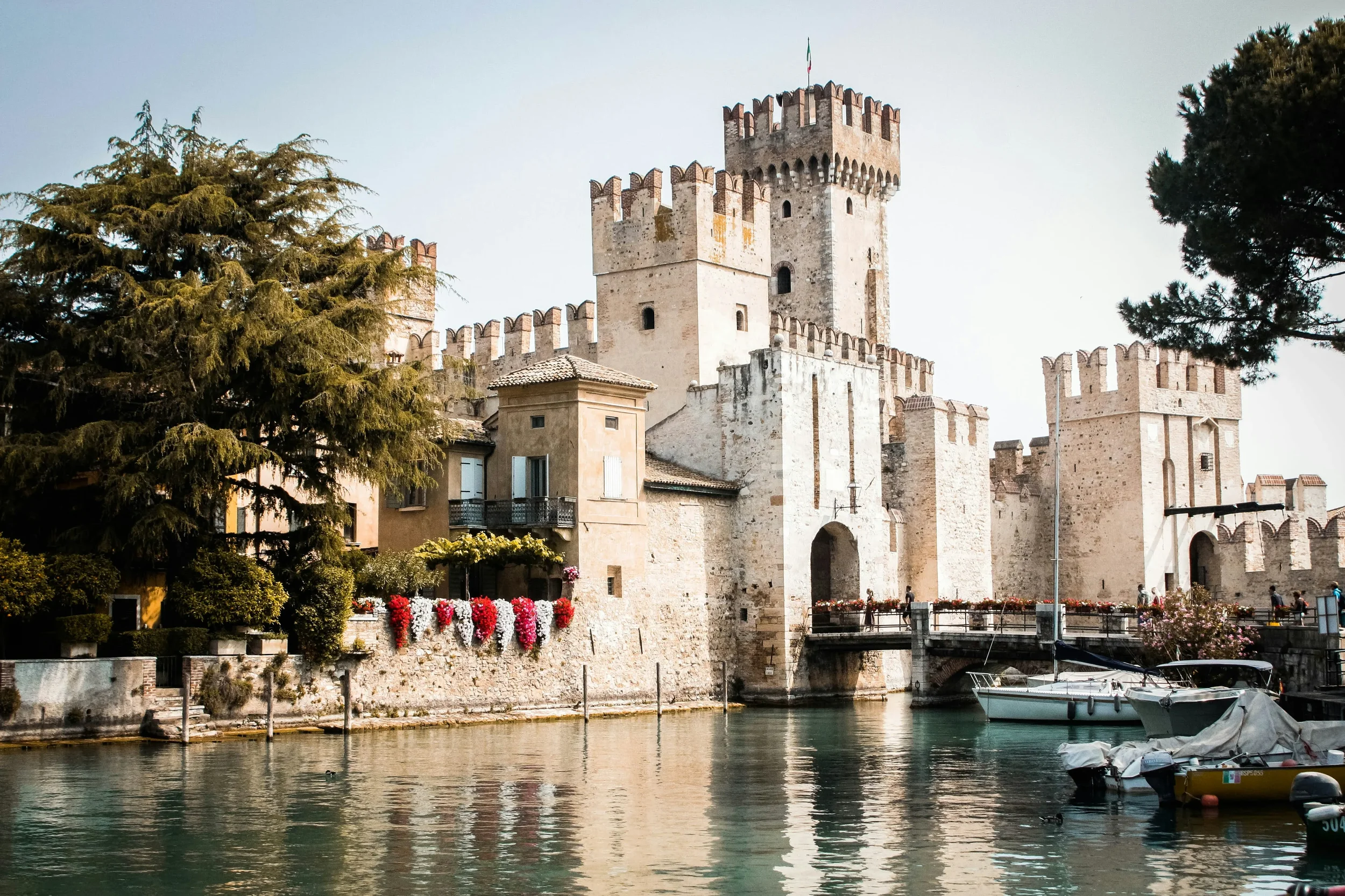
The Scaligero Castle guards the entrance to Sirmione’s historic centre. Built for the Della Scala rulers of Verona in the fourteenth century, it makes the defensive purpose of the peninsula immediately clear. Towers, crenellated walls and the enclosed harbour form a compact composition against the lake.
Inside, the courtyard and elevated walkways reveal how the fortress was organised. The harbour is particularly distinctive: water was part of the defence and a sheltered working space, rather than simply a scenic backdrop. Where the visitor route permits, the tower adds a higher perspective on the roofs and shoreline.
Give the castle its own visit before setting off through the old town. Near its entrance, the small church of Sant’Anna della Rocca provides a change of scale; its origins are connected with the fortress community. Check access to both, and expect stairs on the castle’s upper route.
Hidden Italy tip: Look at the harbour from more than one angle. It explains the castle’s setting better than a single photograph of the main tower.
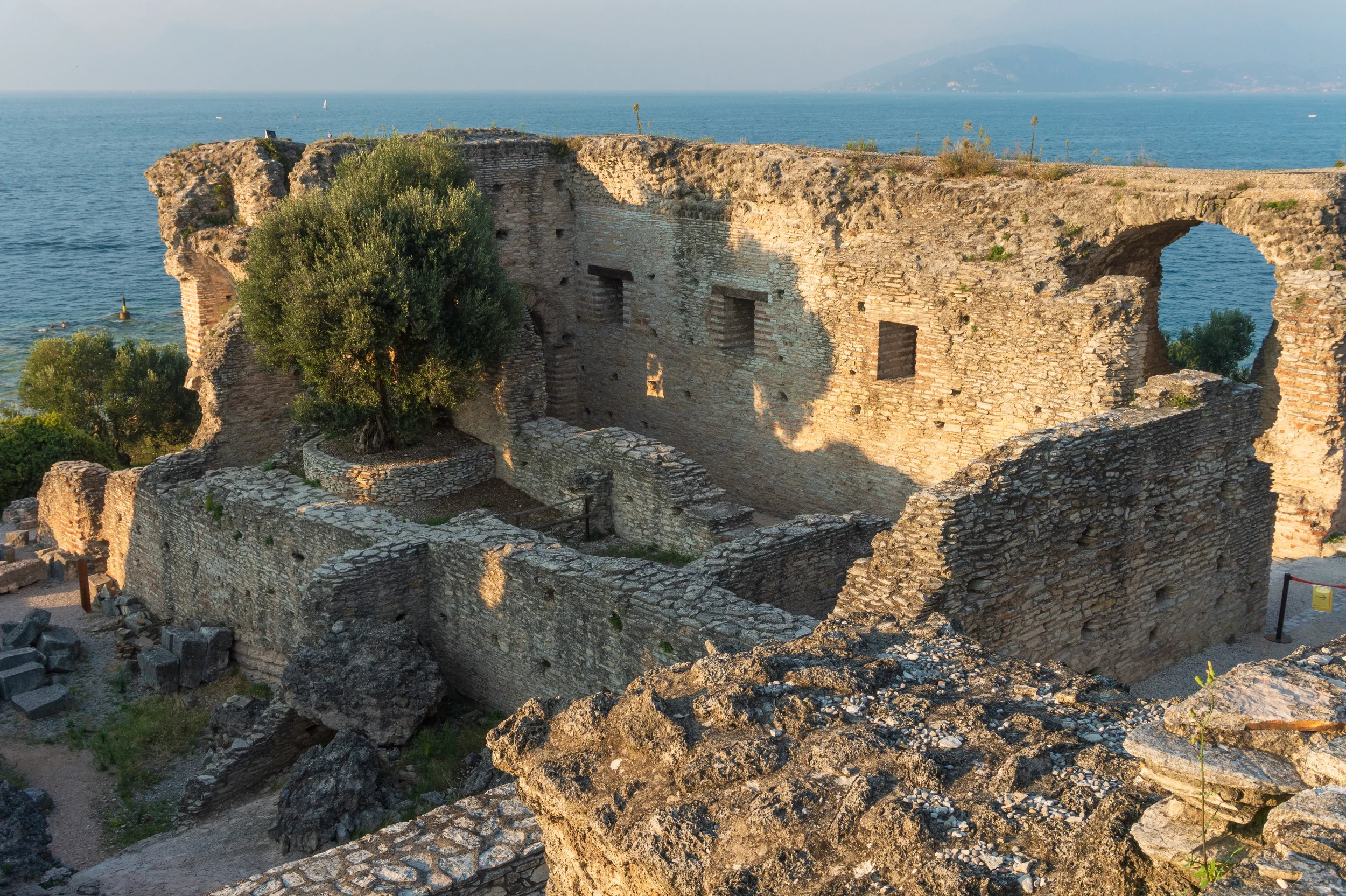
02 · THE GROTTE DI CATULLO
Walk out to the remains of a Roman lakeside residence
At the northern end of the peninsula, the Grotte di Catullo preserve the ruins of a substantial Roman villa. The name can mislead: these are archaeological remains, not natural caves. It also does not establish that the poet Catullus lived in this particular building.
Explore the site as a residence shaped by its position. Surviving structures suggest the scale of the complex, while broad views across Garda make its appeal easy to understand. Allow time for the archaeological museum, which places the villa within the longer history of Sirmione and the lake.
The ruins form an outdoor visit with uneven ground and exposed areas. Bring water and suitable shoes, and check the current visitor route and ticket arrangements. In warm weather, an earlier visit may make the walk more comfortable; reserve time to return along the peninsula afterwards.
Hidden Italy tip: Keep the museum and ruins together in your plan. The objects and interpretation give the fragmentary walls a clearer human context.
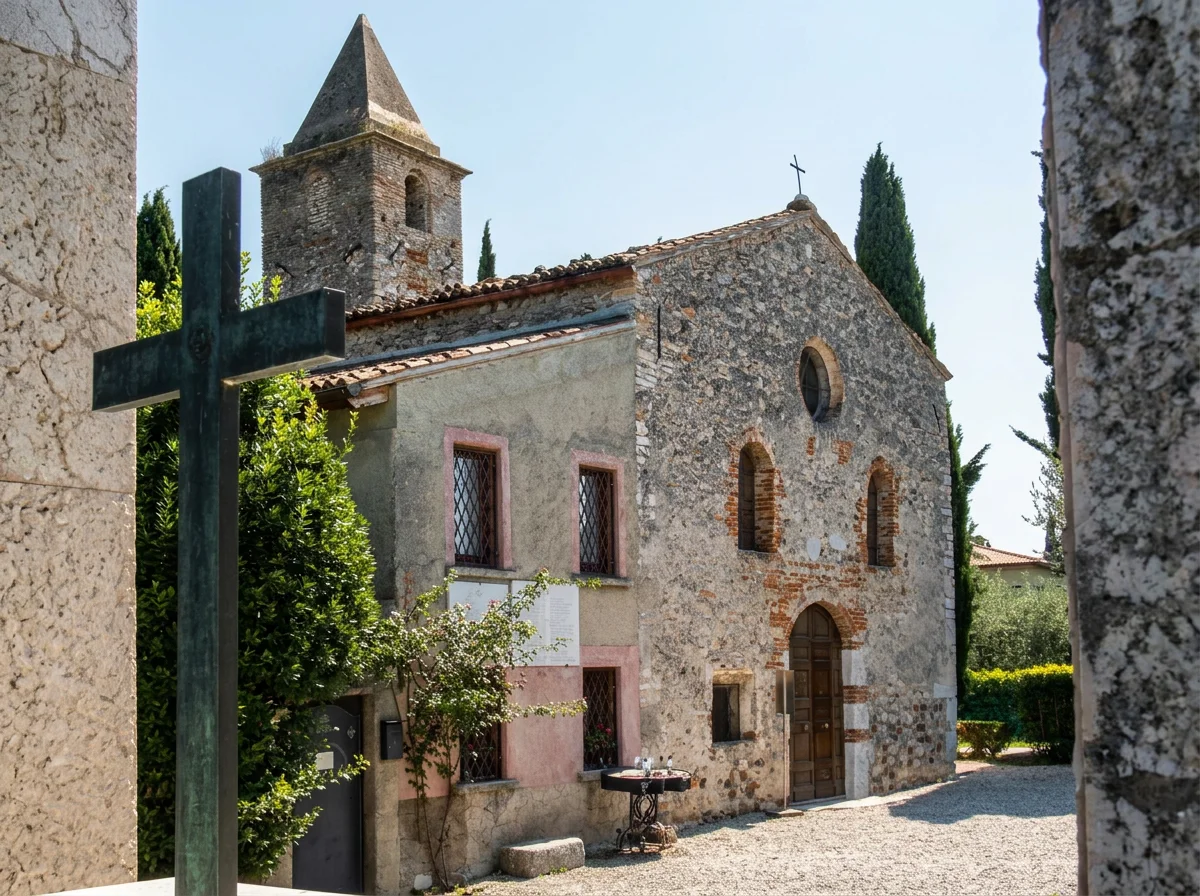
03 · SAN PIETRO IN MAVINO & THE PENINSULA
Find a slower rhythm beyond the main shopping streets
San Pietro in Mavino stands away from the busiest core and is Sirmione’s oldest church. Its history begins in the early medieval period, with later rebuilding and a Romanesque bell tower. The modest exterior invites a more attentive kind of visit than the castle’s monumental entrance.
When the church is open, look for the frescoes and the simple arrangement of its interior. Fourteenth-century painting survives here, making this an important stop for visitors interested in the peninsula’s life between the Roman villa and the later resort town.
Continue the day with unhurried stretches by the water and a return through the old streets. Choose a café or meal stop after looking at the menu and location rather than stopping automatically in the first crowded square. The peninsula rewards pauses, especially when you have already covered its major sights.
Hidden Italy tip: Build a loop around your booked visits and church openings, leaving space for the lake itself. There is no need to turn every waterfront stop into another attraction.
PLAN YOUR VISIT
Give the peninsula a day, not a hurried detour
A day in Sirmione
Start with the castle or the Roman villa according to your booking, then connect the two on foot through the historic centre. Add San Pietro in Mavino when open and leave time for lunch. A thermal-spa session is better planned as a separate commitment than squeezed into an already full sightseeing day.
Where to stay
The historic centre suits travellers who want to explore early and enjoy the evening atmosphere. Colombare and Lugana offer different bases farther south. Compare the actual walk or transport connection to the castle, and confirm parking and luggage arrangements directly with your accommodation.
When to go
Spring and autumn are useful starting points for a walking-focused visit. Summer requires more thought about heat, queues and advance booking. A winter visit can be rewarding for the setting, but check attraction openings and transport before fixing the programme.
Getting there and around
Sirmione has no railway station. Desenzano del Garda and Peschiera del Garda provide rail approaches, with an onward bus or taxi journey. Vehicle access to the historic centre is restricted: follow the official arrival advice and arrange any authorised hotel access in advance. Check current boat and shuttle services rather than assuming summer timetables apply all year.
Use the official visitor pages for castle information and Grotte di Catullo tickets and access before setting off.
Make it a longer journey
Place Sirmione within our seven-day Lombardia itinerary, or compare bases around Garda and the other lakes in the Lombardia lakes guide. Return to the regional guide for a wider mix of towns, mountains and cultural stops.
Image credits
Grotte di Catullo — Marco Ober · CC BY-SA 4.0, via Wikimedia Commons.
Converted to WebP and resized for display; any crops are shared under the same licence.
Lake panorama: Jonny Gios / Unsplash. Castle: Rachel van Elk / Unsplash.
