Sabbioneta
A Renaissance city imagined in streets, palaces and painted perspective
Sabbioneta is a small town with an unusually coherent idea behind it. In the sixteenth century, Vespasiano Gonzaga shaped a fortified residence on the Lombard plain around the ambitions of an ideal city. Streets, public spaces, palaces and a remarkable theatre belong to that larger design. Shared UNESCO recognition with Mantua places the two cities in conversation, but Sabbioneta deserves an unhurried visit of its own: its finest surprises are often behind restrained façades.
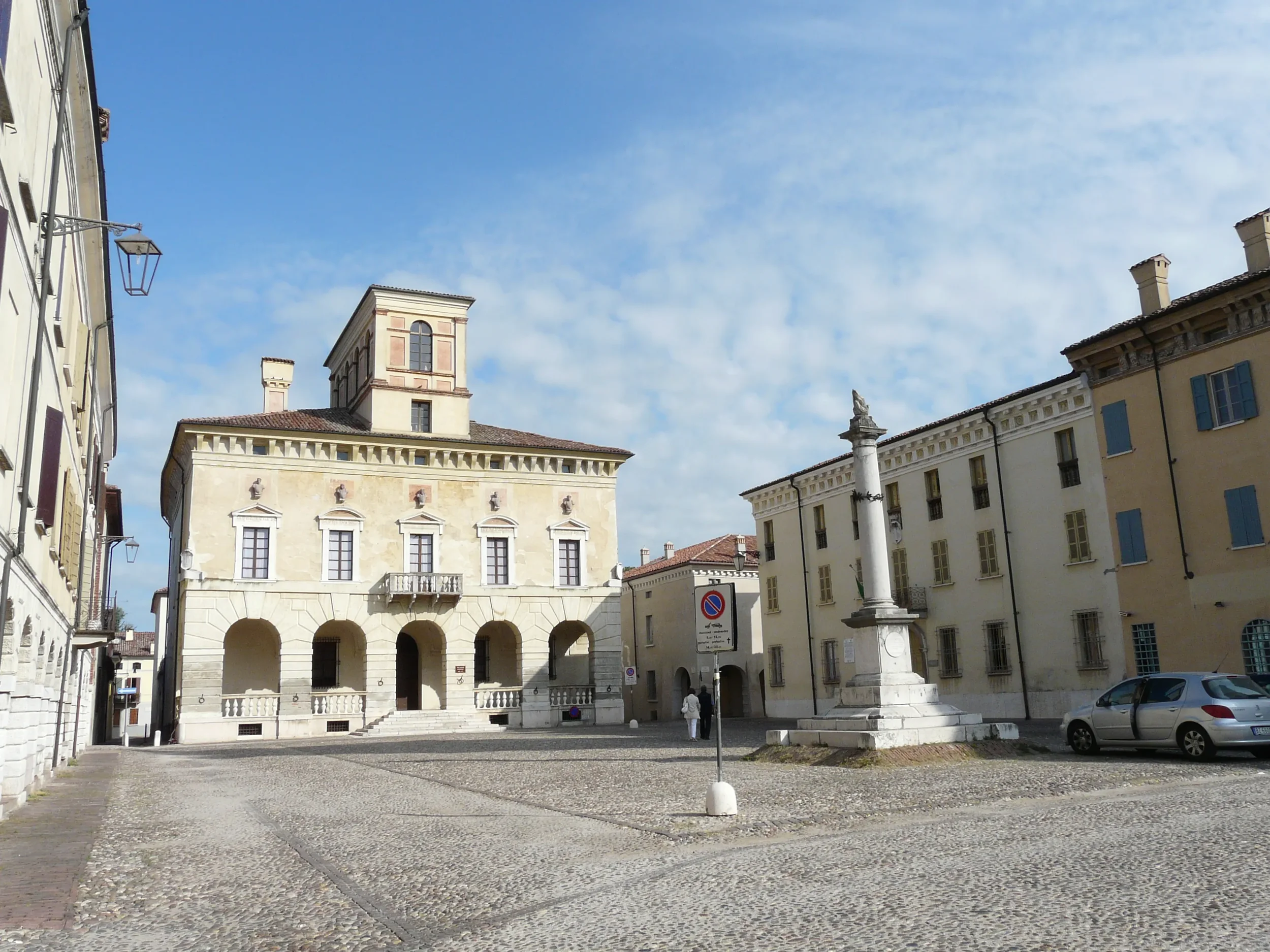
01 · THE CITY AS A DESIGN
Walk through Vespasiano Gonzaga’s ambition
Begin with the town’s layout rather than heading straight into a monument. The defensive enclosure and ordered streets show that Sabbioneta was conceived as a connected whole. Notice how the main public spaces organise movement, and how quickly you can pass from a palace frontage into a quieter residential street.
Vespasiano Gonzaga developed the town during the second half of the sixteenth century, bringing together military planning, courtly life and an admiration for classical antiquity. The modest scale makes these ideas easier to read on foot than they might be in a much larger city.
Mantua and Sabbioneta entered the UNESCO World Heritage List together in 2008. Their interest lies partly in the comparison: Mantua developed through the transformation of an existing city, while Sabbioneta gave physical form to Renaissance ideas of a planned ideal city. Keep that distinction in mind if you visit both.
Hidden Italy tip: Look at a town plan before starting. Then put it away for a few streets and notice how the spaces actually feel at walking pace.
02 · TEATRO ALL’ANTICA
Discover a whole imagined city inside a theatre
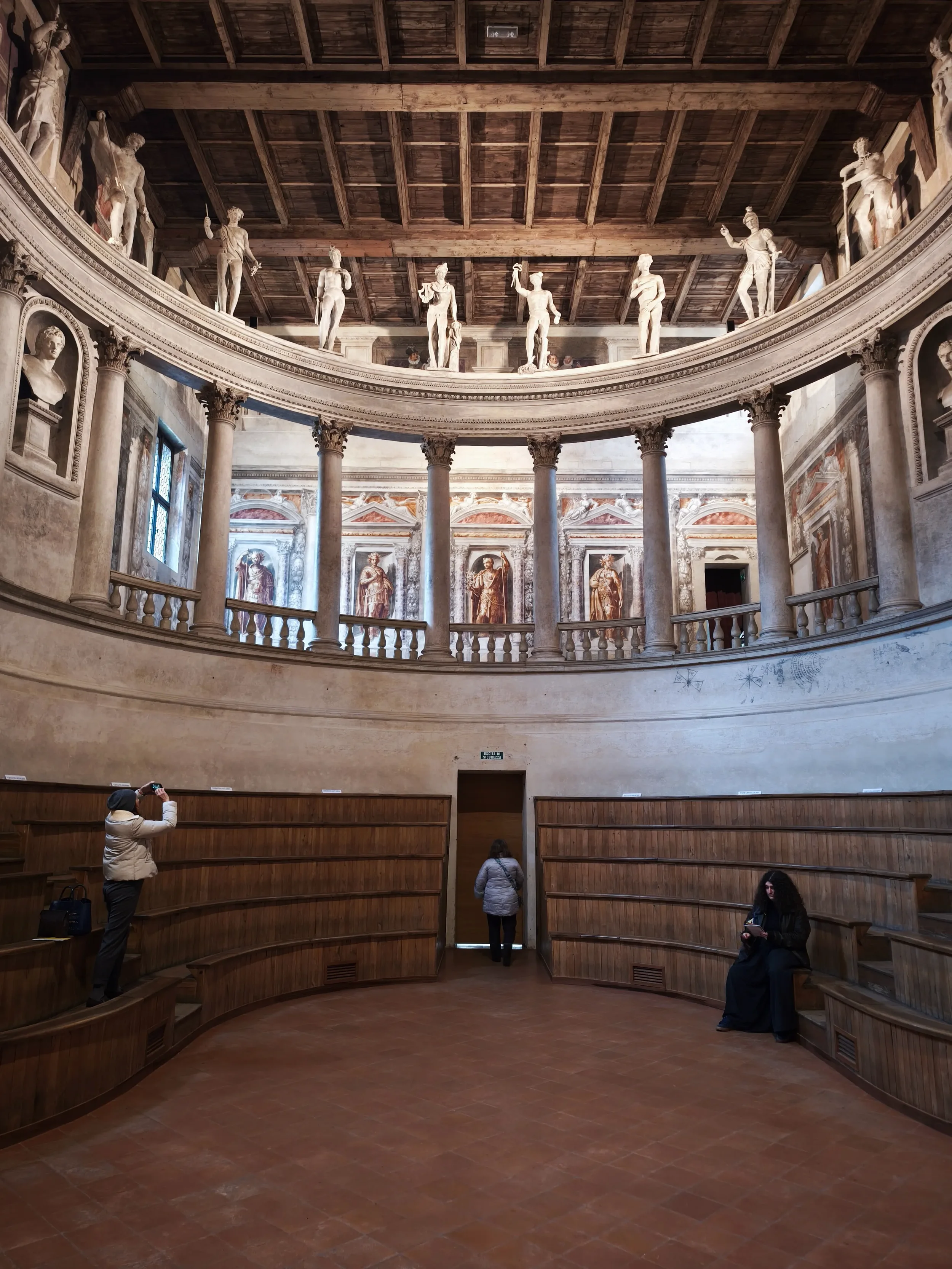
Designed by Vincenzo Scamozzi and completed in 1590, the Teatro all’Antica brings the ambitions of Sabbioneta indoors. Its intimate size invites close looking: the classical loggia, painted architecture and carefully organised auditorium are all part of the experience.
Look beyond the stage towards the images of Rome and the imperial references around the room. These decorations helped connect Vespasiano’s court with the authority and culture of antiquity. The theatre was a place for performance and also a statement about the ruler who commissioned it.
The scenery visible today is a modern reconstruction of the lost stage setting. Understanding that distinction lets you appreciate the historic room without mistaking every element for untouched sixteenth-century fabric. A guide or good interpretation is particularly worthwhile in a space built around perspective and symbolism.
Hidden Italy tip: Give the auditorium as much attention as the stage. The relationship between spectators, painted figures and architecture is central to the theatre’s story.
03 · PALACES & PAINTED WORLDS
Compare public power with a prince’s private retreat
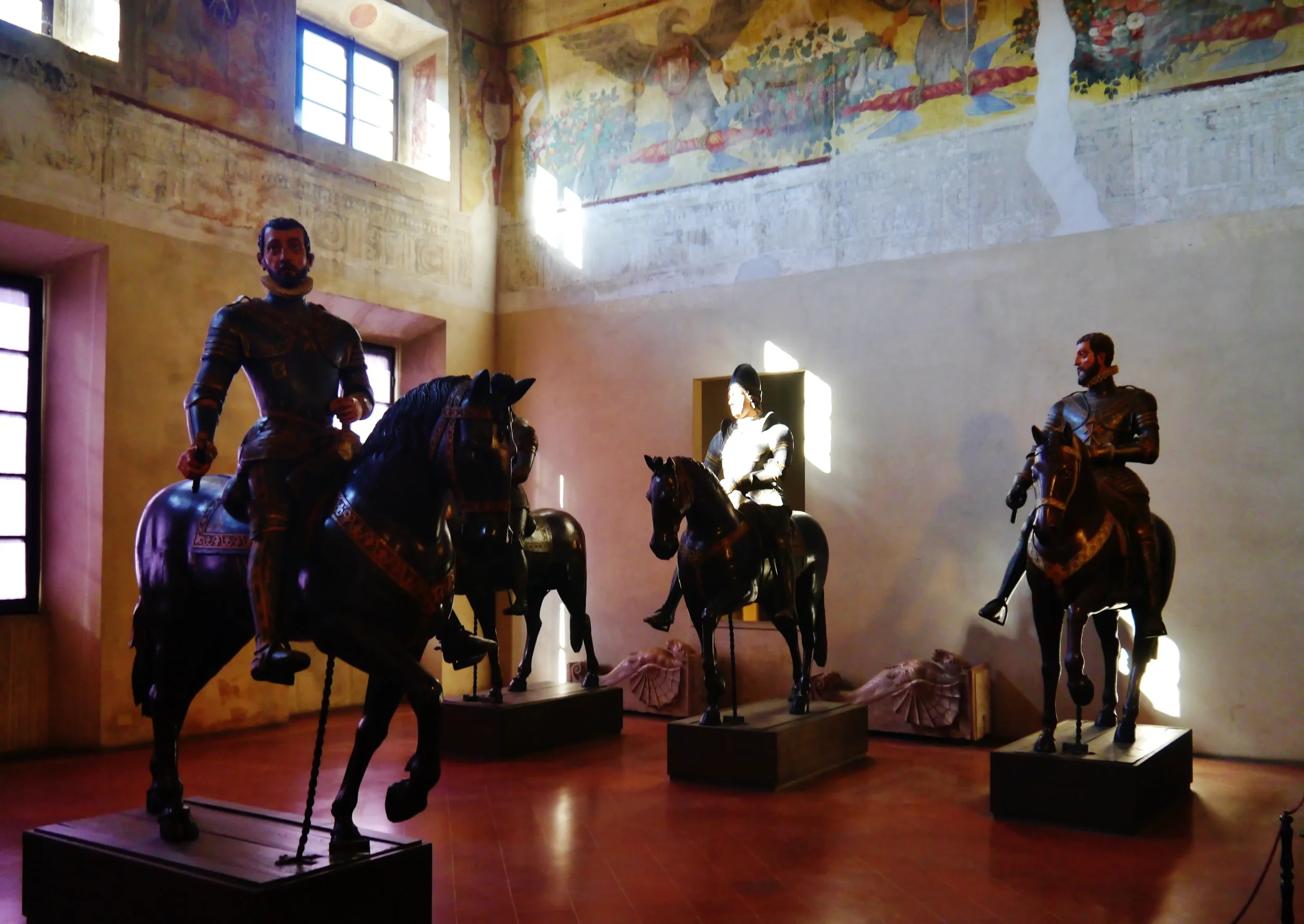
Palazzo Ducale presents the official face of the Gonzaga court. Inside, decorated ceilings and the surviving wooden equestrian figures celebrate dynastic identity and military prestige. This is a useful place to understand how Vespasiano wanted his family and achievements to be remembered.
Palazzo Giardino offers a different emphasis. Intended as a private retreat, it contains elaborate painted rooms overseen by Bernardino Campi and his collaborators. Classical stories and inventive decoration invite a slower visit, with time to look up as well as around.
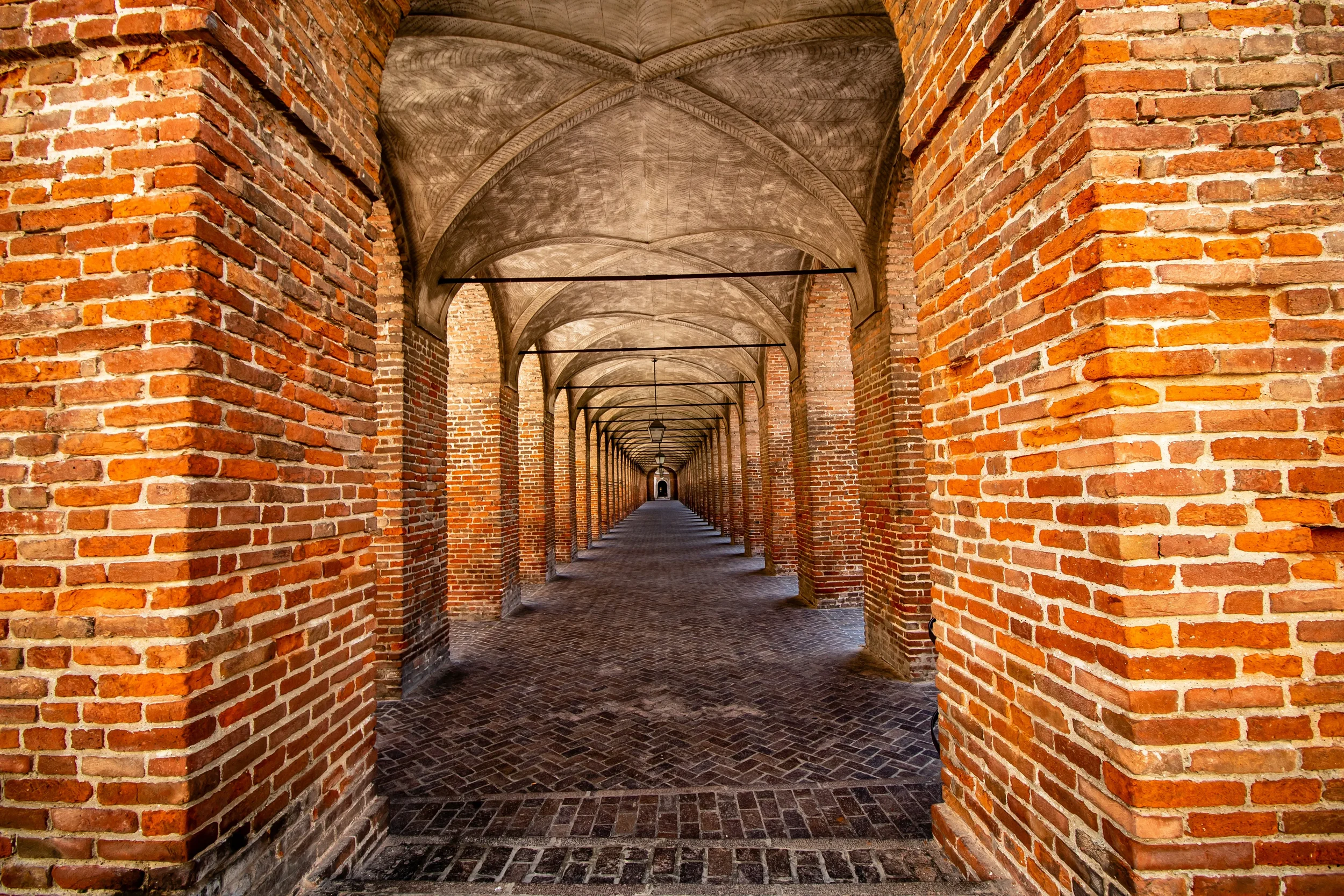
The adjoining Galleria degli Antichi extends the experience into a long, striking interior once used to display antiquities. The original collection was dispersed, so come for the architecture and the history of collecting rather than expecting the gallery to retain its full Renaissance contents.
Hidden Italy tip: Compare the two palaces instead of treating them as interchangeable. One explains the public ruler; the other reveals the learned, imaginative world he created around himself.
PLAN YOUR VISIT
Let the monument openings shape an unhurried day
A day in Sabbioneta
Start with a short walk through the streets and squares, then visit the theatre and Palazzo Giardino with the gallery. After lunch, add Palazzo Ducale if time and interest allow. With a longer stay, ask about the synagogue, sacred-art collection and Church of the Incoronata rather than rushing through every interior.
Where to stay
Choose a room in or near Sabbioneta for time in the streets before and after the main visiting day. Mantua is a practical alternative if its larger group of sights is also central to your trip. Confirm the journey between the two before choosing accommodation, especially without a car.
When to go
Spring and autumn are useful choices for a mix of indoor visits and walking. The plain can be hot in summer and misty in colder months. Plan outdoor stretches around the weather, and check the current opening calendar rather than assuming all monuments operate continuously.
Getting there and around
Sabbioneta has no railway station. The official visitor service lists approaches via nearby stations and bus connections, including from Mantua. Check the current arrival guidance and the complete return journey. Once in town, the compact centre suits exploring on foot; ask about individual monument access where stairs or other barriers matter.
Compare individual admission with the combined options on the official tickets and opening-times page. Bookings, exhibitions and temporary closures may affect the most useful order of visits.
Make it a longer journey
Pair Sabbioneta with Mantua for a focused Renaissance journey, allowing each its own visiting time. Our Lombardia guide helps connect this southern part of the region with a wider trip. Use the seven-day Lombardia itinerary as a framework and add a dedicated cultural extension, rather than treating Sabbioneta as a quick stop between the lakes.
Image credits
Piazza Ducale: Davide Papalini / Wikimedia Commons, CC BY-SA 3.0.

Brick arcade: Claudio Cesaro / Unsplash, Unsplash License.
Teatro all’Antica auditorium: Viaggiamocela / Wikimedia Commons, CC BY-SA 4.0.

Palazzo Ducale interior: Zairon / Wikimedia Commons, CC BY-SA 4.0.

Photographs converted to WebP and resized for display. Any crops of Commons photographs are shared under their respective licences.