Morimondo
A brick abbey, monastic spaces and open countryside beyond Milan
Morimondo gathers around a Cistercian abbey southwest of Milan, on the edge of the agricultural landscape of the Ticino area. The church’s brick façade is the first landmark, but the visit becomes richer when you include the monastery and the countryside that sustained it. This is a place for looking at light, proportion and the practical organisation of daily life. Plan around a guided visit, leave time for the village, and let a short walk extend the story beyond the abbey walls.
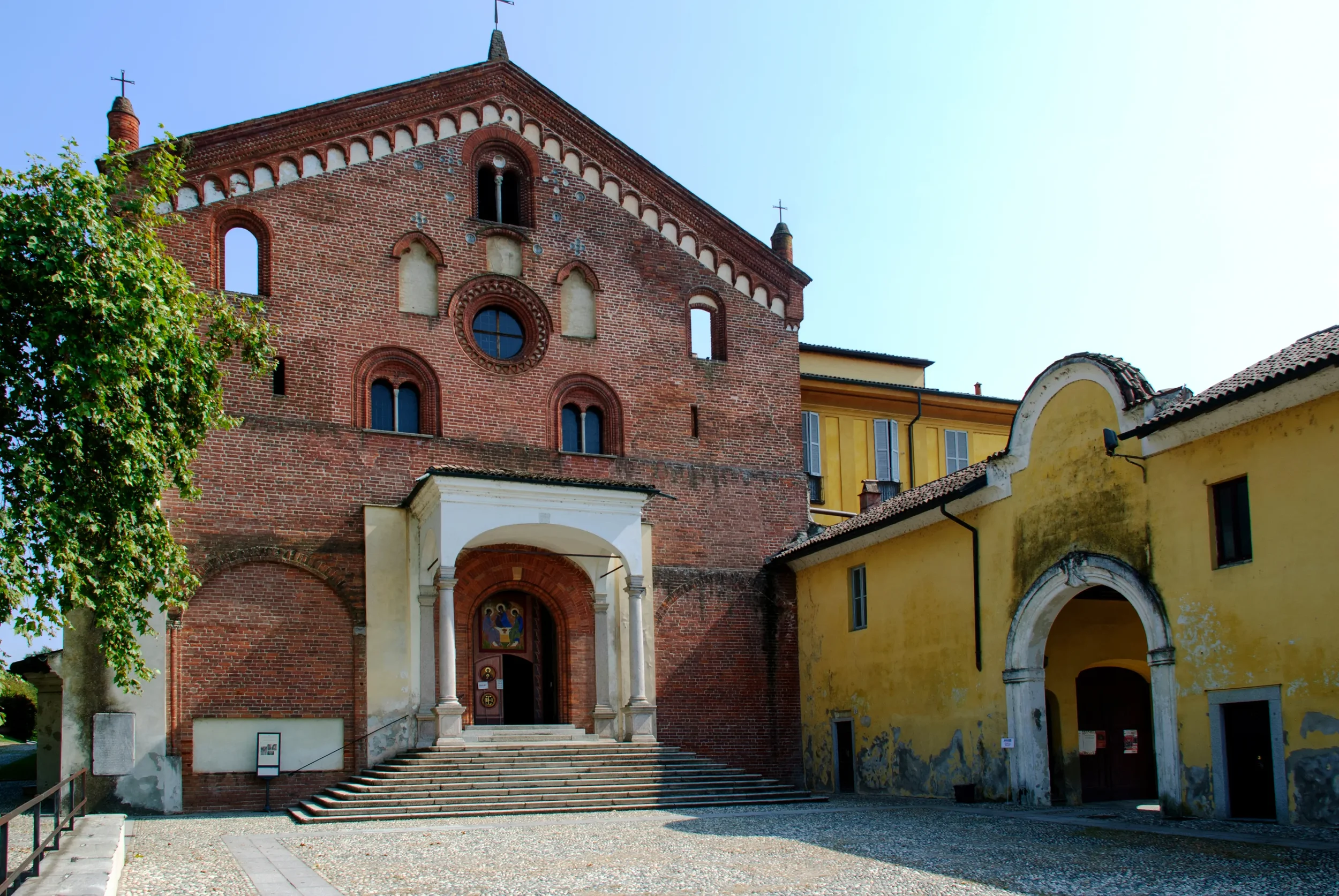
01 · THE CISTERCIAN ABBEY
Let brick, light and proportion guide your eye
Morimondo’s community began in 1134, when monks from Morimond in France settled nearby; they moved to the present location in 1136. The church followed over a long building campaign, interrupted by conflict. Its history belongs to the wider Cistercian world as well as to the countryside outside Milan.
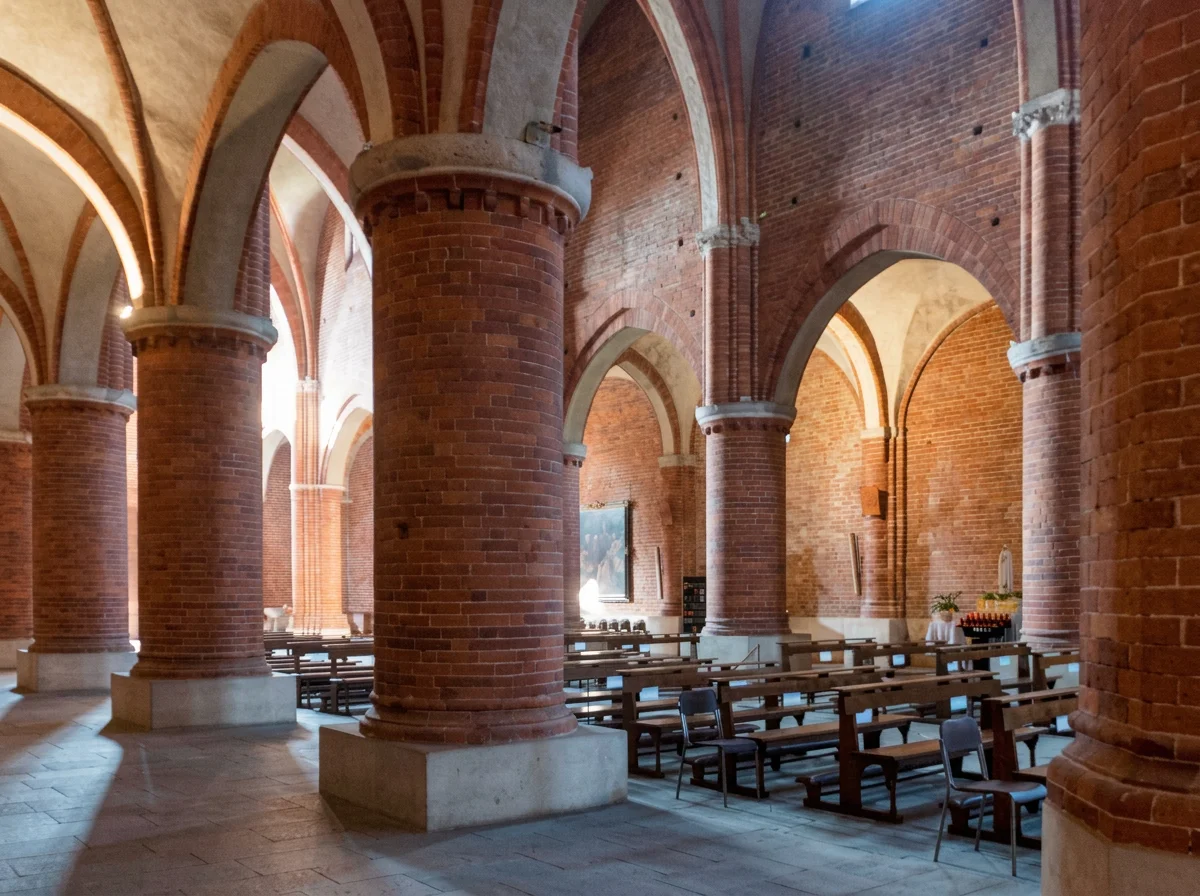
The architecture uses locally available clay brick with remarkable confidence. Notice the clear outline of the façade, then the rhythm of columns, arches and vaults inside. Romanesque traditions and Gothic forms meet here, with the effect depending more on structure and light than on lavish materials.
Later works add their own chapters. The wooden choir, completed in 1522 by Francesco Giramo, and a fresco of the Madonna and Child attributed to the school of Bernardino Luini show how the church continued to change. Follow the permitted visitor areas and respect worship when looking at its art.
Hidden Italy tip: Spend a few minutes looking at the whole interior before seeking individual artworks. The relationship between space and light is the abbey’s most immediate lesson.
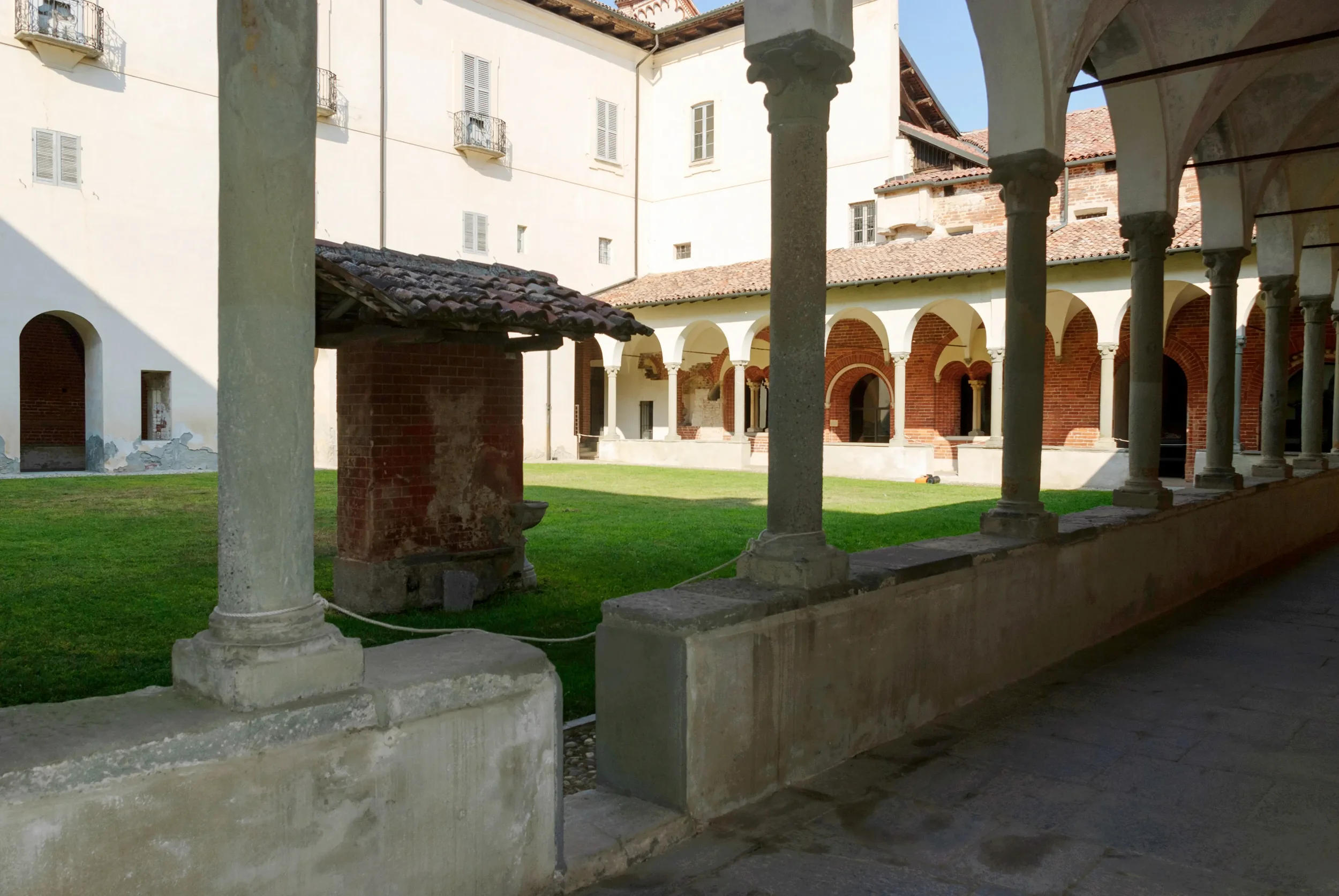
02 · CLOISTER, WORKROOMS & SCRIPTORIUM
Go beyond the church to understand monastic life
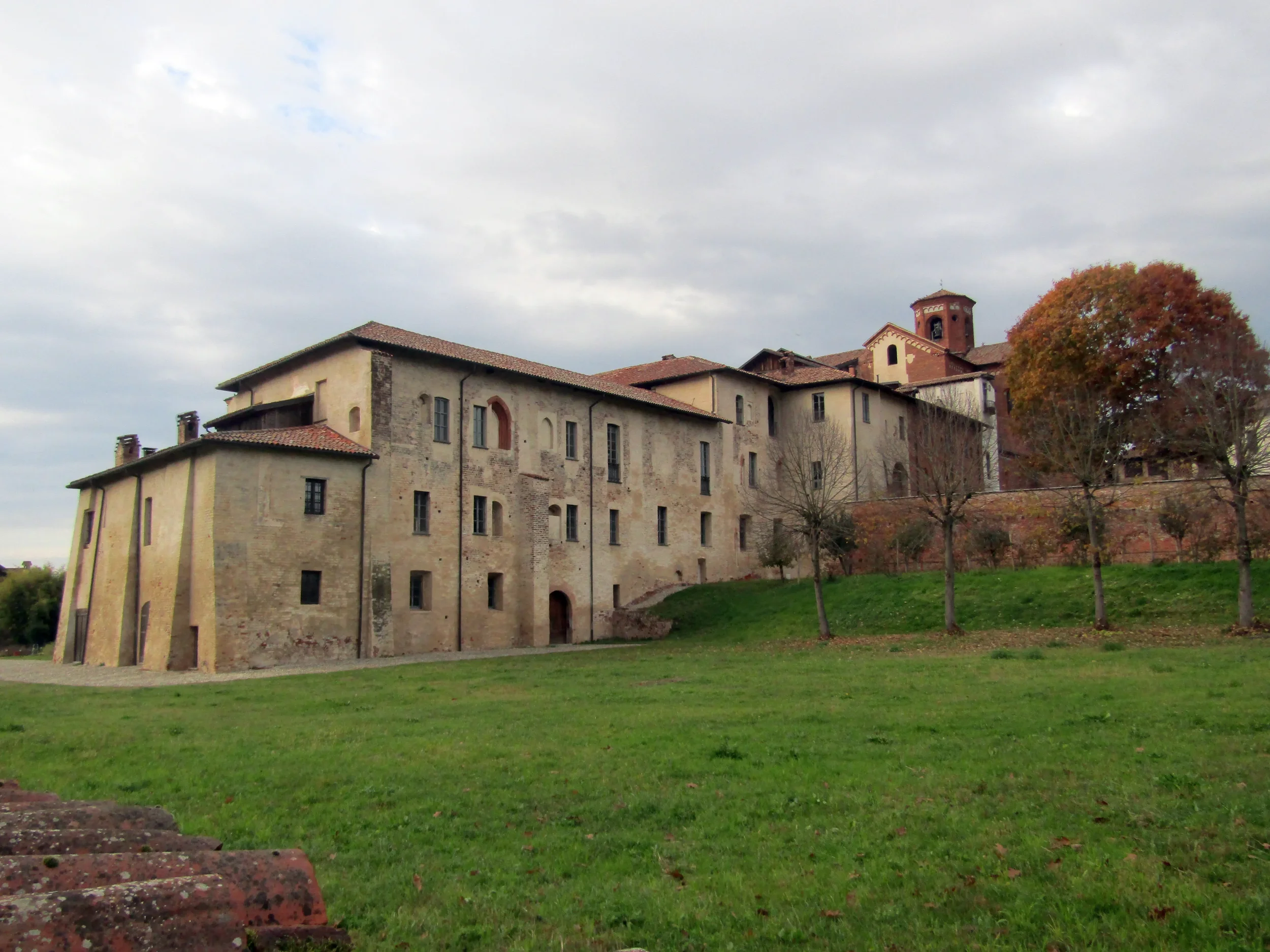
The monastery turns the abbey from a single impressive building into a complete place of daily life. Its visitor route includes spaces such as the cloister, chapter house, workrooms, refectory and dormitory. The complex develops over several levels, responding to the site as well as to the community’s needs.
A guided visit helps explain the relationship between prayer, study, meals and work. Morimondo also had an important scriptorium, where manuscripts were copied for the community’s use. Surviving books are now dispersed among other collections; do not expect a room filled with the abbey’s original medieval manuscripts.
The full monastery visit requires an accompanied tour and advance reservation through the foundation. Limited access to the cloister and chapter house may follow separate arrangements. Check exactly what your chosen visit includes, its language and the current route before planning the rest of the day.
Hidden Italy tip: Reserve the monastery visit first. A spontaneous look inside the church is a different experience and does not replace access to the monastic rooms.
03 · THE VILLAGE & THE WORKED LANDSCAPE
Follow the abbey’s story into the countryside
Morimondo’s village is small enough to explore without an elaborate route. Walk around the abbey precinct, pause in the spaces between the buildings and look out towards the fields. The setting helps explain why this monastery belonged to an agricultural landscape rather than standing apart from it.
The Cistercians developed farms, mills and a network of productive estates. Today the surrounding countryside includes cultivated ground, water channels and patches of woodland. A walk here is a chance to notice how people have shaped the land over time, alongside its natural features.
The Ticino park’s Anello dell’Abbazia offers a documented route through this landscape, connecting Morimondo with nearby rural settlements. Choose the distance that suits your day, consult the official route information and check ground conditions. Stay on permitted paths: fields, farmyards and irrigation works are not automatically public shortcuts.
Hidden Italy tip: Leave the walk until after the abbey visit. Knowing more about the community’s work makes the fields and waterways easier to read.
PLAN YOUR VISIT
Build a quiet day around a confirmed abbey visit
A day in Morimondo
Arrange a monastery tour, visit the church outside service times and leave room for lunch in the village. Add a modest countryside walk if the weather suits. With only a short visit available, prioritise the abbey and its immediate setting rather than attempting a long circular route.
Where to stay
Morimondo can be visited from Milan, but staying locally gives more time for the village and surrounding countryside. Compare a room in the village with accommodation near Abbiategrasso according to your transport plans. Check restaurant availability, parking and evening connections before booking a rural base.
When to go
Spring and autumn suit the combination of architecture and walking. In summer, plan exposed sections of a walk around the heat; after rain, expect some country paths to be muddy. Winter can suit an abbey-focused visit, with shorter daylight and opening arrangements shaping the day.
Getting there and around
Abbiategrasso is the rail approach listed by the abbey, with an onward road connection to Morimondo. The foundation notes that local bus provision is largely linked to school days, so verify the full timetable and return before relying on it. Consult the official arrival information and monastery booking details. Ask in advance about access needs across the different levels.
For an outdoor extension, use the Ticino park’s Anello dell’Abbazia route description, checking its length and current suitability before departure.
Make it a longer journey
Pair Morimondo with Milan and the countryside around Abbiategrasso, giving this part of the region a day of its own. Our Lombardia guide connects rural places with the cities and lakes, while the seven-day itinerary offers a starting framework for the wider journey.
Image credits
Abbey façade and cloister: AB fotografia / Wikimedia Commons, CC BY-SA 4.0.


Monastery exterior: Pampuco / Wikimedia Commons, CC BY-SA 4.0.

These Commons photographs have been converted to WebP and resized for display. Any crops are shared under the same licence.