Home › Lazio › Giardino di Ninfa
Giardino di Ninfa
A romantic garden woven through the remains of a medieval town
At Giardino di Ninfa, plants, water and old stone belong to the same composition. Trees and flowering shrubs soften the remains of a medieval settlement, while the river and its reflections give the garden a changing sense of light. This is a carefully tended historic landscape, visited on a booked route rather than a public park for an unrestricted afternoon. Plan the practical details first, then arrive ready to notice the relationship between living plants and the traces of the town beneath them.
01 — A LIVING COMPOSITION
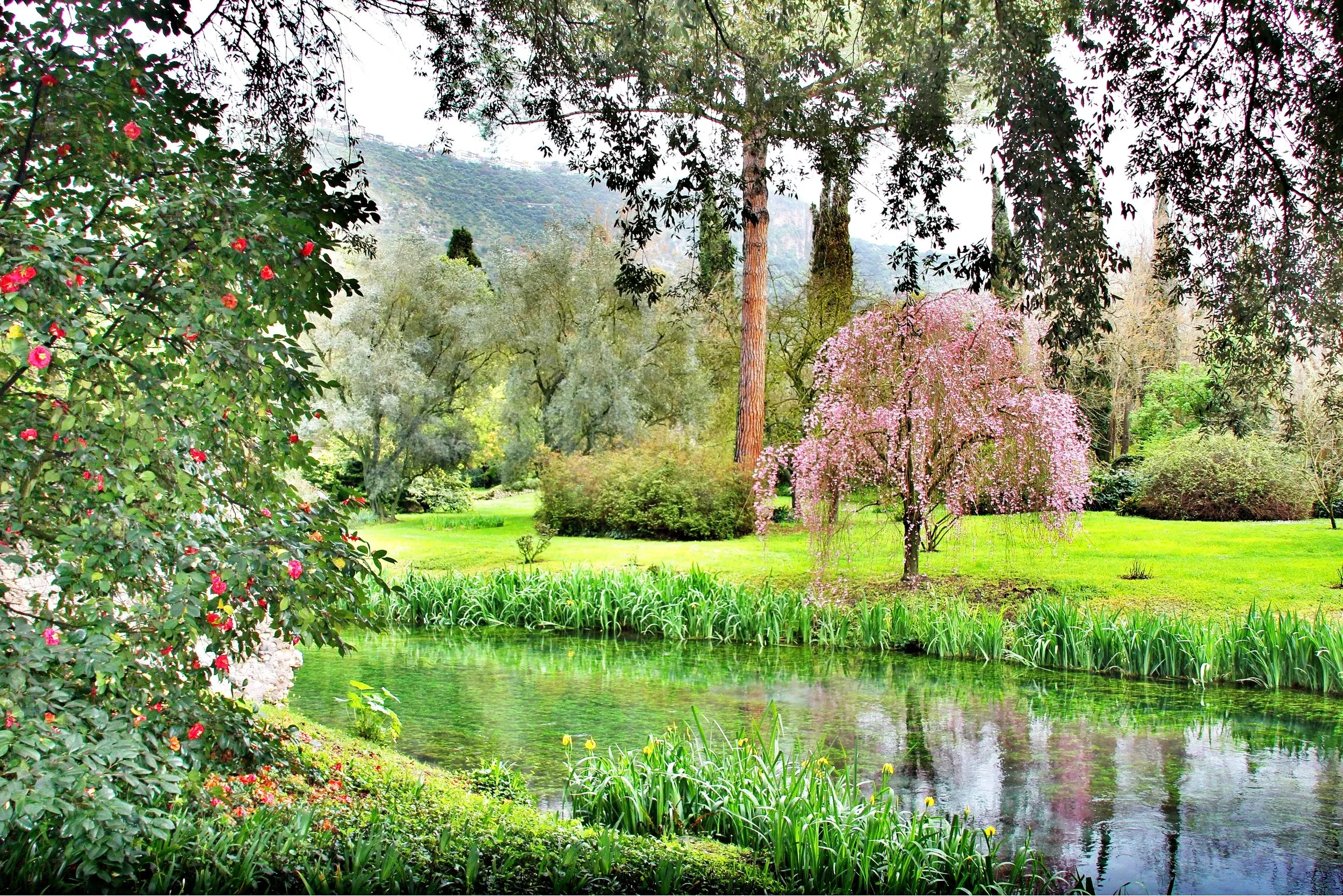
Look at the garden as a whole
Ninfa’s appeal is not limited to a particular flower in bloom. The informal arrangement of trees, shrubs, water and ruins gives the garden its character throughout the visiting season. Look at how one element frames another: a branch against masonry, or foliage reflected in the river.
The modern garden developed through successive generations of the Caetani family and their collaborators. Marguerite Chapin and her daughter Lelia helped shape the planting and the artistic sensitivity for which Ninfa is known. Their work is part of the reason the garden feels composed without appearing rigidly geometric.
Seasonal highlights vary, so approach each visit with curiosity rather than a fixed list of flowers you expect to see. Weather affects flowering, and a photograph from another month cannot promise the same view. The pleasure is in discovering the garden as it is on your day.
Hidden Italy tip: Take a few wider photographs as well as close-ups. The relationships between plants, water and ruins are what make Ninfa distinctive.
02 — THE TOWN BENEATH THE GARDEN
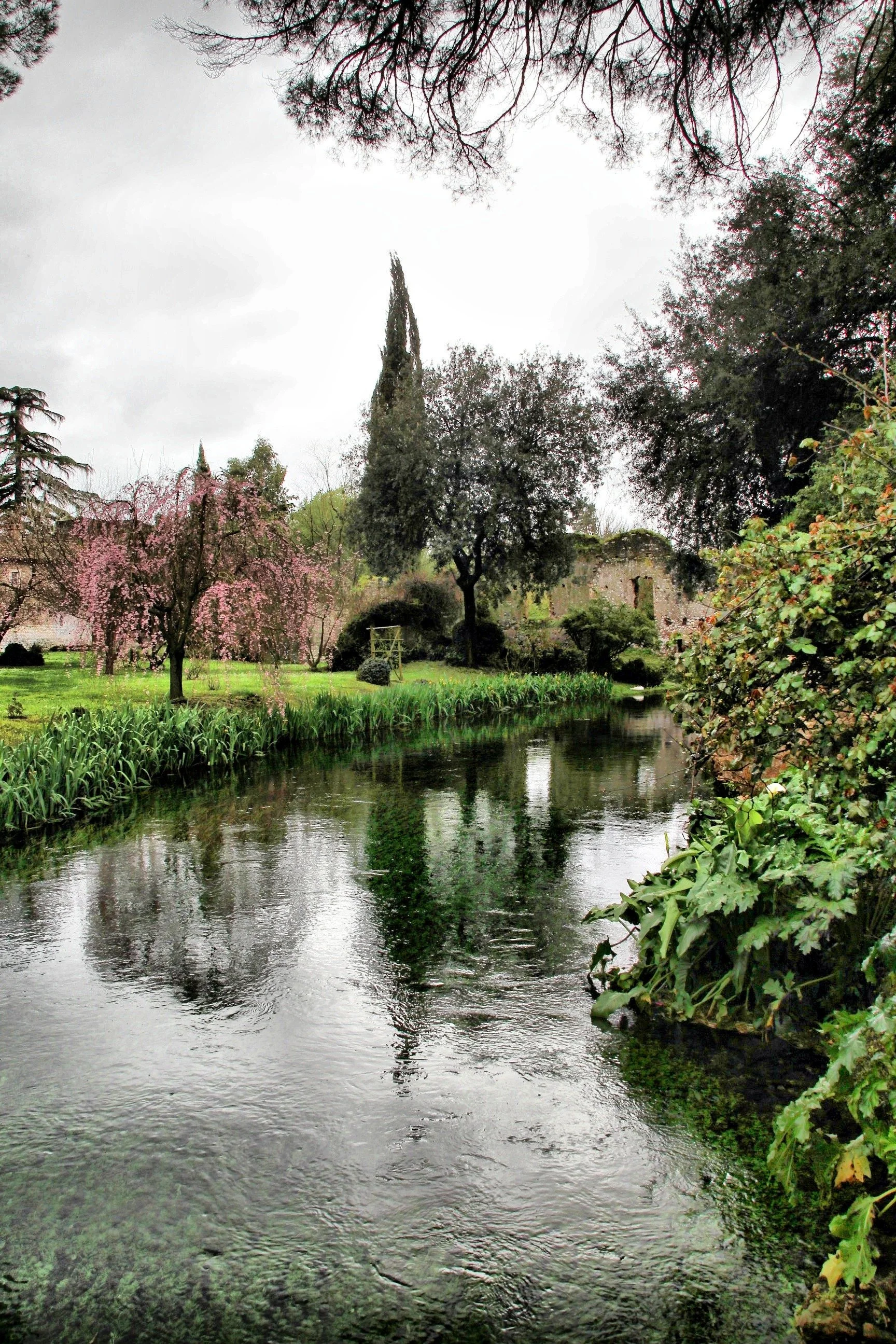
Notice the history between the leaves
The ruins are the remains of a real medieval town, not decorative additions to a landscaped estate. Ninfa once occupied a strategically important position, and its churches and civic buildings belonged to a functioning community.
Destruction and abandonment changed its course. The surviving masonry later became part of a very different landscape as the garden developed around it. Listen to the guide’s explanation of the buildings so that walls and arches become more than picturesque fragments.
The former town and the modern garden reward different kinds of attention. One asks you to imagine streets and daily life that have disappeared; the other invites you to look closely at the living landscape. Allow room for both during the guided route.
Hidden Italy tip: Ask about one ruin that catches your eye. Understanding a single building can make the whole site easier to imagine.
03 — WATER AND THE WIDER LANDSCAPE
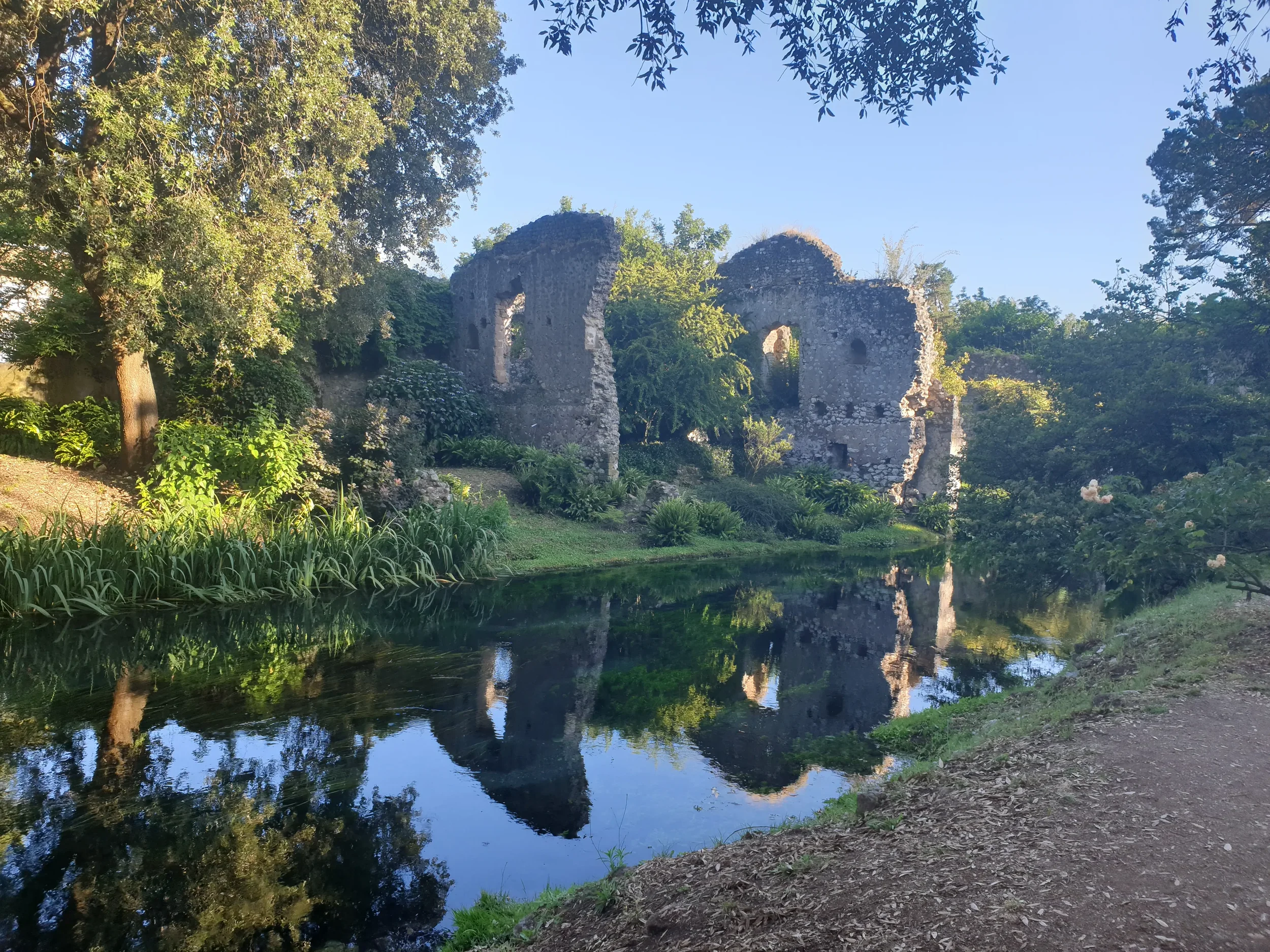
Follow the changing reflections
Water is a defining part of Ninfa. The river and small lake create reflections that change with the light, giving the garden a sense of movement even when the planting is still. Pause where the route allows and look at the same scene from more than one angle.
The protected landscape extends beyond the garden itself. Nearby Pantanello is a restored wetland area with a different ecological purpose and visitor experience. Do not assume that a garden booking includes access to it; investigate any separate activity through the managing foundation.
The garden is cared for by the Fondazione Roffredo Caetani. Staying on the route and following the guide’s directions helps preserve both the planting and the historic remains. This is a place to observe carefully, with time afterwards for a meal elsewhere.
Hidden Italy tip: Put the camera down for part of the route. The sound of water and the changing shade are as much part of the experience as the famous views.
PLAN YOUR VISIT
Book the garden first, then shape the rest of the day
A day around Ninfa
The standard guided visit lasts around an hour, with departure from the garden at its end. Allow extra time for arrival and check-in. Add lunch and, if it suits your transport, a separate visit to nearby Sermoneta rather than expecting to spend an unrestricted day inside Ninfa.
Where to stay
Look for accommodation in the surrounding area if you want a slower visit, checking actual driving distances and access rather than relying on a broad location label. Sermoneta can suit a historic-town stay; a base with easier road access may be more practical for a wider itinerary.
When to go
Choose from the published opening calendar. Spring flowers and autumn foliage offer different reasons to visit, but their timing changes with the weather. Check the language of the guided visit when booking if you need an English tour.
Booking and access
Reserve through the official Ninfa visitor website for an available date and time. Do not rely on buying a ticket at the gate. Save the booking confirmation offline before arrival, and check current terms and weather notices.
Paths can include roots and uneven surfaces. Contact the garden about your particular access needs before booking. Food stops belong outside the garden route, and visitors cannot remain inside after their guided visit ends.
Getting there and around
Ninfa is a countryside destination with visitor parking. For a rail-based trip, investigate arrival at Latina station and arrange the onward journey and return in advance; the station is not at the garden. Avoid a tight connection immediately after your timed visit.
Make it a longer journey
Use the Lazio guide or our seven-day itinerary to combine Ninfa with other stops. Let the confirmed garden slot determine the order of the day, leaving enough time to enjoy the surrounding towns.
Image credits
Flowering tree beside the river — Greymouser, via Wikimedia Commons, CC BY-SA 4.0.

Riverside garden and ruins — Greymouser, via Wikimedia Commons, CC BY-SA 4.0.

Medieval walls reflected in the water — Pepeina8, via Wikimedia Commons, CC BY-SA 4.0.

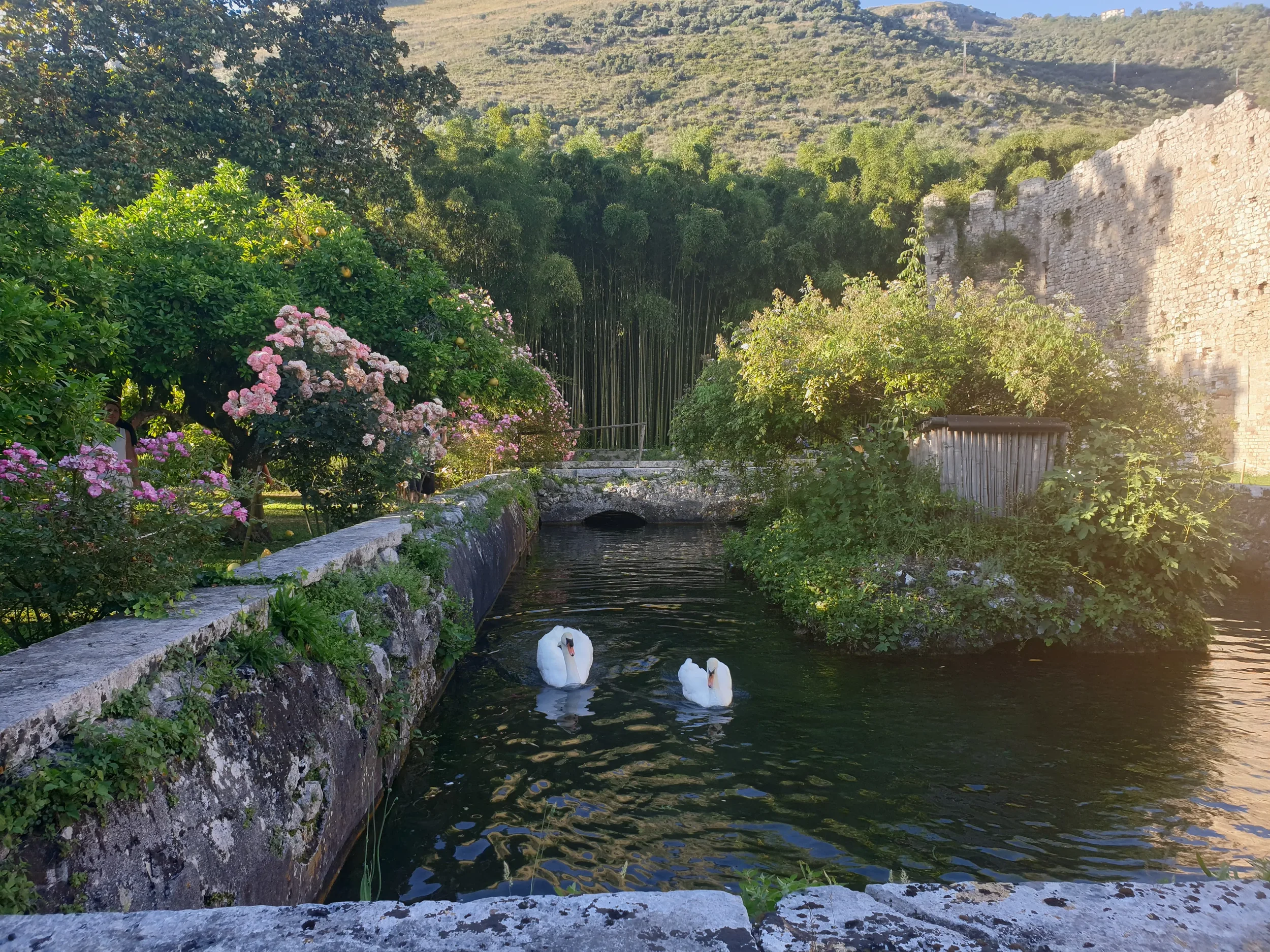
Swans in the garden — Pepeina8, via Wikimedia Commons, CC BY-SA 4.0.

Images have been resized and, where applicable, converted to WebP for this website; display crops may vary by screen size. Adapted images retain the same share-alike licence.