Home › Lazio › Civita di Bagnoregio
Civita di Bagnoregio
A bridge, a fragile hilltop and a village suspended above the calanchi
Civita di Bagnoregio begins before you reach its gate. From the belvedere, the village rises above a deeply eroded landscape, joined to Bagnoregio by a narrow pedestrian bridge. The approach is part of the experience: open sky, a climbing walkway and the gradual appearance of stone houses. Beyond the famous view, there is a small village to explore, a church with layers of history and a museum that explains why this landscape keeps changing. Come prepared to walk, and give the place more time than a photograph.
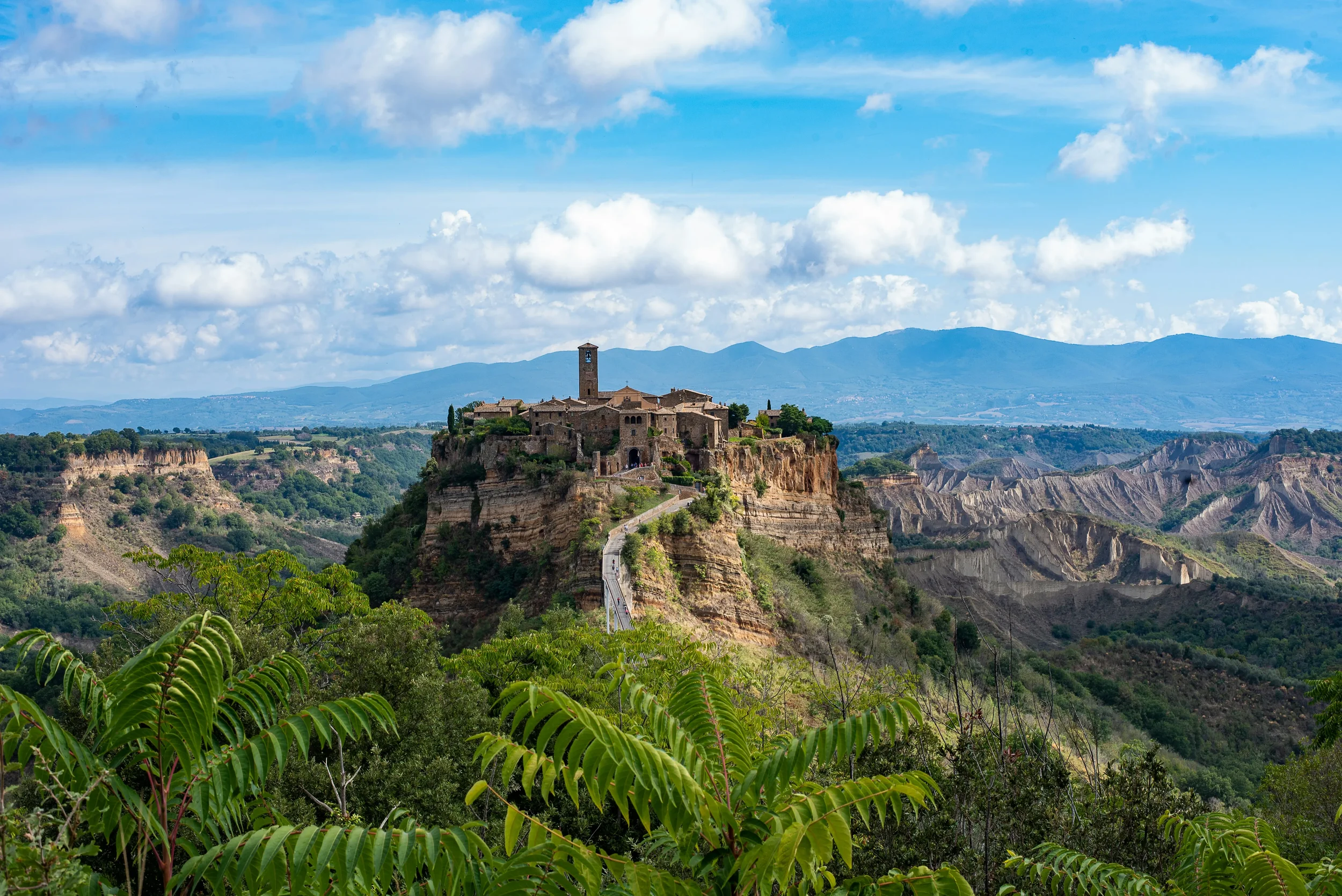
01 — THE APPROACH
Cross the bridge, then lose the straight line
Begin at the belvedere on the Bagnoregio side, where the relationship between village and surrounding valleys is easiest to understand. The route descends towards Mercatello before climbing across the bridge. This is an exposed pedestrian approach with slopes; consider heat, weather and your own mobility before setting off.
Porta Santa Maria marks the change from open landscape to enclosed streets. Look for the carved lions at the gateway, then let the smaller lanes lead you away from the most direct route to the square. Doorways, stone steps and sudden views over the edge give Civita its scale.
The village is well known and can be busy, especially on popular weekends. An early arrival can make the approach more comfortable, but solitude is never guaranteed. Stay on public paths and respect private homes when exploring the quieter corners.
Hidden Italy tip: Photograph the village on the outward walk, then use the return crossing to look at the changing shapes of the surrounding hills.
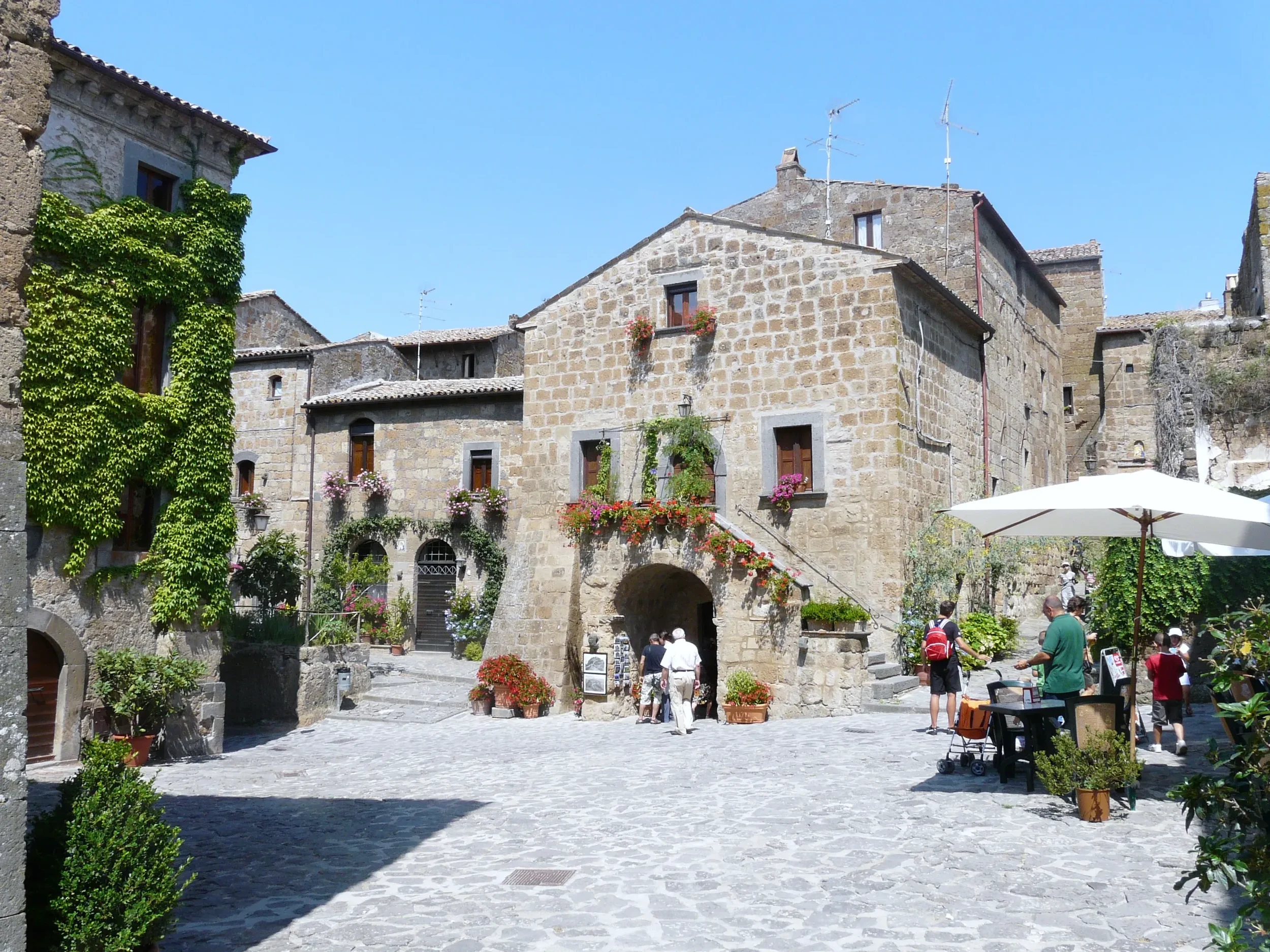
02 — THE VILLAGE SQUARE
Pause in Piazza San Donato
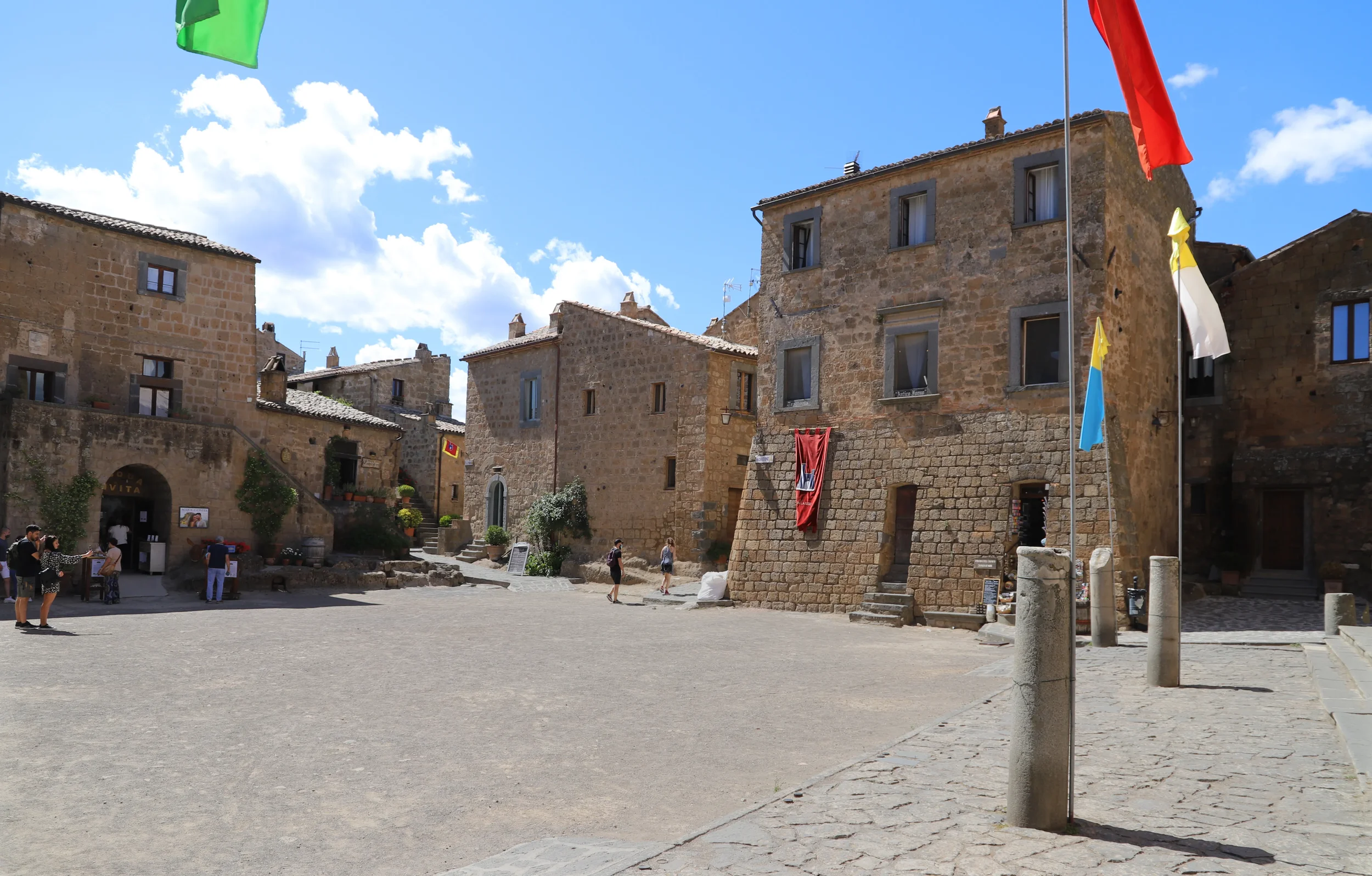
Piazza San Donato is the natural place to slow down after the climb. The church gives the square its focus, while the surrounding buildings make it feel intimate rather than monumental. Sit for a while before moving on; the contrast with the dramatic approach is part of Civita’s appeal.
The church’s Renaissance façade belongs to a building with a much longer history. Inside, when open to visitors, a wooden crucifix associated with the school of Donatello is among the details to look for. Keep your visit quiet and allow services to take precedence.
San Donato was once the cathedral. Earthquake damage and the gradual movement of civic and religious life towards Bagnoregio are reminders that the two settlements share a history. Treat Bagnoregio as more than a parking stop if you have time to extend the day.
Hidden Italy tip: Leave space for lunch around your sightseeing rather than trying to see every lane in a hurried circuit.
03 — A CHANGING LANDSCAPE
Understand the ground beneath the village
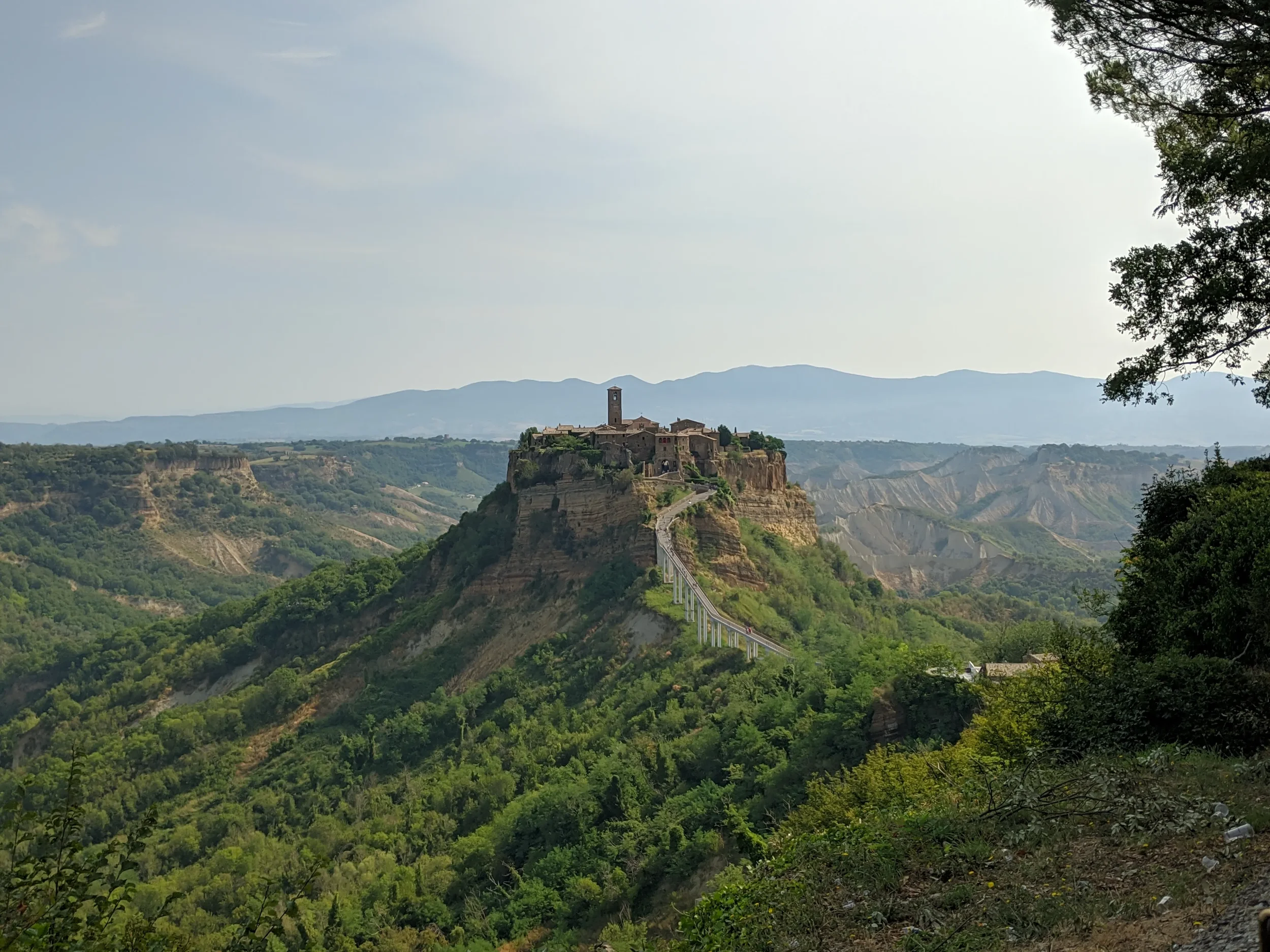
The calanchi are central to Civita’s story. Their ridges and gullies make a beautiful setting, but erosion and landslides also explain the vulnerability of the settlement. The view becomes more interesting when you look beyond the silhouette of the village itself.
The Geological and Landslide Museum in Palazzo Alemanni, on Piazza San Donato, offers a useful introduction to these processes. Check its current opening arrangements before building your visit around it. It is a particularly worthwhile addition if you want to understand how landscape and human history meet here.
Enjoy the valleys from established viewpoints. A scenic outlook is not an invitation to scramble down unstable slopes, and routes or attractions mentioned in older guides may be inaccessible. Use current local information for any walk beyond the village.
Hidden Italy tip: Visit the museum before your final look over the valley; you will notice different things on the way back.
PLAN YOUR VISIT
Give Civita time beyond the famous view
A day in Civita di Bagnoregio
Allow a relaxed half day for the approach, village lanes, church and a meal. Add the geological museum and a walk through Bagnoregio for a fuller day. Check opening arrangements first rather than assuming every interior will be accessible.
Where to stay
Staying in Civita offers a different atmosphere after day visitors leave, but means carrying luggage along the pedestrian approach. Bagnoregio is a more practical alternative for access; Bolsena can suit a longer trip that combines hill towns with the lake.
When to go
Spring and autumn can be comfortable for walking. In summer, plan around the exposed bridge and carry water. Rain and wind can change the feel of the crossing, so check local conditions and avoid building a visit around an exact light or weather promise.
Getting there and around
Drivers should use the designated parking in Bagnoregio and follow local signs towards Civita. Any local shuttle covers part of the Bagnoregio approach, not the pedestrian bridge itself. For public transport, check connections from Orvieto or Viterbo and confirm the return service before travelling.
Consult the official Civita visitor website for current entry arrangements, transport information and access updates. The walk includes slopes and steps; ask locally about suitability if these are a concern.
Make it a longer journey
Combine the visit with the northern part of our Lazio seven-day itinerary, or return to the Lazio guide to choose your next stop. Keep enough time between hill towns to enjoy the journey itself.
Image credits
Village square — Davide Papalini · CC BY-SA 3.0
Piazza San Donato — Sailko · CC BY 3.0
Civita panorama — Tommaso.magliocca95 · CC BY-SA 4.0
Via Wikimedia Commons. Converted to WebP and resized; display crops vary by screen. Adapted share-alike images retain their respective licences.
Hero photograph: Claudio Grande / Unsplash.


