Caprarola
A grand Farnese palace at the summit of a carefully shaped town
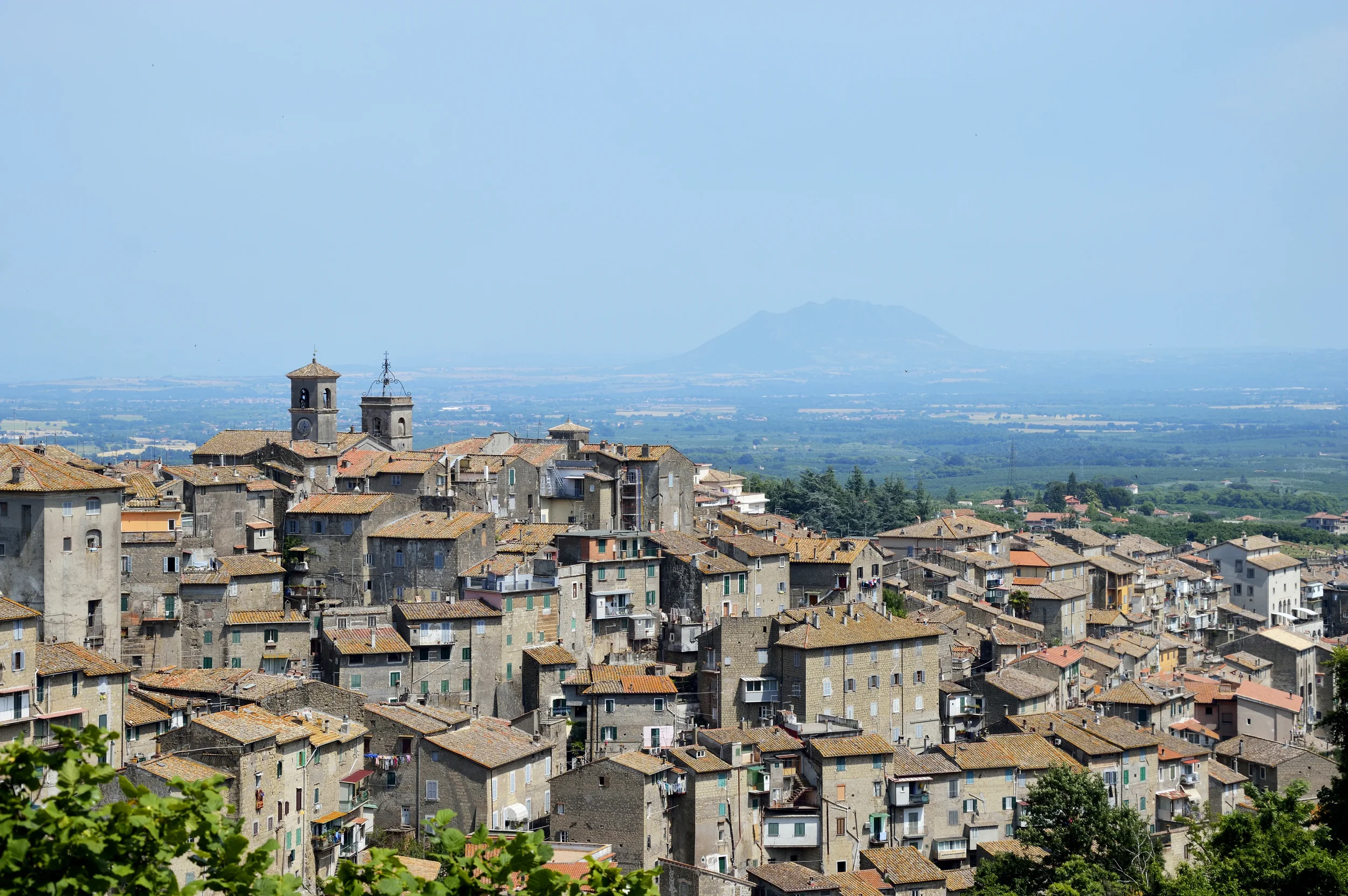
Caprarola announces its main attraction from a distance. Palazzo Farnese rises above the town, and the straight road climbing towards it makes the relationship between palace and streets impossible to miss. Inside are painted rooms, a remarkable staircase and a circular courtyard within a pentagonal building. Beyond the formal grandeur, there is a town to walk through and a surrounding landscape of wooded hills and hazelnut cultivation. Give the palace proper time, then enjoy the smaller details on the way back down.
01 — PALAZZO FARNESE
Move from fortress-like walls to painted rooms
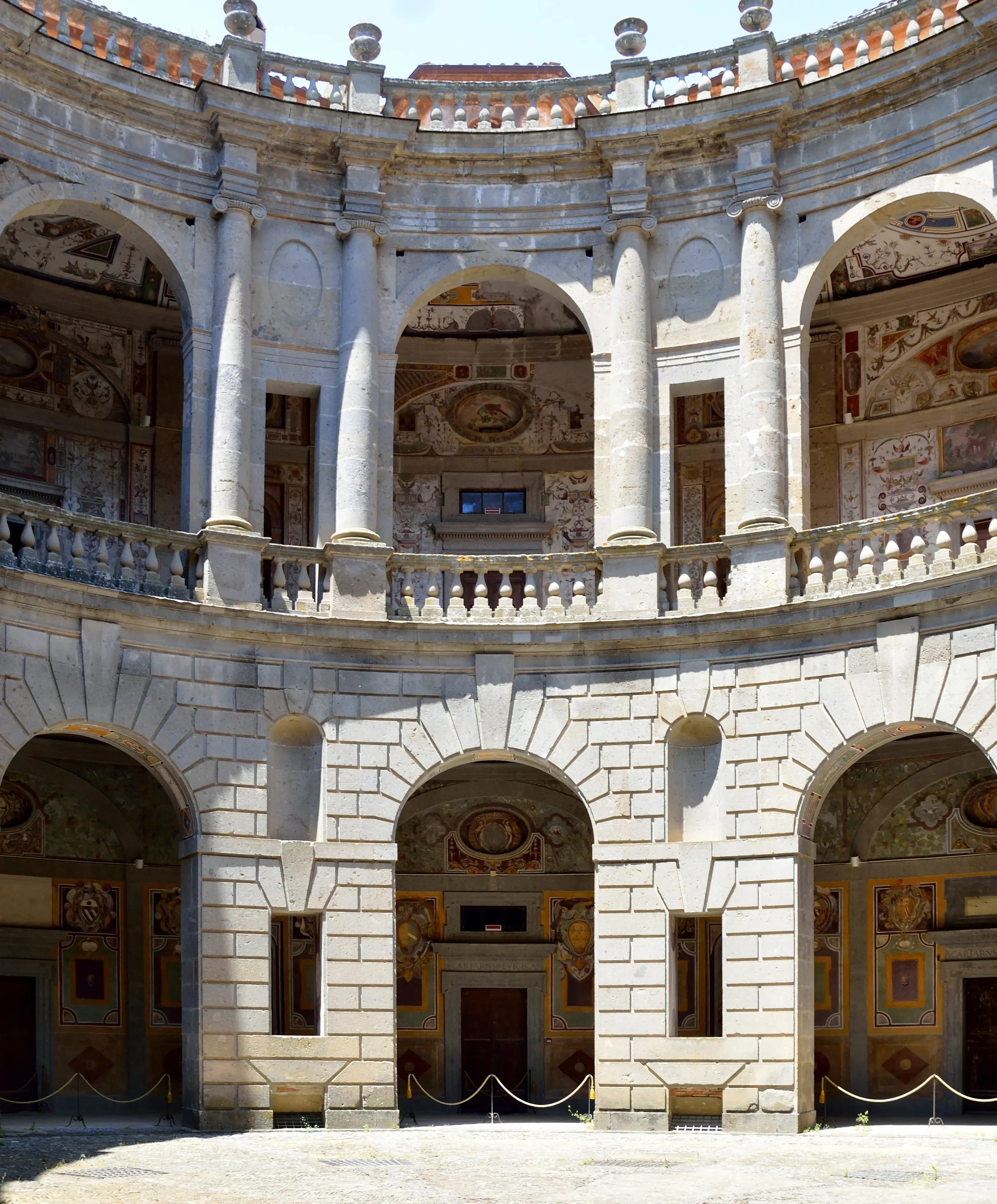
Palazzo Farnese combines the presence of a stronghold with the sophistication of a Renaissance residence. Its pentagonal outline contrasts with the circular courtyard inside, creating an architectural surprise as you move through the building.
The Scala Regia turns the act of climbing between floors into part of the experience. Follow the curve of the staircase and look at the relationship between columns, painting and light. It is worth slowing down before continuing into the principal rooms.
The Sala del Mappamondo is a particular highlight, with maps and a painted celestial ceiling that express a Renaissance vision of the world. Other rooms use mythology and family history to present Farnese power. Take time to read a few scenes rather than trying to absorb every painted surface at once.
Hidden Italy tip: Choose two or three rooms for a closer look. A slower visit is more memorable than moving through the entire palace at the same pace.
02 — GARDENS AND OUTDOOR SPACES
Follow the palace into a different setting
The gardens extend the palace experience beyond the painted interiors. Formal spaces, fountains and the wooded setting introduce a different scale, with architecture and landscape still carefully linked.
The complex includes garden areas close to the palace and an upper garden landscape with a smaller pavilion. Their availability and closing times can differ from those of the building itself. Check exactly which areas are accessible on the day instead of assuming that a palace ticket guarantees every outdoor space.
Weather can affect garden access, and seasonal daylight influences the time available outside. Consult the official Ville Monumentali della Tuscia website before travelling. Leave enough time to enjoy whichever sections are open without rushing back at closing time.
Hidden Italy tip: Decide the order of interiors and gardens after checking the day’s access. In the shorter months, the outdoor part may need to come earlier.

03 — THE TOWN BELOW
Walk the Via Diritta with the palace in mind
The Via Diritta, now Via Filippo Nicolai, is more than an approach road. It was designed as part of the transformation of Caprarola around the Farnese palace, reshaping the earlier town to create a direct and imposing axis.
As you walk, look at the buildings beside the main street and the smaller routes that connect to it. Changes in level, passages and steps reveal how a grand plan had to fit a real hillside. Turning briefly into the side lanes gives a more intimate view of the town.
Caprarola also belongs to a landscape strongly associated with hazelnuts. Look for local hazelnut sweets or other regional products when stopping for coffee or choosing something to take home. A meal in town helps balance the scale of the palace with everyday local life.
Hidden Italy tip: Walk part of the main street before the palace visit and part afterwards. Knowing the building changes how you see the town arranged below it.
PLAN YOUR VISIT
Build the day around the palace, then leave space
A day in Caprarola
Allow several hours for Palazzo Farnese and whichever gardens are open, then add lunch and a town walk for a relaxed day. A shorter visit can focus on the palace, but avoid arriving so late that you have to choose between its main rooms and the outdoor spaces.
Where to stay
A stay in Caprarola suits visitors who enjoy being able to walk through the town after day visitors leave. Check slopes, luggage access and parking before booking. A wider Tuscia base can be useful if you are combining several towns over a few days.
When to go
Spring and autumn can be comfortable for combining the palace, gardens and hillside streets. Summer requires more attention to heat on the exposed approach. In winter, shorter garden hours may shape the order of the visit even when the palace remains open later.
Getting there and around
Drivers should follow designated parking arrangements and continue on foot as appropriate. The direct-looking route up the main street is still a climb, so allow time and wear comfortable shoes. Confirm the best approach with your accommodation if carrying luggage.
For public transport, check the exact arrival stop, onward walk and return service for your date. Consult the palace’s official information for current tickets, group booking requirements and accessibility. The municipal visitor guide provides useful context for the town’s layout.
Make it a longer journey
Our Lazio seven-day itinerary includes ideas for combining Caprarola with other northern Lazio stops. Return to the regional guide for a broader route, keeping enough space for the palace to be a substantial visit in its own right.
Image credits
Panorama of Caprarola — Livioandronico2013, via Wikimedia Commons, CC BY-SA 4.0.

Palazzo Farnese courtyard — Livioandronico2013, via Wikimedia Commons, CC BY-SA 4.0.

Garden pavilion, water chain and fountain — Daderot, via Wikimedia Commons, CC0 1.0.

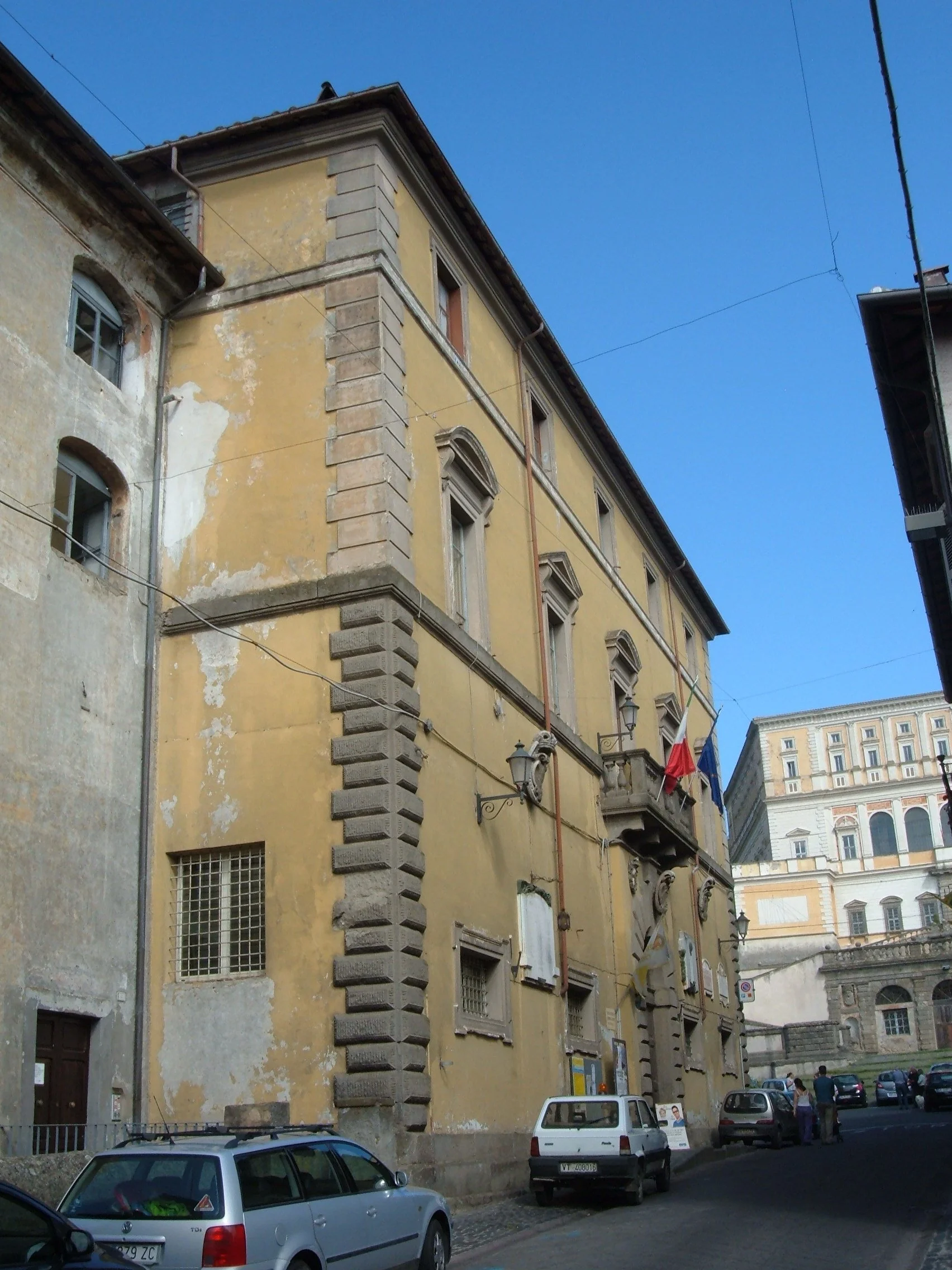
Palazzo Gherardi — Croberto68, via Wikimedia Commons, CC BY-SA 3.0.

Images have been resized and, where applicable, converted to WebP for this website; display crops may vary by screen size. Adapted CC BY-SA images retain their respective share-alike licences.