Home › Lazio › Calcata Vecchia
Calcata Vecchia
A small stone village with an artistic spirit above the Treja Valley
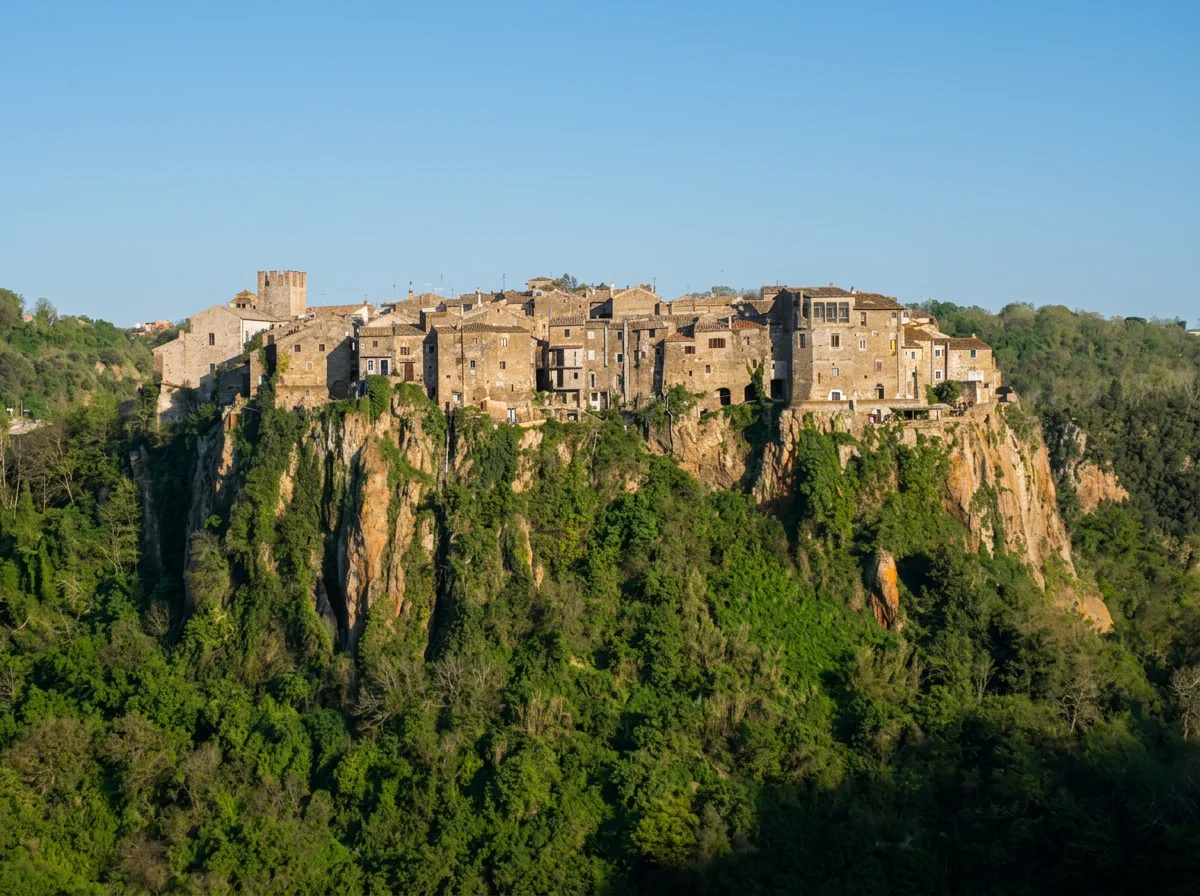
Calcata Vecchia sits on a rocky outcrop surrounded by woodland, its houses gathered into a compact cluster above the Treja Valley. Beyond the gateway, a central square and a handful of lanes create an intimate village world. Artists and craftspeople helped give the old settlement a new life after many residents moved away, and that creative identity remains part of its appeal. Come for the setting, stay for a slow wander, and leave room for a carefully chosen walk in the surrounding park.
Inside the gateway · Artists and workshops · Plan your visit
01 — THE OLD VILLAGE
Step through the gateway into a different rhythm
The entrance to Calcata Vecchia is part of its charm. A double arched gateway leads into a small centre shaped by its rocky site. The main square brings together the former parish church and the Palazzo Baronale Anguillara, with lanes branching away towards the edges of the outcrop.
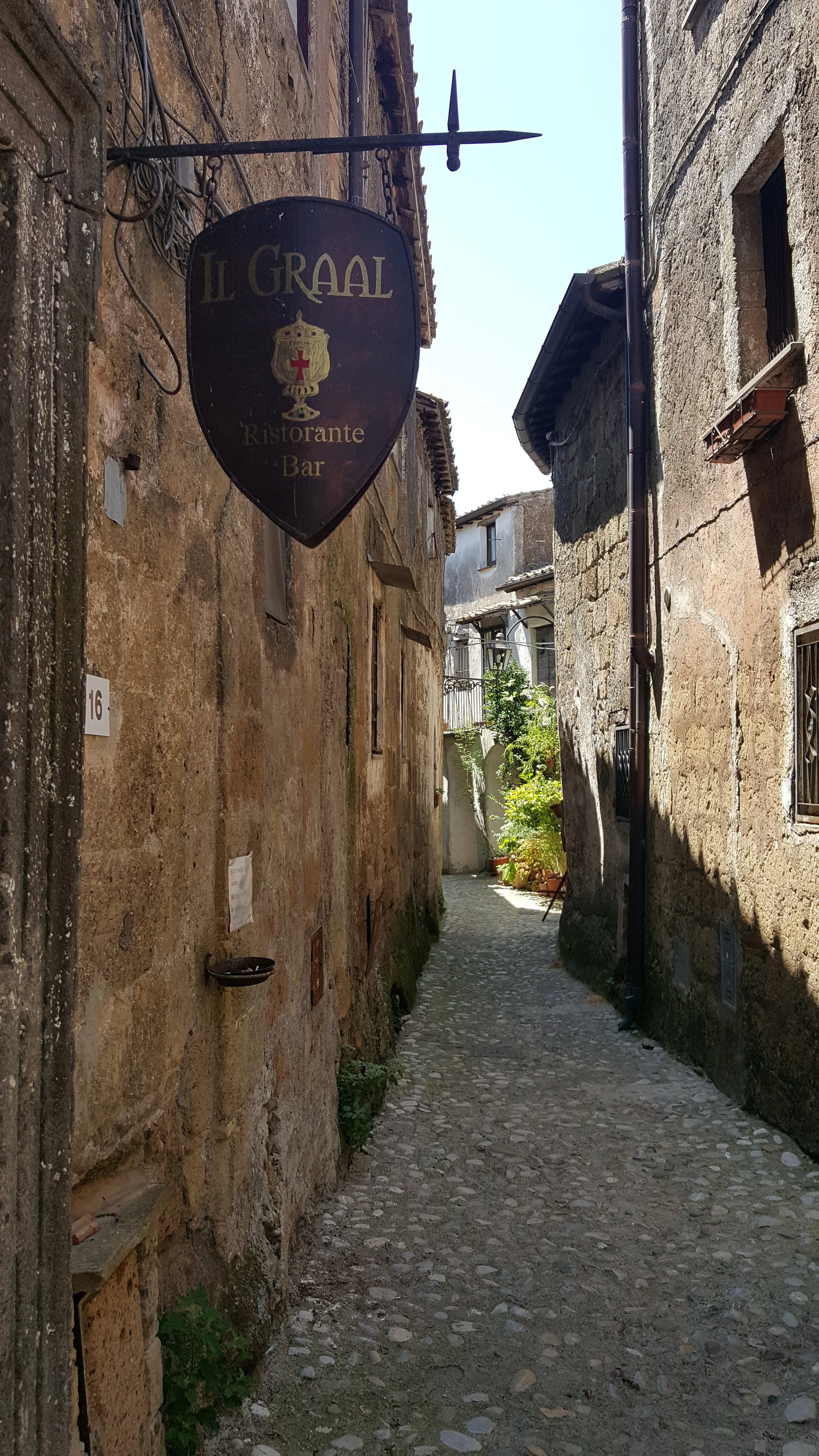
Look closely at how the buildings fit together: stone walls, short passages and courtyards make the village feel more intricate than its size suggests. The palace gives the square a strong architectural focus, though interior access should only be expected when a specific visit or event is advertised.
At the outer lanes, views open towards the wooded valley. These are places to pause rather than rush between landmarks. Keep to public spaces, respect homes and avoid leaning beyond barriers for a photograph.
Hidden Italy tip: Walk the lanes once before choosing a café or lunch stop. In a village this small, the pleasure is in noticing details rather than collecting sights.
02 — A CREATIVE SECOND LIFE
Look for the people behind the village’s character
Calcata’s modern identity grew from a period of change. Concerns about the rock beneath the settlement led many residents to leave the old village. Artists, writers and craftspeople later made their homes here, giving its small buildings a different purpose and energy.
Workshops and independent spaces are part of that story. Explore whatever is open on the day, with time to look at the work and speak to its makers when they are available. This is a living community, so opening patterns and events are not the same as those of a conventional museum.
One distinctive local creation is the nativity scene associated with the Granarone, the old granary. Its figures draw on the people of Calcata itself. If you want to see a particular exhibition or artistic space, confirm access before travelling instead of assuming it is permanently on show.
Hidden Italy tip: Choose one object or conversation to remember. A meaningful visit to a workshop can tell you more than a fast circuit of every shop window.

03 — THE TREJA VALLEY
See the village as part of its wooded landscape
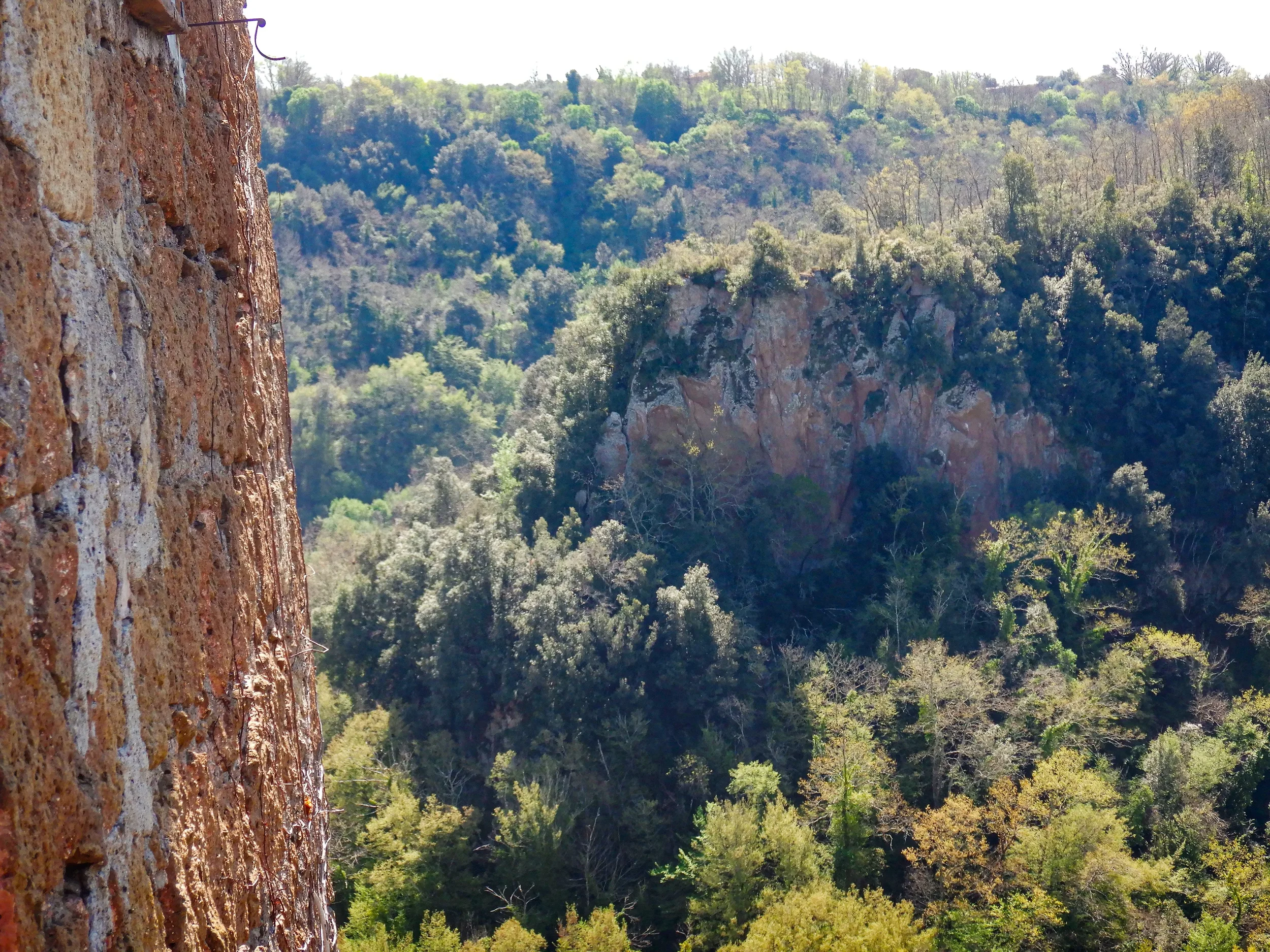
The Valle del Treja regional park surrounds Calcata with wooded slopes and deeply cut valleys. From the village, the trees seem to rise almost to the houses, making the contrast between stone and vegetation especially striking.
A walk can add another dimension to the day, but the paths below the village are a separate activity from strolling through its lanes. Select a marked route that matches your time and fitness, and check the park’s current information before descending. Returning uphill is part of the plan.
The park describes routes between Calcata and Mazzano Romano, among other options. Do not treat these as an automatic extension in sandals after lunch: surfaces, weather and daylight matter. The official Valle del Treja park pages are the right starting point for route information.
Hidden Italy tip: If you only have a short visit, enjoy the valley from the village viewpoints and save a proper trail for another day.
PLAN YOUR VISIT
Keep the village small and the day unhurried
A day in Calcata Vecchia
A few hours allow time for the lanes, viewpoints and a café stop. Add a leisurely lunch or confirmed artistic visit for a half day. A marked walk in the park can fill the rest of the day, provided you plan it as a walk in its own right.
Where to stay
An overnight stay can suit travellers who enjoy the atmosphere of a very small historic village. Check access, steps, luggage arrangements and evening dining before booking. A base elsewhere in the surrounding countryside may be more convenient for a wider driving itinerary.
When to go
Spring and autumn can be pleasant for combining the village with walking. Weekends may bring more activity and more visitors; a weekday may feel quieter but offer fewer open workshops. Choose according to the kind of visit you want, and confirm any essential stop.
Getting there and around
The historic centre is car-free. Follow signed parking arrangements outside it and complete the approach on foot, allowing for uneven paving and changes in level. Calcata Vecchia and the newer settlement are distinct places, so check the location of your accommodation or meeting point carefully.
If travelling by public transport, verify the exact stop, onward walk and return service for your chosen day. Do not assume that reaching Calcata means being dropped at the old village gateway. For park walks, carry water and suitable footwear and check current trail notices.
Make it a longer journey
Use the Lazio guide to combine Calcata with other northern Lazio destinations, or explore our seven-day itinerary. Give the old village enough time to feel like a place you visited, rather than a photograph taken between longer drives.
Image credits
Borgo Calcata panorama — OrCer, CC BY-SA 4.0, via Wikimedia Commons. Edited and cropped version, shared under the same licence.

Calcata Vecchia, Il Graal lane — Dionphoto, CC BY-SA 4.0, via Wikimedia Commons.

Calcata Vecchia courtyard — trolvag, CC BY-SA 3.0, via Wikimedia Commons.

Tuff cliffs of the Treja Valley — Albarubescens, CC BY-SA 4.0, via Wikimedia Commons.

Images resized, format-converted and cropped for this layout; adaptations retain their stated licences.