Bagolino
Stepped lanes, remarkable church art and the flavour of Bagòss
Bagolino lies in the mountains above the Lake Idro area, with houses packed along the slope and a large parish church rising over the village. Its narrow passages and covered lanes invite wandering, but this is also a place of strong traditions: Carnival music and dancing, mountain dairy work and the distinctive Bagòss cheese. Come for a village day with time for art and lunch, or stay longer to explore the surrounding valleys and higher ground.
The historic lanes · Churches and frescoes · Plan your visit
01 · THE OLD VILLAGE & VIA DEI PORTICI
Follow the streets that carried the village’s trade
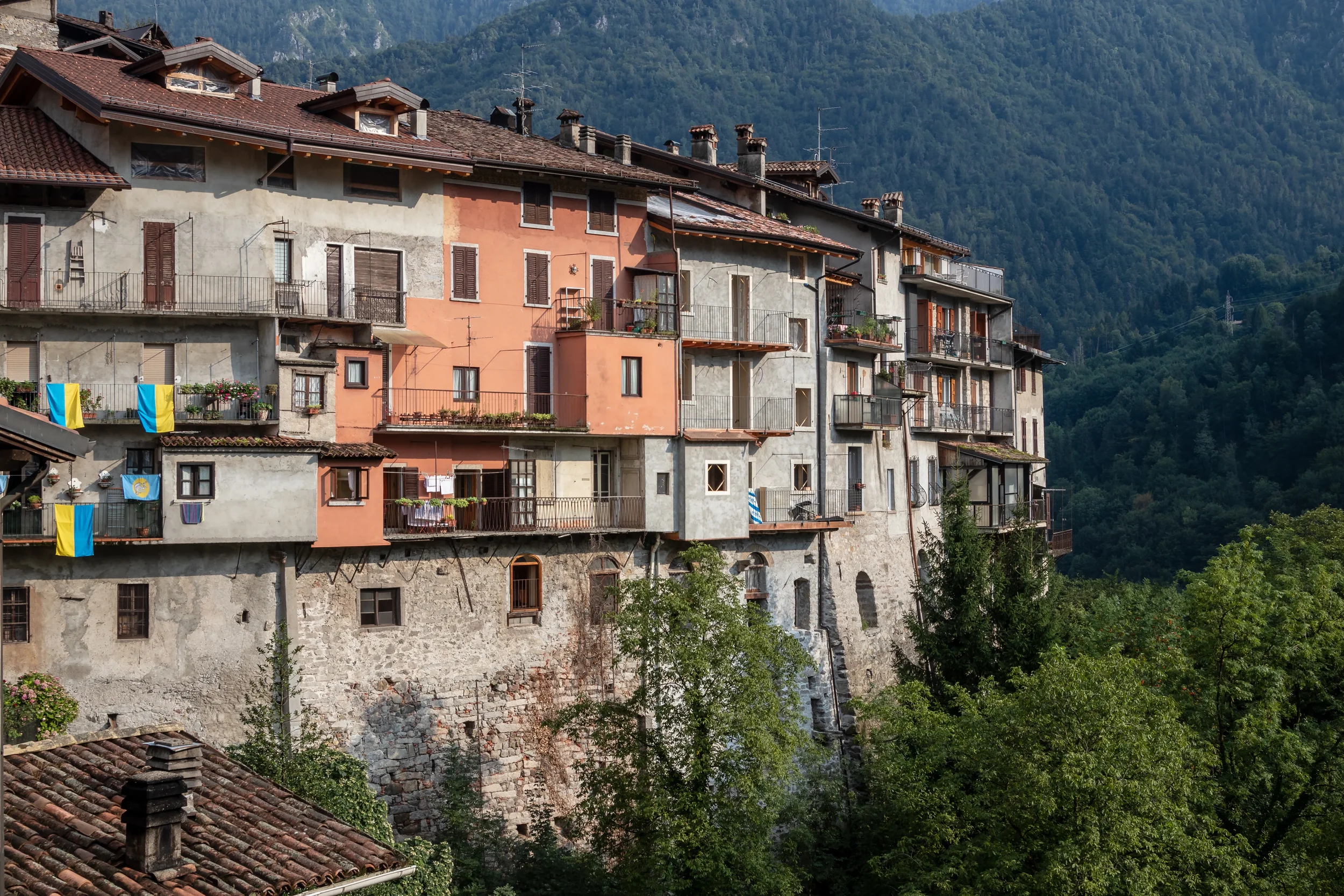
Bagolino’s old centre is a close-knit arrangement of paved lanes, steps and sheltered passages. Via dei Portici was once a principal commercial route through the settlement. Looking at these covered spaces, it is easy to appreciate how movement and trade had to adapt to a steep mountain setting.
Ironworking and dairy production helped sustain the community, while links with Venice formed part of its wider history. The streets are therefore more than an attractive medieval backdrop: they belonged to a village with businesses, local institutions and connections beyond its valley.
A major fire in 1779 devastated much of Bagolino, and rebuilding followed the earlier pattern of properties. That history is worth remembering as you look at the old centre. Its character comes from continuity and reconstruction as well as age, rather than from every building surviving unchanged.
Hidden Italy tip: Wear shoes that work on steps and uneven paving, then let the smaller passages set your pace. The most interesting details often appear between the main sights.
02 · SAN GIORGIO & SAN ROCCO
Give the churches the attention of a small art journey
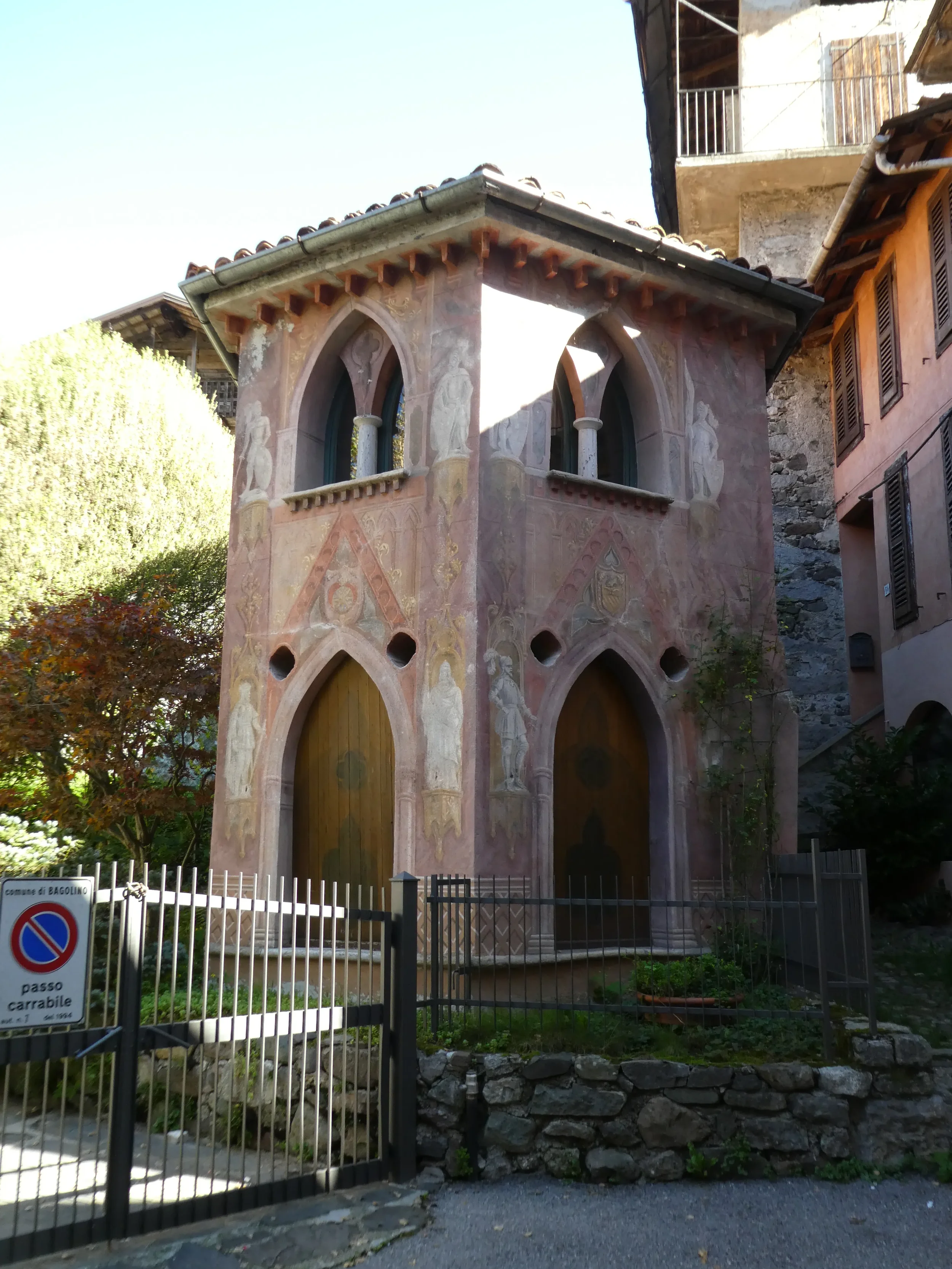
The imposing parish church of San Giorgio is one of Bagolino’s strongest landmarks. Its seventeenth-century interior reflects the community’s artistic ambition, with a painted vault by Tommaso Sandrini and a high-altarpiece by Andrea Celesti showing Saint George and the dragon beneath the Trinity.
Look at the scale and organisation of the interior before focusing on individual works. The church is still a place of worship, and some devotional images are displayed only on particular occasions. Allow for services and ask locally if there is a work you especially hope to see.
San Rocco offers an earlier chapter. Its presbytery was frescoed by Giovanni Pietro da Cemmo between 1483 and 1486, with scenes and figures including the Annunciation, Crucifixion and Sibyls. Later concealed beneath whitewash and rediscovered in the twentieth century, these paintings make the smaller church a substantial reason to linger.
Hidden Italy tip: Check San Rocco’s access before fixing your visit. Pairing its late-medieval frescoes with San Giorgio gives a much richer picture than seeing only the largest church.
03 · BAGÒSS & CARNIVAL TRADITIONS
Meet a mountain culture through food and celebration
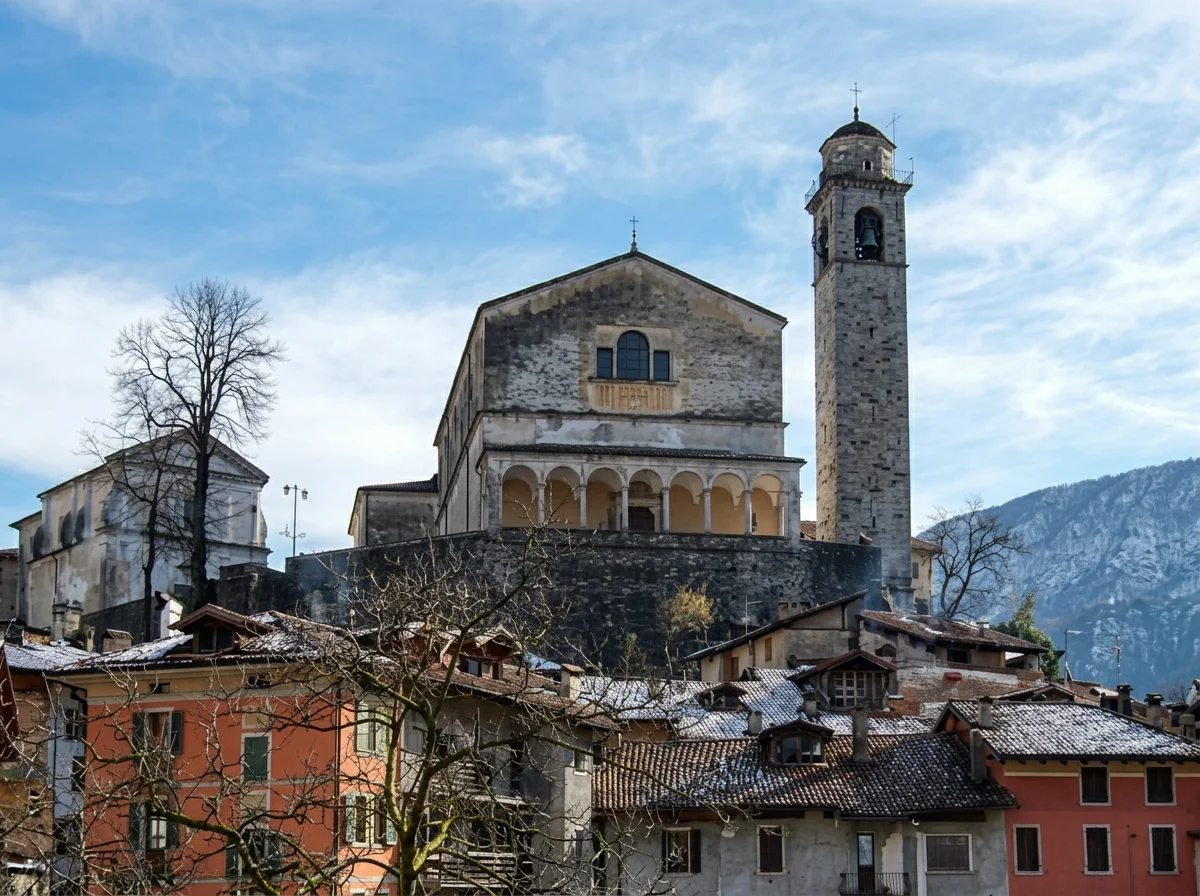
Bagòss is the village’s best-known food: a matured cheese made from raw cow’s milk, closely tied to the surrounding dairy landscape. Ask a local shop about the producer and age of the cheese. Tasting different maturations, when available, is a good way to appreciate its character.
At the table, look for pasta alla bagossa, which uses Bagòss as its defining ingredient. Recipes vary between kitchens, so let the cook explain the version being served. Mountain farms are working places; arrange any producer visit in advance instead of expecting to walk into a dairy during an excursion.
Carnival brings another expression of local identity. The Bälärì dancers, Sonädùr musicians and Màscär masked figures are central to a tradition rooted in the community. If you travel for it, consult the current programme and respect the space needed for the performances. Outside Carnival, the village and its art remain worthwhile in their own right.
Hidden Italy tip: Choose the visit you actually want: the concentration and crowds of Carnival, or a slower day of lanes, paintings and local food. Each offers a different Bagolino.
PLAN YOUR VISIT
Plan a village day with room for mountain life
A day in Bagolino
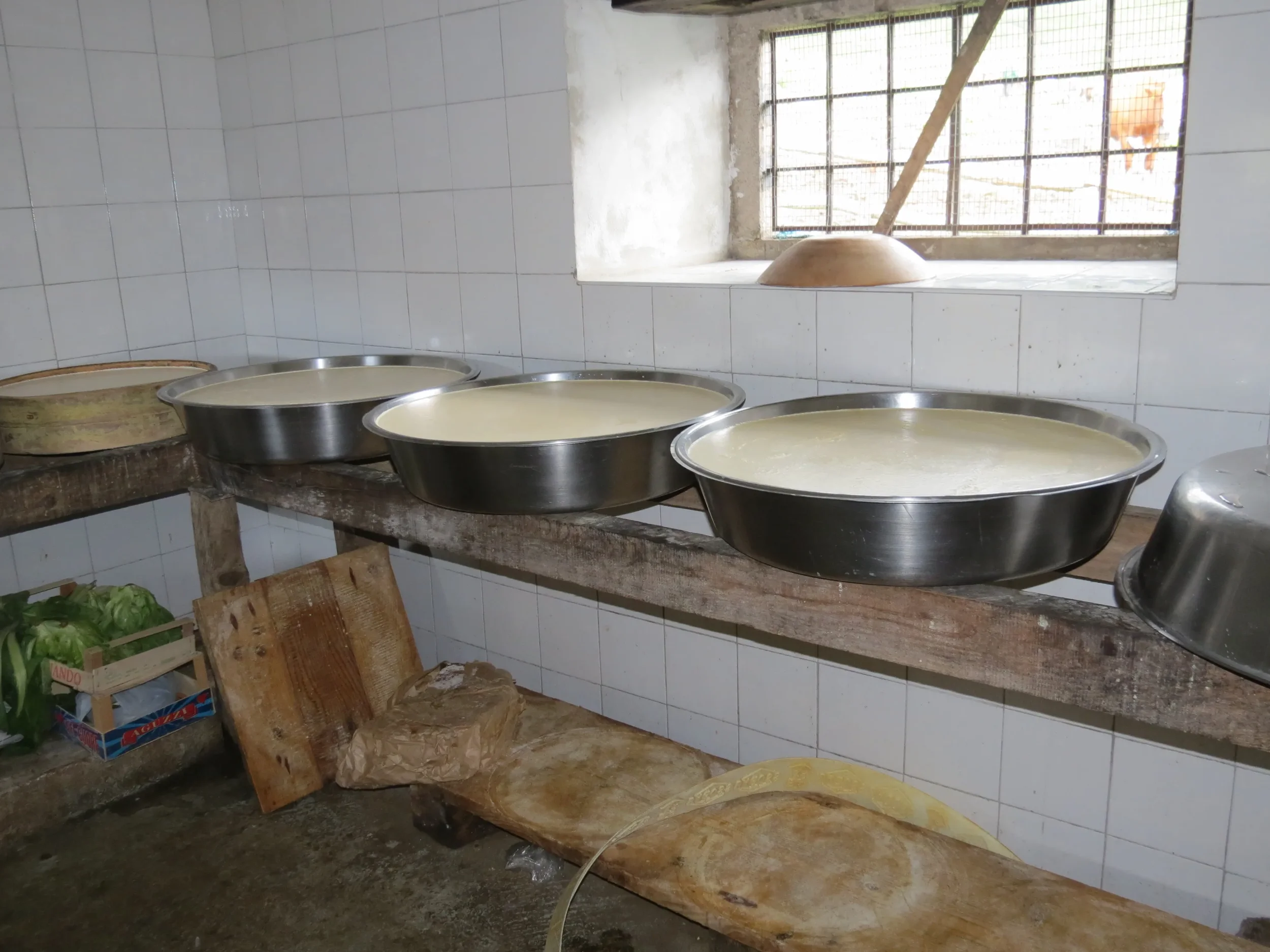
Begin with the historic lanes and Via dei Portici, then visit San Giorgio and San Rocco according to access. Leave time for a meal and a cheese shop. Add a short outdoor walk only if the weather and available daylight suit it; a higher mountain route deserves its own plan.
Where to stay
A village base suits an evening meal and a second walk through the old streets. Accommodation farther up the valley serves a different kind of stay, with more emphasis on outdoor activities. Check exact location, road access and parking, especially if your room is reached through stepped lanes.
When to go
Warmer months offer opportunities to combine Bagolino with the surrounding mountains, while autumn can suit food and village exploring. Carnival needs advance planning for both accommodation and transport. Winter conditions and seasonal road closures can affect higher routes, even when the village itself is accessible.
Getting there and around
Plan the approach through the Lake Idro and Val Sabbia area, allowing for winding roads. Do not assume that a route over a mountain pass is open simply because a navigation app suggests it. With buses, confirm connections and the last return before travelling. For church information and events, use the official Bagolino tourist office; its Carnival guide explains the local traditions.
Make it a longer journey
Combine Bagolino with time around Lake Idro or a separate walking day in the mountains. Compare the region’s waterside bases in our Lombardia lakes guide, then use the seven-day itinerary to shape the wider trip. Return to the Lombardia overview for more villages and cultural stops.
Image credits
Bagolino houses: © Superbass / CC BY-SA 4.0 (via Wikimedia Commons).

Frescoed house: Syrio / Wikimedia Commons, CC BY-SA 4.0.

Milk for Bagòss: © Scailyna / Wikimedia Commons / CC BY-SA 4.0.

These Commons photographs have been converted to WebP and resized for display. Any crops are shared under the same licence.