Sepino
Roman streets in the valley, a living village on the hillside
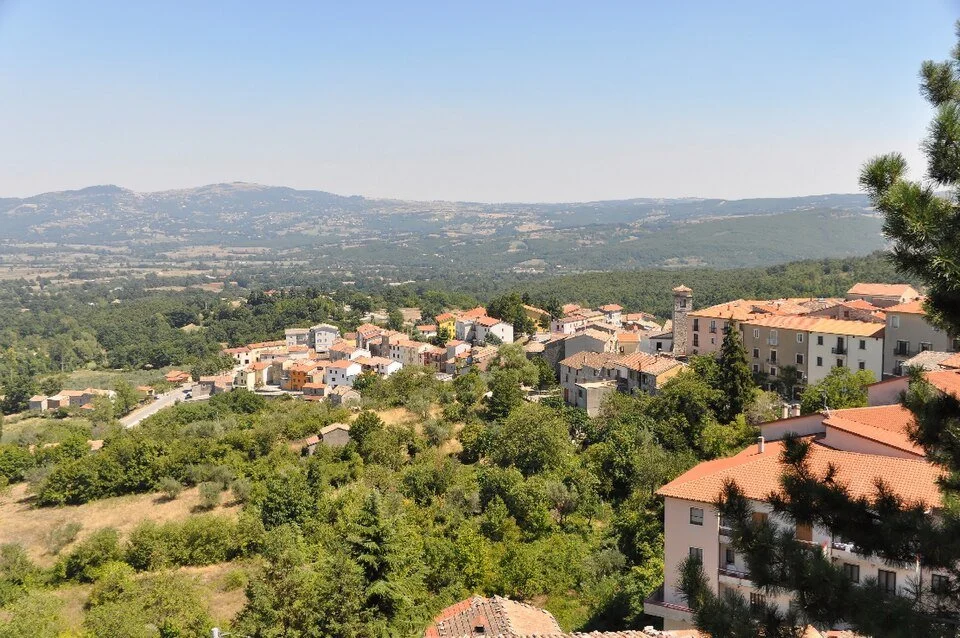
Sepino is a destination with more than one centre. The Roman city of Saepinum lies at Altilia in the valley, while today's village sits higher on the hillside. Visit both and the day becomes a journey through different ways of inhabiting the same landscape. Gates, a forum and a theatre give the ancient town its shape; the village adds a square, church and everyday life beyond the archaeological site.
01 · SAEPINUM AT ALTILIA
Follow the streets into a Roman town
Saepinum developed where important routes met, including the line later known as the Pescasseroli–Candela tratturo. Its main streets drew on those connections, making movement and exchange central to the town's position in the landscape.
Begin with the plan of the site, then follow the streets towards the forum and basilica. The surviving arrangement lets you connect a gateway, public space and working streets in a way that isolated monuments rarely allow. Notice how the civic buildings gather around the heart of the town.
Porta Bojano is one of the most recognisable landmarks, but the quieter traces of shops, houses and infrastructure also deserve attention. They help turn a collection of ruins into a place where people traded, met neighbours and went about ordinary business.
Our tip: Use the archaeological park's digital tour to orient yourself before walking, then spend more time looking at the stones than at your screen.
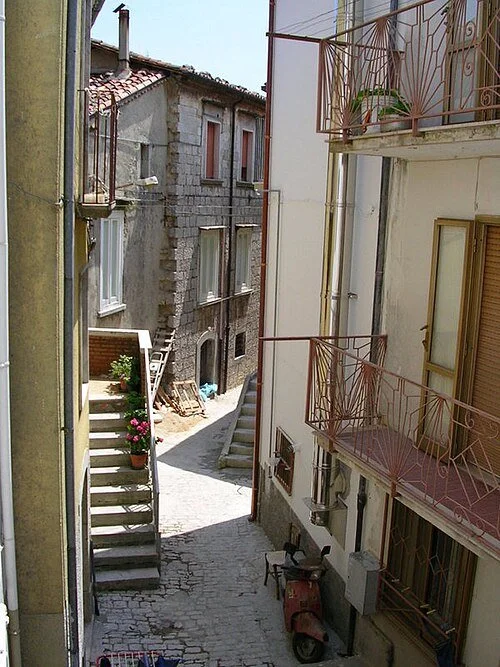
Pictured: a lane in the hill town of Sepino, above the Roman site at Altilia.
02 · THE THEATRE AND ITS LATER LIFE
Look at what grew above the ancient seating
The theatre is memorable not only for its Roman form but for the buildings that later occupied part of it. Rural houses followed the curve of the upper seating, creating a striking meeting of monumental architecture and everyday habitation.
Take in the whole outline before studying individual details. The surviving theatre and the later houses tell different stories within the same view: an entertainment building became the framework for another kind of life. This reuse is part of the site's character, not a distraction from its antiquity.
The Museum of the City and Territory adds context to the archaeological visit. Confirm the current exhibition route and admission arrangements with the park, particularly if you want to make the museum a central part of the day.
Our tip: Leave time to compare the theatre from more than one permitted viewpoint. Its changing uses are easier to understand when you see both the seating and the buildings above.

03 · THE HILL TOWN
Continue to Sepino beyond the archaeological park
The modern village is a separate stop from Altilia. After the open spaces of the Roman site, its streets and central square offer a change of scale and an opportunity to pause over a meal or a coffee.
The Church of Santa Cristina is closely connected with local devotion. Its Tesoro chapel preserves the saint's relics and an elaborate ensemble of carved work, reliquaries and decoration. Ask about access if you want to see the chapel, and allow worship to take priority over sightseeing.
There is an older chapter too: the Samnite settlement of Terravecchia stands apart from both the Roman town and the present village. Treat it as a separately planned outing with appropriate route information, rather than assuming that one archaeological ticket or a short stroll covers all three places.
Our tip: Keep the village in your itinerary even if ancient history is the main reason for coming. It gives the day a social and human pace between the archaeological remains.
PLAN YOUR VISIT
Plan for two distinct stops
A suggested day in Sepino
Begin at Altilia with the gates, main streets and forum, then continue to the theatre and museum according to current access. Take a proper break before travelling to the hill town. Spend the later part of the day around the square and Santa Cristina, leaving Terravecchia for a separate outing if time is limited.
How long to stay
Allow several hours for an interested visit to the archaeological park, especially with a guide or museum stop. A full day lets you add the village comfortably. An overnight stay nearby is useful if you prefer to explore the wider Matese area without squeezing everything into one circuit.
When to go
Mild weather makes the exposed archaeological site more comfortable. In summer, arrive early within the published opening hours and carry water and sun protection. In wet weather, expect uneven paving and ground to require more care. The village's religious celebrations bring another atmosphere; consult the current programme if that is your reason for travelling.
Getting there and getting around
Set your destination to Altilia-Saepinum when visiting the Roman remains, rather than simply navigating to Sepino's centre. A car is convenient for combining the site and village. If travelling by public transport, confirm the stop location, connection between the two places and return service before departure.
Tickets, access and a longer trip
Use the official archaeological park website for current tickets, opening information and accessibility contacts. Our five-day Molise itinerary places Sepino within a wider route; the Molise travel guide offers more ideas for the region.
Image credits
Sepino panorama — © Foto: Ra Boe / Wikipedia — CC BY-SA 3.0 DE.
Lane in Sepino — Paul Bosco (Pauljohnbosco) — public domain.
Roman theatre and museum — Termauri (MaTe.Photo) — CC BY-SA 4.0.
Historic centre — Gianfranco Vitolo — CC BY-SA 2.0.
Via Wikimedia Commons. Resized for display; any crops or adaptations are shared under the respective licences.


