Scicli
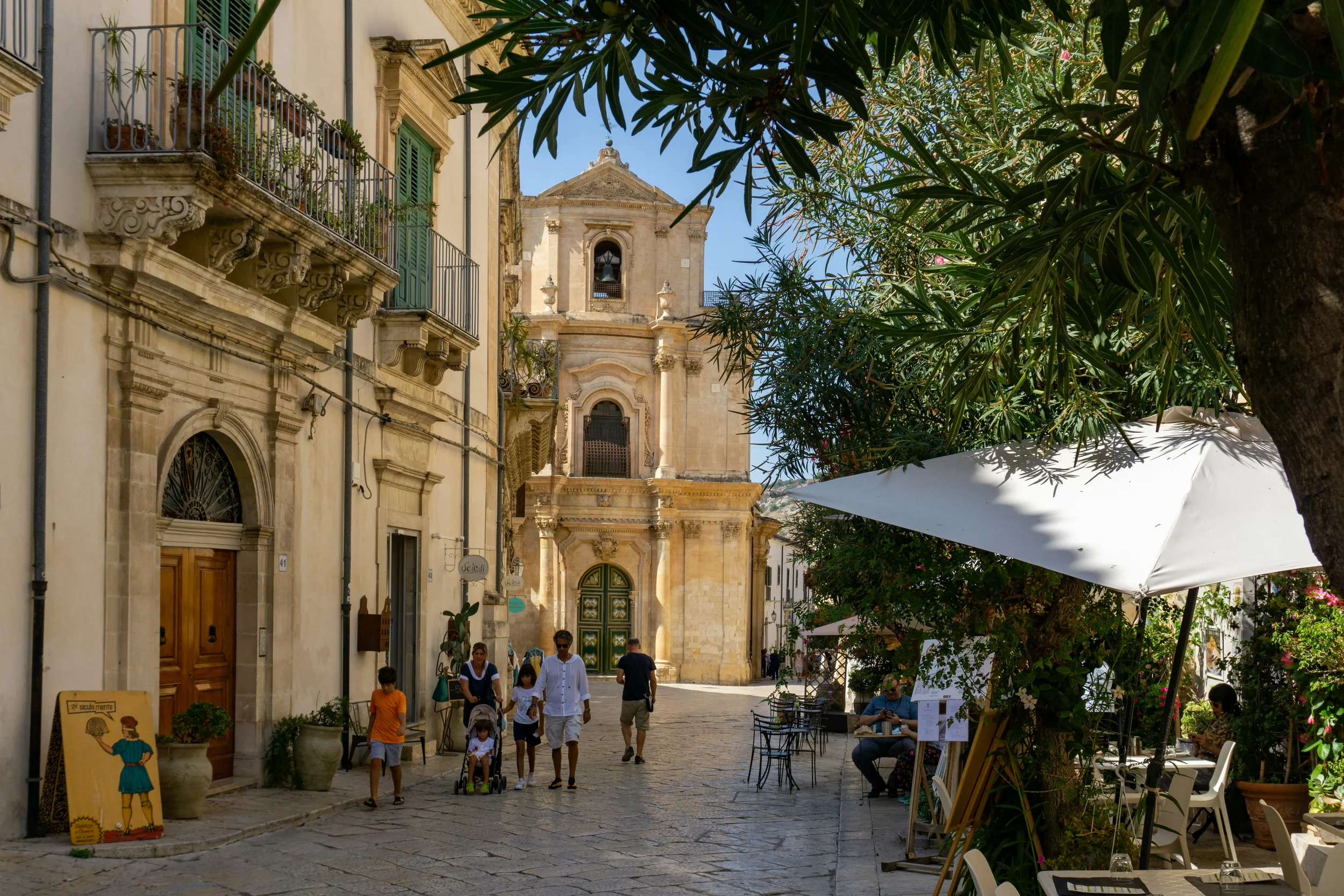
Carved balconies, pale stone and everyday life between Baroque façades.
Scicli sits among the valleys and rocky hills of southeastern Sicily. Its centre invites you to walk slowly, pairing churches and palaces with art collections, café tables and streets familiar from Inspector Montalbano. Stay long enough to move beyond the main filming location and discover the town’s different corners.
01 · VIA MORMINO PENNA & THE PALACES
Read the town in its stonework
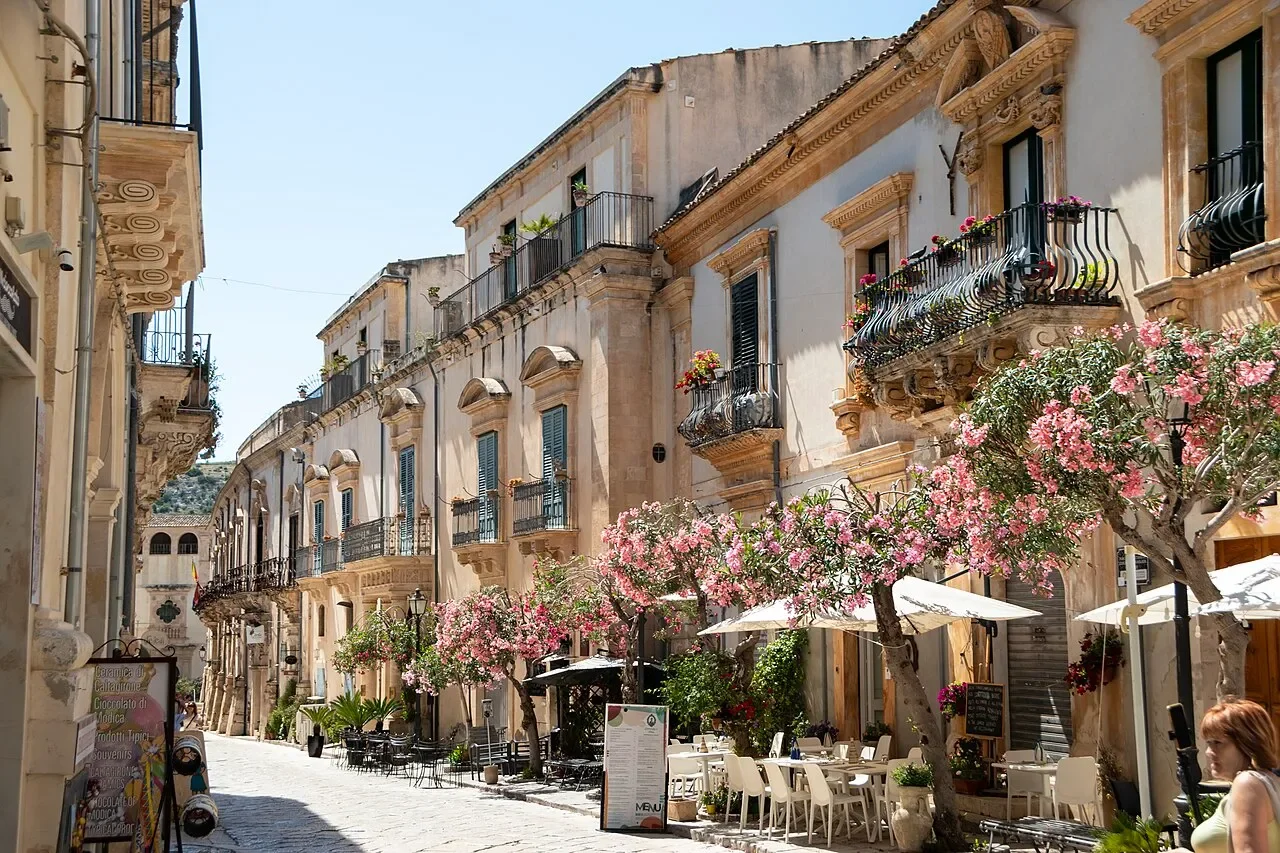
Via Francesco Mormino Penna brings palaces and churches into a compact stretch of the historic centre. Scicli’s late Baroque architecture belongs to the rebuilding that followed the earthquake of 1693, and forms part of the Val di Noto UNESCO property.
Look up at the carved balconies of Palazzo Beneventano, then continue towards Piazza Italia. The architectural detail rewards a slower pace: façades change as you move around a corner, and the spaces between buildings matter as much as their decoration.
Choose one or two interiors rather than collecting a long list of church names. A shorter walk with time to look closely often makes more sense than trying to cover the entire town before lunch.
Hidden Italy tip: Walk the central streets twice if you can, once for the buildings and later for the cafés and evening atmosphere.
02 · PALAZZO SPADARO & MONTALBANO
Step inside for art and screen stories
Palazzo Spadaro houses the municipal art collection, including works by the artists associated with the Gruppo di Scicli. It brings a more recent creative chapter into the setting of an eighteenth-century noble residence.
The town hall supplied the police-station setting for Inspector Montalbano. The museum circuit offers visits to the Commissariato di Vigata and the mayor’s room used as the television police chief’s office. Check which spaces are included on the day.
For another interior, consider Palazzo Bonelli-Patanè, where the museum operator describes an ornate decorative scheme behind a restrained exterior. Let your interests guide the choice between painting, historic rooms and television locations.
Hidden Italy tip: Check the current museum circuit before booking. A combined visit is useful only if you have time for the places it actually includes.
03 · SAN BARTOLOMEO & THE HILLS
Follow the streets towards the rock
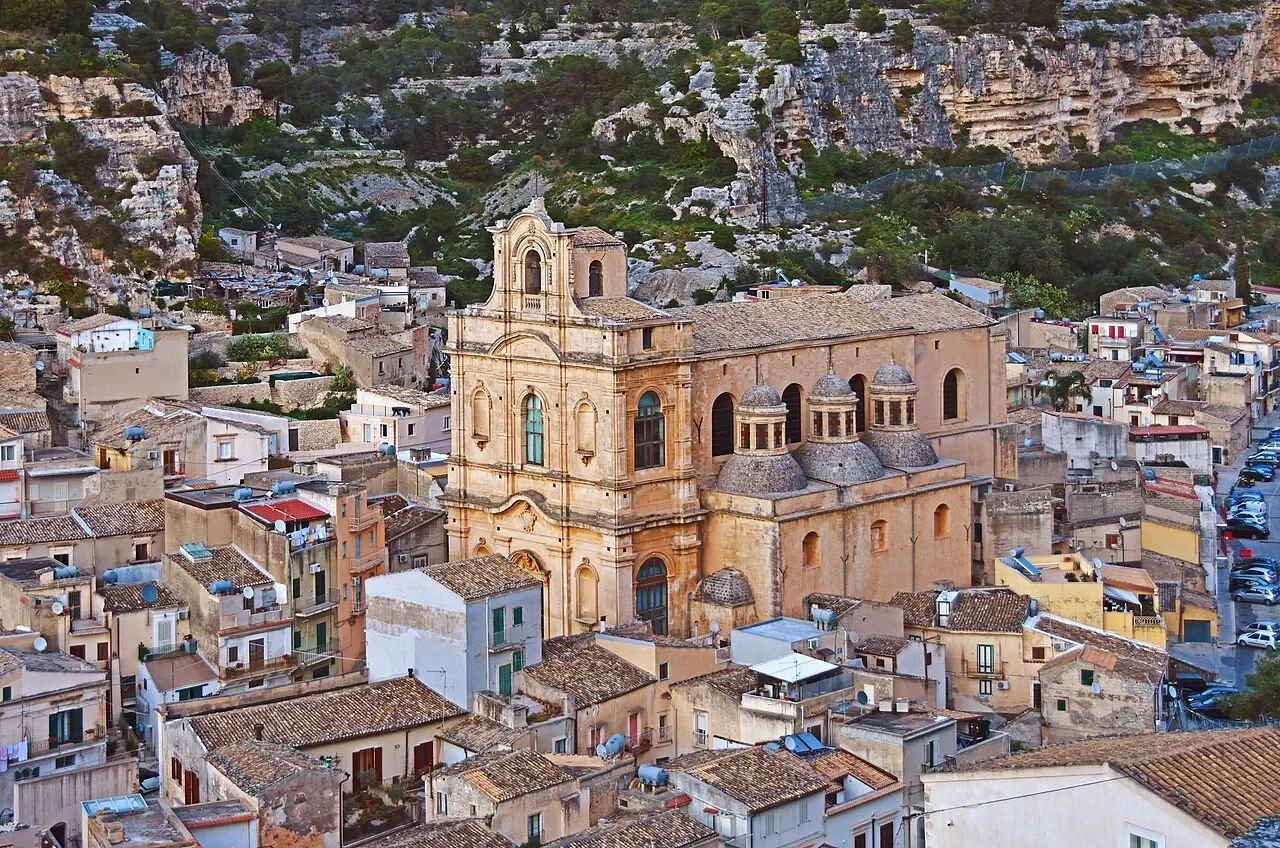
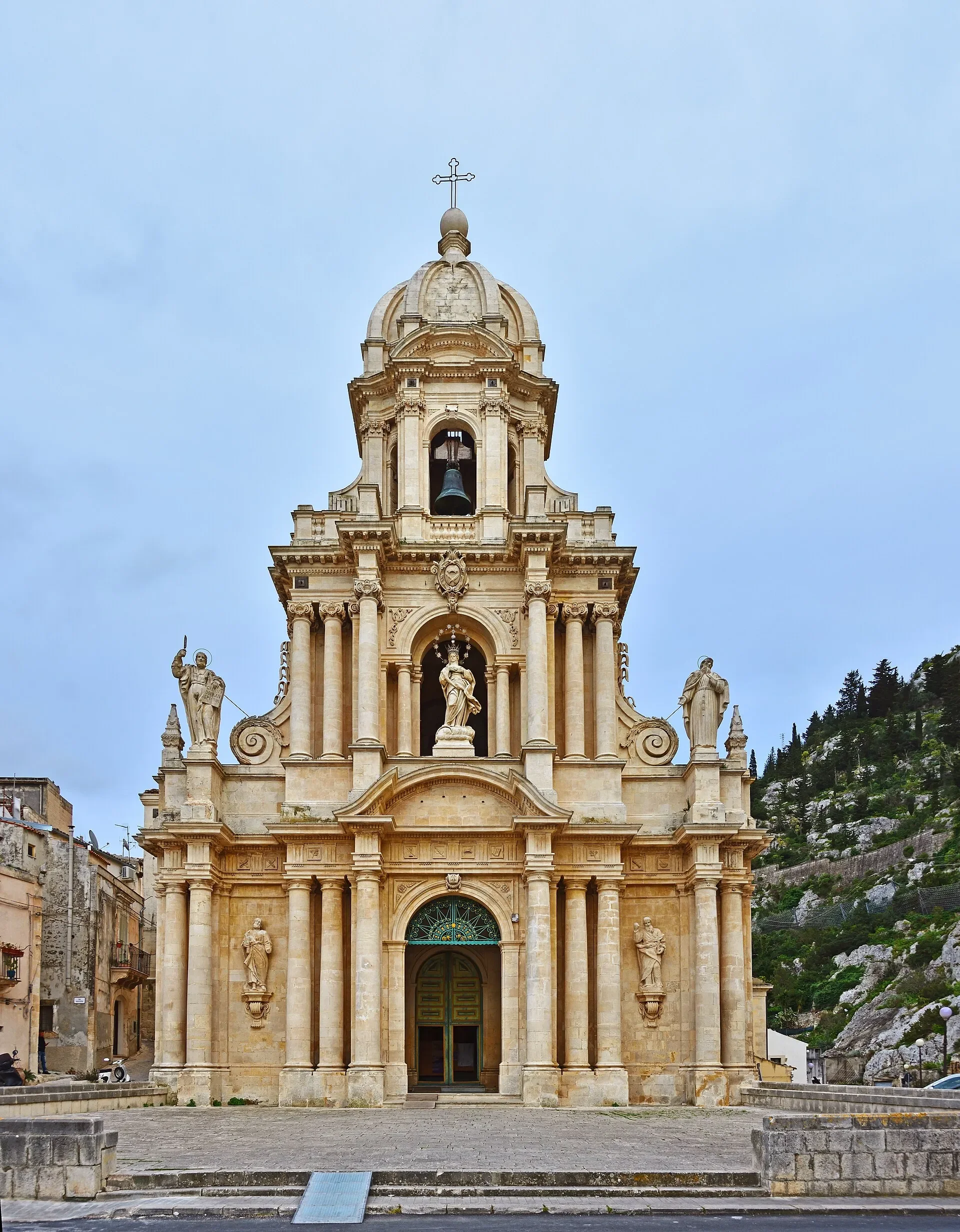
From Piazza Italia, the approach to San Bartolomeo brings the rocky setting of Scicli into focus. The church stands against the limestone of its valley, offering a striking change from the palace-lined streets.
Above the town, San Matteo marks the older hillside settlement. Treat any climb as an optional extension: ask locally about the current route and access, wear suitable shoes and avoid committing to exposed steps in the midday heat.
You can also enjoy Scicli without climbing every hill. Return through the lower streets towards Piazza Busacca for a break, watching how the town sits between its elevated landmarks.
Hidden Italy tip: Keep the hillside walk separate from your core museum plan. That makes it easy to adapt to heat, weather or the needs of your group.
PLAN YOUR VISIT
Spend a day with Scicli’s different layers
A suggested walking day
Morning: explore Via Mormino Penna, then choose Palazzo Spadaro or the Montalbano rooms. Continue past Palazzo Beneventano towards Piazza Italia, with time for coffee and architectural details.
Afternoon: visit the San Bartolomeo area, have a leisurely lunch and decide whether a hillside extension suits the conditions. Return for an evening stroll around the centre. This is our suggested sequence; adjust it to current openings.
Where to stay & how long to spend
We suggest a full day for a first visit, or two nights for a slower combination of museums and the surrounding area. A central room makes restaurants and evening walks convenient. Sampieri or Donnalucata suits a coast-focused stay, with transport needed for time in Scicli itself. Confirm parking and luggage access before choosing an old-town property.
When to visit
Spring and autumn are our choices for walking and museum visits. In summer, explore the hills early and leave the hottest hours for an interior or lunch. Religious celebrations can change the rhythm of the centre; check local event information if you want to attend or need a quieter arrival.
Arrival & getting around
Plan the journey to Scicli together with your wider southeast Sicily route. If travelling by public transport, check current services for your exact day, the final walk or transfer to your accommodation and the return connection. Avoid planning several dispersed towns around an unverified timetable.
Drivers should follow signed parking and restricted-traffic rules. The lower centre and hillside lanes offer different walking conditions: steps and gradients become particularly relevant on the climbs. Confirm the exact route with venues if accessibility is a priority.
Combine town and coast
Give the beaches a separate half-day rather than squeezing them between museum visits. Browse our Sicily beach guide and seven-day itinerary, using the regional guide for the wider picture.
For architectural background, see Visit Sicily’s Scicli guide. For current interiors, exhibitions and tickets, consult the Sistema Museale Scicli.
Image credits
Via Mormino Penna: Via Francesco Mormino Penna, Scicli by Julian Lupyan, CC0 1.0, via Wikimedia Commons.

Santa Maria La Nova: Scicli StMariaNovaChurch 010 1572 by Ludvig14, CC BY-SA 4.0, via Wikimedia Commons.

San Bartolomeo: Scicli San BartolomeoChurch 010 1205 by Ludvig14, CC BY-SA 4.0, via Wikimedia Commons.

Commons images resized for this page; images supplied as WebP were converted from the originals. Adapted versions remain available under the respective licences linked above.