Savoca
Stone lanes, hilltop churches and a familiar doorway from the cinema.
Savoca rises above Sicily’s Ionian coast, a village of steep lanes and wide views. The Godfather brought its most recognisable corners to the screen, but allow time for the churches, old gateways and everyday details between them. A slow half-day here works better than a quick photograph outside the bar.
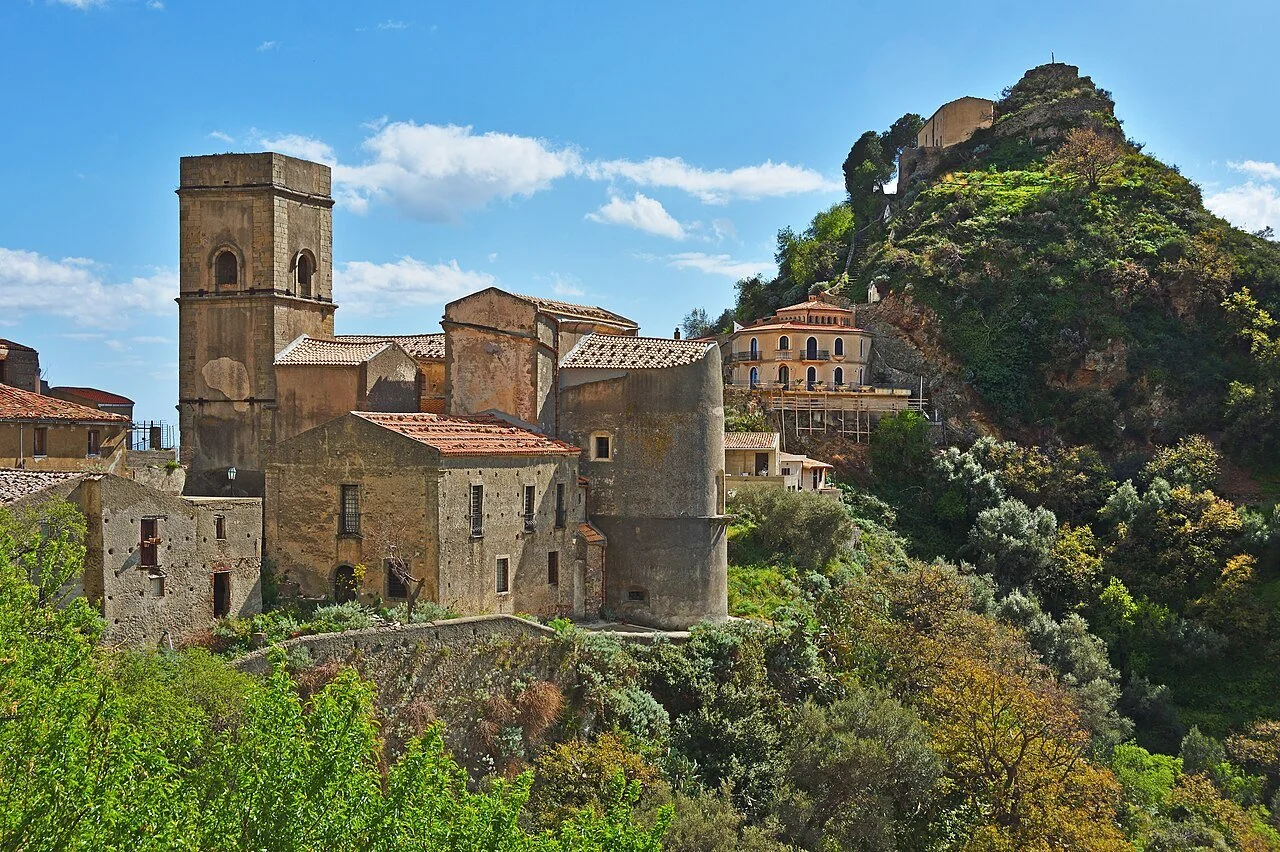
01 · BAR VITELLI & SAN NICOLÒ
Follow the village’s cinematic thread
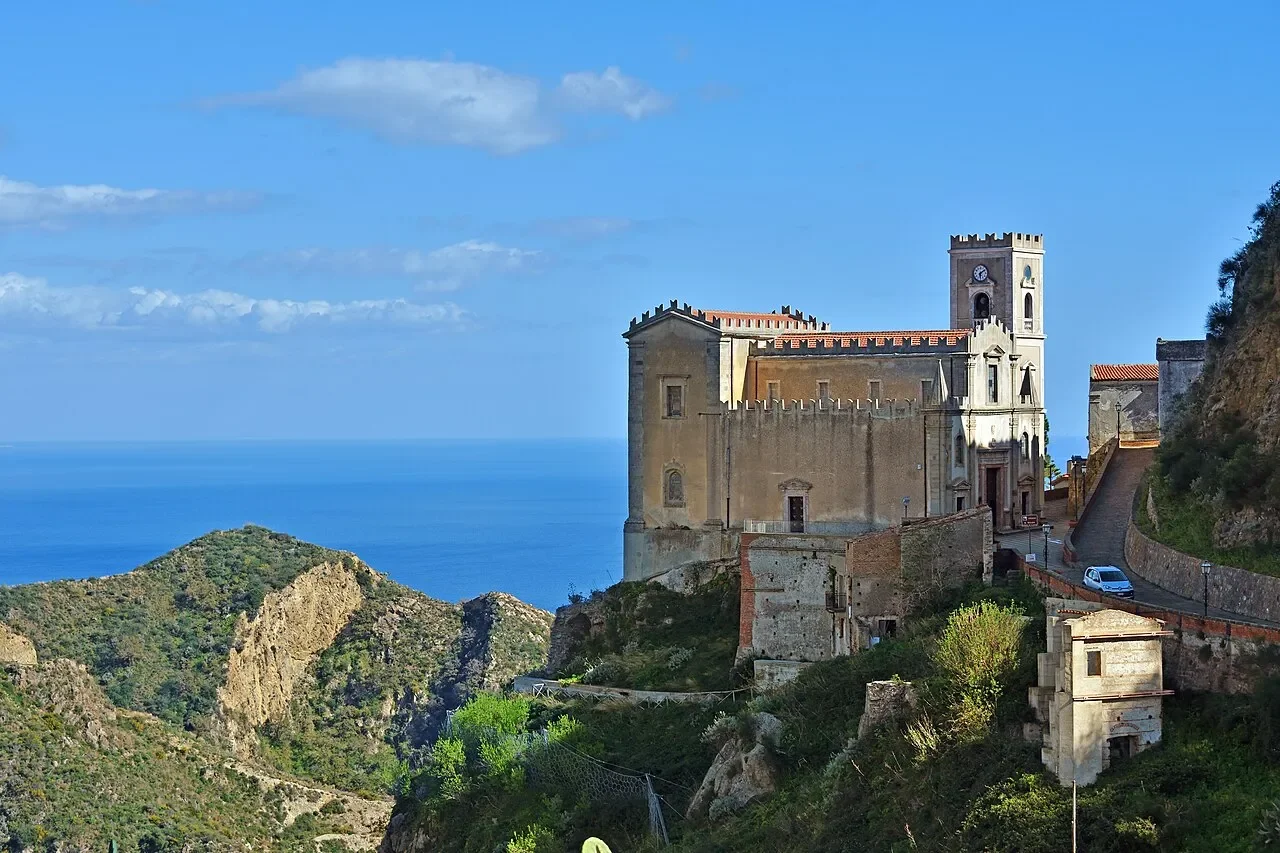
Bar Vitelli occupies part of Palazzo Trimarchi. Its association with The Godfather makes it a natural starting point, followed by the Church of San Nicolò, another location used in the film. Together they give a walk through Savoca a recognisable thread.
At San Nicolò, look beyond the screen memories to the building’s position on a rocky outcrop. The surrounding landscape helps explain the appeal of this hilltop setting. Inside, visit quietly and follow any restrictions during worship.
Let the film stops lead into the village, rather than define the whole visit. Take time between them for a doorway, an unexpected view or a café table away from the busiest arrival point.
Hidden Italy tip: Start earlier in the day if these locations are your priority, and leave a little flexibility around church access and organised groups.
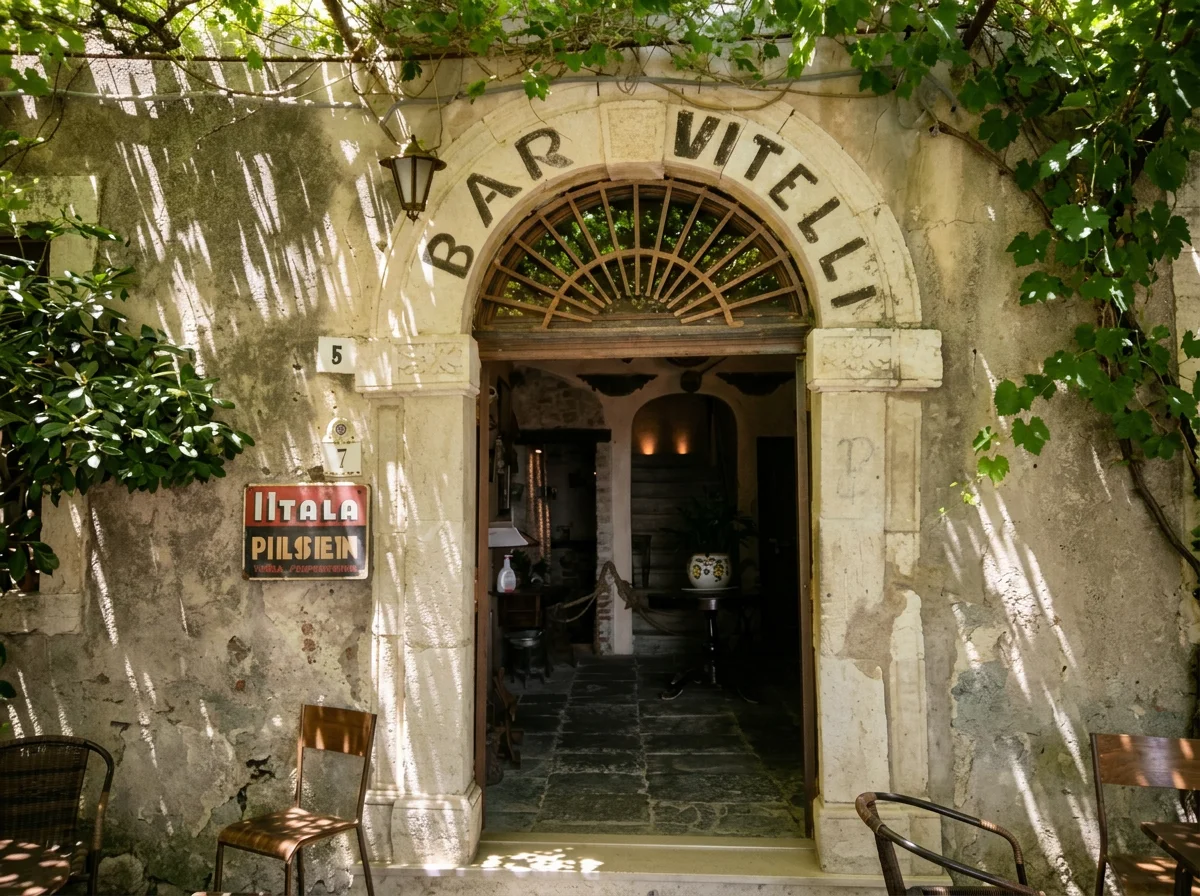
02 · MEDIEVAL LANES & SAN MICHELE
Look closely at the older village
San Michele offers a different architectural focus, with pointed stone portals on its façade. The municipality identifies it as a church connected with the castle of Pentefur, whose ruins occupy the heights above Savoca.
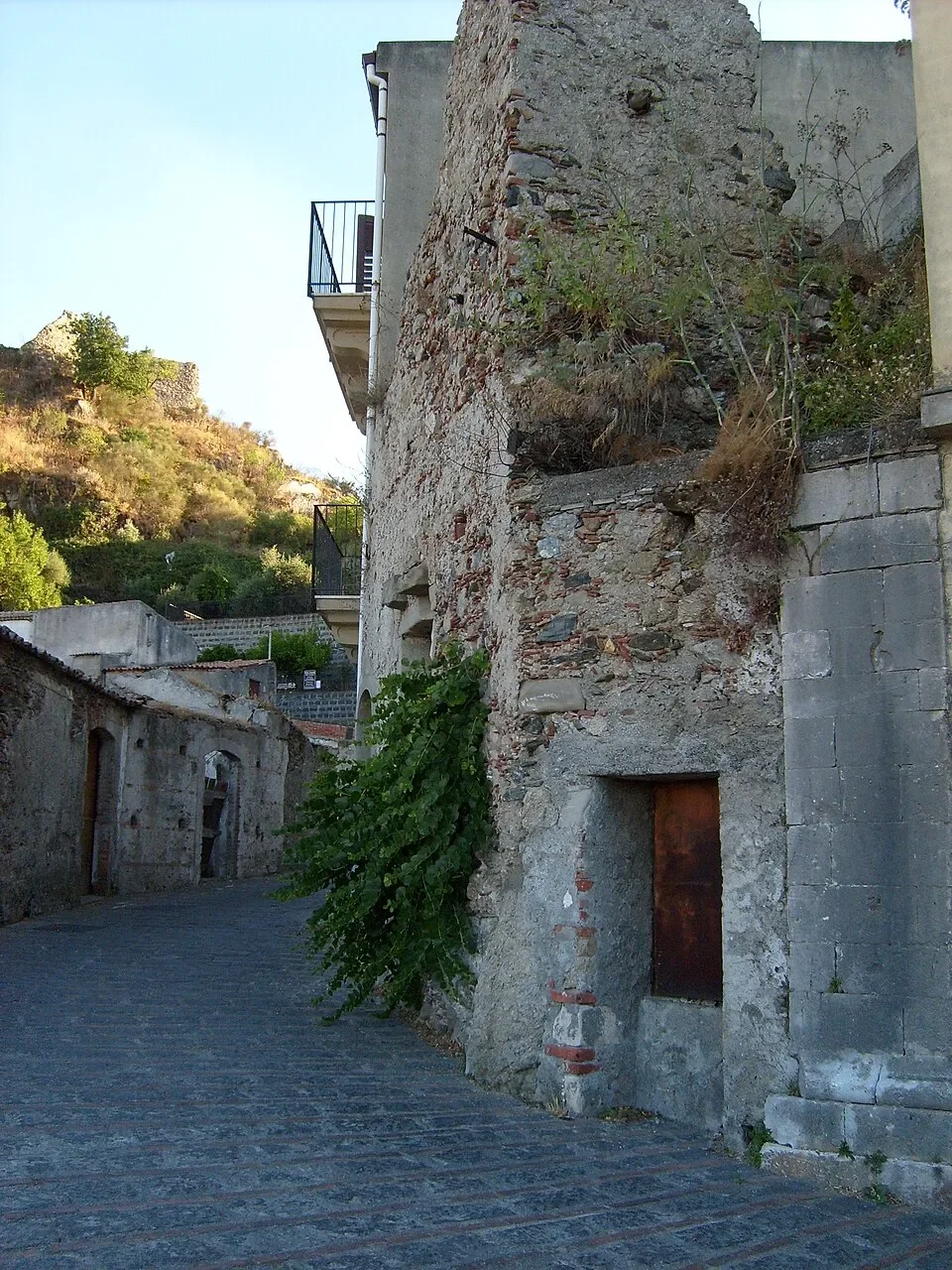
The old town gate and the streets around San Michele reveal how the settlement once defended its hillside position. The municipal account describes the approach as a steep rock-cut stairway before later changes. Walk slowly enough to notice how the lanes bend with the terrain.
Nearby are the remains of Savoca’s former synagogue, documented in the early fifteenth century. It adds another layer to the village’s history; do not assume that ruins or neighbouring private plots are open for entry.
Hidden Italy tip: Choose a few buildings to understand properly. A façade and its setting can be rewarding even when an interior is closed.
03 · VIEWS & A SICILIAN PAUSE
Leave time to stop between the sights
Views open between the village’s buildings towards the surrounding hills and the coast. Rather than chasing a single viewpoint, pause as the streets turn and the scenery changes. The climb is part of the visit, so wear shoes that grip uneven paving.
For a distinctly local break, look for lemon granita served with zzuccarata, the crisp sesame-topped biscuit described in Sicily’s official tourism guide. A longer lunch might include fresh pasta or seasonal aubergine dishes; ask what is being cooked that day.
The Capuchin crypt is a separate option for visitors interested in funerary history. It contains human remains, so decide whether it suits everyone in your party and check current access before making it part of the day.
Hidden Italy tip: Keep one unhurried pause in the plan. The spaces between monuments are much of Savoca’s appeal.
PLAN YOUR VISIT
Make room for a slower hilltop visit
A suggested half-day walk
Morning: begin around Palazzo Trimarchi and Bar Vitelli, then walk towards San Michele and the older lanes. Continue to San Nicolò when visitor access permits, taking breaks on the uphill stretches.
Afterwards: stay for lunch or granita before returning to the coast. This is our suggested sequence, not a waymarked route. Add the crypt only if it interests you and its opening arrangements fit.
Where to stay & how long to spend
We suggest half a day for the village, or a night if you want to enjoy it beyond a daytime excursion. Staying in Savoca puts the old streets close by; a coastal base suits travellers mixing the visit with beach time. Confirm parking, luggage drop-off and the number of steps to your room before booking.
When to visit
Spring and autumn are our preferred seasons for a walking visit. In summer, put the climbs earlier in the day and carry water. A winter stay needs more advance checking of accommodation, restaurants and visitor openings.
Arrival & getting around
Plan the final journey up to the village separately from your travel along the coast. If relying on public transport, confirm both the uphill connection and your return before setting off; a stop on the coastal railway does not deliver you into Savoca’s old town. Drivers should use signed parking and continue on foot, following local restrictions.
Slopes, steps and irregular paving affect the walking route. Ask individual venues and accommodation about the exact approach if you need step-free access.
Build it into an eastern Sicily trip
Use our Sicily itinerary to place Savoca within a longer journey, and our regional guide to choose other stops without overloading the day.
For background, see Visit Sicily’s Savoca guide. The municipal monument directory provides further information on the village’s historic buildings.
Image credits
Santa Maria in Cielo Assunta: Savoca Santa Maria Cielo Assunta Church 009 3575z by Ludvig14, CC BY-SA 4.0, via Wikimedia Commons.

Former prison: Savoca antico Carcere by Eugenio Nicola Scarcella, Public domain, via Wikimedia Commons.

San Nicolò: Savoca StNicholasChurch 009 3794 by Ludvig14, CC BY-SA 4.0, via Wikimedia Commons.

Commons images resized for this page; images supplied as WebP were converted from the originals. Adapted versions remain available under the respective licences linked above.