Home › Molise › San Vincenzo al Volturno
San Vincenzo al Volturno
A Benedictine world beside the river, with centuries beneath your feet
San Vincenzo al Volturno is more than the outline of an abbey against the mountains. Beside the upper Volturno, the remains of a great early medieval monastery reveal the scale of a community that once shaped this valley. The standing abbey, archaeological area and celebrated frescoed crypt have different visiting arrangements. Give each its own place in your plan, and let the river landscape connect them.
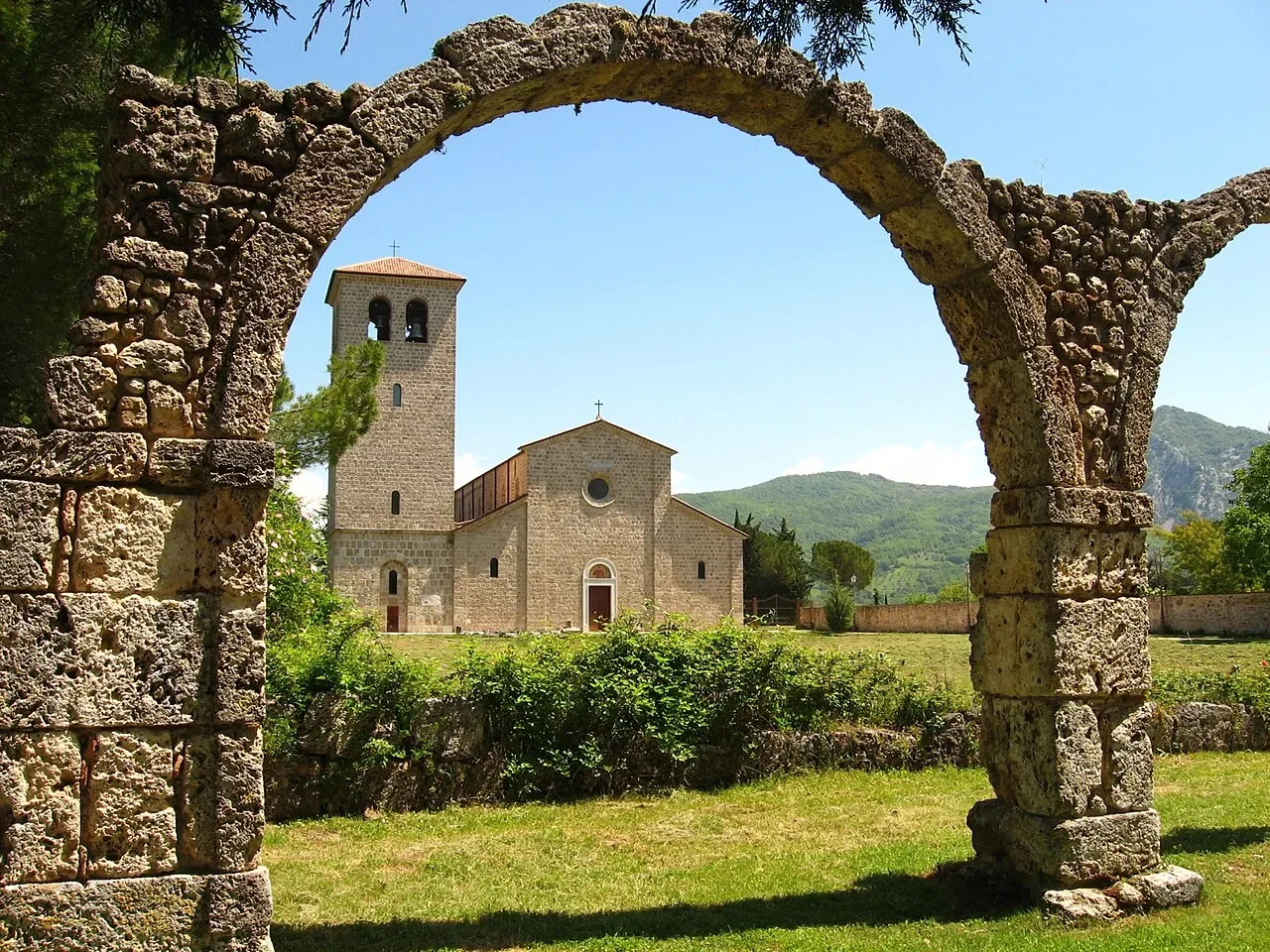
01 · THE ARCHAEOLOGICAL AREA
Look for a whole community within the ruins
The monastery began in the eighth century and became an important Benedictine centre. Its surviving remains make most sense when you imagine everyday life alongside worship: courts, kitchens, eating spaces and a great church belonged to the same organised world.
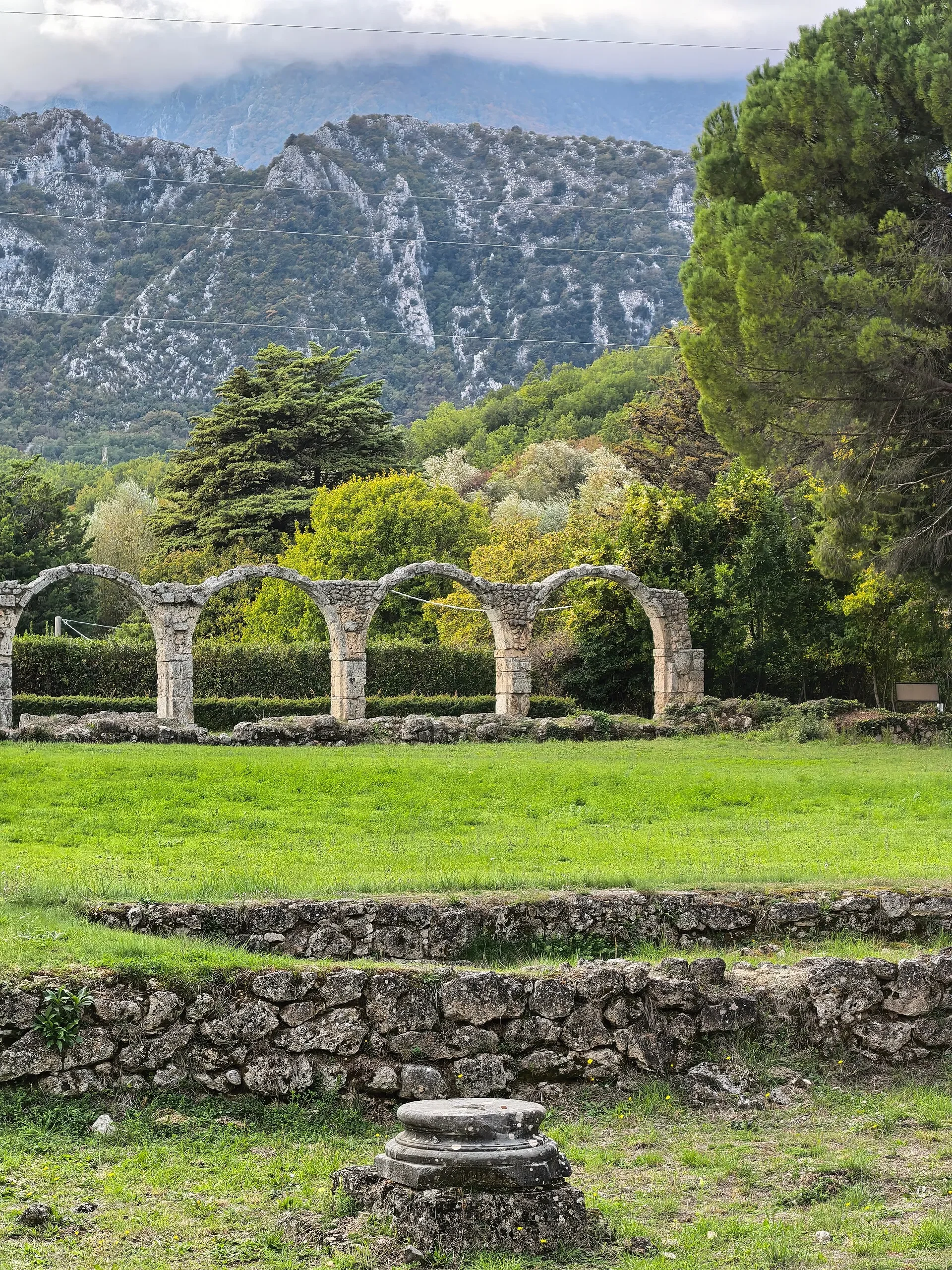
Within the archaeological area, the route from the bridge known as Ponte della Zingara introduces the earlier monastic buildings. Farther along, the remains of the Basilica Maggiore reveal an altogether larger ambition. Use the interpretation on site to connect these different parts rather than treating every wall as an isolated ruin.
This is a visit for patient looking. Pause where the ground plan becomes clear, compare the scale of the communal spaces and let the surrounding hills help you picture the monastery's position in the valley.
Our tip: Check the current visitor route before arriving. Conservation works can change which parts of the complex are accessible.
02 · THE CRYPT OF EPIPHANIUS
Understand the frescoes before arranging a visit
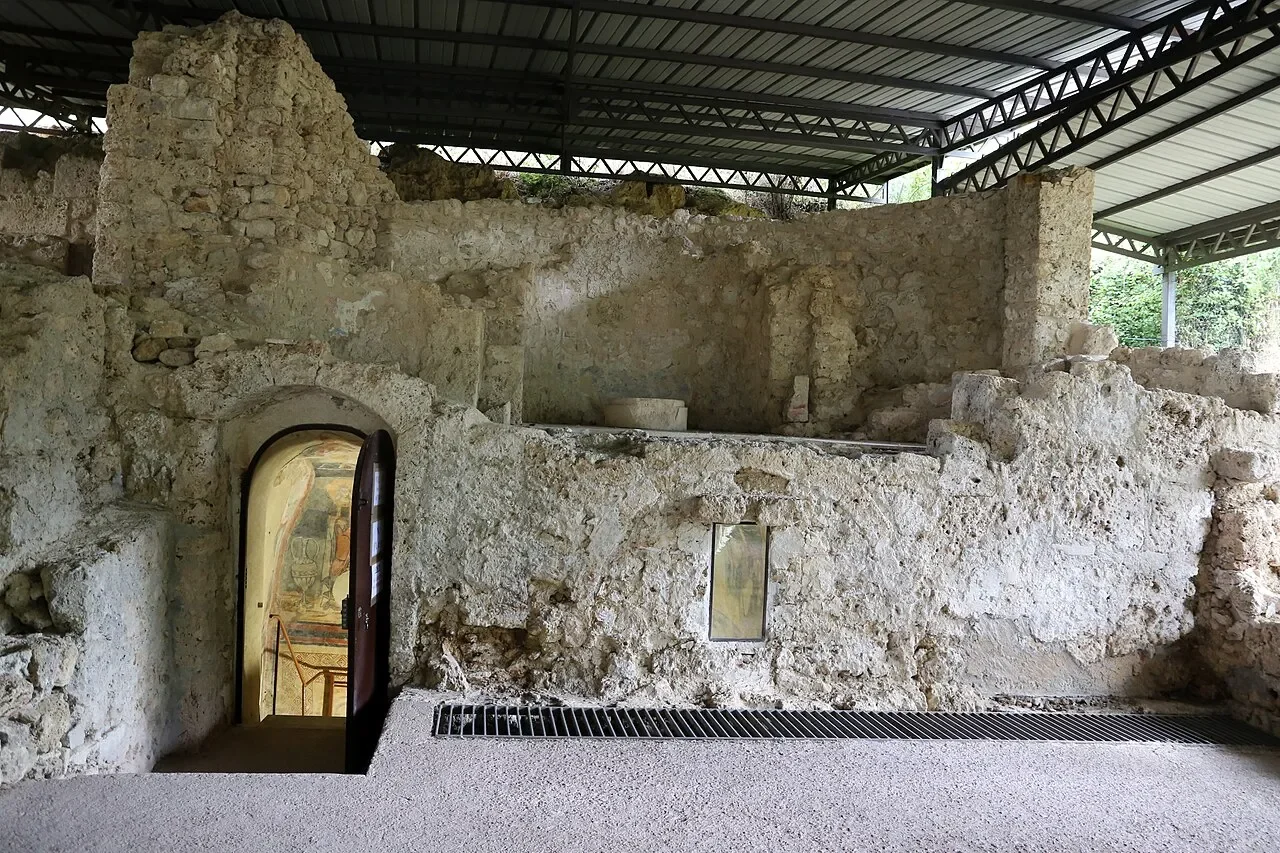
The Crypt of Abbot Epiphanius preserves an extraordinary ninth-century painted interior. Figures of Christ, the Virgin and saints belong to a vivid religious programme, with scenes connected to the martyrdoms of Stephen and Lawrence.
One particularly moving detail is the abbot himself, shown kneeling by the Crucifixion. His square halo identifies him as a living person at the time of the painting. Knowing this small distinction gives the image a human presence beyond its age and artistic importance.
The crypt has separate management and tightly controlled visiting arrangements. An October 2026 notice from the heritage authority reports restoration of its frescoes, begun on 30 September. Do not build a journey around guaranteed entry: ask whether visits are currently possible and what booking conditions apply.
Our tip: Start with the official crypt information, then confirm availability directly with the named operator.
03 · THE ABBEY AND THE VALLEY
Leave room for the quieter side of San Vincenzo
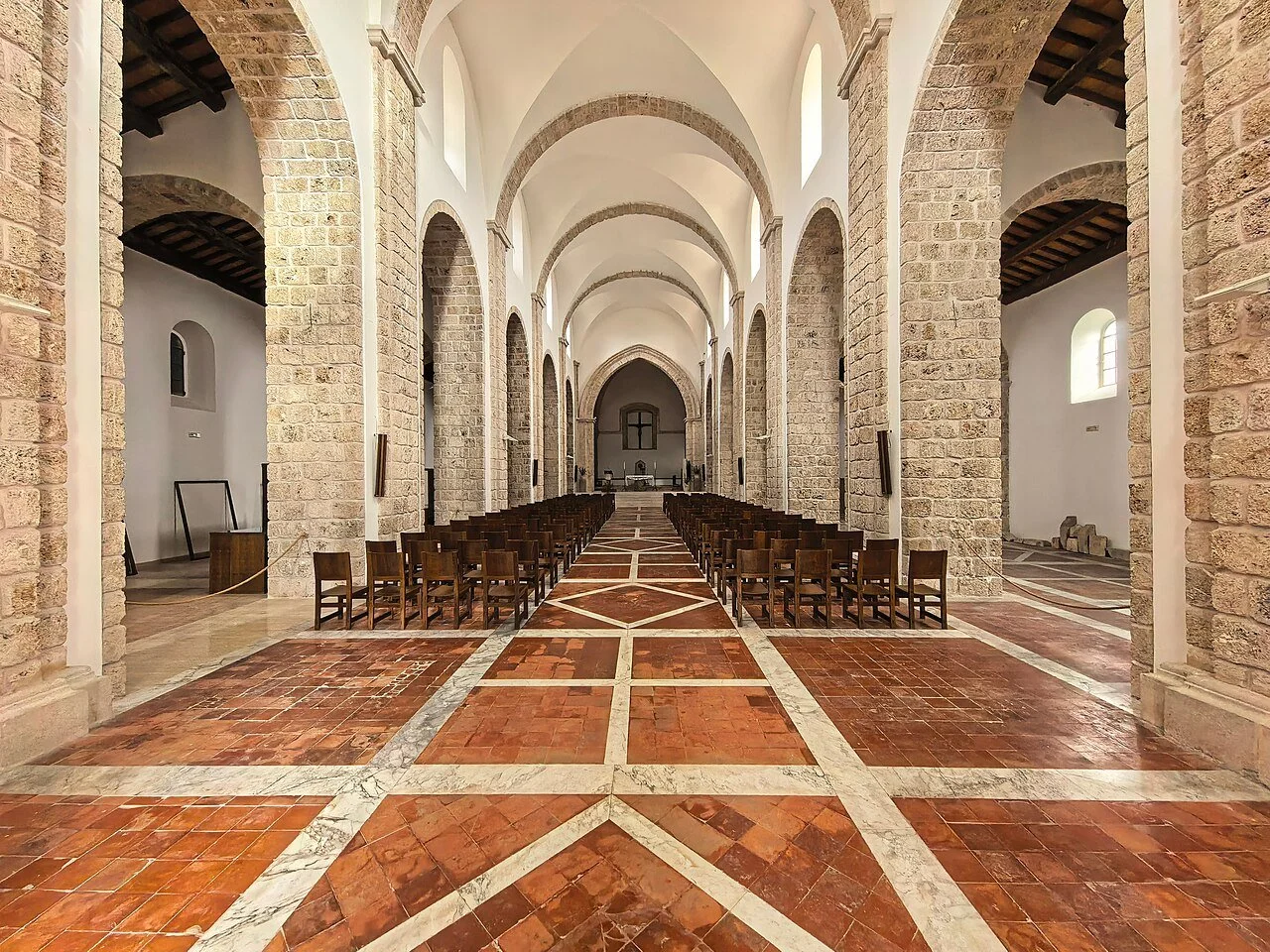
The later abbey, San Vincenzo Nuovo, stands across the river from the early monastic settlement. Keeping the two locations distinct helps explain why photographs of a standing church and images of extensive ruins can both represent San Vincenzo al Volturno.
Allow time to take in the abbey's setting as well as its architecture. The river, open ground and mountain backdrop give this part of Molise a different rhythm from its compact hill towns. A pause here is worthwhile even when your main interest lies in the archaeological remains.
If you enter the church, treat it as a religious space and follow any restrictions connected with worship. Access to the abbey does not automatically include the archaeological area or the painted crypt; arrange the parts you particularly want to see individually.
Our tip: Choose one nearby addition, such as Castel San Vincenzo, rather than filling the day with several distant stops.
PLAN YOUR VISIT
Build the day around confirmed access
A suggested visit to San Vincenzo
Begin with the archaeological area if its current opening arrangements suit your day. Follow the visitor route, then take a break before seeing the standing abbey and its setting. Include the crypt only after receiving specific confirmation; otherwise use the extra time for the valley or a nearby village.
How long to stay
Allow a generous half-day for the complex and its surroundings. A full day works better if you want a guided archaeological visit, time at the lake of Castel San Vincenzo and an unhurried meal. Keep a booked entry time as the fixed point of your schedule.
When to go
A mild, clear day suits the outdoor remains. Bring sun protection and water in warm weather, and shoes that cope with uneven surfaces. After rain, ask about the condition of the route rather than assuming every section is equally easy.
Getting there and getting around
A car gives flexibility between the valley's separate attractions. Check the correct entrance and parking instructions for your booking. Without a car, confirm both the outward and return journey in advance. For step-free requirements, ask the operator about the exact route, including the crypt, before committing.
Access and a longer Molise trip
Consult the official complex website for notices and visitor information. Place the valley within our five-day Molise itinerary, or return to the Molise travel guide to choose your next stop.
Image credits
Abbey through a stone arch — Bryan — CC BY 2.0.
Arches in the abbey grounds — Kewerner — CC BY-SA 4.0.
Entrance to the Crypt of Epiphanius — Sailko — CC BY 3.0.
New abbey interior — Kewerner — CC BY-SA 4.0.
Via Wikimedia Commons. Images resized for display; the first three were converted to WebP. Any crops or other adaptations are shared under the respective licences above.


