Riccia
A De Capua stronghold, a quiet court and woodland beyond the town
Riccia brings a different character to an inland Molise journey. Its tower and the buildings around Piano della Corte tell a story of local power and Renaissance ambition, while narrow streets and steep steps keep the scale intimate. Beyond the town, Bosco Mazzocca offers a change of scene. Come for the historic centre, then decide whether to extend the visit with a slower afternoon among the trees.
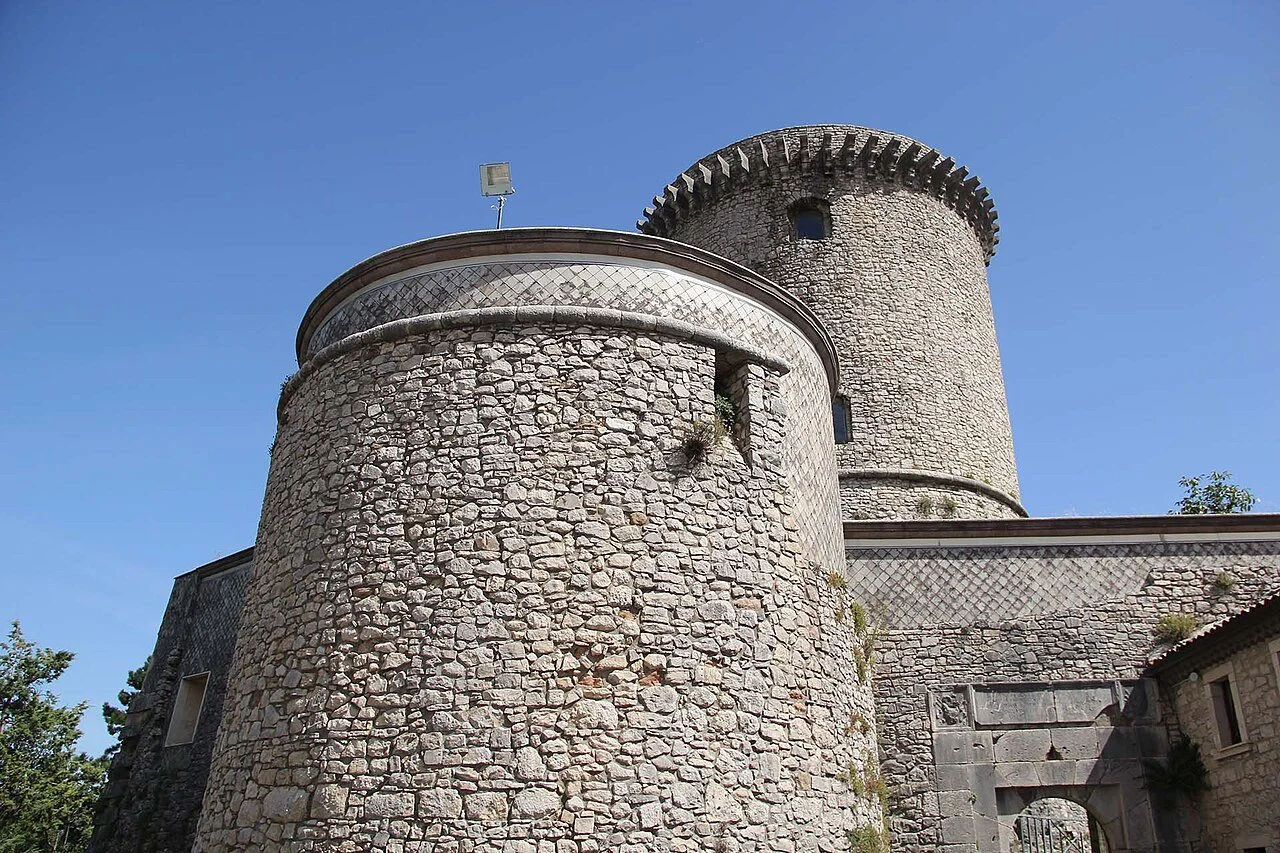
01 · PIANO DELLA CORTE
Read the tower as part of a larger ensemble
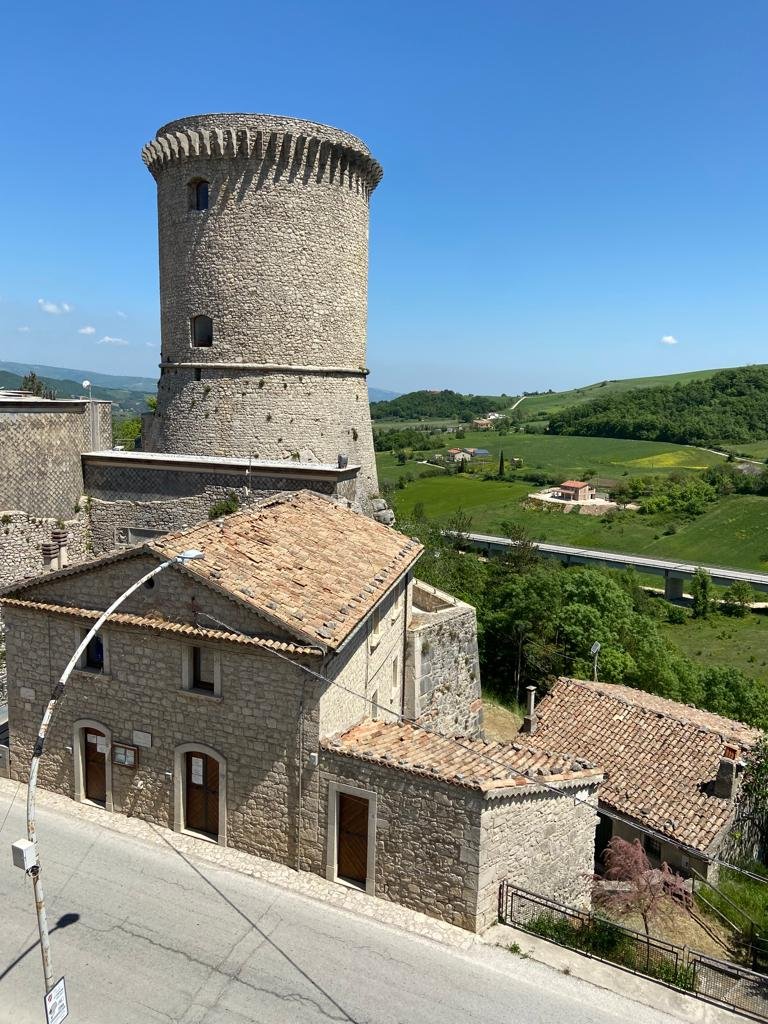
The De Capua tower is Riccia's most recognisable landmark, but its meaning becomes clearer when you look at the surrounding court as well. The castle remains, Santa Maria delle Grazie and the Magazzeno belong to a connected historic setting.
Bartolomeo III De Capua reshaped the castle in the early sixteenth century, combining defence with the ambitions of a noble residence. What survives asks you to imagine the larger complex rather than expect an intact furnished palace. Look at the tower, entrance and changes in ground level together.
The Magazzeno, once used for grain storage, has housed the town's museum of arts and popular traditions. If you want to include the collection, enquire about current access before arriving. It offers a useful counterpoint to the aristocratic story, bringing attention back to tools and everyday work.
Our tip: Begin with an overview of Piano della Corte before moving in for details. The relationships between the buildings are part of what makes the place interesting.
02 · SANTA MARIA DELLE GRAZIE
Look beyond the restrained church façade
Santa Maria delle Grazie is also known locally as the church of Beato Stefano. Its appearance reflects the work commissioned by Bartolomeo III around 1500, with a measured façade that contrasts with the more forceful presence of the nearby castle.
Inside, the De Capua tombs connect the building directly with the family that shaped this part of Riccia. The burial monuments include that of Costanza di Chiaromonte, whose name belongs to the wider story of the southern Italian nobility.
Give the interior time if it is open. The division of the nave, the carved details and the arrangement of the tombs reward close attention without requiring a long catalogue of dates. The church makes most sense as part of the same visit as the tower and court.
Our tip: Consult the municipal church guide for background and local contacts, and leave space for worship when visiting.
03 · BOSCO MAZZOCCA
Add a woodland pause beyond the old streets
Bosco Mazzocca gives Riccia an outdoor dimension beyond its monuments. The wooded setting is a natural complement to a morning among stone buildings, particularly if you want a modest walk rather than another historic centre.
The area includes the Bosco delle Favole, an educational project drawing on local stories and traditional games. Families interested in that experience should check which facilities and activities are currently available, rather than assume it operates as a staffed attraction every day.
Choose your outing around the conditions and the time you have. A short, clearly identified route and a quiet break can be enough. Keep longer walks separate from a hurried town visit, and use local advice to establish the appropriate access point.
Our tip: Ask about current paths and picnic arrangements before leaving Riccia. Carry water and use designated areas rather than choosing an informal spot beside a road.
PLAN YOUR VISIT
Let the court anchor a relaxed visit
A suggested day in Riccia
Start at Piano della Corte with the tower and the surrounding buildings, then visit Santa Maria delle Grazie if open. Continue through the smaller streets and stop for lunch. In the afternoon, choose the museum if access is arranged or head towards Bosco Mazzocca for a suitable walk.
How long to stay
Allow half a day for the historic centre and a meal. A full day gives you time for the woods or a more detailed local visit. If staying overnight, check parking and luggage access with your accommodation, especially for a room reached through narrow lanes or steps.
When to go
A mild day works well for combining the town with woodland. In warm weather, leave time for breaks and avoid packing the afternoon with exposed walking. After rain, choose paths with care. For festivals or special openings, check the programme for your travel date rather than relying on an annual pattern.
Getting there and getting around
A car is practical for combining Riccia with Bosco Mazzocca and other inland stops. Park where indicated and explore the old centre on foot. The steps are part of its character, so visitors needing an easier route should ask locally about a suitable approach to Piano della Corte.
Planning a longer Molise journey
Use Riccia as a deliberate stop with time to explore, rather than a detour fitted between several distant towns. Our five-day Molise itinerary gives a regional framework, and the Molise travel guide helps you choose the places that best match your interests.
Image credits
Castello di Riccia — P Pasquale 86.
De Capua tower — Giangiuseppe Mancini.
Via Wikimedia Commons, both CC BY-SA 4.0. Resized for display; any crops or adaptations are shared under the same licence.

