Home › Molise › Pietrabbondante
Pietrabbondante
Samnite history above the Trigno Valley, with a mountain village nearby
Pietrabbondante is a place to understand a civilisation as well as admire a landscape. Its sanctuary brings together temple foundations and a remarkable theatre, while the modern village occupies a separate setting among rocky heights. Plan for both, but confirm archaeological access before travelling: the sanctuary is the main reason to come, and conservation work can affect the visit.
01 — THE SAMNITE SANCTUARY
Read the theatre and temple as one complex
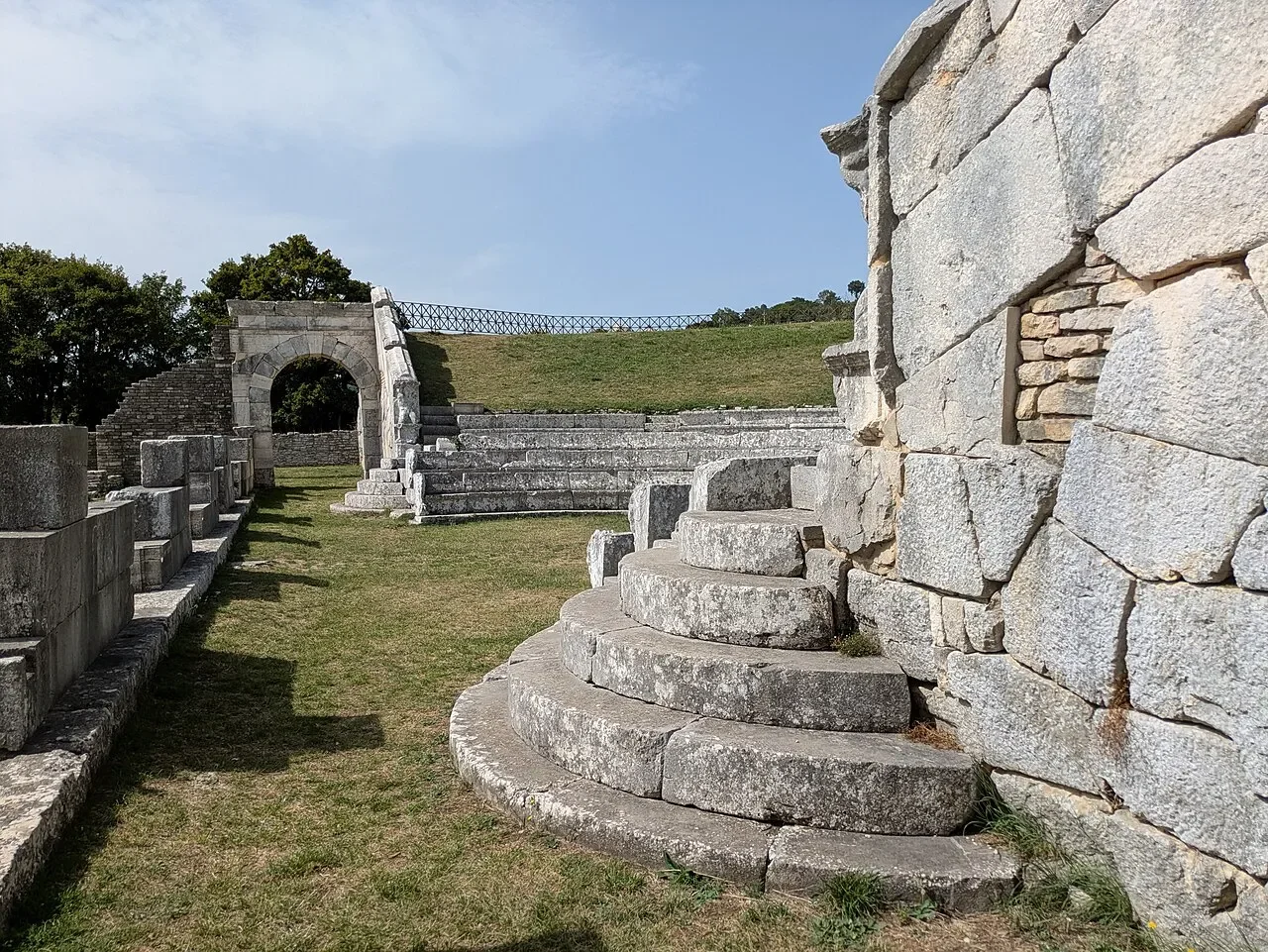
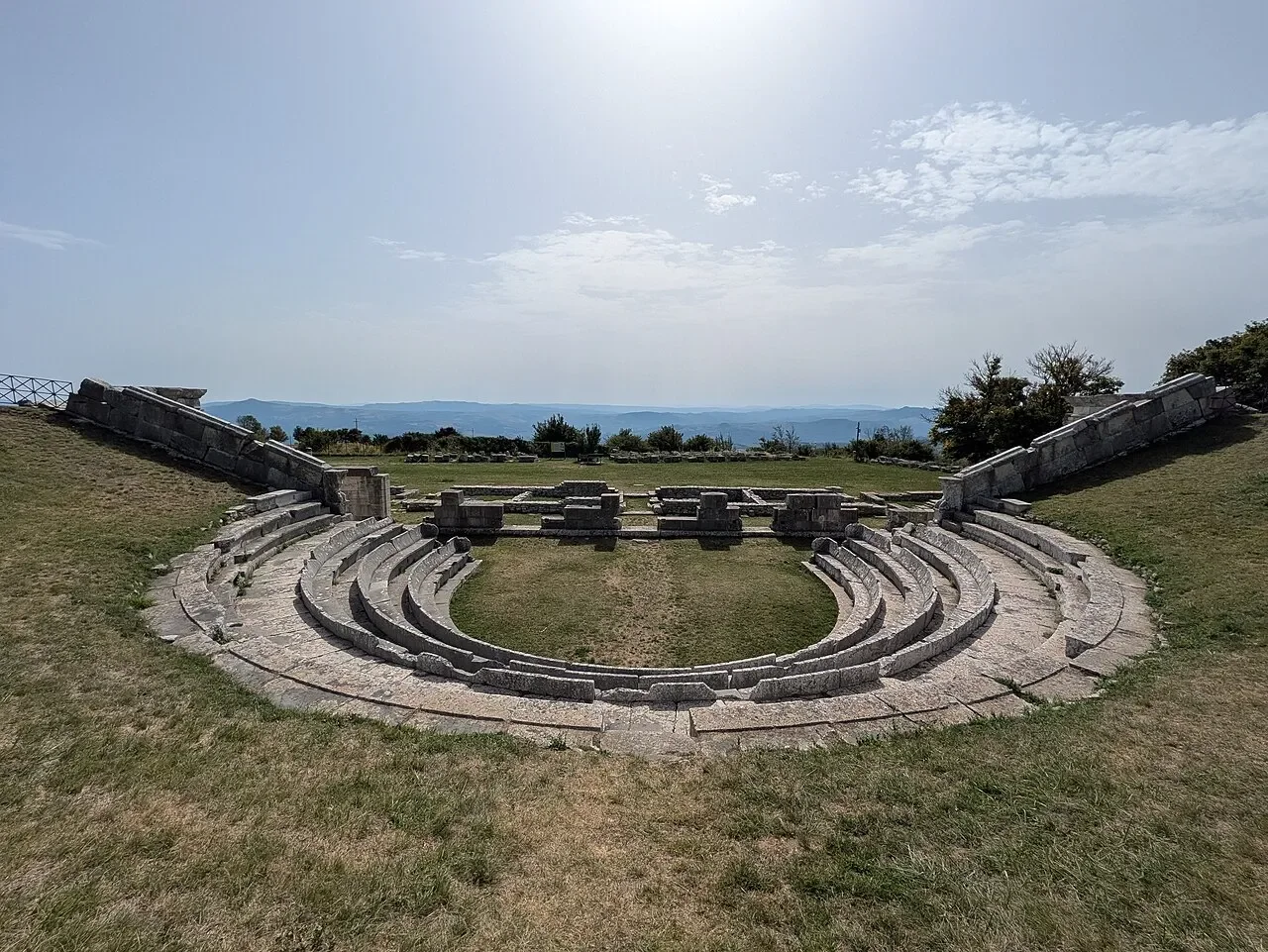
The sanctuary at Calcatello was a major religious and political centre of the Samnites. Its theatre and temple formed a connected monumental setting, rather than simply a Roman entertainment venue on a scenic hillside.
Look for the relationship between the curved seating and the temple platform behind it. The shaped stone seats and carved armrests make the surviving theatre especially distinctive. Follow the permitted route and avoid climbing on ancient fabric for a photograph.
Research has also revealed a domus publica associated with religious and public functions. A guide or the site’s interpretation helps connect these remains to the sanctuary’s wider role. Confirm which parts of the archaeological area are included in the current visitor circuit.
Hidden Italy tip: Look at the layout as a whole before focusing on the individual seats and carved details.
02 — THE MOUNTAIN VILLAGE
Leave time for Pietrabbondante itself
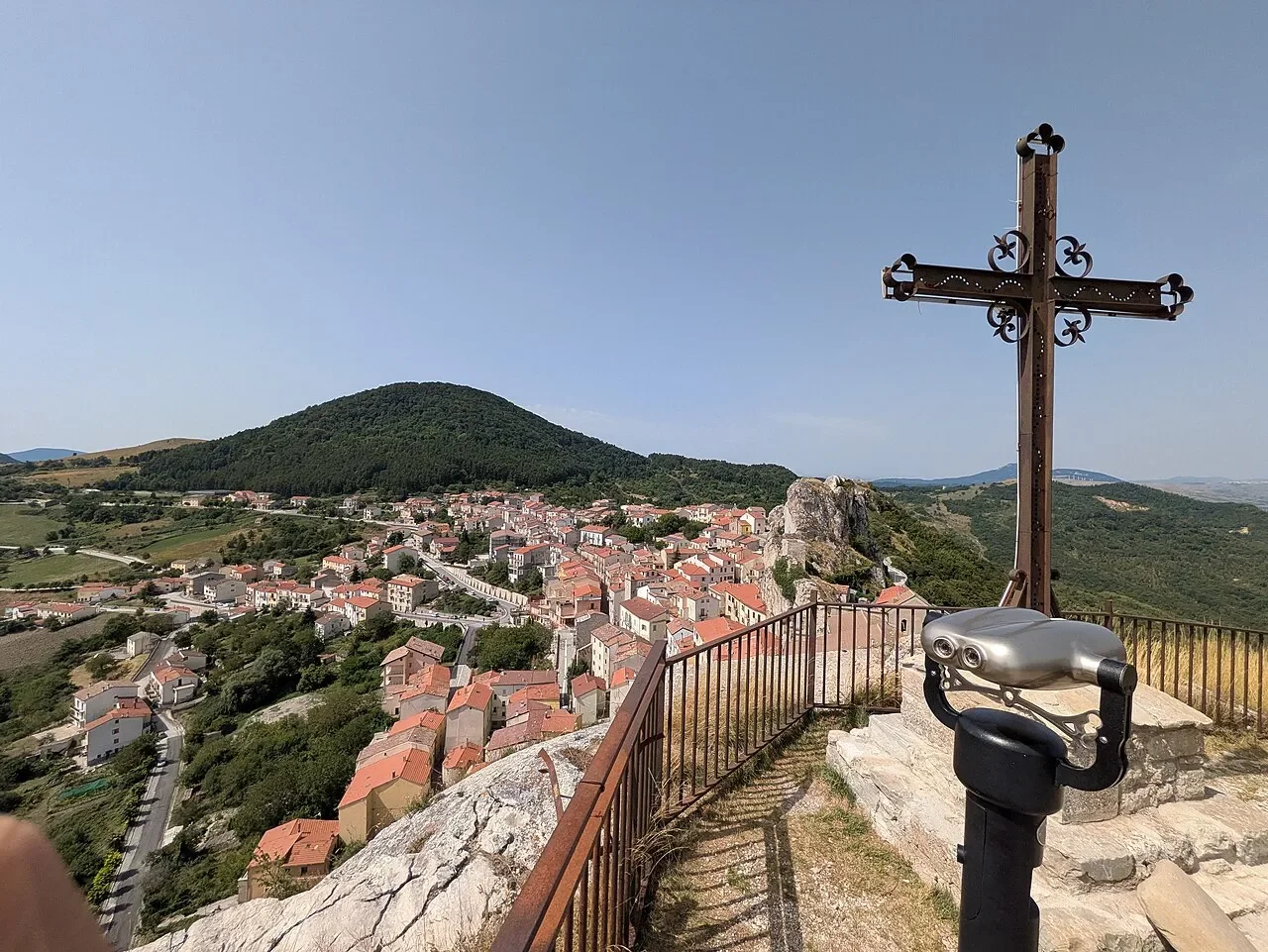
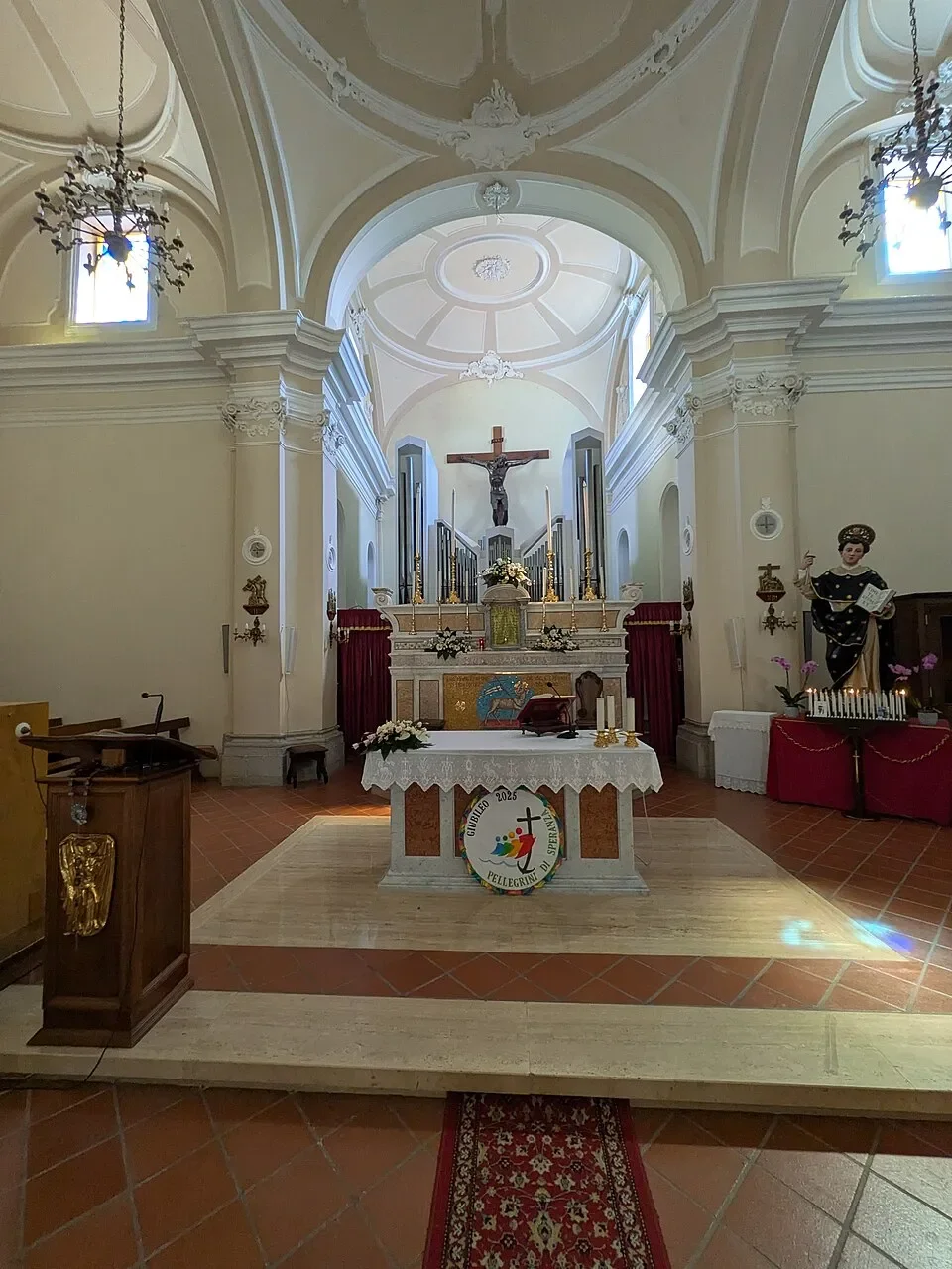
The present village deserves a separate walk after the archaeological visit. Make your way through the historic centre towards Santa Maria Assunta, using public streets to appreciate how the settlement fits among the rocks.
The remains of Torre Marchesani below the church belong to a much later chapter than the Samnite sanctuary. Keeping those periods distinct makes the visit more interesting: the village and the ancient site are connected by landscape, but they are not the same settlement frozen in time.
A simple circuit and a meal can be enough here. Allow for slopes and steps, and ask locally about church access rather than relying on an interior visit to fill a fixed schedule.
Hidden Italy tip: Include a village pause in your plan, even if the sanctuary is the main attraction.
03 — THE HIGH VALLEY SETTING
Give the landscape your attention
The sanctuary lies close to a thousand metres above sea level, overlooking the Trigno Valley. Its elevated position helps explain why the setting feels so commanding and why the weather can differ markedly from the coast.
On a clear day, take time to follow the contours of the valley from a permitted viewpoint. The experience does not require a mountain hike; the relationship between archaeology and the surrounding terrain is already a substantial part of the visit.
If adding a walk, choose a specific route with current local advice. Rocky slopes around a village are not an invitation to improvise a climb, and a longer outing needs suitable shoes, water and a separate weather check.
Hidden Italy tip: Keep an extra layer with you and leave the schedule flexible enough to use a clear-weather window.
PLAN YOUR VISIT
Confirm the sanctuary visit before building the day
Access and conservation work
The museum authority announced temporary closure for improvement works beginning in January 2026. Check the latest notices and contact the site through the official sanctuary page before travelling. Do not assume a published general timetable confirms that every area has reopened.
A suggested visit
When access is confirmed, visit the sanctuary first, allowing time for its interpretation and views. Continue to the village for a walk and lunch. Add another inland stop only if the journey leaves enough time; avoid committing to a long detour without confirmed archaeological access.
Where to stay and how long
Allow a half-day for a considered visit to the site and village, longer with a guided tour or walk. An overnight stay nearby suits a slower Alto Molise journey; a larger base such as Isernia may offer more services. Check meal availability and driving distances before booking.
When to visit
Milder months can suit the exposed site. Summer still calls for water and sun protection, while colder seasons can bring difficult mountain conditions. Check the forecast and daylight as well as the opening calendar.
Getting here and around
Plan separate arrival points for the sanctuary at Calcatello and the village. Use signed parking and leave time for winding roads. For a car-free trip, confirm the final transfer and return in advance; a bus serving the village may not meet the needs of an archaeological visit.
Continue through Molise
Our five-day itinerary places Pietrabbondante within a wider regional journey. Browse the Molise guide for other stops, including Bagnoli del Trigno, and allow realistic road time between mountain destinations.
Image credits
View from Monte Il Castello · Theatre steps and entrance · Santa Maria Assunta interior · Samnite theatre panorama.
All four photographs by Accurimbono, via Wikimedia Commons — CC BY-SA 4.0.
Converted to WebP and resized for display. Any crops or other adaptations are shared under the same licence.


