Offagna
A watchful fortress, village lanes and views towards the Conero.
Offagna sits in the hills inland from Ancona, where a compact village gathers beneath a commanding Rocca. Its scale invites a slower visit: combine the fortress with small museums, a walk through the lanes and time to look across the surrounding countryside.
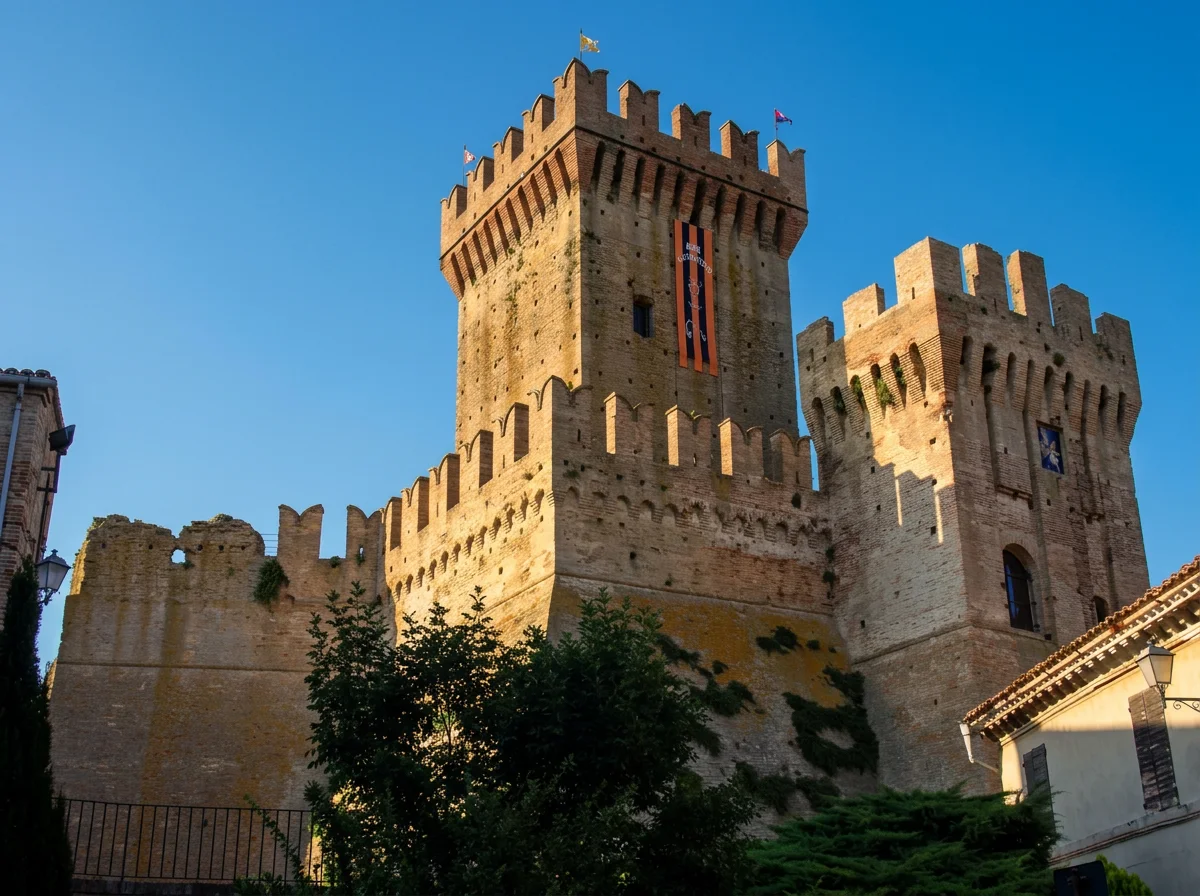
01 · THE ROCCA
A fortress between two eras
Built in the fifteenth century for Ancona’s defence against rival Osimo, Offagna’s Rocca stands on a rocky spur at the top of the village. Its design belongs to a changing military world: positions for archers sit alongside defences adapted to early artillery.
Inside, the route explores the defensive structure and central keep, with historical weapons from different periods adding context. The upper terrace opens the view towards the Apennines and the Conero. Seeing the surrounding landscape helps explain why this small hilltop mattered.
The climb is part of the experience, but it is not suitable for everyone. The historic fortress has limited wheelchair access and no lift. Ask the museum about the accessible areas before booking if steps are a concern.
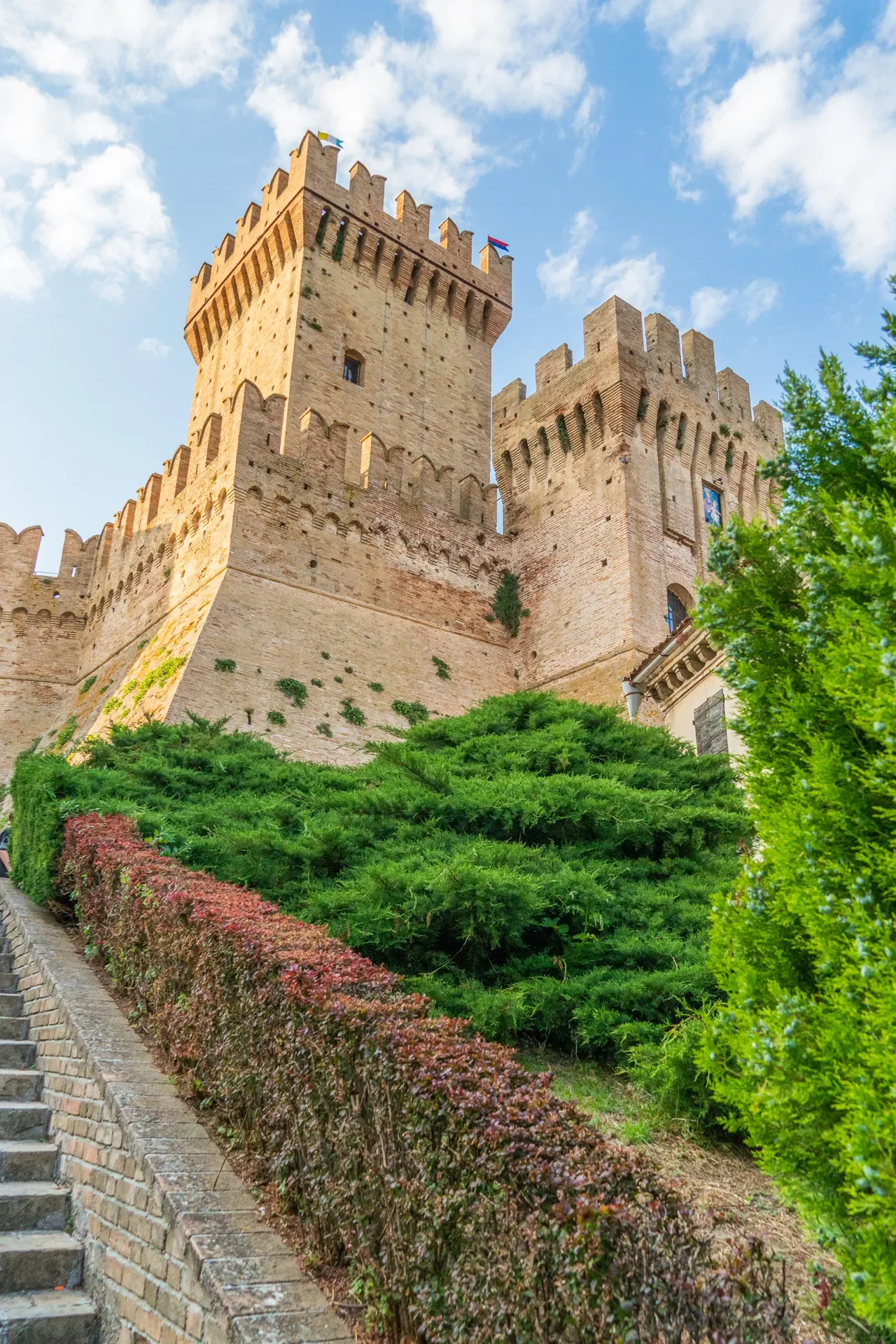
02 · THE OLD VILLAGE
Piazza del Maniero and the lanes below
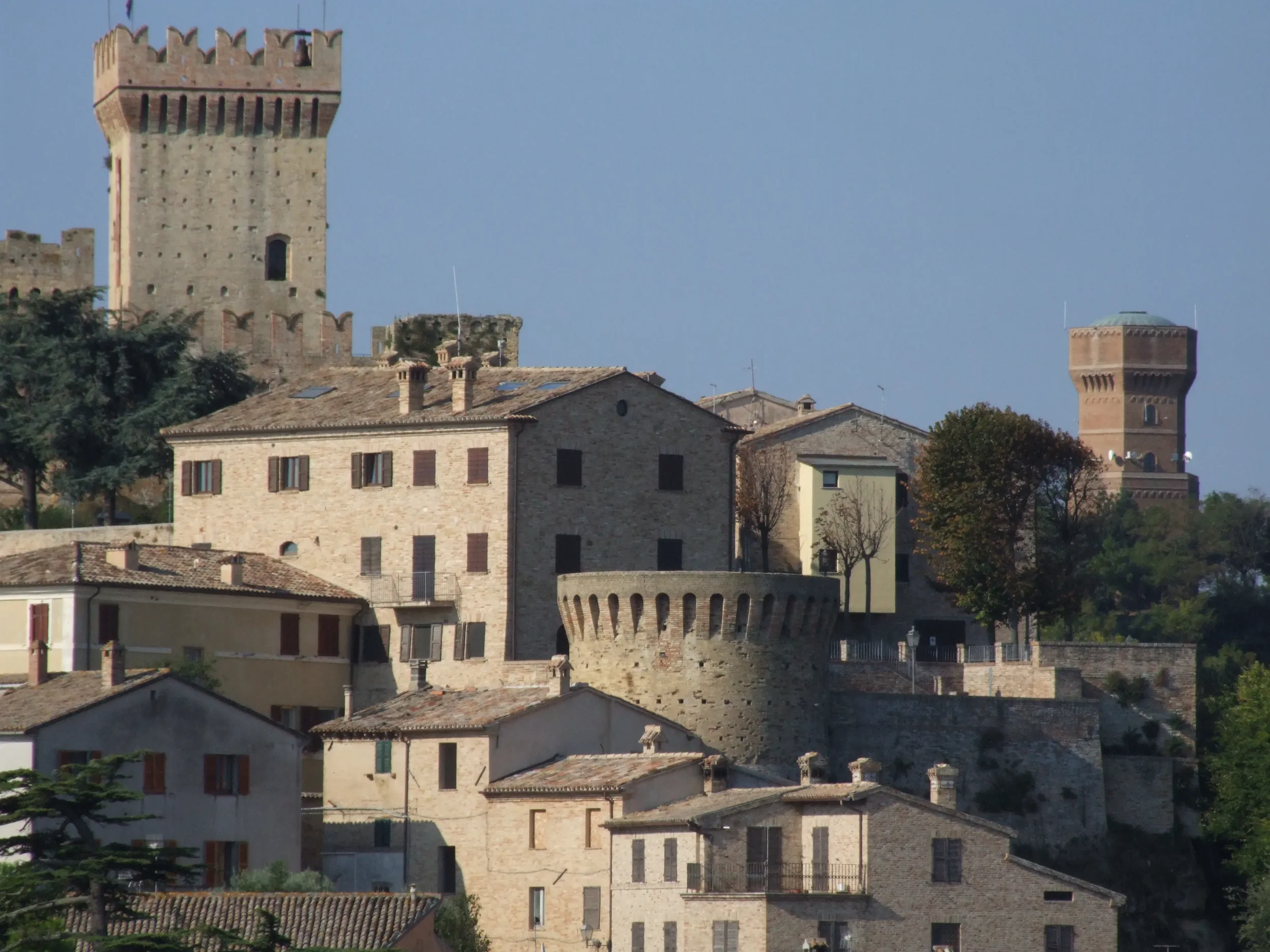
Piazza del Maniero brings the fortress, its neighbouring defensive structures and the wider landscape into one view. Pause here before entering the Rocca, then return afterwards: the relationship between the village and its defences becomes easier to read.
Continue through the historic centre towards Via dei Tornei. The town’s tourism office highlights this street for seasonal craft initiatives and temporary displays. Visit with curiosity, but do not expect every workshop to be open on an ordinary weekday.
Offagna’s Feste Medievali give these streets a very different rhythm. Choose an event visit if you want performances and a lively atmosphere, or a quieter date for the architecture and views. Consult Visit Offagna for the current programme rather than planning around a date from a previous year.
03 · BEYOND THE BATTLEMENTS
Two museums that widen the story
The Luigi Paolucci Natural History Museum, housed in the former Santa Zita monastery, turns attention to the surrounding region. Fossils, minerals, botanical material and zoological specimens reflect the work of the Ancona-born naturalist and offer a useful introduction to the environments of Le Marche, including the Conero.
The Museum of the Liberation of Ancona tells a more recent and human story. Photographs and wartime objects explore the campaign to liberate the port, the role of the Polish II Corps and the experiences of local civilians and partisans. It adds an important counterpoint to the romantic image of a medieval village.
The Rocca and these two museums form Offagna’s museum circuit. Check the official museum information before travelling, especially outside summer: opening days and arrangements for visiting the smaller venues can be limited.
STAY A LITTLE LONGER
Plan your visit to Offagna
A suggested half-day
Begin in Piazza del Maniero and visit the Rocca while you are fresh for its stairs. Follow with the museum circuit if the opening arrangements suit, then leave time for the village lanes and lunch. Allow roughly half a day at this pace, extending the visit if you enjoy reading museum displays in detail.
Where to stay and how long
Offagna suits a slow overnight stop or a half-day outing from the Ancona and Conero area. A village stay keeps the evening close at hand; a countryside stay makes sense if you have a car and want to combine several hill towns. Choose a coastal base if swimming and public transport connections are your priority.
When to visit
Spring and early autumn are good options for walking and combining the hills with the coast. In summer, put the exposed viewpoints earlier or later in the day. Museum access deserves particular attention in the quieter months: check the current calendar before committing to a weekday visit.
Getting there and parking
Plan the final approach by road. If travelling without a car, check local bus connections from your actual arrival point and arrange the return journey before setting out; do not assume a convenient evening service. Drivers should follow local parking signs and leave the tight historic lanes for walking. Ask your accommodation about access before bringing luggage into the village.
Steps, tickets and access
Expect slopes and stone paving around the historic centre, with additional stairs inside the Rocca. The museum operator lists ticket sales at the fortress and arrangements for visiting the other two museums. Confirm these details, any combined admission and the accessible route directly through the Offagna museum circuit.
Food and time to pause
Reserve time for a proper meal rather than using Offagna only as a viewpoint. Ask for seasonal dishes from the surrounding Marche countryside and consider a local wine with lunch if you are not driving. In a small village, checking restaurant opening days ahead is especially useful outside the main holiday period.
Explore the surrounding region
Combine Offagna with another nearby stop instead of crossing Le Marche in a single day. Our Le Marche 7-day itinerary helps shape a longer route, while the regional map makes distances easier to judge. For a day that mixes hills and sea, browse the Le Marche beach guide and allow time for the onward drive.
Image credits
Rocca overview: adapted from Alessandro Vecchi (colour edit: Εὐθυμένης), CC BY-SA 3.0.
Rocca tower: GianniBasaglia, CC BY-SA 4.0.
Village and medieval tower: Diego Baglieri, CC BY-SA 4.0.
Santissimo Sacramento interior: Aionna, CC BY-SA 4.0.
Via Wikimedia Commons. Images resized and converted for display; the Rocca overview is cropped and colour-adjusted. Adapted versions remain under their respective licences.


