Home › Tuscany › Massa Marittima
Massa Marittima
A cathedral square, an upper town and the heritage of the Metalliferous Hills
Massa Marittima deserves more than a quick photograph of its cathedral. The lower town gathers around a striking piazza, while streets climb towards towers, museums and broader views. Its history is tied to the mineral wealth of the surrounding hills, giving the architecture and collections a shared story. Despite its name, this is an inland hill town: allow a full day for walking, art and a leisurely meal.
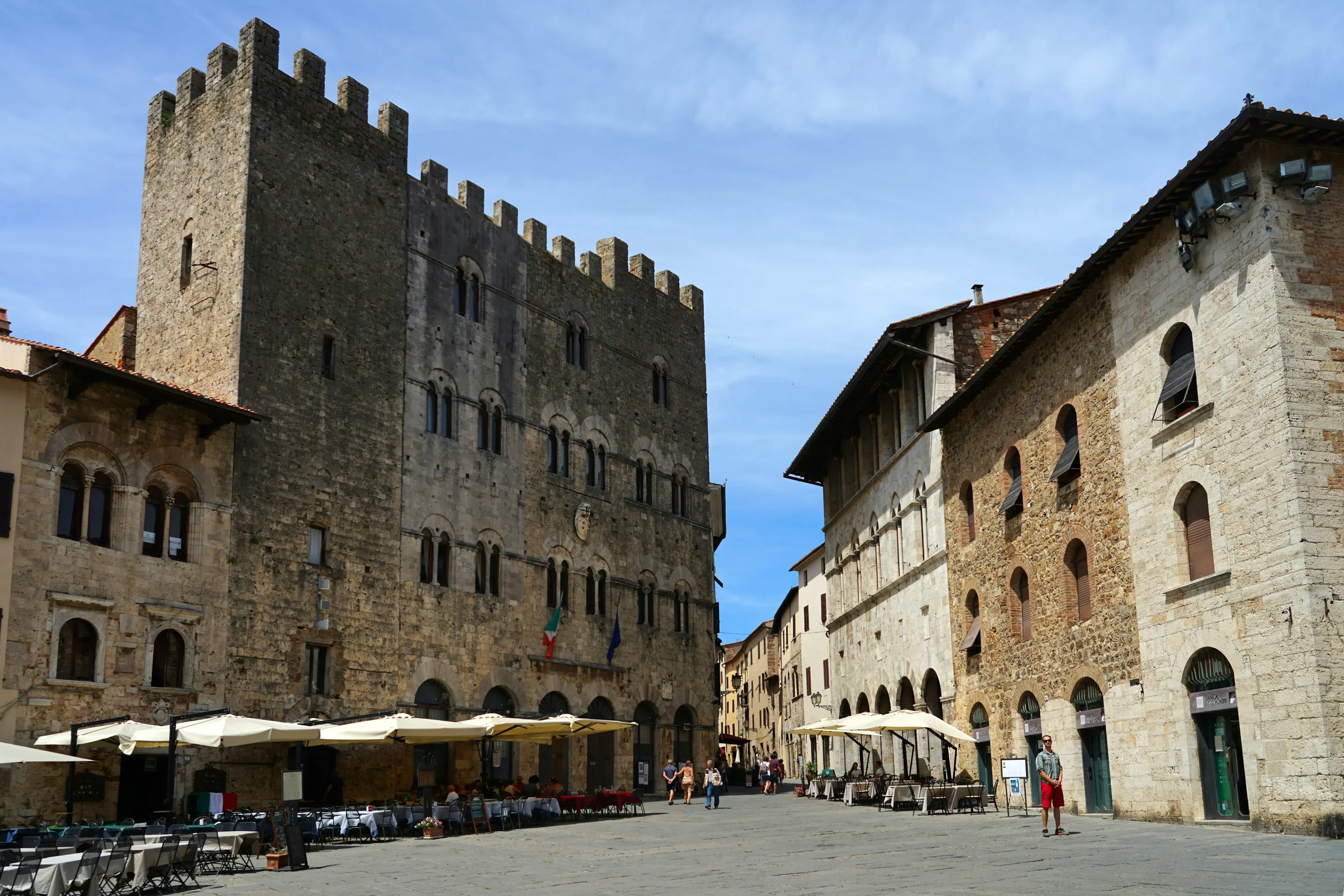
01 — PIAZZA GARIBALDI
Take time to understand the cathedral square
The Cathedral of San Cerbone stands at an angle above Piazza Garibaldi, creating a memorable relationship between steps, façade and surrounding buildings. Walk across the square before approaching the entrance; the changing perspective is part of its appeal.
The Palazzo del Podestà and other civic buildings make this more than a church forecourt. Look at the square as the centre of a prosperous medieval community, with religious and public life closely connected.
Visit the cathedral quietly around services, then continue into the nearby streets. A stop at the Fonte dell’Abbondanza introduces another aspect of the town’s public history. Leave enough time for details rather than trying to see every sight before lunch.
Hidden Italy tip: Return to the piazza after exploring the upper town; it is worth seeing with a different light and a better sense of the place around it.
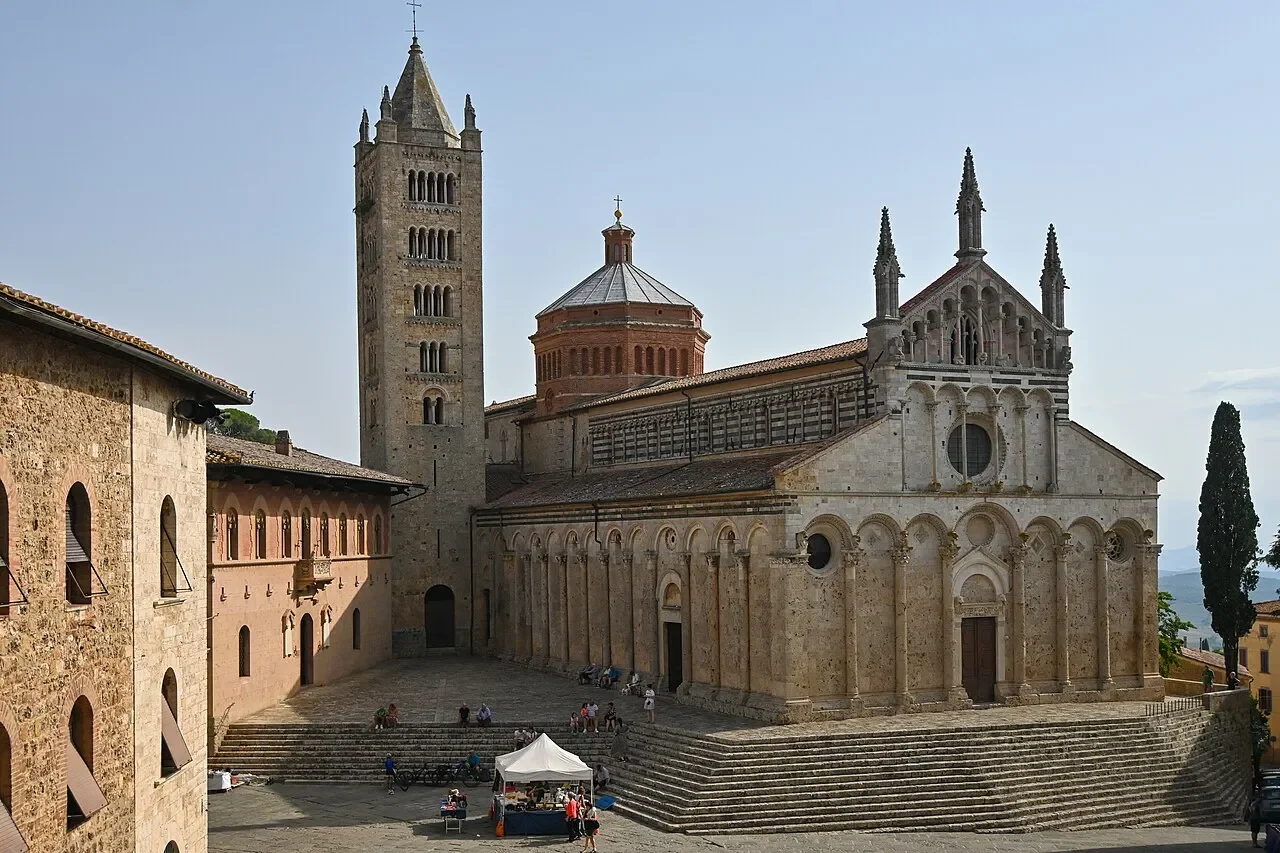
02 — CITTANUOVA
Climb towards the tower and the wider view
The upper town provides a clear contrast with the cathedral square. Make your way towards Piazza Matteotti and the Torre del Candeliere, allowing pauses on the climb rather than treating the two parts of town as one flat circuit.
The tower began as a symbol of civic authority and a lookout over the surrounding territory. A visit adds height and perspective to the day, but check the current visitor route and whether the stairs suit everyone in your group.
Even without climbing the tower, the upper streets deserve attention. Explore at ground level and leave space for a museum nearby. If you are visiting in hot weather, put the exposed walking earlier in the day and use indoor stops to break up the afternoon.
Hidden Italy tip: Combine the upper-town walk with one museum, giving the climb a purpose beyond reaching a viewpoint.
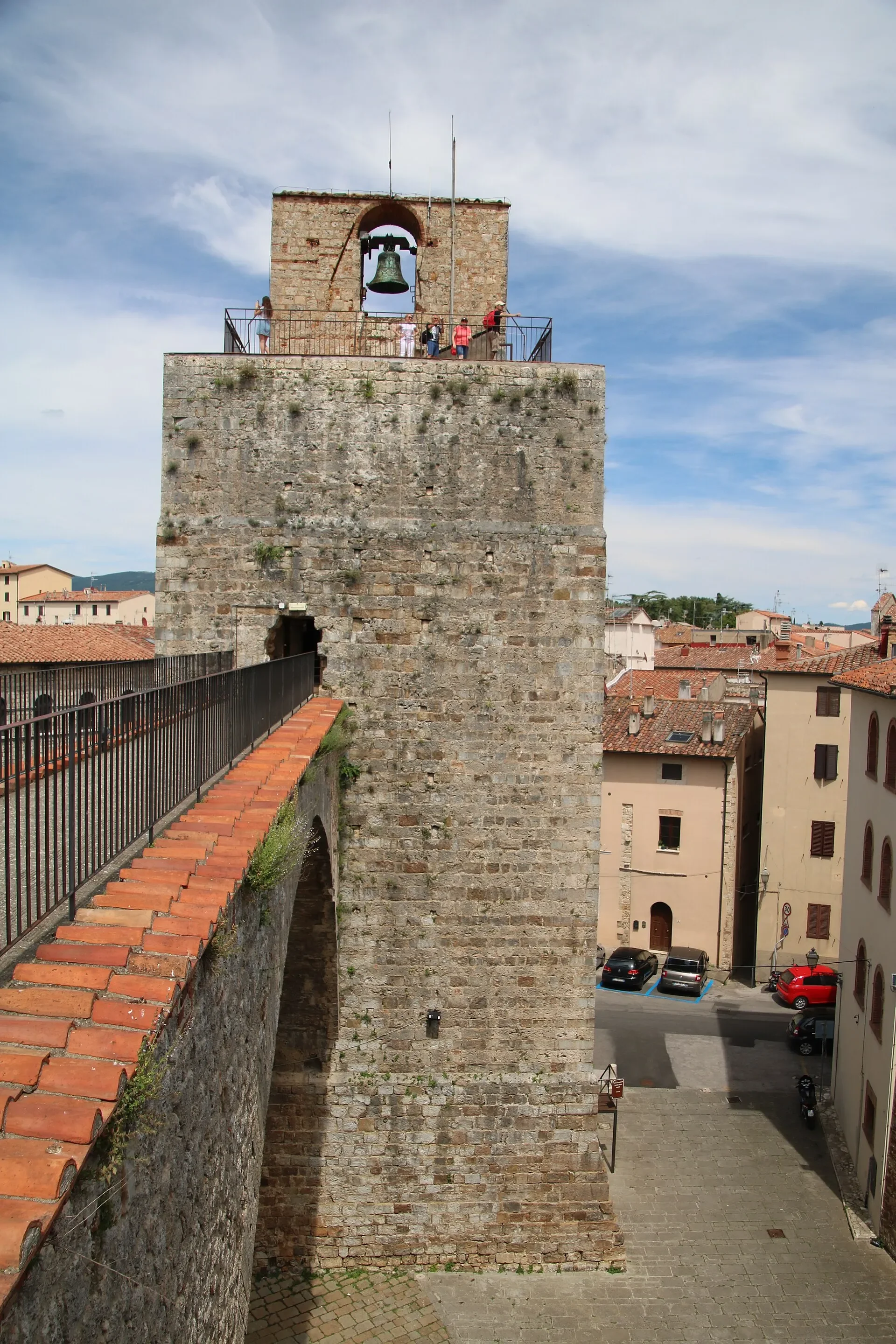
03 — ART AND MINING HISTORY
Choose a museum that opens up the town’s story
The Museo di San Pietro all’Orto holds works associated with Massa Marittima’s churches, including Ambrogio Lorenzetti’s Maestà. It is a rewarding continuation of the cathedral visit for anyone interested in medieval painting and sculpture.
The Archaeological Museum offers a different route into the area’s past, while the mining museums explain the industries of the Metalliferous Hills. Choose according to your interests rather than assuming all the collections can be absorbed in a short afternoon.
Check the municipal museum information for contacts and access arrangements. The mining visit requires advance arrangements, and seasonal schedules vary across the museums. Confirm what a combined ticket includes before building your day around it.
Hidden Italy tip: Book a guided mining visit first if that is your priority, then arrange the town walk and other museum around the confirmed time.

PLAN YOUR VISIT
Make this an inland day with room for discovery
A suggested day in Massa Marittima
Begin in Piazza Garibaldi and visit San Cerbone, then walk the lower streets before lunch. Climb to Cittanuova in the afternoon for the tower area and San Pietro all’Orto, subject to opening. If choosing a mining tour instead, simplify the other stops so you can enjoy it without rushing.
Where to stay and how long
A full day is a good starting point. Stay a night for dinner and an evening walk, or two nights if you want several museums and a countryside excursion. Check parking, luggage access and stairs for old-town accommodation; rural properties can be convenient for driving but less useful for spontaneous evenings on foot.
When to visit
Spring and autumn can suit the climbs and open squares. Summer events may transform the piazza and make accommodation busier, so check the calendar before booking. In quieter months, verify museum days carefully and plan around the attractions you most want to see.
Getting here and around
Follow signs to parking and continue through the historic centre on foot. The lower and upper town are connected by slopes, so allow more time than distance alone suggests. If arriving from a coastal station by bus, verify the final connection and the last return service for your date.
What to try locally
Look for local extra virgin olive oil and Monteregio wines. A meal based on regional ingredients fits naturally between the two parts of town, and gives you a reason to pause rather than filling the day entirely with ticketed visits.
Build a longer Tuscan journey
Use our Tuscany travel map to plan the northern Maremma. The Tuscany beach guide helps with a separate coastal day, while the regional guide introduces other inland destinations. Nearby Suvereto offers another village day with a quiet cloister and local wines. Keep the hill town and the beach as distinct experiences with enough time for each.
Image credits
Piazza di Massa Marittima — Paolo Comai / Unsplash.
Cathedral of San Cerbone — Mykola Pokalyuk, edited by MenkinAlRire — CC BY-SA 4.0.
Torre del Candeliere — Mongolo1984 — CC BY-SA 4.0.
San Pietro all’Orto museum — Sailko — CC BY-SA 4.0.
Commons photographs via Wikimedia Commons. Converted to WebP and resized for display; any crops or other adaptations of the Commons photographs are shared under the same licences.


