Larino
A carved cathedral façade, a Roman arena and traditions still at home
Larino gives you several reasons to turn inland from the Molise coast. Its cathedral anchors a historic centre made for a slow walk, while the Roman amphitheatre recalls the scale of ancient Larinum. The two areas need a little planning to combine, but that change of setting is part of the appeal. Add the town’s connection with San Pardo and its olive-growing countryside, and Larino becomes much more than a single monument stop.
01 · THE CATHEDRAL OF SAN PARDO
Begin with the stonework around the entrance
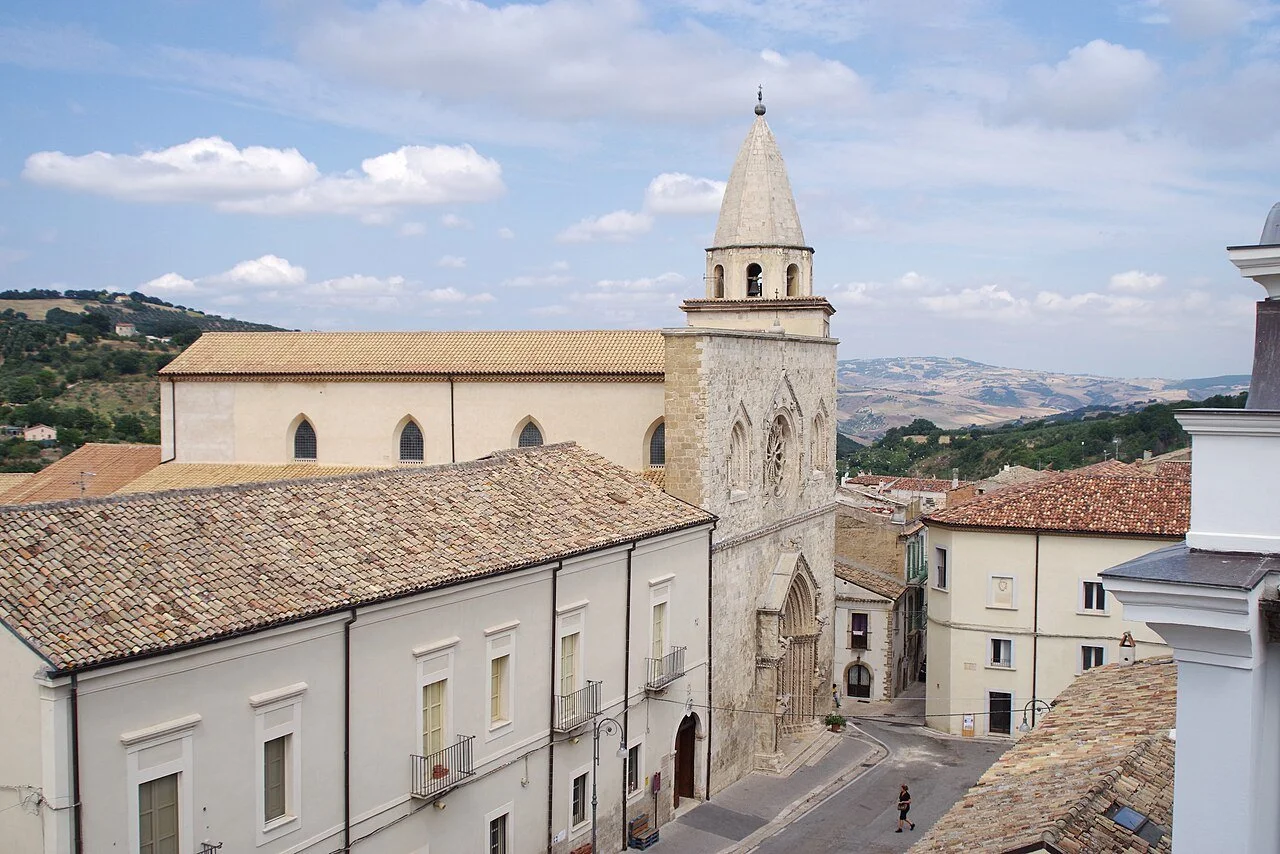
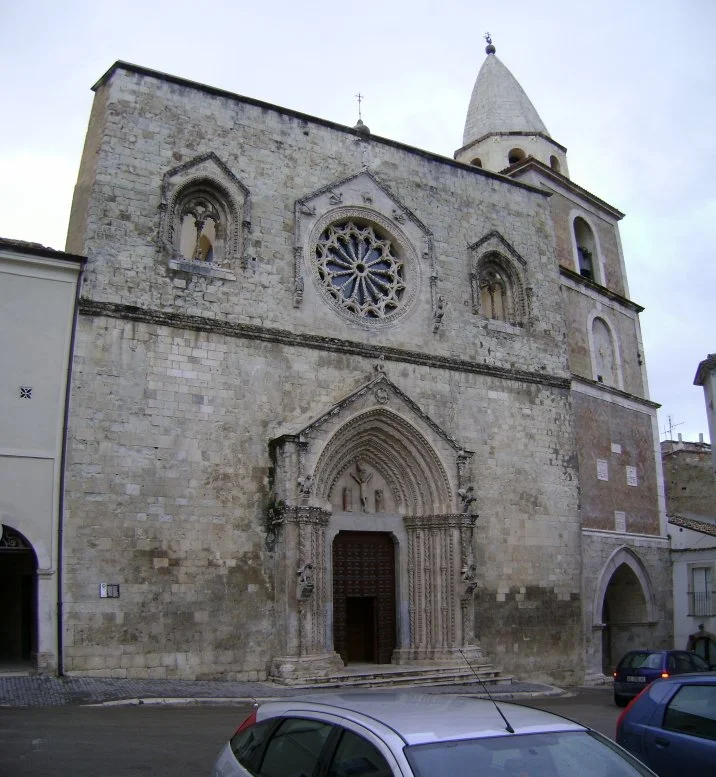
The basilica co-cathedral of Santa Maria Assunta and San Pardo is the defining monument of Larino's historic centre. Its consecration is recorded in 1319, and the façade brings together architecture and sculptural storytelling with remarkable richness.
Before entering, stand back to understand the whole front, then move closer to the portal and its carved details. This is a building that rewards changing your viewing distance: the overall composition and the smaller figures offer different kinds of pleasure.
Inside, works from several periods reveal a church that continued to develop long after its medieval beginnings. Allow time for the quieter interior, respecting services and any areas reserved for worship. A brief look at the façade alone leaves much of the experience unexplored.
Our tip: Use the diocese's San Pardo page for the parish contact if you need to confirm access.
02 · ROMAN LARINUM
Picture the town that gathered around the arena
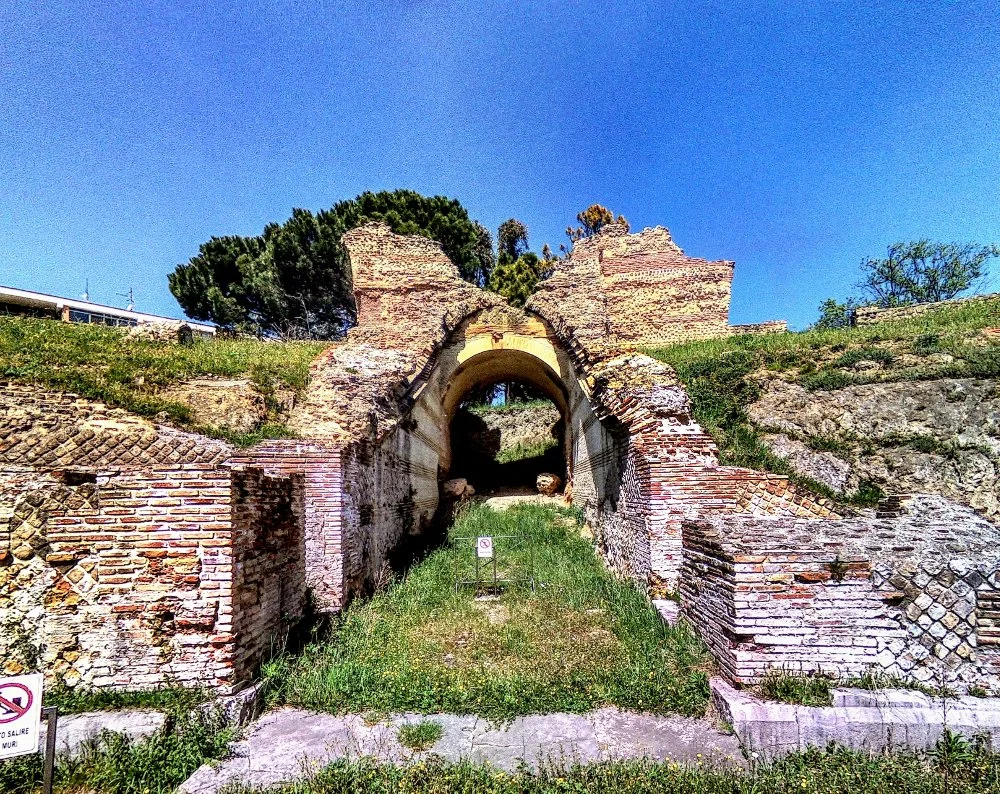
Larino was an important centre of the Frentani before becoming part of the Roman world. The amphitheatre is the most immediately legible reminder of that ancient town, its oval form making the scale of public entertainment easier to imagine.
Give the structure more than a passing photograph. Follow the permitted visitor route and use the interpretation to understand the relationship between the arena, entrances and spectators. The town's Roman remains also include baths and mosaic decoration, evidence of life beyond the spectacles.
The Parco dell'Anfiteatro and Villa Zappone bring different periods together in the same visit. The villa belongs to a much later chapter of Larino's history, so distinguish its architecture and grounds from the ancient remains. Ask which parts of the complex are included in the current visitor route.
Our tip: Confirm opening directly before travelling, especially for a weekend visit. A past special Sunday opening is not evidence of regular Sunday access.
03 · THE OLD TOWN AND SAN PARDO
Leave room for the streets around the cathedral
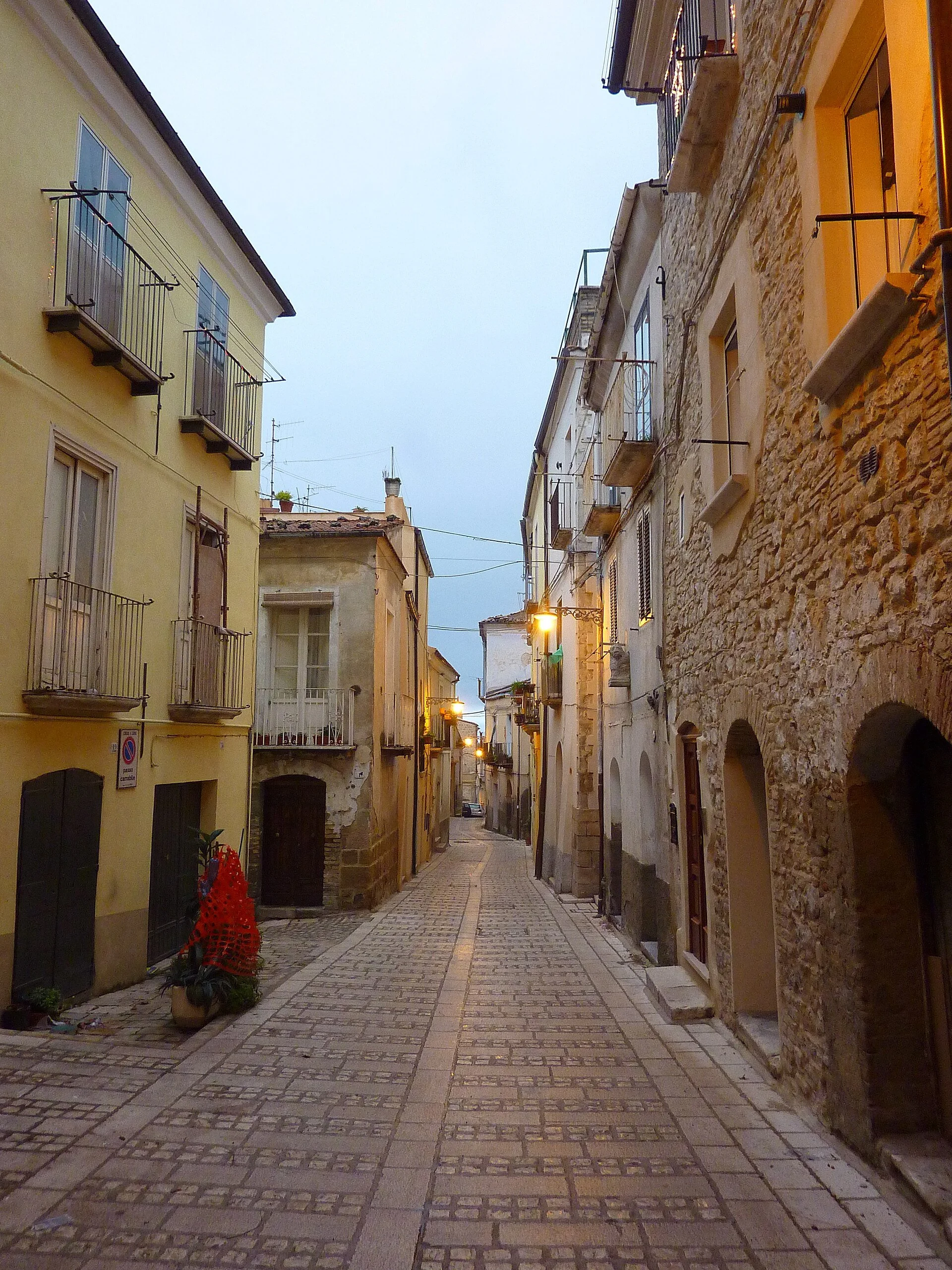
The lanes and spaces around Piazza Duomo give Larino a more intimate rhythm than the open archaeological area. After looking closely at the cathedral, take time to wander, stop for a coffee and notice the ordinary buildings that make its setting feel like a town rather than a display.
San Pardo's feast is central to local identity, traditionally associated with flower-decorated ox carts and processions in May. If you want to experience it, consult the current programme and arrange accommodation early. On an ordinary day, the cathedral still provides a starting point for understanding that devotion.
The surrounding olive landscape offers another connection with local life. Gentile di Larino is the area's characteristic olive variety; asking about locally produced oil can make a meal or a food purchase a small continuation of the visit.
Our tip: Keep some time unallocated after the main sights. A conversation, a shop or a simple lunch can make the town more memorable than adding another hurried stop.
PLAN YOUR VISIT
Connect the historic centre with the archaeological area
A suggested day in Larino
Plan around confirmed access to the amphitheatre and Villa Zappone. If the available slot is in the morning, begin there and continue to the historic centre for lunch and the cathedral. Otherwise reverse the order. Allow time between the two areas rather than treating them as one compact pedestrian site.
How long to stay
A full day gives a comfortable balance of archaeology, cathedral and town life. With only half a day, choose your priorities around the actual opening arrangements. Staying overnight is particularly useful if you are attending a festival or want a slower visit to the surrounding countryside.
When to go
Mild weather suits the outdoor ruins and a walk through the centre. In summer, carry water and plan a break during the hottest hours. A festival visit has a very different pace from a quiet weekday: check road restrictions, parking and the current event programme before arriving.
Getting there and getting around
Use the specific site name when navigating to the archaeological area, and check where to park for the cathedral separately. Explore the historic centre on foot. If using public transport, establish which part of Larino your service reaches and how you will continue to the other sights.
Planning a longer Molise trip
Larino combines well with a journey between the coast and the inland towns. Our five-day Molise itinerary provides a starting route, while the Molise travel guide helps you choose nearby stops without overloading the day.
Image credits
Cathedral and rooftops — Termauri (MaTe.Photo) — CC BY-SA 4.0.
San Pardo Cathedral — Zitumassin — public domain.
Roman amphitheatre — Trocche100 — CC BY 4.0.
Larino old town — Pietro Valocchi — CC BY-SA 2.0.
Via Wikimedia Commons. Resized for display; any crops or adaptations are shared under the respective licences.


