Home › Le Marche › Grottammare Alta
Grottammare Alta
Brick lanes, artists’ stories and an Adriatic horizon.
Above the seafront of Grottammare, the old hilltop quarter offers a different rhythm. Known as the Paese Alto or Vecchio Incasato, Grottammare Alta brings together intimate streets, historic churches and views over the Riviera delle Palme. Come up from the beach and give the village time of its own.
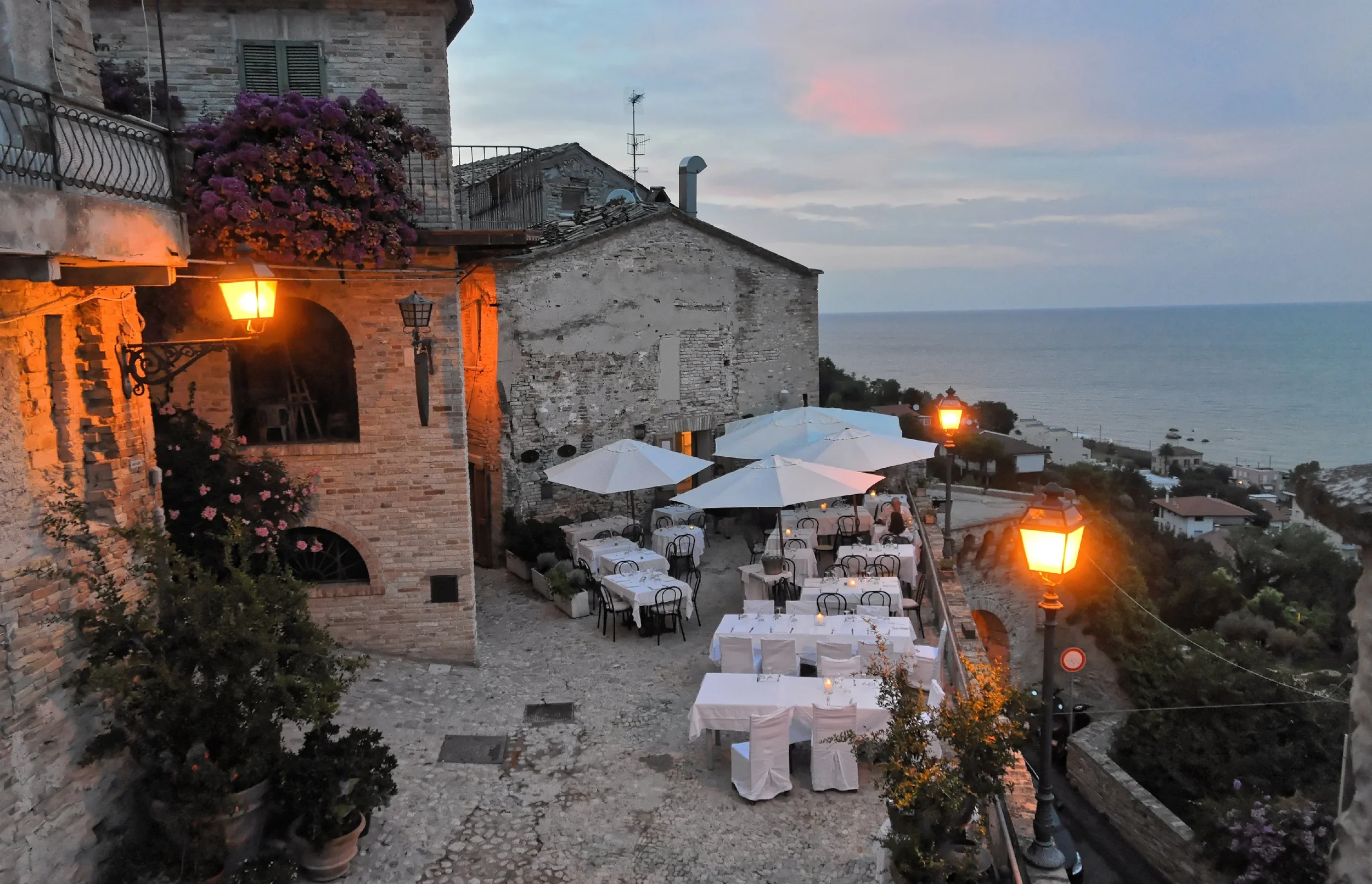
01 · THE VECCHIO INCASATO
Piazza Peretti and the sea beyond
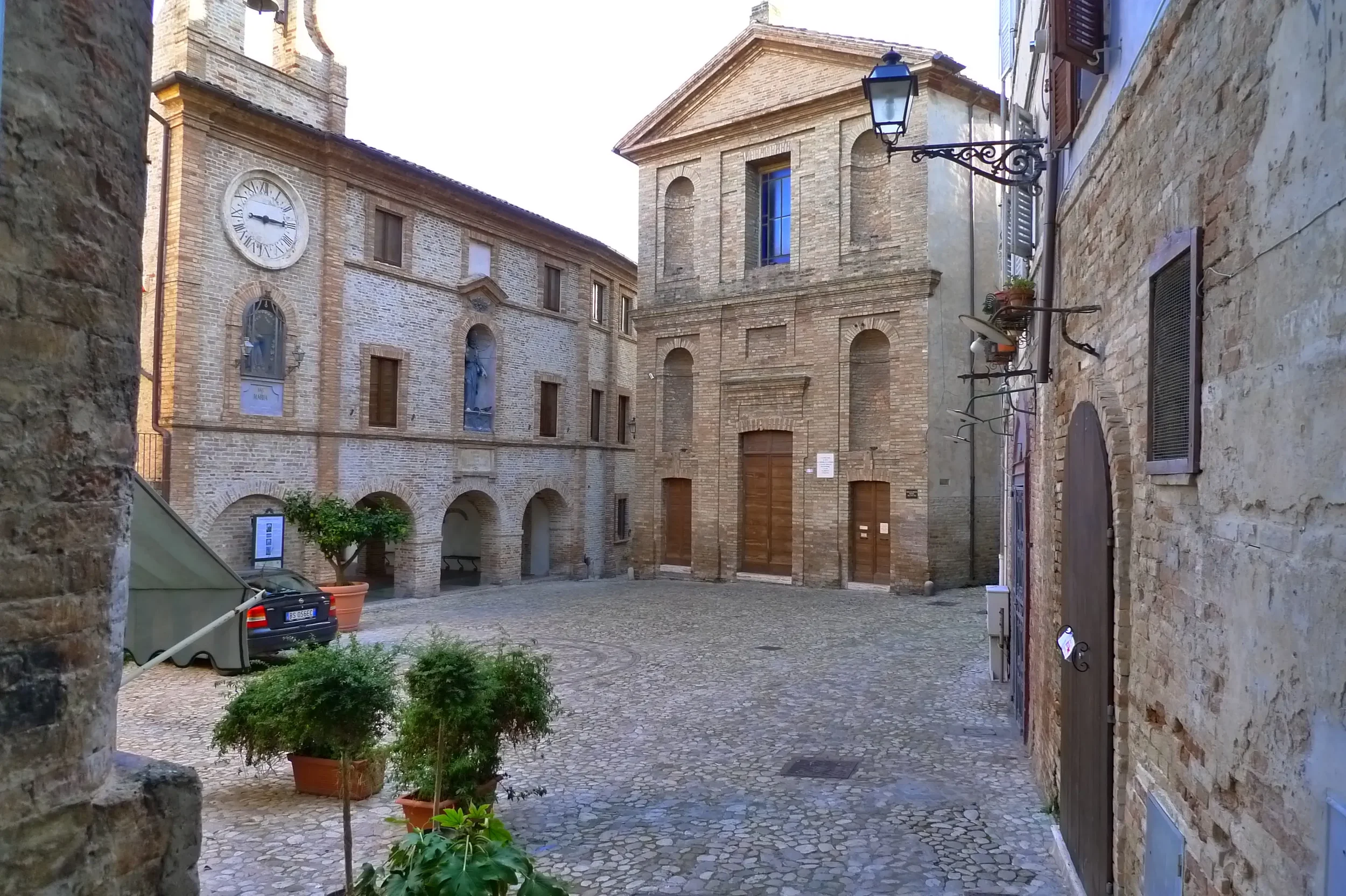
Piazza Peretti is the natural heart of the old quarter. The Teatro dell’Arancio, civic tower and church of San Giovanni Battista frame a small urban space, while the loggias open the view towards the Adriatic. It is a good place to pause before following the lanes further uphill.
Look at the village as a sequence of thresholds: a gateway, a short passage, a square and then a sudden view of the coast. Porta Maggiore and Porta Marina help you understand the old settlement’s compact, defensive form.
Our suggestion is to explore without rushing from viewpoint to viewpoint. Begin with the square, follow a few side streets and return when the light changes. The pleasure here is as much in the small distances between buildings as in the broad sea panorama.
02 · SANTA LUCIA
A pope’s birthplace, remembered in brick
The church of Santa Lucia occupies the site associated with the modest family home where the future Pope Sixtus V was born. Its dedication refers to the saint’s day on which he was born, connecting a major figure of papal history to this small Adriatic town.
Work began in 1590 with a design entrusted to Domenico Fontana. After the pope’s death interrupted the project, his sister Camilla Peretti took it forward. Her role is recalled at the entrance: a useful detail to look for before stepping inside, when the church is open.
Continue towards Porta Castello if you would like to extend the walk uphill. The Monte Castello area contains remains of the former defences and another perspective over the coast. Choose the extension according to the weather, your footwear and the time you want to spend climbing.

03 · ART & THE ADRIATIC
Discover Pericle Fazzini at the Torrione
The Torrione della Battaglia gives a defensive landmark a second purpose as a museum dedicated to the Grottammare-born sculptor Pericle Fazzini. The collection includes sculptures, drawings and preparatory studies that bring the artist’s working process into focus.
Among its highlights is a silver model for The Resurrection, the monumental work in the Vatican’s papal audience hall. Small-scale pieces and drawings make a thoughtful contrast with that vast commission, showing how an idea could move from intimate study to public sculpture.
Fazzini’s connection with the town continues beyond the museum. The official art itinerary links works between the coast and the old quarter, including his Via Crucis in Sant’Agostino. Use the Fazzini itinerary to turn the journey between beach and borgo into part of the visit.

STAY A LITTLE LONGER
Plan your visit to Grottammare Alta
A suggested walk
Allow roughly half a day for a relaxed old-town visit with a museum stop and a meal. Start around Porta Maggiore, pause in Piazza Peretti and continue towards Santa Lucia. Add the upper castle area if you want a longer climb, then return towards the Torrione and Porta Marina. Check museum opening times first if art is your main reason for coming.
Old town or seafront: where to stay
Choose the Paese Alto for atmosphere and an evening close to the historic lanes. Choose the lower town for easier access to the railway, seafront and beach. Both belong to Grottammare, but the elevation matters: a room described simply as “Grottammare” may offer a very different daily walk. Ask about luggage access and parking before booking.
When to visit
Spring and early autumn suit a walking-focused stay. In summer, consider a beach morning followed by the old town later in the afternoon, leaving enough time for any museum you want to visit. The hilltop is a place to enjoy evening light over the coast; the sun sets inland, rather than into this stretch of the Adriatic.
Getting there and reaching the upper town
Grottammare has a railway station served by Trenitalia in the lower town. Continue to the Paese Alto on foot if the uphill route suits you, or check the local bus and taxi options. The official transport guide links to the seafront–upper-town service. Verify dates and return departures rather than assuming tourist transport runs throughout the year.
Parking, slopes and access
Drivers should follow signs for parking outside the historic lanes, then explore on foot. Expect slopes, steps and uneven paving; the lower seafront and the upper village have different access conditions. If you need a route with fewer steps, ask the visitor office or your accommodation for advice specific to your destination.
Food between coast and countryside
Plan a meal around the area’s coastal cooking, or ask for seasonal dishes from the Piceno hinterland. Seafood makes a natural companion to a day by the Adriatic, while the village offers a different setting for an unhurried dinner. Reserve ahead when a particular terrace or small restaurant matters to your plans.
Combine the village with a beach stay
Give the old quarter its own half-day instead of treating it as a brief detour from the promenade. Our Le Marche beach guide helps plan time by the water. For a longer journey, use the 7-day itinerary and regional map to connect the southern coast with inland stops.
Before you go
Check Visit Grottammare for current museum openings, events and visitor information. Church access can vary with services and local arrangements, so build some flexibility into your walk.
Image credits
Grottammare at dusk — © Foto: Ra Boe / Wikipedia, CC BY-SA 3.0 DE.
Piazza Peretti — Peter Forster, CC BY-SA 2.0.
Portrait of Sixtus V — unknown painter; source: Visit Grottammare. Public-domain painting; file also marked CC BY 3.0.
Torrione della Battaglia — Paulacastelli, CC BY-SA 4.0.
Via Wikimedia Commons. Images converted to WebP and resized for display. Any adapted versions remain under their respective licences.


