Gradara
Castle walls, literary legends and a hilltop above the Adriatic.
Gradara brings together a formidable fortress and a small village enclosed by walls, close to the northern edge of Le Marche. Come for the Rocca, then slow down in the lanes below it: the setting makes more sense when you explore the whole fortified settlement.
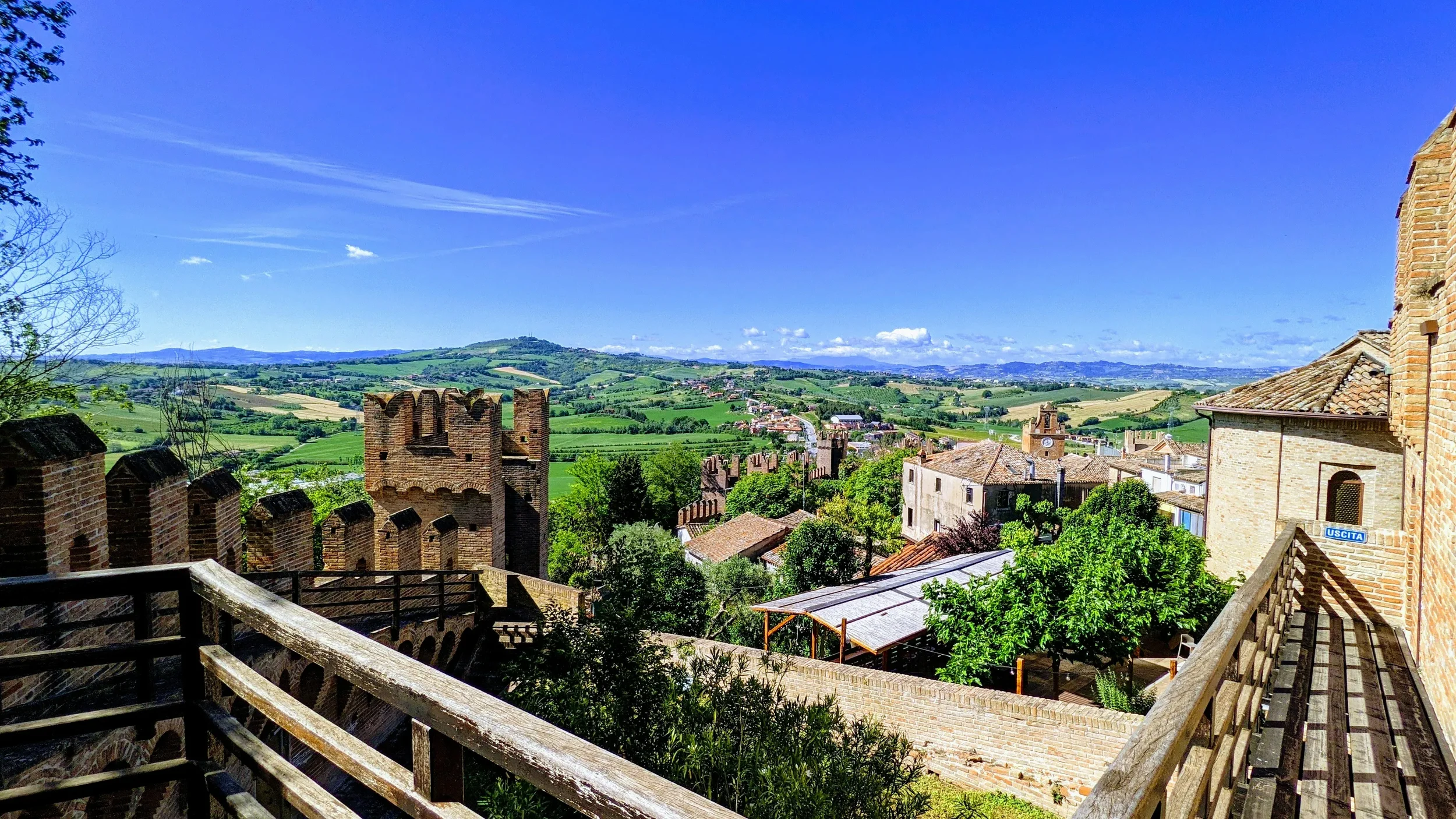
01 · THE ROCCA
A fortress with a second life
The Rocca dominates Gradara with its towers and enclosed courtyard. Once held by the Malatesta and later the Sforza, it tells a story of changing rulers and a defensive stronghold gradually becoming a prestigious residence. Look beyond the silhouette to the heraldic details and painted interiors.
The rooms also owe much to Umberto Zanvettori’s restoration of 1921–1923. Their carefully staged atmosphere is part of the castle’s twentieth-century history; it should not be mistaken for an entirely untouched medieval interior. This layering is one of the most interesting things about visiting.
Give the interiors their own time rather than treating the castle as a backdrop for photographs. Consult the official Rocca website for tickets, last admission and any access restrictions before choosing your arrival time.
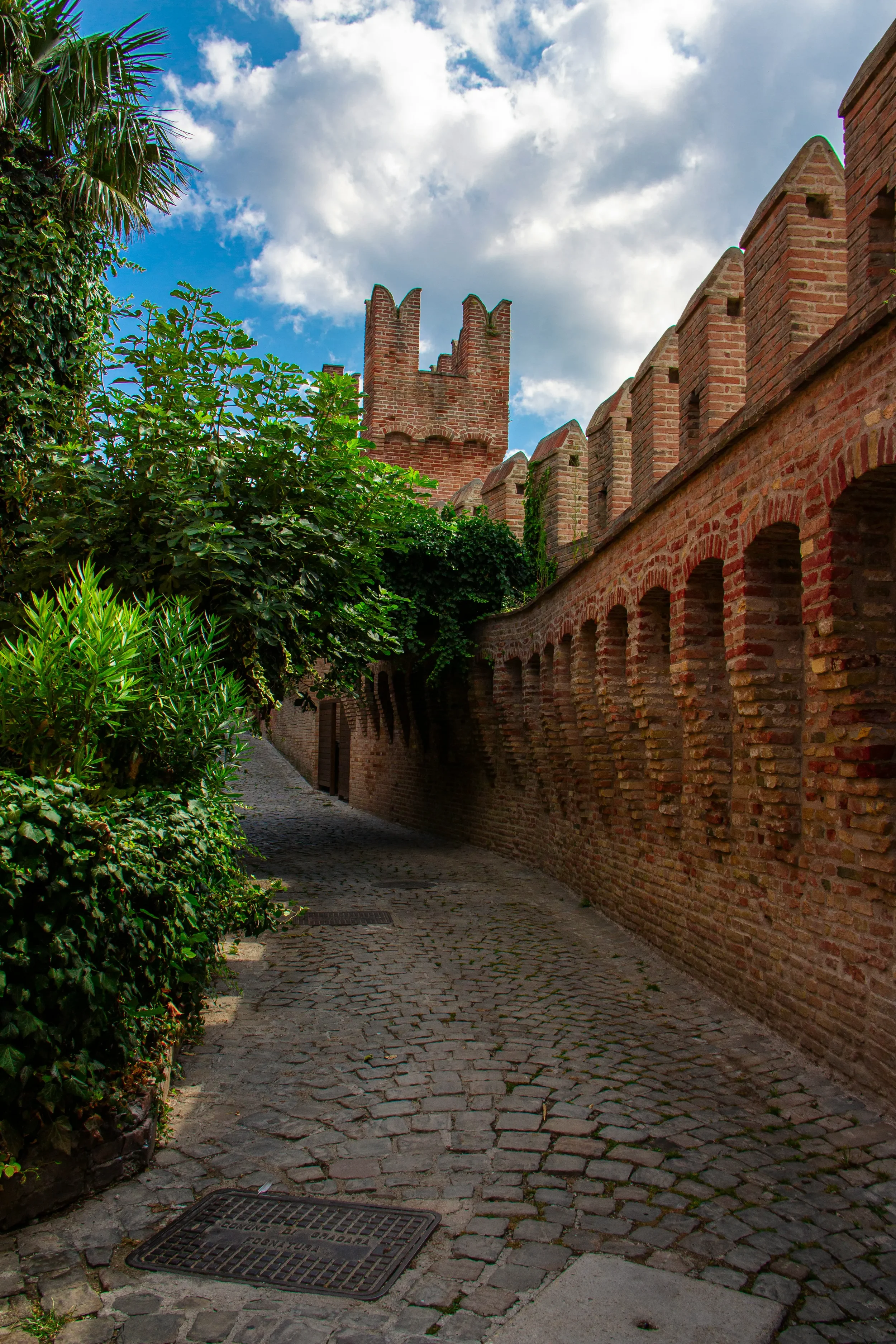
02 · WITHIN THE WALLS
Explore the fortified village
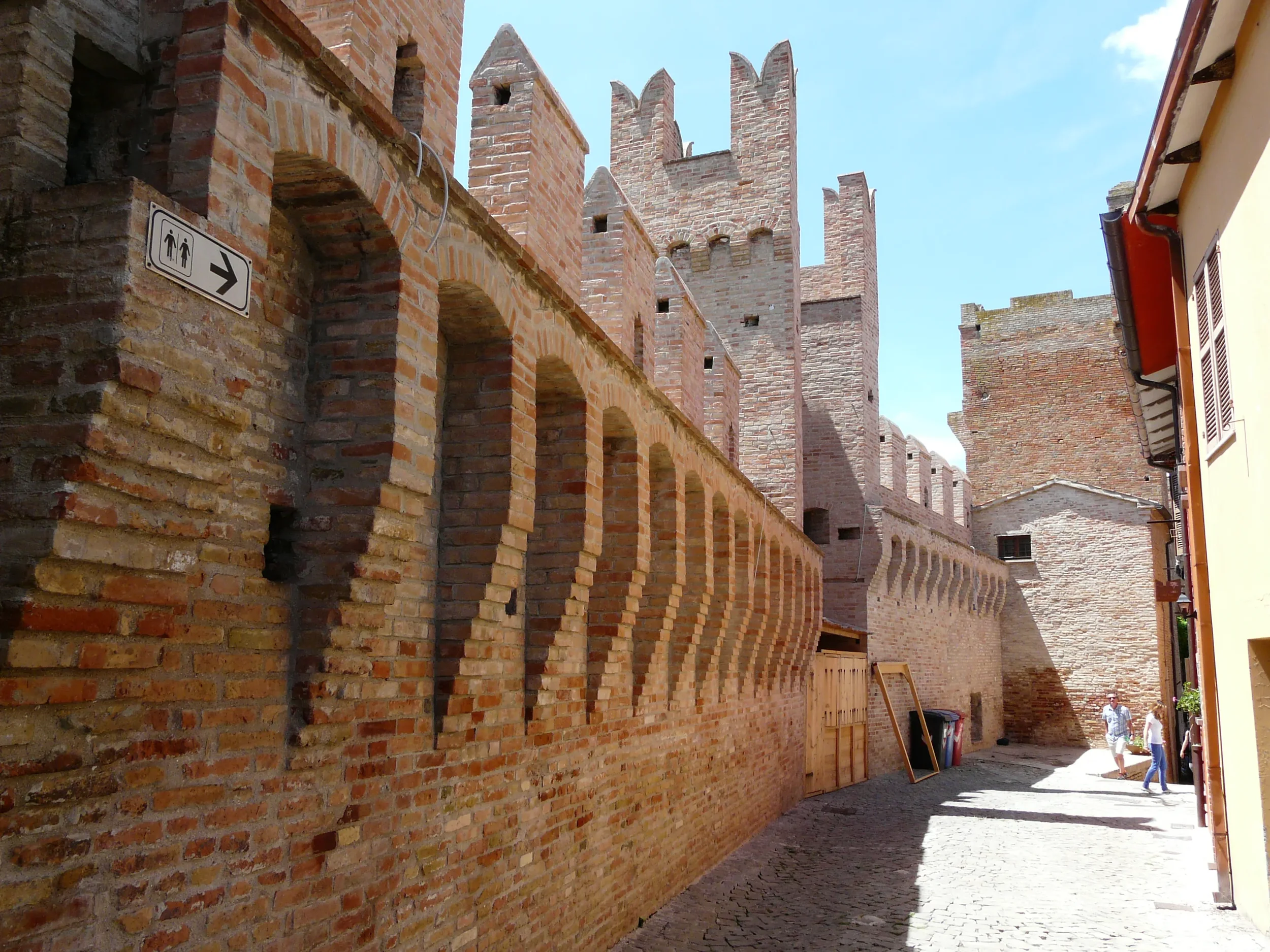
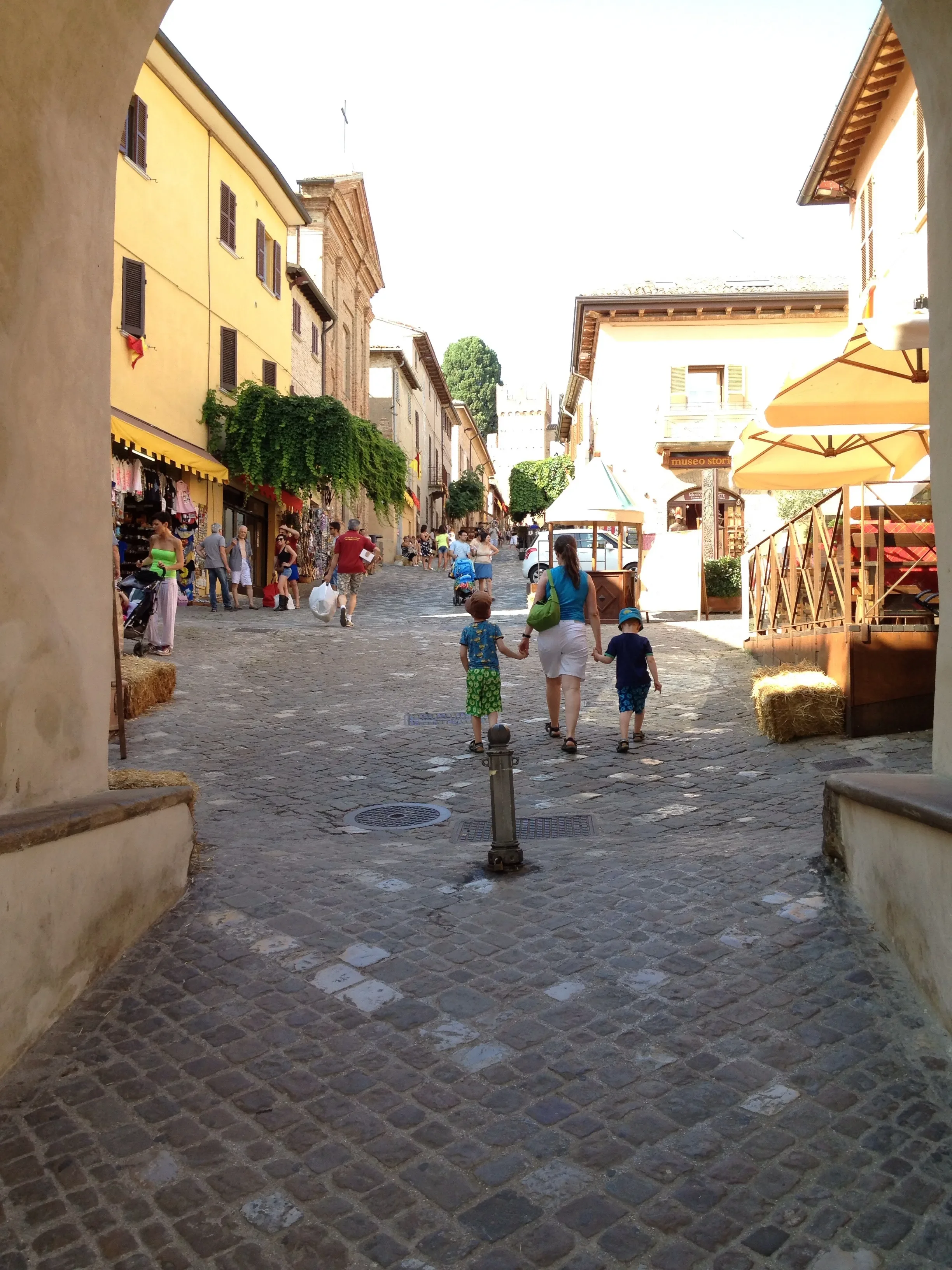
The approach through the village is an essential part of Gradara. Follow the main uphill route towards the Rocca, then turn into the smaller lanes to see how closely houses and fortifications sit together. The changing angles give the castle a different scale from its distant, postcard view.
The Camminamenti di Ronda, the elevated wall walk, offer another perspective when open. Treat the walls and castle interiors as separate parts of your plan: confirm the applicable tickets and opening arrangements rather than assuming one admission covers everything.
Our suggestion is to walk through the village twice: once on arrival and again after the castle, with time for a drink or lunch between them. The second circuit is a chance to notice doors, brickwork and quieter corners beyond the busiest approach.
03 · STORIES & IMAGINATION
Paolo and Francesca: understand the legend
Gradara is closely associated with Paolo and Francesca, the lovers remembered in Canto V of Dante’s Inferno. The claim that their tragedy took place inside this particular castle is a local legend, not an established historical fact. Keeping that distinction makes the visit more rewarding, not less romantic.
The room associated with Francesca belongs to the castle’s later evocation of the story. Read it as an encounter between literature, restoration and the popular imagination, alongside the documented history of the building and its ruling families.
If the literary connection interests you, read the episode before visiting and compare its emotional world with the castle’s theatrical interiors. A guided visit can be useful for separating the surviving historical fabric from the stories attached to it.
STAY A LITTLE LONGER
Plan your visit to Gradara
A relaxed half-day
Allow roughly half a day for the castle, village and a meal; this is our suggested pace, not a fixed tour duration. Start with your booked castle visit, explore the lanes afterwards and add the wall walk if it is open. Leave a little flexibility for queues and separate admissions.
Where to stay and how long
Stay in or near the village for an evening after the main sightseeing hours. Choose Gabicce Mare, Cattolica or Pesaro if beach time and a larger choice of transport matter more. An overnight stop suits a slower itinerary, while a half-day visit fits naturally into a coastal stay.
When to visit
Spring and early autumn are appealing for an unhurried walking visit. In summer, plan around heat and the busier middle of the day. If you prefer a quiet atmosphere, check the events calendar before booking: a festival or special evening can change the experience considerably.
Getting there and parking
Gradara is inland from Cattolica and Gabicce Mare. The local visitor office identifies Cattolica–San Giovanni–Gabicce and Pesaro as nearby railway stations, with onward bus connections. Check the current timetable and return journey; seasonal services should not be assumed to run throughout the year. By car, follow signs for the public parking areas below the historic centre and continue on foot. See the official arrival and parking guide.
Walking and accessibility
Expect an uphill village approach and steps on elevated routes. Contact the Rocca directly if you need step-free access, as works or temporary restrictions can affect the available route. Plan the castle, wall walk and village separately rather than assuming the same access conditions apply to all three.
Food and a slower stop
Make room for lunch instead of squeezing Gradara between too many appointments. Choose a menu that reflects the Marche–Romagna border, and ask what is seasonal that day. A village meal and a coastal dinner offer an easy way to experience both sides of this short trip.
Make it part of Le Marche
Pair Gradara with the northern Adriatic coast rather than trying to cover the whole region in one day. Use our Le Marche 7-day itinerary for the wider journey, the Le Marche map to group stops, and the beach guide for time by the sea.
Image credits
Village ramparts: Sergio Conti, CC BY-SA 2.0.
Village street: Peter Leth, CC BY 2.0.
Via Wikimedia Commons. Images converted to WebP and resized for display. Adapted versions remain under their respective licences.

